
BookBrief
Unfolding Meaning cover
Archivist's Choice

Unfolding Meaning

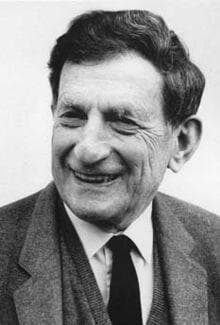
David Bohm (2006)

Genre

General

Reading Time

12 Minutes

Key Themes

See below

Track Your Reading

Sign in to track this book

Core Idea

David Bohm's "Unfolding Meaning" delves into the nature of thought, meaning, and reality, proposing that our current fragmented way of thinking is at the root of many of humanity's problems. He argues for a more holistic and integrated approach, where thought is seen not as a separate entity but as an active participant in shaping reality. Bohm introduces the concept of the 'implicate order' – an undivided, hidden ground of all reality from which the 'explicate order' (the world we perceive) unfolds. He suggests that true meaning arises when thought aligns with this deeper, undivided order, moving beyond rigid categories and dualities towards a more fluid and creative understanding of existence.
Difficulty
Hard

Core idea

The central argument and framework that powers the entire book.

David Bohm's "Unfolding Meaning" delves into the nature of thought, meaning, and reality, proposing that our current fragmented way of thinking is at the root of many of humanity's problems. He argues for a more holistic and integrated approach, where thought is seen not as a separate entity but as an active participant in shaping reality. Bohm introduces the concept of the 'implicate order' – an undivided, hidden ground of all reality from which the 'explicate order' (the world we perceive) unfolds. He suggests that true meaning arises when thought aligns with this deeper, undivided order, moving beyond rigid categories and dualities towards a more fluid and creative understanding of existence.

At a glance

Difficulty

Hard

Key Takeaways

1

The Illusion of Fragmentation

Our modern worldview, rooted in a mechanistic understanding of the universe, inherently fosters division and conflict.

Quote

The general attitude of fragmentation is so deeply embedded in our culture that it is taken for granted as the normal way of thinking.

Bohm argues that the current scientific view, which sees the universe as separate parts, has shaped human consciousness and society. This 'fragmented' view began when people stopped believing the Earth was the center of the cosmos. It has led humanity to see itself and the world as broken into distinct entities—nations, fields of study, individuals—instead of an interconnected whole. This is not just an intellectual error but a deep habit of thought that causes social conflict, environmental damage, and psychological disunity. The boo...

Supporting evidence

Bohm frequently references the historical shift from an Aristotelian, geocentric view of an integrated cosmos to a Galilean/Newtonian model emphasizing isolated bodies in motion, arguing this intellectual shift underpins modern fragmentation.

Apply this

Recognize moments of 'fragmented thinking' in daily life, such as categorizing people rigidly or viewing problems in isolation, and consciously seek connections and underlying unity.

2

The Implicate and Explicate Order

Reality operates on two fundamental levels: a manifest, 'explicate' order and a deeper, 'implicate' order where all things are enfolded.

Quote

The implicate order is a deeper, more fundamental order of reality from which the explicate order unfolds and into which it enfolds.

This is a main idea in Bohm's philosophy, proposing a new way to think about reality. The 'explicate order' is our everyday world, with distinct objects and separate space and time. The 'implicate order' is a hidden, undivided whole where all things are subtly connected and folded within each other, like a hologram where each part contains the whole. The explicate order 'unfolds' from the implicate, and processes 'enfold' back into it. This idea challenges the notion that reality is fundamentally made of separate parts. It suggests th...

Supporting evidence

Bohm frequently uses the analogy of a hologram, where every piece of the photographic plate contains the entire image, albeit at a lower resolution, to illustrate the enfolded nature of information in the implicate order.

Apply this

When encountering seemingly disparate phenomena, consider what deeper, unifying principle or 'implicate order' might be giving rise to them. This can be applied to understanding complex systems or personal relationships.

3

Thought as a Participatory Process

Our thought processes are not passive observations but active participants in shaping our perceived reality.

Quote

Thought is not merely an instrument for understanding reality, but it is also a part of reality, and it participates in shaping what we take to be reality.

Bohm argues that thought is not a neutral tool but a part of reality's 'unfolding meaning.' Our thoughts, beliefs, and assumptions do not just describe the world; they actively create it, especially the 'explicate order' we experience. This means our fragmented thinking literally creates a fragmented world. This idea has consequences for personal and collective change, suggesting that changing how we think is not just an intellectual exercise but a basic shift in how reality appears to us. This is a strong criticism of objective scien...

Supporting evidence

Bohm often discusses how scientific theories, initially conceptual frameworks, can lead to the 'discovery' of phenomena that align with those theories, demonstrating how thought shapes perception and experiment.

Apply this

Practice mindfulness to observe the patterns and assumptions embedded in your own thinking. Challenge automatic thoughts, especially those that reinforce separation or negativity, to foster a more integrated internal and external experience.

4

Dialogue as a Path to Coherence

True dialogue, characterized by suspending assumptions and listening deeply, can heal fragmentation and foster collective intelligence.

Quote

The purpose of a dialogue is to enable the participants to observe the activity of thought as a whole, to experience the collective nature of thought.

Bohm proposed a specific type of 'dialogue.' It is not a debate or discussion to reach agreement. Instead, it is a process for participants to observe the collective movement of thought, including their own assumptions and biases. In a true Bohmian dialogue, individuals 'suspend' their opinions rather than defending them, allowing a free flow of meaning and the emergence of a shared, coherent understanding that goes beyond individual views. This process aims to access a collective intelligence, a 'larger mind,' that can perceive the i...

Supporting evidence

Bohm famously facilitated dialogue groups at the University of London and other institutions, observing how shared meaning and novel insights emerged when participants truly listened and suspended judgment.

Apply this

When engaging in group discussions, consciously practice active listening without formulating your rebuttal. Encourage others to share their underlying assumptions rather than just their conclusions, fostering a more open and explorative conversation.

5

The Dangers of Unexamined Assumptions

Unchallenged assumptions, especially about the nature of reality, perpetuate our fragmented worldview and hinder progress.

Quote

Our assumptions are often tacit, unexamined, and yet they profoundly shape what we perceive and how we act.

Bohm consistently emphasizes that our main obstacle to 'unfolding meaning' and achieving a more coherent reality is our inability or unwillingness to examine our basic assumptions. These are not just personal biases but deeply embedded cultural and scientific beliefs, such as the inherent separateness of things. When these assumptions remain unexamined, they operate unconsciously, guiding our perceptions and actions and reinforcing the very fragmentation we want to overcome. The book asks readers to engage in rigorous self-reflection ...

Supporting evidence

Bohm points to the long-standing scientific assumption of reductionism – that complex systems can be understood by breaking them into their smallest parts – as a prime example of an unexamined assumption leading to fragmented understanding.

Apply this

Regularly question the 'givens' in your field or personal life. Ask 'why do I believe this?' or 'what if this fundamental assumption were wrong?' to open up new possibilities for understanding and action.

6

Meaning is Primary, Not Derived

Meaning is not something we impose on an objective reality, but an intrinsic aspect of the universe's unfolding.

Quote

Meaning is not merely in our heads; it is in the movement of reality itself, a kind of order that is inherently significant.

Unlike many philosophies that see meaning as a human construct or subjective interpretation, Bohm suggests that meaning is a fundamental property of the universe. It is inherent in the 'unfolding' and 'enfolding' processes of the implicate order. This means reality itself has significance. Our task is not to 'create' meaning but to 'unfold' or discover the meaning that is already present. This view offers a sense of purpose and interconnectedness. It suggests that human consciousness is not an alien intruder in a meaningless cosmos bu...

Supporting evidence

Bohm often discusses the 'unbroken wholeness' of the universe, where even at the quantum level, particles exhibit non-local connections, suggesting a deeper, inherent order and interconnected meaning.

Apply this

Instead of feeling pressure to 'find your purpose,' cultivate a sense of wonder and openness to discover the inherent meaning in everyday experiences and the natural world, seeing yourself as part of a larger, meaningful process.

7

The Role of Creativity in Unfolding Meaning

Genuine creativity stems from an ability to perceive and express the implicate order, bringing forth novel forms of meaning.

Quote

True creativity is not merely rearranging what is known, but rather a direct perception of the new, an unfolding from the implicate order.

Bohm sees creativity as more than just artistic expression or problem-solving. It is the human ability to 'unfold' new meaning from the implicate order into the explicate. This involves suspending habitual thought patterns and being open to seeing fresh connections and insights that were previously enfolded. It is not about making something entirely new from nothing, but rather about bringing forth what was already subtly present in the underlying wholeness. This view makes creativity a fundamental human function, essential for evolvi...

Supporting evidence

Bohm discusses scientific breakthroughs, like Einstein's relativity or quantum mechanics, as examples of profound creative leaps that shifted fundamental paradigms by revealing deeper orders.

Apply this

When facing a creative block or a difficult problem, try to quiet your analytical mind and allow for a period of open-ended reflection, trusting that insights can 'unfold' from a deeper, less structured mental space.

8

Beyond Mechanism: A New Notion of Order

Moving beyond a purely mechanistic worldview is essential for addressing humanity's deepest challenges.

Quote

The mechanistic notion of order is not wrong in its domain, but it has been generalized beyond its appropriate limits, leading to fragmentation.

While acknowledging the successes of mechanistic science in its specific field, Bohm argues that its universal application has led to a misunderstanding of reality and worsened global problems. The book suggests that a new, more holistic 'notion of order' is needed. This order should embrace interconnectedness, process, and the implicate order. This shift is not about abandoning science but expanding its conceptual framework to include meaning, consciousness, and undivided wholeness. Without this fundamental shift in our understanding...

Supporting evidence

Bohm critiques how mechanistic thinking, while effective for engineering, fails to adequately address complex biological or social systems, leading to unintended consequences and a lack of holistic solutions.

Apply this

When approaching complex problems (e.g., climate change, social inequality), challenge the impulse to break them down into isolated, manageable parts. Instead, seek to understand the systemic interdependencies and the 'whole' context.

9

The Continuum of Consciousness and Matter

Consciousness and matter are not separate entities but different aspects of a single, undivided reality.

Quote

Ultimately, consciousness and matter are not two separate things, but are two aspects of a single reality, like two sides of a coin.

Bohm challenges the Cartesian dualism that separates mind and body, consciousness and matter. He suggests that both are manifestations or 'unfoldings' from the same deeper implicate order. Consciousness is not just a byproduct of the brain but is woven into the fabric of reality. This view opens the door to understanding how our thoughts can influence our physical world and how the universe itself might have a basic 'mind-like' quality. This is a speculative but central idea of Bohm's philosophy, offering a way to bridge scientific ma...

Supporting evidence

Bohm's work is heavily influenced by quantum physics, where the observer's consciousness seems to play a role in collapsing wave functions, hinting at a deeper connection between mind and matter.

Apply this

Consider how your mental state and intentions might subtly influence your physical environment or the outcomes of your actions, recognizing the deep interconnectedness between your inner world and outer reality.

10

The Necessity of Constant Inquiry

Unfolding meaning is an ongoing process that requires continuous, open-ended inquiry rather than fixed conclusions.

Quote

Truth is not a fixed thing, but an ongoing process of unfolding, requiring constant attention and inquiry.

For Bohm, 'unfolding meaning' is not about finding a final answer but about engaging in a continuous process of discovery and learning. The universe itself is constantly unfolding, and our understanding must reflect this dynamic nature. This means intellectual rigidity, dogmatism, and the belief in absolute truths are opposed to true understanding. Instead, Bohm advocates for perpetual inquiry, where one remains open to new information, challenges existing frameworks, and embraces the evolving nature of reality. This emphasis on proce...

Supporting evidence

Bohm's own intellectual journey, marked by shifts from plasma physics to quantum theory and then to philosophical inquiry, exemplifies a continuous process of questioning and evolving understanding.

Apply this

Cultivate a 'beginner's mind' in all areas of life, approaching new information and experiences with curiosity and a willingness to revise your understanding, rather than clinging to pre-conceived notions.

Critical analysis

Notable Quotes

Quiz

Test Your Knowledge

Ready to see how well you understood this book? Take our interactive quiz with 10 questions.

10
Questions
~5
Minutes
?
Best Score

Key Questions (FAQ)

David Bohm argues that our fragmented, mechanistic view of reality, stemming from the modern scientific conception of Earth as a mere part of the universe, leads to disharmony. He proposes that alternative ways of thinking can lead to a more harmonious and integrated reality.

About the author

David Bohm

David Bohm was a renowned theoretical physicist and philosopher, best known for his groundbreaking work on quantum mechanics and his concept of the 'implicate order.' His influential books, including 'Wholeness and the Implicate Order' and 'Unfolding Meaning,' explore the interconnectedness of consciousness and the universe, making significant contributions to both physics and philosophy.