BookBrief
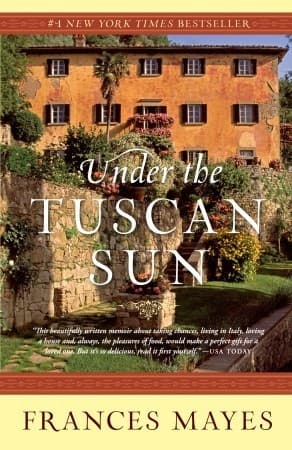
Under the Tuscan Sun cover
Archivist's Choice

Under the Tuscan Sun

Frances Mayes (1996)

Genre

Lifestyle / Biography / Memoir / Romance

Reading Time

6-8 hours

Key Themes

See below

Track Your Reading

Sign in to track this book

An American writer buys a run-down Tuscan villa, beginning a journey of restoration, cooking, and self-discovery in the Italian countryside.

Core Idea

Frances Mayes's "Under the Tuscan Sun" explores how an old Italian villa, Bramasole, and its Tuscan surroundings help her reinvent herself. It suggests that by embracing new experiences, connecting with a place through its sights and sounds, and restoring a home, one can create a richer life. The book argues that 'home' is not just a building but a feeling achieved by engaging with one's environment, community, and inner self.
Reading time
6-8 hours
Difficulty
Easy
✓ Read this if...
You dream of escaping to a picturesque foreign land, appreciate vivid sensory descriptions of food, nature, and architecture, or are looking for inspiration on how to find beauty and joy in the process of rebuilding and nesting.
✗ Skip this if...
You prefer fast-paced narratives with strong plotlines, are not interested in detailed descriptions of renovations, gardening, or cooking, or find introspective memoirs without significant external conflict unengaging.

Core idea

The central argument and framework that powers the entire book.

Frances Mayes's "Under the Tuscan Sun" explores how an old Italian villa, Bramasole, and its Tuscan surroundings help her reinvent herself. It suggests that by embracing new experiences, connecting with a place through its sights and sounds, and restoring a home, one can create a richer life. The book argues that 'home' is not just a building but a feeling achieved by engaging with one's environment, community, and inner self.

At a glance

Reading time

6-8 hours

Difficulty

Easy

Read this if...

You dream of escaping to a picturesque foreign land, appreciate vivid sensory descriptions of food, nature, and architecture, or are looking for inspiration on how to find beauty and joy in the process of rebuilding and nesting.

Skip this if...

You prefer fast-paced narratives with strong plotlines, are not interested in detailed descriptions of renovations, gardening, or cooking, or find introspective memoirs without significant external conflict unengaging.

Key Takeaways

1

The Allure of the Ruin

Finding beauty and purpose in neglected places.

Quote

Buying a house in Tuscany is not just a real estate transaction; it's an adoption of a lifestyle, a commitment to a place with a soul.

Mayes describes the satisfaction of restoring an old Italian villa, Bramasole. It is more than home improvement; it is a connection to history, the land, and a slower way of life. The process, full of challenges and discoveries, becomes a metaphor for personal renewal. The 'ruin' is not just a building but a starting point for new beginnings and a return to simple pleasures. This point shows that embracing imperfection and the effort of restoration can lead to personal growth and a deeper appreciation for one's surroundings.

Supporting evidence

Mayes details the painstaking process of uncovering faded frescos, clearing overgrown vineyards, and dealing with local artisans and bureaucracy, all of which contribute to her growing attachment to Bramasole.

Apply this

Seek out opportunities to revitalize something neglected in your own life, whether it's a forgotten hobby, a strained relationship, or even a neglected corner of your home. Embrace the process, not just the outcome, and find beauty in imperfection.
bramasolerestorationrenewal
2

Sensory Immersion in Tuscany

Engaging all senses to experience life's richness.

Quote

The air itself has a flavor, like a good wine, made of sun and earth and ancient stone.

Mayes's writing uses rich sensory details, taking the reader into the Tuscan landscape. She describes the smells of cypress and olive oil, the sounds of church bells and cicadas, the taste of fresh produce and local wines, and the feel of old stone and warm sun. This deep sensory experience is presented as essential to truly appreciating a place and life. It encourages readers to slow down, pay attention, and enjoy the moment with all their senses, making everyday experiences special.

Supporting evidence

She describes market scenes with vibrant colors and pungent smells, the taste of just-picked figs, the sound of rain on the terracotta roof, and the warmth of the Tuscan sun.

Apply this

Practice mindful sensory engagement in your daily life. When eating, truly taste your food; when walking, notice the sounds and smells around you. Consciously engage all five senses to deepen your connection to your environment.

sensory-experiencemindfulnesstuscan-cuisine
3

The Table as a Sacred Space

Food as the heart of culture, connection, and celebration.

Quote

For Italians, food is not just sustenance; it is life, memory, family, and art. It is the language of love.

Food is central to 'Under the Tuscan Sun,' more than just nourishment. Mayes shows how preparing and sharing meals is a basic ritual, tied to Tuscan culture, hospitality, and community. From gathering ingredients to long dinners, eating becomes a celebration of life, a way to tell stories, and a powerful way to connect with friends, family, and even strangers. This point highlights the deep cultural and emotional meaning of food, urging us to see our own meals as chances for connection and joy.

Supporting evidence

Mayes recounts numerous elaborate meals shared with friends, neighbors, and even strangers, featuring descriptions of traditional Tuscan dishes like pappa al pomodoro, wild mushroom pasta, and various local wines.

Apply this

Make an effort to slow down and savor your meals. Host dinner parties, cook with loved ones, and explore local produce. View meal preparation and sharing as an act of love and connection, not just a necessity.

tuscan-foodhospitalitycommunity
4

Embracing the Unfamiliar

Stepping outside comfort zones leads to unexpected discovery.

Quote

The unexpected is where the real life happens. It's where you learn, where you grow, where you find joy.

Mayes's journey involves constant encounters with the unfamiliar—a new language, different customs, unpredictable contractors, and a foreign landscape. Instead of resisting these challenges, she welcomes them with curiosity and flexibility. This open-mindedness allows her to find hidden frescoes, build friendships with locals, and truly become part of the Tuscan way of life. This point argues that discomfort and newness are not problems but paths to deeper understanding, personal growth, and richer experiences, encouraging readers to ...

Supporting evidence

Her interactions with local workers like the foreman, Geppetto, and her attempts to communicate and understand Italian customs despite language barriers, often leading to humorous or heartwarming outcomes.

Apply this

Actively seek out new experiences, even if they seem daunting. Travel to new places, try a new cuisine, learn a few phrases of a new language, or engage with people from different backgrounds. Embrace the learning curve and the potential for surprise.

cultural-immersionadaptabilitycuriosity
5

The Rhythm of Place

Aligning with the natural and cultural pulse of a location.

Quote

In Tuscany, time is not a straight line but a circle, returning to the ancient rhythms of the earth.

One of Mayes's main realizations is the importance of adapting to the natural rhythm of a place, rather than trying to force her own pace. In Tuscany, this means observing the seasons, understanding local traditions, and appreciating the unhurried pace of daily life. She learns to wait patiently for repairs, enjoy long, unplanned meals, and let nature guide her activities. This point suggests that true belonging comes from respecting and fitting into the existing flow of a culture and environment, leading to a more peaceful life.

Supporting evidence

Mayes describes the seasonal cycle of olive harvesting, grape picking, truffle hunting, and the predictable yet leisurely pace of village life, including siestas and long afternoon pauses.

Apply this

Observe the rhythms of your own community and environment. Pay attention to seasonal changes, local customs, and the natural flow of your day. Try to align your activities with these rhythms, rather than constantly fighting against them.

slow-livingseasonal-livingcultural-rhythms
6

Cultivating Your Own Garden

Finding joy and meaning in creation and nurturing.

Quote

Gardening is an act of faith, a belief in the future, a conversation with the earth.

Beyond the villa, Mayes focuses on creating and caring for her garden. This act of gardening is shown as therapeutic and fulfilling. It is a connection to the earth, a creative outlet, and a source of both beauty and food. The garden, like the villa, requires patience, effort, and a willingness to work with nature's unpredictable forces. This point emphasizes the satisfaction that comes from creating and tending to something, whether it is a garden, a creative project, or a personal skill, highlighting the joy of seeing things grow un...

Supporting evidence

Her descriptions of planting cypress trees, roses, and herbs, and her efforts to revive the neglected vineyard, culminating in her first homemade wine.

Apply this

Engage in an activity that involves creation and nurturing, whether it's gardening, learning a musical instrument, writing, cooking from scratch, or mentoring someone. Experience the satisfaction of seeing your efforts grow and bear fruit.

gardeningcreationnurturing
7

The Art of Slow Travel

Beyond tourism: truly experiencing a place through deliberate exploration.

Quote

Travel is not just about seeing new places, but about seeing old places with new eyes.

Mayes does not just 'visit' Tuscany; she settles in, allowing for a deeper understanding than typical tourism. Her explorations of nearby towns, local markets, and hidden restaurants are not rushed lists but leisurely wanderings, driven by curiosity and a desire for real engagement. This 'slow travel' approach reveals layers of history, culture, and daily life often missed by hurried tourists. This point promotes the value of spending extended time in one place, allowing for genuine immersion and a deeper connection to the destination...

Supporting evidence

Her detailed accounts of day trips to Cortona, Siena, Florence, and other small villages, focusing on market interactions, local festivals, and discovering hidden gems rather than just famous landmarks.

Apply this

When traveling, consider staying longer in one place rather than rushing through many. Explore local neighborhoods, visit markets, engage with locals, and allow for serendipitous discoveries. Prioritize depth over breadth.

slow-travelcultural-explorationauthenticity
8

Finding Home Anywhere

Home is a feeling created through connection, not just a physical place.

Quote

Home is where you are understood, where you can be yourself, where you are loved. It can be found in a person, a place, a memory.

Though Mayes initially seeks a physical escape in Tuscany, her journey shows that 'home' is a more flexible idea. It is built through relationships with people—her partner, local friends, and even brief acquaintances—and through a deep, sensory connection with her surroundings. It is less about the structure of Bramasole and more about the feeling of belonging, comfort, and self-discovery she finds there. This point challenges the traditional idea of home as a fixed location, suggesting it is a state of mind and heart, found wherever ...

Supporting evidence

Her evolving relationships with local characters like her neighbors, the contadini, and the various artisans, and how these connections make Tuscany feel like home, despite its foreignness.

Apply this

Actively cultivate relationships and engage with your community, wherever you are. Create spaces and routines that bring you comfort and joy. Recognize that 'home' is a feeling you can carry with you and build anew.

belongingcommunityidentity
9

The Romance of Imperfection

Embracing flaws and unexpected turns as part of life's beauty.

Quote

Life, like an old house, is full of cracks and imperfections. But it is in these very flaws that its true character and beauty lie.

Mayes does not romanticize Tuscany to the point of ignoring its difficulties. Her story includes humorous accounts of bureaucracy, unreliable services, language misunderstandings, and the sheer effort of restoring an old house. Yet, she finds charm and even beauty in these imperfections. The 'flaws' become part of the authentic experience, adding character and depth rather than taking away from the overall joy. This point encourages a change in perspective: to see life's inevitable challenges and less-than-perfect moments not as failu...

Supporting evidence

Her humorous anecdotes about dealing with Italian bureaucracy, plumbing issues, and the unpredictable nature of local contractors, which she ultimately recounts with affection rather than frustration.

Apply this

When faced with challenges or imperfections in your life or projects, try to reframe them. Look for the humor, the lesson, or the unique character they add. Practice acceptance and find beauty in the 'cracks.'

acceptanceresilienceauthenticity
10

Reinvention Through Relocation

A change of scenery can catalyze profound personal transformation.

Quote

Sometimes, to find yourself, you have to lose yourself completely in a new place.

Mayes's move to Tuscany is more than just a change of address; it is a deliberate act of self-reinvention after a major life change. The foreign environment, the challenges of restoration, and the immersion in a different culture force her to adapt, learn new skills, and re-evaluate her priorities. This geographical shift helps her grow personally, allowing her to shed old routines and identities and embrace a more authentic, joyful self. This point suggests that a significant change in environment can be a powerful tool for personal ...

Supporting evidence

Her initial decision to buy the villa after a divorce and subsequent rebuilding of her life, both literally with the house and metaphorically with her personal identity and relationships, is the core premise of the book.

Apply this

Consider how a change of environment, even a small one, could foster personal growth. This could involve moving to a new city, taking a sabbatical, or simply redecorating your home to reflect a new phase of life. Embrace the opportunity for self-discovery that new surroundings can offer.

self-discoverypersonal-growthnew-beginnings

Critical analysis

Notable Quotes

To be able to make a choice of what you want, you are rich.

Reflecting on the simple joys and abundance found in her new life in Italy.

The house, like a person, has a soul, and it is a feminine soul.

Describing her first impressions and immediate connection with Bramasole, her new home.

Life is a celebration. Even when it's not. Even when it's all a mess.

Emphasizing the importance of embracing all aspects of life, good and bad.

I am not a cook. I am a gatherer of ingredients, a composer of meals.

Her approach to food, focusing on fresh, local ingredients rather than complex recipes.

The search for beauty is a form of prayer.

Reflecting on the profound aesthetic pleasure she finds in the Tuscan landscape and culture.

Every day is a journey, and the journey itself is home.

Expressing a sense of belonging and contentment found in the daily rhythm of her life in Tuscany.

The pleasure of a garden is not in its perfection, but in its constant becoming.

Observing the organic, ever-changing nature of her garden at Bramasole.

To live in Italy is to live in a state of constant sensual overload.

Describing the vibrant sensory experiences of Italian life, from food to scenery.

We are drawn to Italy not just for its beauty, but for its sense of time, its ancient layers of life.

Explaining the deeper allure of Italy beyond its surface aesthetics.

Often, what we think of as a problem turns out to be a gift.

Reflecting on unexpected challenges and how they often lead to positive outcomes.

A house is not a machine for living in. It is a place of dreams.

Contrasting a functional view of a house with her romantic and personal connection to Bramasole.

The greatest luxury is space and silence.

Appreciating the tranquility and expansive surroundings of her Tuscan home.

Friendship is a sheltering tree.

Highlighting the importance and comfort of the relationships she builds with locals.

To fall in love with a place is to fall in love with the life that goes on there.

Explaining her deep affection for Tuscany, encompassing its people, rhythms, and traditions.

Quiz

Test Your Knowledge

Ready to see how well you understood this book? Take our interactive quiz with 10 questions.

10
Questions
~5
Minutes
?
Best Score

Key Questions (FAQ)

'Under the Tuscan Sun' is a memoir by Frances Mayes detailing her experience buying and renovating an abandoned villa in rural Tuscany, Italy. It explores the joys of Italian life, culture, cuisine, and the process of making a new home in a foreign land.

About the author