“The world is a dance, and all of us are dancers.”
— Early philosophical reflection by Jake Donaghue.


Iris Murdoch (2002)
Genre
Literary Fiction / Philosophy
Reading Time
600 min
Key Themes
See below
Sign in to track this book
In bohemian London, a charming but aimless young translator chases an old love, falls into absurd misadventures, and grapples with an enigmatic philosopher's ideas about language.
The novel begins with Jake Donaghue, a struggling writer and translator, being told by Madge, his current patron and on-again, off-again girlfriend, that he must leave her London flat. This sudden homelessness makes Jake and his loyal, somewhat naive friend, Finn, look for a place to stay. Jake remembers his past relationship with Anna Quentin, a singer and actress he had a deep but unfinished connection with. He decides to find her, hoping she might offer him a place or, at least, a new sense of purpose. Their first attempts to find her through friends fail, sending Jake on a path of increasingly chaotic encounters.
Jake's search for Anna accidentally leads him to Hugo Belfounder, a reclusive and influential philosopher Jake knew years ago. Hugo, a former fireworks maker who became an abstract thinker, lives an unusual life. Jake is immediately drawn to Hugo's deep and often puzzling philosophical ideas, especially his concept of the 'net of language' – the idea that language, though needed, can twist and limit our understanding of reality. This meeting sparks Jake's intellectual curiosity and makes Hugo a central, though often absent, figure in Jake's search for understanding and self-discovery.
Trying to make money and deal with being homeless, Jake gets involved with a film studio, where he meets a famous dog actor named Mars. Through a series of misunderstandings and quick decisions, Jake and Finn 'kidnap' Mars, believing the dog belongs to Hugo and they are helping him. This absurd act leads them on a wild chase through London, ending in a comical and chaotic scene where they try to hide the dog, making Jake's already difficult situation worse and pulling him deeper into the odd lives of those around him.
While trying to return Mars, Jake reconnects with Sadie Quentin, Anna's sister, who works in the film industry. Sadie, more practical than Anna, offers Jake a temporary break and a look into her world. Jake is both fascinated and put off by the film industry's superficiality and commercialism, a sharp contrast to his own intellectual pursuits and philosophical thoughts. This meeting with Sadie gives Jake more clues about Anna's location and hints at the complex relationships within the Quentin family, especially concerning Hugo.
Jake finds a hidden manuscript written by Hugo Belfounder, containing his deepest philosophical ideas. Believing this work is important, Jake tries to understand and perhaps publish it. However, a huge fire breaks out where the manuscript is kept, destroying it. This event is a big blow to Jake, symbolizing the elusive nature of truth and knowledge, mirroring Hugo's own struggles with expressing his philosophy. The fire also highlights the destructive results of Jake's often impulsive actions.
As Jake continues his wandering through London, he often finds himself in pubs, having long, often drunken, philosophical debates with Finn and other friends. These talks often center on Hugo's ideas, the nature of language, reality, and the search for meaning. These scenes show Jake's intellectual restlessness and his struggle to match his theoretical understanding with the messy realities of his own life. The pub discussions are a small example of the novel's larger philosophical themes, showing Jake's constant struggle with the 'net of language' and the limits of abstract thought.
After many false leads and frustrating detours, Jake finally finds and speaks with Anna. Their reunion is sweet and sad, marked by lingering affection and their unfinished past. Anna, however, reveals more about her complex relationship with Hugo, explaining his character and why he is reclusive. Jake learns that Hugo's philosophical ideas are deeply connected to his personal experiences and his attempts to make sense of a chaotic world. These revelations make Jake re-evaluate his idealized view of Hugo.
Inspired by Hugo's genius and his own intellectual ambitions, Jake tries to publish Hugo's philosophical writings. He believes Hugo's ideas deserve a wider audience and could bring him recognition. However, Jake faces big obstacles, including Hugo's own hesitation and the practical problems of turning such abstract thought into something sellable. In the end, his attempts to share Hugo's work with the public fail, showing the gap between intellectual pursuit and the demands of the commercial world, and reinforcing the idea that some truths are too complex to be easily spread.
Through talks with Anna and other characters, Jake slowly uncovers details of Hugo Belfounder's difficult childhood. He learns that Hugo experienced significant trauma and hardship, especially related to his parents' early death and his time in an orphanage. These revelations provide important context for understanding Hugo's unique philosophical view, particularly his focus on language's limits and the search for basic truths beyond social norms. Jake realizes that Hugo's intellectual pursuits come from his personal suffering and his desire to understand a world that often felt illogical.
In a surprising turn, Jake finds himself in a boxing match. This physical fight is a sharp contrast to his usual intellectual and verbal world. For Jake, the boxing match is an attempt to experience something raw, immediate, and not filtered by language or abstract thought. It is a moment where he faces his own body and weakness, seeking a form of real experience that fits with Hugo's philosophy of direct engagement with reality. While he does not win, the experience offers him a different kind of insight and a temporary break from his intellectual worries.
Near the novel's end, Jake starts to make peace with the various characters he has met and often pushed away during his journey. He mends his relationship with Madge, understands Finn better, and accepts the complexities of his relationships with Anna and Hugo. The frantic search for answers and a place to belong begins to calm down. Jake realizes that perfect understanding or a definite solution to life's problems may be impossible, echoing Hugo's philosophy about language's limits and existence's inherent ambiguity. He finds a fragile peace in accepting this uncertainty.
Having traveled through London, chased philosophical truths, and navigated a maze of personal relationships, Jake Donaghue finally finds a tentative sense of direction. He gets a new translation job, suggesting a return to his craft, but with new maturity. He understands that life, like language, is often ambiguous and that absolute truths are hard to find. Jake embraces the idea that meaning often comes from the direct, unfiltered experience of life, rather than only through intellectual ideas. He accepts the 'net of language' not as a prison, but as a natural part of human experience, choosing to live within its complexities rather than trying to escape them.
The Protagonist
Jake evolves from a detached, intellectually arrogant drifter into a more grounded individual who accepts the inherent ambiguities of life and finds purpose in direct experience.
The Supporting
Finn remains largely static, serving as a reliable foil to Jake's development, embodying loyalty and simple practicality.
The Supporting
Anna's character is gradually revealed as Jake uncovers more about her past, showing her as a complex figure caught between two intellectual men.
The Supporting
Hugo's character is explored through Jake's retrospective understanding, revealing him as a tragic figure whose philosophical depth stems from profound personal suffering.
The Supporting
Madge remains a relatively static character, serving as a practical counterpoint to Jake's idealism.
The Supporting
Sadie remains a consistent, practical presence, helping to ground Jake's often abstract journey.
The Mentioned
N/A
The main theme, shown through Hugo Belfounder's philosophy, is that language, while needed for communication, naturally distorts and limits how we see reality. Jake constantly struggles with this 'net,' finding that his intellectual attempts to categorize the world often fail to capture its true, messy nature. This appears in his philosophical debates in pubs, his struggle to explain Hugo's complex ideas, and his realization that direct experience often gives more insight than abstract thought, as seen in his boxing match.
“All theorizing is flight. We must be in the place itself. The only thing that is real is the present. What we are doing now. And what we are doing now is not theorizing.”
Jake's whole journey is a search for meaning in a world that seems absurd. He looks for an authentic way to live, free from social expectations and abstract thinking. This search shows up in his pursuit of Anna, his fascination with Hugo's philosophy, and even his impulsive actions like the dog kidnapping or the boxing match. He longs for an unfiltered experience of reality, always questioning what is truly 'real' and how one can live truthfully, eventually finding that authenticity might mean accepting life's inherent ambiguity rather than finding definite answers.
“What I wanted was to get into the heart of the world, to be there, to be real.”
The novel explores the complex and often messy nature of human relationships, showing how people are connected despite trying to be independent. Jake, despite his intellectual solitude, relies deeply on Finn, Madge, Anna, and Hugo. The intricate web of past and present connections between Jake, Anna, and Hugo drives much of the plot. The novel suggests that true understanding often comes from interacting with others, even if those interactions are full of misunderstanding and conflict, emphasizing that no one exists alone.
“We are all in the net together, and the net is ourselves.”
Jake is an existential drifter, a smart but aimless person struggling to find purpose. His constant homelessness and reliance on others symbolize his lack of a stable base. The novel shows his journey as a series of impulsive decisions and reactions, rather than a clear path. However, through these experiences, especially his engagement with Hugo's philosophy and his direct encounters with life's absurdities, Jake slowly moves towards a more self-aware understanding of his place, hinting that purpose can be found even in uncertainty.
“I was a sort of spiritual tramp, and the whole world was a kind of spiritual doss-house.”
Many key events in the novel happen not through careful planning, but by chance, coincidence, or Jake's impulsive reactions. The eviction, the meeting with Mars, the fire, and even some of his reunions with Anna are mostly accidental. This theme highlights life's unpredictable nature and challenges the idea of a set path. It suggests that meaning can come from the chaos of random events, and that one's journey is often shaped more by unforeseen circumstances than by carefully made plans.
“Life is a series of accidents, and the important thing is to be ready for them.”
An initial object of desire that drives the plot but is not the ultimate goal.
Anna initially serves as a MacGuffin for Jake. His eviction prompts him to seek her out, ostensibly for a place to stay, but more deeply to rekindle a past connection and find direction. While she remains an important character, the true 'quest' evolves beyond simply finding Anna to include understanding Hugo's philosophy and, ultimately, Jake's own place in the world. Anna's elusive nature and her connection to Hugo fuel Jake's journey, but the discovery of her isn't the final resolution, rather a step in a larger intellectual and personal awakening.
Extended discussions and internal monologues exploring abstract ideas.
The novel is replete with philosophical monologues and dialogues, often delivered by Hugo or engaged in by Jake (both internally and with others like Finn). These sections are not merely decorative; they are integral to the plot, as Jake's internal and external struggles are often directly tied to his attempts to comprehend and apply Hugo's ideas about language, reality, and meaning. These discussions often occur in informal settings like pubs, making the abstract ideas feel grounded in the characters' everyday lives and intellectual restlessness.
A recurring image representing the limitations and complexities of language and perception.
The 'net' is the central symbol, directly referenced in the title and Hugo's philosophy. It represents the intricate, yet ultimately restrictive, structure of language through which humans try to apprehend reality. Just as a net captures some things while letting others slip through, language allows us to communicate but also filters and distorts our direct experience of the world. Jake's journey is about trying to navigate this net, to understand its limitations, and to find truths that lie 'under' or beyond its confines, suggesting a quest for unmediated, authentic experience.
A episodic, journey-based narrative following a rogue-like protagonist.
The novel follows a picaresque structure, with Jake Donaghue, a charming but somewhat roguish intellectual, embarking on a series of episodic adventures across London. His journey is largely aimless, driven by circumstance, impulsivity, and a constant search for lodging, money, and philosophical understanding. Each episode, from the dog kidnapping to the boxing match, contributes to his gradual enlightenment without necessarily following a strict linear plot, allowing for a rich exploration of character and theme through diverse encounters and situations.
“The world is a dance, and all of us are dancers.”
— Early philosophical reflection by Jake Donaghue.
“All art is the destruction of chaos.”
— Jake pondering the nature of artistic creation.
“Language is a net. I am caught in it.”
— Jake reflecting on the limitations and structures of language.
“Freedom is the recognition of necessity.”
— A philosophical statement Jake encounters and considers.
“Every man has his own private language.”
— Jake's musings on individual understanding and communication.
“Goodness is a private thing, a secret from the world.”
— Jake's thoughts on the nature of virtue and its display.
“There are more things in heaven and earth, Horatio, than are dreamt of in your philosophy.”
— A direct quote from Hamlet, used by Jake to express wonder and the limits of knowledge.
“The greatest joy of all is to be a spectator.”
— Jake's often detached perspective on life and human affairs.
“One must choose one's illusions carefully.”
— A pragmatic piece of advice Jake considers in his chaotic life.
“Love is the extremely difficult realisation that something other than oneself is real.”
— Jake's profound reflection on the nature of love and empathy.
“The world is a looking-glass, and gives back to every man the reflection of his own face.”
— Jake's contemplation of how perception shapes reality.
“One must learn to live with the fact that one will never be perfectly understood.”
— Jake's acceptance of the inherent isolation in human communication.
“What one cannot speak about, thereof one must be silent.”
— A nod to Wittgenstein, used by Jake in his reflections on language and its limits.
“The good life is a matter of luck, not merit.”
— Jake's cynical observation about the distribution of fortune.
Ready to see how well you understood this book? Take our interactive quiz with 10 questions.
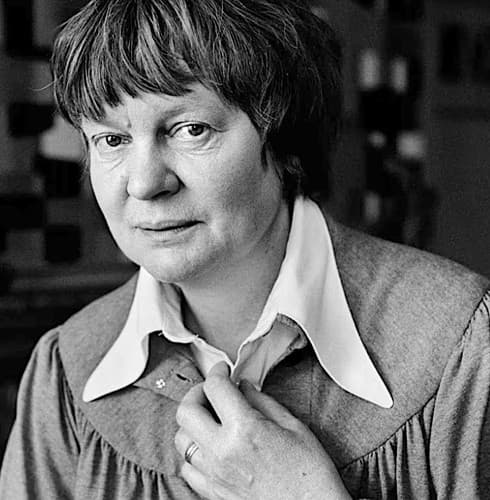
Dame Jean Iris Murdoch was an Irish and British novelist and philosopher. Murdoch is best known for her novels about good and evil, sexual relationships, morality, and the power of the unconscious. Her first published novel, Under the Net (1954), was selected in 1998 as one of Modern Library's 100 best English-language novels of the 20th century. Her 1978 novel The Sea, the Sea won the Booker Prize. In 1987, she was made a Dame by Queen Elizabeth II for services to literature. In 2008, The Times ranked Murdoch twelfth on a list of "The 50 greatest British writers since 1945".