BookBrief
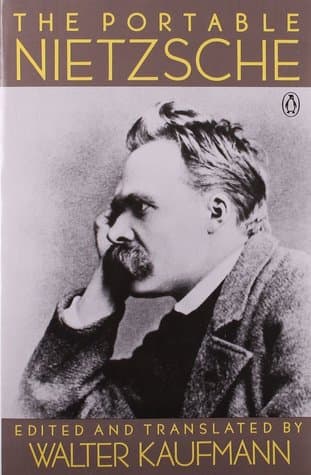
The Portable Nietzsche cover
Archivist's Choice

The Portable Nietzsche

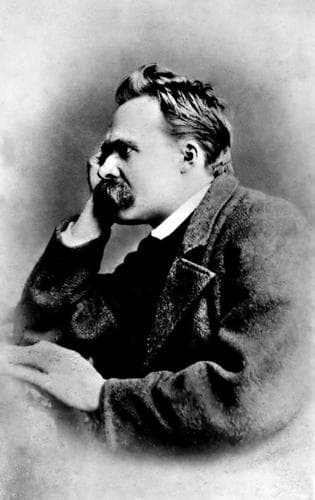
Friedrich Nietzsche (1954)

Genre

Psychology / Reference / Spirituality / Philosophy

Reading Time

1500 min

Key Themes

See below

Track Your Reading

Sign in to track this book

Explore Nietzsche's challenging ideas on morality, religion, and human purpose, guided by an expert through his most influential works.

Core Idea

Nietzsche argues that the 'death of God' has led to a crisis of meaning in Western culture. He believes conventional morality, religion, and philosophy need a 'revaluation of all values' to overcome this nihilism. He advocates for the 'Will to Power' as the basic drive of existence, urging individuals to embrace concepts like the 'Overman' and 'Eternal Recurrence.' This means rising above common morality, accepting life's suffering and joy, and creating personal meaning and values to 'become who they are' and affirm existence.
Reading time
1500 min
Difficulty
Hard
✓ Read this if...
You are eager to directly engage with the primary texts of one of history's most provocative philosophers and explore radical ideas about morality, meaning, and human potential.
✗ Skip this if...
You prefer light reading, are easily offended by confrontational philosophical arguments, or are looking for a gentle introduction to philosophy.

Core idea

The central argument and framework that powers the entire book.

Nietzsche argues that the 'death of God' has led to a crisis of meaning in Western culture. He believes conventional morality, religion, and philosophy need a 'revaluation of all values' to overcome this nihilism. He advocates for the 'Will to Power' as the basic drive of existence, urging individuals to embrace concepts like the 'Overman' and 'Eternal Recurrence.' This means rising above common morality, accepting life's suffering and joy, and creating personal meaning and values to 'become who they are' and affirm existence.

At a glance

Reading time

1500 min

Difficulty

Hard

Read this if...

You are eager to directly engage with the primary texts of one of history's most provocative philosophers and explore radical ideas about morality, meaning, and human potential.

Skip this if...

You prefer light reading, are easily offended by confrontational philosophical arguments, or are looking for a gentle introduction to philosophy.

Key Takeaways

1

Embrace the Will to Power

Life is a constant striving for growth and overcoming, not mere survival.

Quote

What is good? All that heightens the feeling of power, the will to power, power itself, in man. What is bad? All that proceeds from weakness. What is happiness? The feeling that power increases – that a resistance is overcome.

Nietzsche redefines 'power' as an internal drive for self-improvement and creativity. The 'will to power' is a life-affirming instinct, pushing people to grow, challenge themselves, and reach their full potential. It is about becoming more, not just existing. This idea criticizes traditional morality that values weakness or passivity. Instead, it argues for an active engagement with life's challenges. Denying this will leads to nihilism and resentment. True flourishing comes from embracing this drive to expand one's being.

Supporting evidence

Nietzsche elaborates on the Will to Power extensively in 'Thus Spoke Zarathustra,' personifying it through Zarathustra's teachings on self-overcoming, and explicitly defines it in 'The Antichrist' as the essence of 'good.'

Apply this

Identify areas in your life where you feel stagnant or constrained. Consciously choose challenging goals that require personal growth and effort, rather than seeking comfort or external validation. Cultivate self-discipline and creativity to actualize your unique potential, always striving to surpass your current self.
will-to-powerself-overcomingnihilismmaster-morality
2

Become Who You Are

Discover and create your authentic self by rejecting herd mentality and external impositions.

Quote

Man, know thyself! And what is more difficult than to know oneself? To become oneself.

Nietzsche argues that most people follow societal norms and values without question. To 'become who you are' means to question yourself deeply and reject the 'herd instinct' – the urge to conform and seek comfort in group norms. This process involves shedding inherited beliefs, prejudices, and values that do not align with one's unique spirit. It is an active, ongoing process of self-creation, demanding honesty, clear thinking, and a willingness to stand alone. This path is for the 'free spirit' who dares to create their own values an...

Supporting evidence

The concept is central to 'Thus Spoke Zarathustra,' where Zarathustra descends from the mountain to teach individuals to overcome themselves and create their own values, rather than follow. 'Twilight of the Idols' also critiques the 'idols' of conventional thought that prevent self-discovery.

Apply this

Regularly question your deeply held beliefs, values, and assumptions. Ask yourself if they are truly yours or merely inherited. Engage in activities that foster self-reflection, like journaling or solitary walks. Be willing to defy popular opinion or societal expectations when they conflict with your authentic inner voice.

individuationherd-mentalityfree-spiritself-creation
3

The Death of God and the Rise of Nihilism

The decline of religious belief ushers in a crisis of meaning, demanding new value creation.

Quote

God is dead. God remains dead. And we have killed him. How shall we comfort ourselves, the murderers of all murderers?

Nietzsche's statement 'God is dead' is not simply atheism. It is an observation about the decline of transcendent sources of meaning and morality in Western society. With the weakening of Christian metaphysics, humanity lacks an objective framework for values, leading to a sense of aimlessness – nihilism. This 'death' is a significant event because it removes the foundation of Western civilization's moral and knowledge structures. It gives humanity a clear choice: either give in to nihilism or actively create new, life-affirming value...

Supporting evidence

This concept is most famously articulated by the 'madman' in 'The Gay Science,' and its implications are explored throughout 'Thus Spoke Zarathustra' and 'The Antichrist,' which critiques Christian morality as a 'slave morality' contributing to this decline.

Apply this

Recognize that meaning is not inherent but created. Instead of passively accepting external value systems, actively define what gives your life purpose and significance. Engage in creative pursuits, cultivate strong personal ethics, and take responsibility for constructing your own worldview.

nihilismdeath-of-godvalue-creationpost-religious
4

Revalue All Values

Critically examine and overturn traditional moral assumptions to forge a new ethics of strength.

Quote

What is good? What is bad? What is happiness? He who asks these questions is a philosopher. But if he asks them of himself, he is a philosopher for himself. And if he gives an answer, he is a philosopher for others.

Nietzsche calls for a 'revaluation of all values,' a questioning of moral frameworks from Christianity and traditional philosophy. He argues that many common virtues (humility, pity, altruism) are 'slave morality' – a morality born of resentment and weakness, designed to suppress the strong and life-affirming. He proposes a 'master morality' that values strength, creativity, courage, pride, and self-overcoming. This revaluation is not about moral relativism. It is about creating a new, healthier ethical system that affirms life, growt...

Supporting evidence

Nietzsche's 'The Antichrist' is a direct assault on Christian morality, identifying its origins in weakness and resentment. 'Twilight of the Idols' also deconstructs various philosophical and cultural 'idols' that perpetuate outdated values.

Apply this

Identify a moral principle you hold dear. Trace its origins and question whether it genuinely serves your growth and flourishing, or if it's a constraint born of fear or societal pressure. Experiment with adopting a 'master morality' perspective in your decision-making, prioritizing strength, integrity, and self-actualization.

slave-moralitymaster-moralityrevaluation-of-valuesresentment
5

Embrace Eternal Recurrence

Live each moment as if you would relive it infinitely, demanding profound responsibility.

Quote

What if a demon were to steal after you into your loneliest loneliness and say to you: 'This life as you now live it and have lived it, you will have to live once more and innumerable times more; and there will be nothing new in it, but every pain and every joy and every thought and sigh and everything unutterably small or great in your life will have to return to you, all in the same succession and sequence – even this spider and this moonlight between the trees, and even this moment and I myself. The eternal hourglass of existence is turned upside down again and again, and you with it, speck of dust!'

The 'eternal recurrence' is Nietzsche's test of a life well-lived. It asks you to imagine that every detail of your life, exactly as it is, will repeat forever. If this thought brings dread, it suggests you are not living authentically. If it brings joy or affirmation, it means you have embraced your fate and affirmed your life completely. It is not a scientific theory but a powerful ethical idea, urging people to live with such intensity that they would want their life to repeat endlessly. This concept demands full responsibility for...

Supporting evidence

The concept is introduced as a 'tremendous thought' in 'The Gay Science' and is a recurring theme in 'Thus Spoke Zarathustra,' particularly in the section 'The Convalescent' where Zarathustra grapples with its implications.

Apply this

Before making a significant decision, ask yourself: 'Would I be willing to live this choice, and its consequences, an infinite number of times?' Use this as a filter to align your actions with your highest values and desires for self-affirmation. Cultivate a mindset of 'amor fati' – a love of one's fate.

eternal-recurrenceamor-fatiself-affirmationresponsibility
6

The Overman (Übermensch)

An ideal of human excellence: a self-overcoming individual who creates their own values.

Quote

Man is a rope, tied between beast and overman – a rope over an abyss. A dangerous crossing, a dangerous on-the-way, a dangerous looking-back, a dangerous shuddering and stopping.

The Übermensch (Overman or Superman) is a spiritual and psychological ideal, not a biological one. It represents the person who has moved past traditional morality, the herd mentality, and their own weaknesses to create their own values and meaning. The Overman is a master of themselves, showing strength, creativity, self-discipline, and a deep affirmation of life. This figure counters nihilism, showing humanity's potential to rise above its current state. It is a goal for humanity, a higher type that justifies existence, not a bluepr...

Supporting evidence

Zarathustra's central teaching in 'Thus Spoke Zarathustra' is the concept of the Overman, presented as humanity's destiny and the antithesis to the 'Last Man' – the complacent, conformist individual.

Apply this

Identify areas where you are complacent or conformist. Strive for excellence in your chosen fields, not for external reward, but for the sake of self-mastery and personal growth. Cultivate courage, independent thought, and a willingness to stand apart from the crowd, actively shaping your own character and values.

übermenschovermanlast-manself-mastery
7

Beyond Good and Evil

Moral distinctions are human creations, not divine commands, requiring critical examination.

Quote

There are no moral phenomena whatsoever, but only a moral interpretation of phenomena.

Nietzsche argues that 'good' and 'evil' are not objective, universal categories. They are human constructs, developed through history, psychology, and society. He criticizes the idea of an absolute, transcendent morality imposed from above. Instead, he suggests that moral judgments often reflect underlying psychological states, such as the 'will to power' (in master morality) or 'resentment' (in slave morality). To go 'beyond good and evil' means to recognize the subjective nature of these distinctions, allowing one to critically eval...

Supporting evidence

The title work 'Beyond Good and Evil' is dedicated to this theme, exploring the psychological origins of morality and critiquing philosophical dogmatism. 'On the Genealogy of Morality' further elaborates on the historical development of moral concepts.

Apply this

When faced with a moral dilemma, don't just default to conventional 'right' or 'wrong.' Analyze the underlying motivations and consequences of different actions. Consider whose interests are served by a particular moral judgment and whether it genuinely promotes life, growth, and individual flourishing, rather than suppression or resentment.

beyond-good-and-evilmoral-relativismgenealogy-of-moralitypsychology-of-morals
8

Critique of Asceticism and Pity

Practices that deny the body and affirm weakness are detrimental to human flourishing.

Quote

Pity is the most agreeable feeling among those who have little pride and nothing to gain: for them it is a great attraction to overcome their envy and acquire property in the unfortunate.

Nietzsche criticizes asceticism – severe self-discipline and abstinence, often for religious reasons. He sees it as a life-denying impulse, a rejection of the body, senses, and earthly life in favor of a spiritual ideal. He also criticizes pity, not as mere sympathy, but as a moral value that glorifies weakness, diminishes the strong, and hinders growth. For Nietzsche, true compassion would empower, not weaken. These practices, often part of 'slave morality,' undermine the 'will to power' and prevent individuals from fully embracing t...

Supporting evidence

'The Antichrist' directly attacks Christian asceticism and its emphasis on denying the flesh. 'Thus Spoke Zarathustra' champions the body and earthly life, rejecting otherworldly promises. 'Twilight of the Idols' discusses pity in the context of 'moral prejudices.'

Apply this

Examine if any of your habits or beliefs involve unnecessary self-denial or a glorification of suffering. Instead, cultivate practices that affirm your body, your senses, and your earthly experience. When encountering suffering, focus on empowering others to overcome their challenges, rather than merely commiserating in a way that might perpetuate their weakness.

asceticismpitylife-affirmationbody-affirmation
9

The Philosopher as Physician of Culture

Philosophy's role is to diagnose and challenge the 'sickness' of cultural decay.

Quote

All great problems demand great love and are always solved for the sake of love of man. For me, philosophy is never a mere game of ideas, but a serious task of healing and growth.

Nietzsche saw true philosophers as 'physicians of culture,' not detached academics. Their role is to diagnose cultural decline – such as nihilism, herd mentality, and life-denying moralities – and offer radical, often difficult, solutions. This involves a harsh critique of common values and institutions, exposing their psychological origins, and calling for humanity to overcome its sickness. This diagnostic role is tied to his project of 'revaluing all values,' aiming to restore health and vigor to humanity.

Supporting evidence

Nietzsche's entire body of work, particularly 'Twilight of the Idols' (subtitled 'How to Philosophize with a Hammer') and 'The Antichrist,' exemplifies this critical, diagnostic approach to Western culture, religion, and philosophy. His critiques of Wagner also fall under this lens.

Apply this

Adopt a critical, diagnostic lens towards cultural trends, societal norms, and even personal beliefs. Instead of passively accepting, question the health and vitality of ideas and practices. Identify where 'sickness' (weakness, resentment, denial of life) might be present and consider how to advocate for 'health' (strength, creativity, life-affirmation).

cultural-criticismdiagnosis-of-culturephilosopher-as-physiciandecadence
10

Art as the Highest Affirmation of Life

Art provides meaning and justifies existence in a world devoid of objective truth.

Quote

We have art in order not to die of the truth.

In a world without God and objective truth, art becomes the main justification for existence. Nietzsche saw art, especially tragedy, as a powerful force that affirms life, even its most terrible and painful aspects. Art faces suffering but transforms it into something beautiful and meaningful, helping us endure life's harsh realities. It adds an aesthetic dimension to life, making it bearable and even desirable, without needing metaphysical comforts. For Nietzsche, creating and appreciating art are acts of deep life-affirmation and a ...

Supporting evidence

Nietzsche's first book, 'The Birth of Tragedy,' explores the Apollonian and Dionysian forces in Greek tragedy as a means of affirming life amidst suffering. His later works, like 'Twilight of the Idols,' continue to champion art as superior to science and traditional morality in providing meaning.

Apply this

Actively engage with art in its various forms – music, literature, visual arts. Seek out art that challenges you, evokes strong emotions, and helps you confront difficult truths while finding beauty. Consider engaging in creative expression yourself, recognizing it as a fundamental human act of meaning-making and life-affirmation.

aestheticsdionysianapolloniantragedyart-as-salvation

Critical analysis

Notable Quotes

That which does not kill us makes us stronger.

From 'Maxims and Arrows' in 'Twilight of the Idols', reflecting on overcoming adversity.

God is dead. God remains dead. And we have killed him.

From 'The Gay Science', spoken by the madman, announcing the decline of traditional religious belief and its implications.

Man is a rope, tied between beast and overman — a rope over an abyss.

From 'Thus Spoke Zarathustra', Zarathustra's opening speech on humanity's transitional nature.

He who has a why to live for can bear almost any how.

From 'Twilight of the Idols', emphasizing the importance of purpose in enduring hardship.

And if you gaze long enough into an abyss, the abyss will gaze back into you.

From 'Beyond Good and Evil', warning against prolonged engagement with evil or destructive ideas.

There are no moral phenomena whatsoever, but only a moral interpretation of phenomena.

From 'Beyond Good and Evil', challenging the objective nature of morality.

What is good? — All that enhances the feeling of power, the will to power, power itself in man. What is bad? — All that springs from weakness. What is happiness? — The feeling that power increases — that a resistance is overcome.

From 'The Antichrist', defining his ethical framework based on the will to power.

To live is to suffer, to survive is to find some meaning in the suffering.

A synthesis of Nietzschean ideas on suffering and meaning, though not a direct quote from 'The Portable Nietzsche' as presented.

Become what you are.

A recurring theme in Nietzsche's work, encouraging self-realization and embracing one's true nature.

The snake that cannot cast its skin has to die. As well the minds that are prevented from changing their opinions; they cease to be mind.

From 'Daybreak', advocating for intellectual flexibility and growth.

Every deep thinker is more afraid of being understood than of being misunderstood.

From 'Beyond Good and Evil', suggesting that profound ideas are often distorted by simplistic understanding.

One must still have chaos in oneself to be able to give birth to a dancing star.

From 'Thus Spoke Zarathustra', suggesting that creativity and greatness emerge from inner turmoil and disorder.

Whoever fights monsters should see to it that in the process he does not become a monster.

From 'Beyond Good and Evil', a cautionary statement about the corrupting influence of fighting evil.

For art to exist, for any sort of aesthetic activity or perception to exist, a certain physiological precondition is indispensable: intoxication.

From 'Twilight of the Idols', discussing the Dionysian aspect of art and its origins in heightened states.

The greatest weight. — What if a demon were to creep after you one day or night in your loneliest loneliness and say to you: 'This life as you now live it and have lived it, you will have to live once more and innumerable times more; and there will be nothing new in it, but every pain and every joy and every thought and sigh and everything immeasurably small or great in your life must return to you — all in the same succession and sequence...'

From 'The Gay Science', introducing the concept of eternal recurrence as a thought experiment.

Quiz

Test Your Knowledge

Ready to see how well you understood this book? Take our interactive quiz with 10 questions.

10
Questions
~5
Minutes
?
Best Score

Key Questions (FAQ)

'The Portable Nietzsche' is a comprehensive collection of Friedrich Nietzsche's major works and selections, translated and edited by Walter Kaufmann. It is ideal for both new readers seeking an accessible entry point into Nietzsche's philosophy and seasoned scholars looking for definitive translations and a full picture of his intellectual development.

About the author