BookBrief
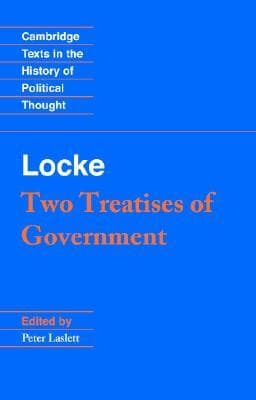
Two Treatises of Government cover
Archivist's Choice

Two Treatises of Government

John Locke

Genre

Politics / History / Economics / Philosophy

Reading Time

16-20 hours (for careful study)

Key Themes

See below

Track Your Reading

Sign in to track this book

This revised edition explores John Locke's foundational arguments for legitimate government and individual rights, updated with recent scholarship on his influential ideas.

Core Idea

John Locke's "Two Treatises of Government" argues against absolute monarchy. It proposes that government should come from the consent of the governed and protect citizens' natural rights. Locke believed individuals have inherent rights to life, liberty, and property, even without government. People form civil society to better secure these rights. Government is a trust established by the people, limited by law, and legitimate only with their ongoing consent. If a government breaks this trust by violating natural rights or acting without consent, the people have the right to resist and form a new government. The second treatise details a theory of political power. It states that legitimate government comes from a social contract where people give up some powers for the common good, while keeping their basic natural rights. It introduces the labor theory of property, which says that individuals gain ownership by mixing their work with natural resources. Locke advocates for a government bound by law, accountable to the people, and suggests a separation of powers to prevent tyranny. This makes it a key text for modern democratic thought and revolutionary movements.
Reading time
16-20 hours (for careful study)
Difficulty
Hard
✓ Read this if...
You want to understand the philosophical bedrock of modern liberal democracy, natural rights, and the justification for revolution against tyrannical governments. Essential for students of political philosophy, history, and law.
✗ Skip this if...
You are looking for a light read or a modern political analysis; this is dense 17th-century philosophy with specific historical context (e.g., critique of Robert Filmer).

Core idea

The central argument and framework that powers the entire book.

John Locke's "Two Treatises of Government" argues against absolute monarchy. It proposes that government should come from the consent of the governed and protect citizens' natural rights. Locke believed individuals have inherent rights to life, liberty, and property, even without government. People form civil society to better secure these rights. Government is a trust established by the people, limited by law, and legitimate only with their ongoing consent. If a government breaks this trust by violating natural rights or acting without consent, the people have the right to resist and form a new government.

The second treatise details a theory of political power. It states that legitimate government comes from a social contract where people give up some powers for the common good, while keeping their basic natural rights. It introduces the labor theory of property, which says that individuals gain ownership by mixing their work with natural resources. Locke advocates for a government bound by law, accountable to the people, and suggests a separation of powers to prevent tyranny. This makes it a key text for modern democratic thought and revolutionary movements.

At a glance

Reading time

16-20 hours (for careful study)

Difficulty

Hard

Read this if...

You want to understand the philosophical bedrock of modern liberal democracy, natural rights, and the justification for revolution against tyrannical governments. Essential for students of political philosophy, history, and law.

Skip this if...

You are looking for a light read or a modern political analysis; this is dense 17th-century philosophy with specific historical context (e.g., critique of Robert Filmer).

Key Takeaways

1

Natural Rights Precede Government

Individuals possess inherent rights to life, liberty, and property independent of any state.

Quote

The state of nature has a law of nature to govern it, which obliges every one: and reason, which is that law, teaches all mankind, who will but consult it, that being all equal and independent, no one ought to harm another in his life, health, liberty, or possessions.

Locke argues that before government, humans live in a 'state of nature.' There, they are free, equal, and guided by the 'law of nature'—which is reason. This law says no one should harm another's life, health, liberty, or possessions. These rights are inherent, not given by rulers or societies. The right to property, for instance, comes from an individual's labor mixing with common resources, making that resource their own. This idea changed political thought from divine right of kings to a focus on individual rights that government m...

Supporting evidence

Locke's detailed exposition in Chapter II of the Second Treatise, 'Of the State of Nature,' where he systematically outlines the conditions and laws governing individuals prior to civil society.

Apply this

When evaluating government actions, consider whether they uphold or infringe upon fundamental individual rights to life, liberty, and property. Advocate for policies that secure these rights rather than those that seek to control or diminish them.


state-of-naturenatural-lawindividual-rightsproperty-rights
2

Government by Consent of the Governed

Legitimate political authority derives solely from the explicit or tacit agreement of the people.

Quote

Men being, as has been said, by nature, all free, equal, and independent, no one can be put out of this estate, and subjected to the political power of another, without his own consent.

Locke states that people leave the state of nature and form civil society to better protect their natural rights, especially property. This move is voluntary, based on each person's consent. Therefore, government's legitimacy comes directly from the people's agreement to be governed. This consent can be explicit, through direct agreement, or tacit, by enjoying government benefits like owning property or using public roads. This principle rejects absolute monarchy and divine right, making the people the ultimate source of power and cha...

Supporting evidence

Locke's discussion in Chapter VIII of the Second Treatise, 'Of the Beginning of Political Societies,' where he details how individuals unite and consent to form a commonwealth, and the nature of tacit consent.

Apply this

Actively participate in democratic processes like voting, advocacy, and civic discourse to ensure that government remains accountable and reflective of the people's will. Question policies that lack broad public support or are imposed without sufficient consultation.

social-contractconsent-of-governedpolitical-legitimacypopular-sovereignty
3

Limited Government and Rule of Law

Government's power must be constrained by established laws and focused on protecting natural rights.

Quote

Absolute arbitrary power, or governing without settled standing laws, can neither consist with the ends of society and government, which are the preservation of property, nor be tolerable by a free people.

For Locke, government's main purpose is not to have absolute power, but to protect citizens' natural rights, especially their property. To do this, government must operate under known, established laws, applied fairly to everyone, rather than arbitrary commands. This 'rule of law' means both the governed and governors are subject to the same laws, preventing tyranny and ensuring fairness. Any government that acts outside these limits, or tries to arbitrarily violate rights, breaks its purpose and loses its legitimacy. This idea suppor...

Supporting evidence

Locke's argument in Chapter XI of the Second Treatise, 'Of the Extent of the Legislative Power,' where he outlines the fundamental limits on legislative authority, including governing by promulgated standing laws and not by arbitrary decrees.

Apply this

Support constitutional frameworks that define and limit governmental powers. Advocate for judicial independence and transparent legal processes that ensure laws are applied fairly and consistently to all citizens, including those in power.

rule-of-lawconstitutionalismlimited-governmenttyranny-prevention
4

Right to Revolution

Citizens have the right, and sometimes the duty, to overthrow a tyrannical government.

Quote

Whenever the legislators endeavour to take away, and destroy the property of the people, or to reduce them to slavery under arbitrary power, they put themselves into a state of war with the people, who are thereupon absolved from any farther obedience.

If a government consistently fails to protect its citizens' natural rights, particularly their property and liberty, or if it betrays the trust placed in it, it becomes tyrannical. In such a situation, the people are no longer obligated to obey. They have the right to resist and even overthrow that government to create a new one that will uphold their rights. This is a last resort when rulers have fundamentally broken the social contract. This idea greatly influenced later revolutions, including the American and French Revolutions, by...

Supporting evidence

Locke's powerful concluding chapters, XIX ('Of the Dissolution of Government'), where he articulates the conditions under which a government is dissolved and the people regain their right to establish a new legislative power.

Apply this

Engage in peaceful protest and civil disobedience when government actions are perceived as tyrannical or unjust. Understand that the right to revolution is a grave last resort, emphasizing the importance of robust democratic checks and balances to prevent such a scenario.

tyrannysocial-contract-breachjustified-rebellionpopular-resistance
5

Separation of Powers (Implicit)

Government functions should be divided to prevent the concentration of absolute authority.

Quote

It may be too great a temptation to human frailty, apt to grasp at power, for the same persons, who have the power of making laws, to have also in their hands the power to execute them.

While not as detailed as Montesquieu's later ideas, Locke clearly identifies separate governmental powers: legislative, executive, and federative (foreign policy and war/peace). He argues against combining legislative and executive powers, recognizing that people tend to abuse power. If those who make laws also enforce them, they might exempt themselves or tailor laws for their own benefit. This separation, especially between law-making and law-enforcing, is essential for preventing arbitrary rule and protecting liberty. It is a corne...

Supporting evidence

Locke's analysis in Chapter XII of the Second Treatise, 'Of the Legislative, Executive, and Federative Power of the Commonwealth,' where he distinguishes these powers and argues for their separation, particularly the legislative and executive.

Apply this

Advocate for institutional designs that ensure checks and balances between different branches of government. Pay attention to proposed legislation or executive orders that could consolidate too much power in one branch or individual.

checks-and-balanceslegislative-powerexecutive-powerprevention-of-tyranny
6

Labor Theory of Property

Individuals acquire ownership of resources by mixing their labor with them.

Quote

Every man has a property in his own person: this no body has any right to but himself. The labour of his body, and the work of his hands, we may say, are properly his. Whatsoever then he removes out of the state that nature hath provided, and left it in, he hath mixed his labour with, and joined to it something that is his own, and thereby makes it his property.

Locke's theory of property is central to his political philosophy. He argues that God initially gave the Earth to all humanity. However, individuals get private property by applying their labor to common resources. When a person harvests fruit, farms land, or hunts, their effort 'mixes' with the natural resource, making it their own. This property right is natural and exists before government. Locke also includes conditions: one should only take what one can use (the 'spoilage proviso') and leave 'enough, and as good' for others (the ...

Supporting evidence

Locke's detailed explanation in Chapter V of the Second Treatise, 'Of Property,' where he systematically builds the case for private property originating from individual labor.

Apply this

Reflect on how your labor creates value and ownership. Consider the ethical implications of resource allocation and consumption, particularly regarding the 'enough and as good' proviso in a world of finite resources.

labor-valueprivate-propertyspoilage-provisosufficiency-proviso
7

Trust as the Basis of Governance

Government is a fiduciary trust, holding power on behalf of the people for their benefit.

Quote

The legislative acts against the trust reposed in them, when they endeavour to invade the property of the subject, and to make themselves, or any part of the community, masters, or arbitrary disposers of the lives, liberties, or fortunes of the people.

Locke sees government not as a master, but as a trustee. The people give power to their rulers, not for arbitrary rule, but specifically to protect their natural rights and promote the common good. This 'fiduciary trust' means power is conditionally granted and can be taken back if the government abuses its authority or acts against the people's interests. This idea emphasizes government's accountability to its citizens and reinforces that political power is a delegated responsibility, not an inherent right of rulers. It's a strong fr...

Supporting evidence

Locke's repeated use of the concept of 'trust' throughout the Second Treatise, particularly in Chapter XIII ('Of the Subordination of the Powers of the Commonwealth') and Chapter XIX ('Of the Dissolution of Government'), where he outlines how breaches of trust lead to dissolution.

Apply this

Hold elected officials and government agencies accountable for their actions. Demand transparency and ethical conduct, recognizing that public office is a trust, not a personal entitlement. Support independent oversight bodies.

fiduciary-dutygovernmental-accountabilitypublic-trustconditional-power
8

Reason as the Guiding Principle

Human reason is the foundation of natural law and the path to understanding just governance.

Quote

Reason, which is that law, teaches all mankind, who will but consult it, that being all equal and independent, no one ought to harm another in his life, health, liberty, or possessions.

Locke trusts human reason as the faculty that lets individuals understand the 'law of nature' and their rights and duties. In the state of nature, reason is the only guide, stating that all are equal and independent and should not harm each other. Even after civil society forms, reason is still important for interpreting laws, making moral judgments, and evaluating government actions. This focus on reason differs greatly from relying on divine revelation or inherited authority as the only basis for political order. It empowers individ...

Supporting evidence

Locke's opening arguments in the Second Treatise, particularly Chapter II, where he defines the law of nature as 'reason' and explains its binding force on all individuals.

Apply this

Cultivate critical thinking skills and engage in rational discourse when discussing political and social issues. Base arguments on logical principles and evidence rather than emotion or unquestioned authority.

enlightenmentrationalitynatural-reasoncritical-thought
9

Critique of Absolute Monarchy

Absolute monarchy is fundamentally incompatible with civil society and the protection of rights.

Quote

Absolute monarchy, which by some men is counted the only government in the world, is indeed inconsistent with civil society, and so can be no form of civil government at all.

A main goal of Locke's work, especially the First Treatise, was to dismantle Robert Filmer's theory of divine right of kings. In the Second Treatise, Locke argues that absolute monarchy is flawed because it places the monarch above the law. This leaves citizens without an impartial judge or recourse against the ruler's arbitrary will. In such a system, the monarch remains in a 'state of nature' relative to their subjects, with no higher authority to appeal to. This makes absolute monarchy worse than the state of nature, as there is no...

Supporting evidence

Locke's direct refutation of absolute monarchy in Chapter VII of the Second Treatise, 'Of Political or Civil Society,' where he argues that it cannot be a form of civil government.

Apply this

Be wary of any political system or leader that seeks to consolidate absolute power or place themselves above the law. Support institutions and norms that ensure no individual is beyond accountability.

divine-right-of-kingsabsolutismtyrannical-rulestate-of-war
10

The Purpose of Law

Laws are designed to preserve and enlarge freedom, not to restrict it arbitrarily.

Quote

For in all the states of created beings capable of laws, where there is no law, there is no freedom. For liberty is to be free from restraint and violence from others; which cannot be where there is no law.

Locke challenges the common idea that law restricts freedom. Instead, he argues that true freedom is impossible without law. Without law, individuals are subject to others' arbitrary will and violence, leading to an insecure existence. Just laws, however, define and protect the boundaries within which individuals can exercise their liberty without violating others' rights. They provide security and predictability, thus expanding, not lessening, individual freedom. Law's purpose is to guide rational beings toward their true interest, w...

Supporting evidence

Locke's explanation in Chapter VI of the Second Treatise, 'Of Paternal Power,' where he famously states, 'where there is no law, there is no freedom,' and elaborates on the relationship between law and liberty.

Apply this

Support laws that are clear, just, and apply equally to all, as these foster true liberty. Critically examine laws that appear to arbitrarily restrict freedoms without a clear benefit to the common good or protection of rights.

rule-of-lawnegative-libertylegal-frameworksecurity-and-freedom

Critical analysis

Notable Quotes

The great and chief end, therefore, of men uniting into commonwealths, and putting themselves under government, is the preservation of their property.

Explaining the primary purpose of civil society and government.

But though this be a state of liberty, yet it is not a state of licence.

Describing the state of nature as one of freedom but not without moral bounds.

Where-ever law ends, tyranny begins.

Warning against the abuse of power and the importance of rule of law.

Every man has a property in his own person: this nobody has any right to but himself.

Asserting the fundamental right to self-ownership.

For nobody can transfer to another more power than he has in himself.

Arguing against absolute monarchy and the limits of governmental power.

Rebellion being an opposition, not to persons, but to authority, which is founded only in the constitutions and laws of the government.

Justifying the right of the people to resist tyrannical rule.

Reason, which is that law, teaches all mankind, who will but consult it, that being all equal and independent, no one ought to harm another in his life, health, liberty, or possessions.

Defining the law of nature and its implications for human interaction.

The end of law is not to abolish or restrain, but to preserve and enlarge freedom.

Explaining the true purpose of law in a free society.

For without property, there can be no society.

Highlighting the foundational role of property in the formation and stability of society.

The legislative cannot transfer the power of making laws to any other hands.

Emphasizing the principle of legislative supremacy and the non-delegation of power.

And thus, in the beginning, all the world was America.

Referring to the abundance of land and resources in the early state of nature, drawing a parallel to the Americas.

To understand political power right, and derive it from its original, we must consider, what state all men are naturally in.

Setting the stage for the discussion of the state of nature as the basis for political theory.

As usurpation is the exercise of power, which another has a right to; so tyranny is the exercise of power beyond right, which nobody can have a right to.

Distinguishing between usurpation and tyranny, both forms of illegitimate power.

For a man, not having the power of his own life, cannot, by compact, or his own consent, enslave himself to any one, nor put himself under the absolute, arbitrary power of another.

Arguing against the possibility of legitimate self-enslavement or absolute submission.

Quiz

Test Your Knowledge

Ready to see how well you understood this book? Take our interactive quiz with 10 questions.

10
Questions
~5
Minutes
?
Best Score

Key Questions (FAQ)

Locke's core argument asserts that legitimate government is derived from the consent of the governed and is obligated to protect natural rights, primarily life, liberty, and property. He posits a state of nature governed by natural law and argues that government's failure to uphold these rights justifies revolution.

About the author