BookBrief
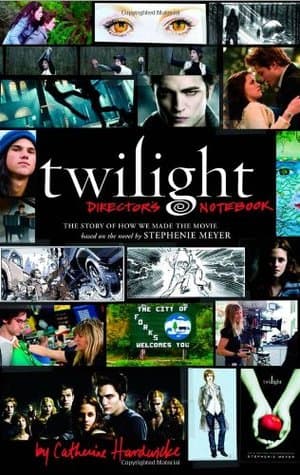
Twilight Director's Notebook: The Story of How We Made the Movie Based on the Novel by Stephenie Meyer cover
Archivist's Choice

Twilight Director's Notebook: The Story of How We Made the Movie Based on the Novel by Stephenie Meyer

Catherine Hardwicke (2009)

Genre

Reference / Young Adult / Romance

Reading Time

12 Minutes

Key Themes

See below

Track Your Reading

Sign in to track this book

Director Catherine Hardwicke offers an intimate look into her creative process, using sketches, photos, and personal notes to show how she brought *Twilight* to the screen.

Core Idea

Catherine Hardwicke's "Twilight Director's Notebook" offers an intimate, behind-the-scenes look at the creative and logistical challenges of adapting Stephenie Meyer's bestselling novel into a major motion picture. Through candid notes, storyboards, photos, and personal reflections, Hardwicke reveals her vision for bringing the iconic characters and supernatural romance to life on screen, detailing the collaborative process with cast and crew, and the pressures of meeting fan expectations while maintaining artistic integrity. The book serves as both a director's journal and a practical guide to filmmaking, illustrating how a director navigates the complexities of pre-production, principal photography, and post-production under tight deadlines and intense scrutiny.
Difficulty
Easy

Core idea

The central argument and framework that powers the entire book.

Catherine Hardwicke's "Twilight Director's Notebook" offers an intimate, behind-the-scenes look at the creative and logistical challenges of adapting Stephenie Meyer's bestselling novel into a major motion picture. Through candid notes, storyboards, photos, and personal reflections, Hardwicke reveals her vision for bringing the iconic characters and supernatural romance to life on screen, detailing the collaborative process with cast and crew, and the pressures of meeting fan expectations while maintaining artistic integrity. The book serves as both a director's journal and a practical guide to filmmaking, illustrating how a director navigates the complexities of pre-production, principal photography, and post-production under tight deadlines and intense scrutiny.

At a glance

Difficulty

Easy

Key Takeaways

1

Visionary Adaptation Under Pressure

Hardwicke's unique visual style was crucial in translating the novel's mood to screen.

Quote

I wanted to make sure the film felt gritty and real, almost like a documentary, even with vampires and werewolves.

Hardwicke's notebook shows her careful process for turning Stephenie Meyer's novel into a film, often with tight deadlines and small budgets. She focused on 'gritty realism' and a natural look, especially for the Pacific Northwest setting, to make the fantastical elements feel real. She explains how specific camera angles, handheld shots, and natural light created an intimate, almost voyeuristic feel, drawing the audience into Bella's view. This method, documented with sketches and notes, shows her dedication to capturing the book's e...

Supporting evidence

Hardwicke's sketches and notes on framing the forest scenes, her detailed plans for using natural light, and her rationale for the 'documentary' feel of the cinematography.

Apply this

For aspiring filmmakers, this demonstrates the importance of developing a strong personal visual style and a clear artistic vision, even when working with established franchises.

2

The Art of Casting Chemistry

Finding the perfect Bella and Edward was a painstaking process driven by instinct and screen tests.

Quote

The chemistry between Kristen and Rob was undeniable from their first screen test. It was electric.

The notebook spends much space on casting, especially for Bella Swan and Edward Cullen. Hardwicke describes the extensive search and many auditions, saying that 'chemistry' was the main factor. She explains how Kristen Stewart's natural awkwardness and vulnerability fit Bella, while Robert Pattinson's intensity and charm captured Edward's mysterious appeal. The book includes personal stories and photos from their first screen tests, showing how a director's instinct, with practical observation, leads to memorable casting. This shows t...

Supporting evidence

Photos and notes from the screen tests of Kristen Stewart and Robert Pattinson, Hardwicke's personal commentary on their immediate chemistry.

Apply this

In any collaborative creative project, prioritizing genuine chemistry and interpersonal dynamics among key players can significantly enhance the final product's impact.

3

Budgetary Ingenuity and Constraints

Limited resources forced creative solutions that defined the film's aesthetic.

Quote

We had to be incredibly resourceful. Every dollar counted, and it pushed us to be more inventive.

A repeated idea in Hardwicke's notes is the constant struggle with a small budget and a very short production schedule. She openly shares how these limits often guided creative choices, from costumes to special effects. For example, the 'sparkling' effect for vampires was made with practical effects and clever lighting, not expensive CGI, giving it a unique, ethereal quality. Likewise, location scouting was heavily influenced by cost and access. This shows that limited resources, while hard, can often lead to great creativity and dist...

Supporting evidence

Notes on the development of the 'sparkling' effect using mica and specific lighting setups, discussions about shooting locations based on budget, and the rapid production timeline.

Apply this

Creatives facing budget restrictions should view them as opportunities for innovation and problem-solving, rather than insurmountable obstacles. Simplicity can often be more impactful.

4

Collaborative World-Building

The director fostered a highly collaborative environment with her crew and actors.

Quote

I encouraged everyone to bring their ideas to the table. Filmmaking is a team sport.

Hardwicke's notebook is not just her thoughts; it shows her belief in working together. She often mentions talks with her production designer, costume designer, cinematographer, and even the actors, showing how their ideas shaped the film world. For example, the design of the Cullen house or Bella's clothes were often improved through group brainstorming. This approach gave the crew a sense of ownership, letting individual talents grow and contribute to a unified vision. This shows the strength of a director who trusts and empowers he...

Supporting evidence

Sketches with multiple annotations from different crew members, notes on collaborative meetings for set design and character looks, and anecdotes about actors contributing to their characters' physicality.

Apply this

Leaders in any field can benefit from fostering a truly collaborative environment, recognizing that diverse perspectives often lead to richer, more robust outcomes.

5

Storyboarding as a Language

Detailed visual planning was essential for complex sequences and maintaining narrative flow.

Quote

Storyboards are my blueprint. They allow me to pre-visualize every shot and communicate my intentions clearly.

The book is full of Hardwicke's hand-drawn storyboards, offering a look into her planning process. She carefully planned key action scenes, like the baseball game and the final fight with James, panel by panel. These detailed drawings, often with notes on camera movement, actor positions, and emotional beats, were a valuable communication tool for her crew. This dedication to thorough storyboarding ensured that even with tight deadlines, the story flowed well and the visual impact was strong. It shows that good planning is not a limit...

Supporting evidence

Numerous pages of detailed, hand-drawn storyboards for critical scenes, with accompanying notes on camera angles and actor movements.

Apply this

For any project requiring complex execution, pre-visualization tools like storyboards or detailed outlines can streamline the process, prevent miscommunications, and save time and resources.

6

Capturing Raw Emotion

Hardwicke prioritized the visceral, often awkward, emotions of first love.

Quote

I wanted to feel Bella's heart racing, her awkwardness, her complete obsession. It had to be raw.

Hardwicke's notes often highlight her goal of showing the intense, sometimes uncomfortable, emotions of teenage first love and obsession. She explains how she worked with Stewart and Pattinson to show Bella's shyness, Edward's conflicting desire, and their strong pull toward each other. Her use of close-ups, intimate camera work, and specific lighting choices all aimed to amplify these raw feelings. This focus on real emotions, not just plot, is a main reason why the film connected so deeply with its young adult audience, who recogniz...

Supporting evidence

Notes on directing actors for specific emotional responses, discussions about camera proximity to capture intimacy, and the use of music cues to enhance emotional impact.

Apply this

When creating content for a specific audience, understanding and authentically portraying their core emotional experiences is crucial for resonance and engagement.

7

The Power of Sound and Music

Hardwicke's attention to auditory details enhanced the film's atmosphere and emotional depth.

Quote

Sound is half the movie. The right score, the right sound effects, they build the world and the tension.

While mainly a visual document, the notebook also touches on Hardwicke's awareness of sound and music. She discusses early ideas for the film's score, emphasizing its role in the moody atmosphere and romantic tension. Specific sound effects, like Edward's distinct 'thump' when landing or the subtle forest sounds, were carefully planned to immerse the audience further into Bella's sensory experience. This attention to the auditory world shows a complete approach to filmmaking, recognizing that sound design is not just background but an...

Supporting evidence

Notes on desired musical themes, mentions of specific sound effects for vampire abilities or environmental ambience, and discussions with the sound designer.

Apply this

Creators should consider all sensory elements of their work, recognizing that sound, music, and even silence can profoundly impact audience perception and emotional engagement.

8

Practical Effects and Authenticity

Hardwicke favored practical effects to maintain a grounded and believable world.

Quote

Wherever possible, I wanted to do things practically. It just feels more real on screen.

The director's preference for practical effects over extensive CGI is clear throughout her notes. From the wirework for vampire jumps to the physical sets for the forest and school, Hardwicke believed that tangible elements contributed to the film's grounded look. This approach not only saved money but also allowed actors to interact with their environment more authentically, leading to more believable performances. The details on how the 'sparkling' effect was achieved with practical elements, not just digital rendering, show this co...

Supporting evidence

Descriptions of wirework for stunt sequences, details on creating the 'sparkling' effect with physical materials, and notes on building practical sets.

Apply this

When aiming for realism or a specific aesthetic, prioritizing practical effects and tangible elements can often yield more believable and impactful results than purely digital solutions.

9

The Director's Personal Touch

The notebook itself is a testament to Hardwicke's hands-on and intimate directorial style.

Quote

This notebook was my constant companion, a place for every idea, every challenge, every inspiration.

The book's format—a copy of Hardwicke's personal, hand-annotated notebook—is a key takeaway itself. It gives an unfiltered, intimate look into a director's mind, showing her thought process, struggles, and inspirations. The messy sketches, handwritten notes, and taped-in photos all convey raw creativity and a deep personal investment in the project. This differs from more polished 'making-of' books, offering a genuine insight into the often-chaotic but rewarding journey of bringing a vision to life. It shows that great art often comes...

Supporting evidence

The entire structure of the book as a replica of her personal notebook, filled with handwritten notes, sketches, and personal photos.

Apply this

For creators, maintaining a personal journal or 'notebook' for ideas, challenges, and inspirations can be an invaluable tool for clarifying vision and documenting growth.

10

Navigating Fan Expectations

Balancing loyalty to the source material with cinematic necessities was a constant tightrope walk.

Quote

You have to honor the book, but you also have to make a good movie. It's a delicate balance.

Hardwicke's notes implicitly and explicitly discuss the challenge of adapting a popular novel with a large, passionate fanbase. She details moments where creative decisions had to be made that differed slightly from the book for pacing, visual impact, or budget reasons, but always with an eye toward keeping the spirit and key moments. This constant balance between loyalty to the source and the demands of filmmaking is a central tension in any adaptation. Her success is in capturing the feeling of the book, even if specific details c...

Supporting evidence

Discussions on condensing certain book scenes, altering minor plot points for cinematic flow, and the rationale behind specific visual interpretations of key moments.

Apply this

When adapting any existing work, understand the core essence that resonates with the audience and prioritize translating that, rather than getting bogged down by literal replication of every detail.

Critical analysis

Notable Quotes

Quiz

Test Your Knowledge

Ready to see how well you understood this book? Take our interactive quiz with 10 questions.

10
Questions
~5
Minutes
?
Best Score

Key Questions (FAQ)

This book offers a behind-the-scenes look at the making of the Twilight movie, as documented by director Catherine Hardwicke. It includes her personal notes, sketches, and photographs from the production process.

About the author