BookBrief
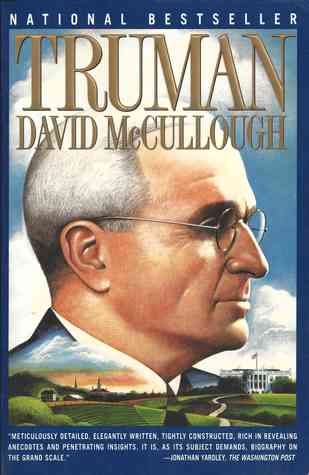
Truman cover
Archivist's Choice

Truman

David McCullough (1992)

Genre

Politics / Biography / History

Reading Time

25-35 hours

Key Themes

See below

Track Your Reading

Sign in to track this book

From a Missouri farm to the Oval Office, Harry S. Truman unexpectedly faced the atomic age, the start of the Cold War, and the Korean conflict, showing a courageous resolve that reshaped the 20th century.

Core Idea

David McCullough's "Truman" shows Harry S. Truman as a human figure whose unexpected rise to the presidency during a global crisis required Midwestern practicality, integrity, and the courage to make major decisions. The book argues that Truman's humble beginnings, his strong sense of duty, and his direct character allowed him to manage the end of World War II, the start of the Cold War, and the challenges of rebuilding a shattered world. He shaped the modern international order through actions like the Marshall Plan and the decision to use the atomic bomb. The book highlights the personal burden and moral strength needed to lead with integrity and vision amid great uncertainty and opposition, establishing Truman's legacy as an ordinary man who achieved extraordinary things through character and commitment to what he believed was right.
Reading time
25-35 hours
Difficulty
Medium
✓ Read this if...
You want a comprehensive, deeply human biography of a pivotal 20th-century leader, exploring the immense personal and political burdens of the presidency during a time of global upheaval, and appreciate detailed historical narrative.
✗ Skip this if...
You prefer concise, thematic non-fiction over lengthy biographical detail, or are looking for a critical re-evaluation of Truman's policies rather than a largely sympathetic portrayal of his life and leadership.

Core idea

The central argument and framework that powers the entire book.

David McCullough's "Truman" shows Harry S. Truman as a human figure whose unexpected rise to the presidency during a global crisis required Midwestern practicality, integrity, and the courage to make major decisions. The book argues that Truman's humble beginnings, his strong sense of duty, and his direct character allowed him to manage the end of World War II, the start of the Cold War, and the challenges of rebuilding a shattered world. He shaped the modern international order through actions like the Marshall Plan and the decision to use the atomic bomb. The book highlights the personal burden and moral strength needed to lead with integrity and vision amid great uncertainty and opposition, establishing Truman's legacy as an ordinary man who achieved extraordinary things through character and commitment to what he believed was right.

At a glance

Reading time

25-35 hours

Difficulty

Medium

Read this if...

You want a comprehensive, deeply human biography of a pivotal 20th-century leader, exploring the immense personal and political burdens of the presidency during a time of global upheaval, and appreciate detailed historical narrative.

Skip this if...

You prefer concise, thematic non-fiction over lengthy biographical detail, or are looking for a critical re-evaluation of Truman's policies rather than a largely sympathetic portrayal of his life and leadership.

Key Takeaways

1

The Burden of Unexpected Leadership

Greatness can be thrust upon the unprepared, demanding immense personal growth.

Quote

The world was suddenly on my shoulders. I felt like the moon, the stars, and all the planets had fallen on me.

Truman's rise to the presidency after Roosevelt's sudden death shows that leadership often comes unexpectedly and without preparation. Thrust into office during the final months of World War II and the start of the Cold War, Truman felt overwhelmed. McCullough vividly describes his initial insecurity and the immense weight of decisions, from the atomic bomb to Europe's post-war rebuilding. This period shows that personal character, a strong moral compass, and a willingness to learn under pressure are more important than prior experien...

Supporting evidence

Truman's immediate briefing on the Manhattan Project, a secret he was entirely unaware of as Vice President, and his subsequent decision to use the atomic bomb, exemplify the sudden, monumental responsibilities he inherited.

Apply this

Embrace unexpected challenges as opportunities for growth. Cultivate a strong ethical foundation and a continuous learning mindset, as these qualities are invaluable when unforeseen leadership roles emerge. Prepare yourself not for a specific role, but for adaptability.

accidental-presidencyleadership-under-duresscharacter-in-crisis
2

Decisive Action in the Face of Uncertainty

Truman's presidency was defined by a willingness to make unpopular, high-stakes decisions.

Quote

It is amazing what you can accomplish if you do not care who gets the credit.

McCullough shows Truman's consistent pattern of making tough, often unpopular, decisions and standing by them, even under intense criticism. From the atomic bombings to the Berlin Airlift, the Marshall Plan, the recognition of Israel, the intervention in Korea, and the firing of General MacArthur, Truman repeatedly showed duty over personal popularity. He understood that leadership, especially during global change, required conviction and a readiness to face public and political backlash. This resolve, from his Missouri practicality, ...

Supporting evidence

The decision to drop the atomic bomb, a choice fraught with moral and strategic complexities, and the subsequent public and international debate it generated, exemplifies Truman's willingness to make an agonizing decision he believed was necessary to end the war and save lives.

Apply this

Develop the courage to make difficult decisions based on conviction and thorough analysis, rather than seeking popular approval. Understand that true leadership often requires standing firm against opposition, especially when the stakes are high.

presidential-couragedecisive-leadershipmoral-dilemmas
3

The Power of a Humble Background

Ordinary origins can forge extraordinary resilience and a deep connection to the common person.

Quote

I never gave anybody hell! I just told the truth and they thought it was hell.

Truman's life story shows how an ordinary upbringing can create the qualities needed for extraordinary leadership. His Missouri farm background, World War I service, business struggles, and entry into politics through the Pendergast machine all gave him a grounded, no-nonsense view. McCullough highlights how these experiences created empathy for the average American, a plainspoken communication style, and an unpretentious manner. This humility and relatable quality, rather than polish, made him popular and helped him connect with vote...

Supporting evidence

His 'whistle-stop' campaign of 1948, where he traveled the country by train, speaking directly to ordinary citizens from the back of his railcar, contrasted sharply with his opponent's more conventional approach and was pivotal in his unexpected victory.

Apply this

Don't underestimate the strength derived from humble beginnings. Cultivate authenticity, direct communication, and an understanding of everyday struggles, as these can be powerful assets in leadership and connection.

humble-originsauthentic-leadershiprelatability
4

Integrity Amidst Political Machines

Maintaining personal honesty is possible even within corrupt political structures.

Quote

I don't think I ever went into a political deal that I didn't keep my word.

McCullough reveals Truman's complex relationship with the Pendergast political machine in Kansas City. While he used its support to enter politics, Truman remained remarkably free of corruption, a rare feat in such an environment. He navigated a system full of patronage and graft, yet kept his personal integrity and reputation for honesty. This shows that one can work within imperfect systems, using their power for good, without falling to their negative aspects. Truman's ability to rise while largely keeping his ethical compass is a ...

Supporting evidence

Despite his association with the Pendergast machine, Truman's personal financial records and conduct as a county judge and later as a senator were consistently found to be clean, a stark contrast to many of his contemporaries within the machine.

Apply this

Identify your non-negotiable ethical boundaries. Understand that participation in imperfect systems can be a pathway to influence, but only if you maintain vigilance over your own integrity and actions.

political-ethicspersonal-integritynavigating-corruption
5

The Power of Historical Perspective

A deep understanding of history provides context and wisdom for contemporary challenges.

Quote

There is nothing new in the world except the history you do not know.

Truman was an avid history reader, a passion McCullough emphasizes as key to his decision-making. Unlike many politicians who focus only on immediate concerns, Truman's extensive knowledge of past events, biographies, and global conflicts gave him a broader framework for understanding the post-war world. This historical grounding helped him see patterns, predict consequences, and avoid past mistakes. His understanding of European history, for instance, informed his support for the Marshall Plan, recognizing the dangers of economic ins...

Supporting evidence

Truman's personal library was extensive, filled with historical texts. His frequent references to historical figures and events in his speeches and private correspondence demonstrate how deeply history informed his worldview and policy decisions.

Apply this

Cultivate a lifelong habit of reading and studying history. Understand that current events are rarely unprecedented and that historical context can illuminate pathways forward and highlight potential pitfalls.

historical-literacyinformed-decision-makingwisdom-through-history
6

Loyalty and Its Limits

While essential, loyalty must be balanced with the greater good and the need for decisive action.

Quote

You don't just pick up a general and throw him out. You've got to be sure you're right.

The dramatic firing of General Douglas MacArthur during the Korean War is a key moment in Truman's presidency, showing the complex interaction between loyalty and leadership. Truman initially admired MacArthur, but when the general publicly challenged presidential authority and risked the war effort and international relations, Truman made the difficult decision to remove him. This act, though very unpopular at the time, cemented the principle of civilian control over the military and showed Truman's willingness to prioritize national...

Supporting evidence

The public dispute and subsequent firing of General MacArthur, despite MacArthur's immense popularity and heroic status, due to his insubordination regarding the conduct of the Korean War and his public criticisms of presidential policy.

Apply this

Understand that loyalty is a two-way street and must be tempered by the demands of a larger mission. Be prepared to make difficult personnel decisions when an individual's actions undermine organizational goals or authority, regardless of their past contributions or popularity.

civilian-controlleadership-accountabilitydifficult-personnel-decisions
7

The Weight of the Presidency

The highest office demands immense personal sacrifice and carries an unparalleled psychological toll.

Quote

Being a President is like riding a tiger. You have to keep riding or be swallowed.

McCullough shows the immense personal cost the presidency had on Truman. Despite his public 'give 'em hell' persona, the book reveals a man who deeply carried the burdens of his decisions. The isolation of the office, constant criticism, sleepless nights spent agonizing over global choices, and strain on his family life are all detailed. This emphasizes that leadership at the highest level is not just about policy and power, but about the profound human cost of constant responsibility and the mental strength needed to endure it. Truma...

Supporting evidence

Accounts of Truman's struggles with insomnia, his physical aging during his presidency, and the constant stress on his relationship with his wife Bess, who often found the public scrutiny unbearable.

Apply this

Recognize that high-level leadership roles demand significant personal sacrifice. Develop coping mechanisms, a strong support system, and a clear understanding of the 'why' behind your efforts to sustain yourself through immense pressure.

presidential-stressleadership-burdenpersonal-sacrifice
8

Vision for a New World Order

Truman laid the groundwork for the modern international system and American global leadership.

Quote

The free peoples of the world look to us for support in maintaining their freedoms.

Beyond simply reacting to crises, Truman's administration was foundational in shaping the post-World War II global landscape. McCullough credits him with starting key policies and institutions that defined the Cold War era and beyond. The Truman Doctrine, the Marshall Plan, the formation of NATO, and support for the United Nations were not just quick responses but parts of a clear vision for containing communism, rebuilding economies, and promoting collective security. These initiatives established America's role as a global superpowe...

Supporting evidence

The implementation of the Marshall Plan, which poured billions of dollars into rebuilding war-torn Europe, and the creation of NATO, a military alliance designed to deter Soviet aggression, are prime examples of Truman's long-term strategic vision.

Apply this

Beyond immediate problem-solving, cultivate a long-term strategic vision for the institutions or communities you lead. Understand that foundational decisions made today can have ripple effects for decades or even centuries.

post-war-reconstructioncold-war-originsamerican-global-leadership
9

The Value of Direct Communication

Plainspoken honesty, though sometimes blunt, can be a powerful tool for clarity and connection.

Quote

I never did give anybody hell. I just told the truth and they thought it was hell.

Truman was known for his direct, often blunt, communication style. McCullough often highlights how Truman avoided flowery rhetoric for clear, concise, and often forceful language. While this sometimes caused controversy (e.g., his 'give 'em hell' speeches), it also created a sense of authenticity and trustworthiness. In a political world often muddled by euphemisms and calculated statements, Truman's plainspokenness cut through the noise, allowing him to connect directly with the American people and convey his intentions clearly. This...

Supporting evidence

His famous 'whistle-stop' speeches, delivered extemporaneously from the back of his train, were characterized by their direct address to the concerns of ordinary Americans, contrasting sharply with the more formal, often vague speeches of his opponents.

Apply this

Strive for clarity and directness in your communication. While tact is important, authenticity and plainspoken honesty can build trust and ensure your message is understood, even if it's not always popular.

plainspoken-leadershipauthentic-communicationclarity-in-messaging
10

Legacy and Reassessment

Historical figures are often reevaluated over time, revealing deeper complexities and lasting impact.

Quote

I wonder how many of my successors will be able to say, 'I never lost a war.'

McCullough's biography itself shows the power of historical reassessment. Initially, Truman left office with low approval ratings, often seen as an accidental president who struggled with his role. However, with time, his decisive leadership, foundational foreign policy, and integrity became more appreciated. This emphasizes that initial public perception is rarely history's final judgment. Great leaders often make unpopular decisions at the time that are later recognized as important. McCullough's work played a significant role in im...

Supporting evidence

The sharp contrast between Truman's low approval ratings upon leaving office in 1953 and his significantly elevated status in subsequent historical polls and public opinion, particularly after the release of McCullough's biography.

Apply this

Focus on making sound, ethical decisions based on long-term impact rather than immediate popularity. Understand that true legacy is built over time and often requires patience for its full appreciation.

historical-legacypresidential-rankingreassessment-of-leaders

Critical analysis

Notable Quotes

I felt like the moon, the stars, and all the planets had fallen on me.

Truman's reaction to the news of Roosevelt's death and his sudden ascension to the presidency.

It is amazing what you can accomplish if you do not care who gets the credit.

A common saying of Truman's, reflecting his humble approach to public service.

The buck stops here.

The sign on Truman's desk in the Oval Office, signifying his ultimate accountability.

I have told you that I am not a great man. And I am not. But I have a great job, and I am trying to do it to the best of my ability.

Truman's self-assessment, emphasizing his dedication over personal grandeur.

Men make history and not the other way around. In periods where there is no leadership, society stands still. Progress occurs when courageous, skillful leaders seize the opportunity to change things for the better.

Truman's belief in the power of individual leadership to shape events.

If you can't stand the heat, get out of the kitchen.

Another common Truman saying, reflecting his toughness and expectation of resilience in public office.

A leader is a man who has the ability to get other people to do what they don't want to do, and like it.

Truman's pragmatic view on the art of leadership and persuasion.

I never gave anybody hell. I just told the truth and they thought it was hell.

Truman's defense of his blunt and honest communication style.

It's a cinch to be an ex-president. You don't have to worry about anything.

Truman reflecting on the relief of leaving the demanding office of the presidency.

There is nothing new in the world except the history you do not know.

Truman's emphasis on the importance of studying history to understand current events.

My father told me that it was a man's duty to take care of his family and his country. I have always tried to do both.

Truman reflecting on his personal values and commitment to duty.

We must make the world safe for democracy.

A statement reflecting Truman's foreign policy goals and the post-World War II international landscape.

It is a terrible thing to be an ex-president. You're just a relic.

A more somber reflection from Truman on the transition from power to civilian life.

I am not afraid of the Republicans. I am afraid of the people who think they know everything.

Truman expressing his concern about dogmatism and overconfidence, regardless of political affiliation.

Quiz

Test Your Knowledge

Ready to see how well you understood this book? Take our interactive quiz with 10 questions.

10
Questions
~5
Minutes
?
Best Score

Key Questions (FAQ)

McCullough's 'Truman' offers a comprehensive look into the life and presidency of Harry S. Truman, detailing his journey from the Missouri frontier to the White House. The book emphasizes his character, the momentous decisions he made, and the turbulent era he navigated, revealing a more complex and determined leader than often perceived.

About the author

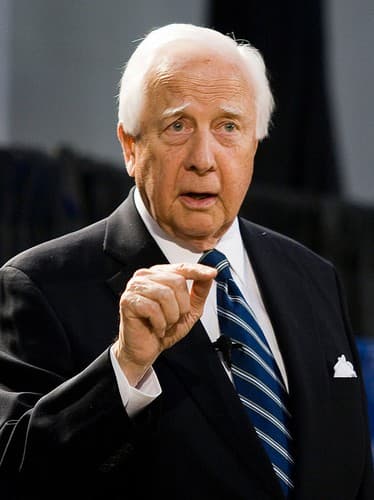
David McCullough

David McCullough was a two-time Pulitzer Prize winner and a recipient of the Presidential Medal of Freedom, celebrated for his vivid historical narratives. His notable works, including "1776," "John Adams," and "Truman," brought American history to life for millions of readers. McCullough's masterful storytelling and meticulous research made him one of the nation's most beloved and respected historians.