BookBrief
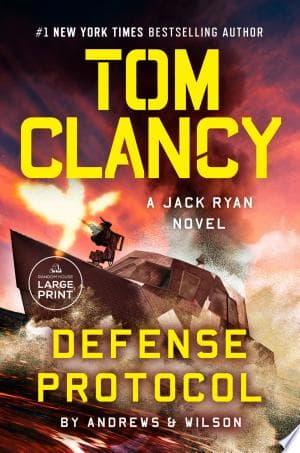
Tom Clancy Defense Protocol cover
Archivist's Choice

Tom Clancy Defense Protocol

Brian Andrews (2024)

Genre

General

Reading Time

12 Minutes

Key Themes

See below

Track Your Reading

Sign in to track this book

When a ruthless Chinese president escalates tensions over Taiwan, a desperate Chinese defense minister risks everything to give vital intelligence to the CIA, setting the stage for a global confrontation that could involve President Jack Ryan's own daughter.

Core Idea

Tom Clancy Defense Protocol explores a high-stakes geopolitical thriller where a newly developed, impenetrable defense system designed to protect American assets is compromised from within. The narrative delves into the complex web of international espionage, cyber warfare, and political intrigue, questioning the very nature of trust and security in an increasingly volatile world. It examines how advanced technology, while offering unparalleled protection, also creates new vulnerabilities that can be exploited by adversaries who understand the human element behind the machines.
Difficulty
Medium

Core idea

The central argument and framework that powers the entire book.

Tom Clancy Defense Protocol explores a high-stakes geopolitical thriller where a newly developed, impenetrable defense system designed to protect American assets is compromised from within. The narrative delves into the complex web of international espionage, cyber warfare, and political intrigue, questioning the very nature of trust and security in an increasingly volatile world. It examines how advanced technology, while offering unparalleled protection, also creates new vulnerabilities that can be exploited by adversaries who understand the human element behind the machines.

At a glance

Difficulty

Medium

Key Takeaways

1

The Taiwan Strait: A Geopolitical Tinderbox

China's 'rogue province' claim vs. Taiwan's independence, a flashpoint for global conflict.

Quote

For decades, Taiwan has been a thorn in the side of the Chinese government. An independent nation to the rest of the world, it is considered a rogue province by the PRC.

The book immediately shows the core geopolitical tension: China's claim over Taiwan, seen as a breakaway province, against Taiwan's status as an independent nation to much of the world. This disagreement drives the plot, showing how old grievances and national ambitions can lead to military conflict. The story highlights the delicate power balance in the Indo-Pacific and how any mistake could trigger a large war, involving global powers. This setup helps explain the high stakes for characters like Jack Ryan and John Clark.

Supporting evidence

The initial premise of Chinese President Li Jian Jun's secret military operation to take Taiwan, driven by the PRC's long-standing view of Taiwan as a 'rogue province.'

Apply this

Policy makers and strategists can glean insights into the persistent and escalating nature of the Taiwan issue, emphasizing the need for robust diplomatic and defensive postures to deter aggression in similar disputed territories.


2

Defection as a Strategic Imperative

A high-ranking defector holds the key to averting an international crisis.

Quote

Only one man knows how to stop Li’s mad and bloody plan for reunification and that’s Minister of Defense Qin Haiyu. Fearing for his life and the safety of his family, Qin covertly makes contact with the CIA in Beijing and signals his desire to defect to the West.

This point shows the important role of human intelligence and defection in spy thrillers, especially with state secrets. Minister of Defense Qin Haiyu's defection is not just personal; it is a strategic move that could prevent a war. His access to Li's secret plans makes him invaluable, showing the power an insider can have. The book uses this to create immediate tension, as the success of the Western counter-operation depends on Qin's extraction and help. It also explores the moral conflicts people face when caught between loyalty to...

Supporting evidence

Minister Qin Haiyu's role as the sole possessor of President Li's secret invasion plans and his subsequent contact with the CIA to defect.

Apply this

Intelligence agencies can recognize the immense value of cultivating high-level sources and the intricate, high-stakes operations required to facilitate their defection, which can provide critical foresight into adversary intentions.

3

The 'Rainbow Six' Model: Elite Covert Operations

John Clark's international task force revives a legendary covert operations strategy.

Quote

To get Qin out, John Clark creates an international task force reminiscent of Rainbow Six and goes undercover in mainland China.

The mention of 'Rainbow Six' immediately signals the nature of John Clark's covert operation: a specialized, international, elite task force designed for precise missions. This is a nod to Clancy's legacy and sets up a framework for high-skill infiltration and extraction. The 'Rainbow Six' model suggests a mix of diverse skills, advanced technology, and a willingness to operate deep in hostile territory, often with deniable assets. This approach is presented as the only way for a mission as sensitive and dangerous as extracting a high...

Supporting evidence

John Clark's formation of an international task force 'reminiscent of Rainbow Six' for the extraction of Minister Qin from mainland China.

Apply this

Military strategists and special operations planners can consider the efficacy of multi-national, specialized task forces for high-stakes, politically sensitive missions where conventional military intervention is not feasible or desirable.

4

Next-Gen Naval Warfare: The Destroyer's Role

Lt. Commander Katie Ryan's deployment highlights the cutting edge of naval defense.

Quote

Meanwhile, Lt. Commander Katie Ryan is deployed to the tip of the spear on the destroyer USS Jason Dunham to defend Taiwan. Threatened by an encircling Chinese armada, she’s under pressure to find a flaw in the invaders’ plan for her father to exploit.

Placing Lt. Commander Katie Ryan on the USS Jason Dunham puts a key character directly into potential naval conflict. This shows the critical role of modern destroyers – advanced, multi-mission warships – in projecting power, defending interests, and gathering intelligence in contested waters. The 'tip of the spear' metaphor highlights their frontline position. Katie's mission to find weaknesses in the Chinese fleet shows the importance of real-time battlefield assessment and tactical skill in modern naval engagements, where technolog...

Supporting evidence

Katie Ryan's deployment on the destroyer USS Jason Dunham to defend Taiwan against an 'encircling Chinese armada' and her mission to find flaws in their plan.

Apply this

Naval commanders and defense planners can appreciate the multi-faceted capabilities of modern destroyers and the critical role of frontline intelligence gathering and tactical analysis in high-stakes maritime confrontations.

5

The President's Dilemma: Information vs. Annihilation

President Jack Ryan grapples with the terrifying choice between war and waiting for intelligence.

Quote

For his part, President Jack Ryan may have the power of the entire US military at his disposal, but what he really needs are Li’s secret plans from Defense Minister Qin so he can stave off a war.

This is the book's strongest insight into the pressures of presidential decision-making in a crisis. Despite commanding the world's most powerful military, President Jack Ryan needs actionable intelligence more than brute force. This highlights a truth in modern warfare: good information can be more decisive than firepower, allowing for de-escalation instead of direct fighting. Ryan's dilemma shows the tension between the urge to act and the need to wait for crucial intelligence that could prevent a catastrophic 'game of mutual destru...

Supporting evidence

President Jack Ryan's realization that he needs 'Li’s secret plans from Defense Minister Qin' to 'stave off a war,' despite having the full power of the US military.

Apply this

Heads of state and national security advisors can reflect on the paramount importance of intelligence gathering and analysis in crisis management, emphasizing that military might alone is often insufficient to prevent or resolve complex international conflicts.

6

Defense Protocol: The Brink of Mutual Destruction

America's defense strategy could trigger a devastating chain reaction.

Quote

Because America’s Defense Protocol could lead to a game of mutual destruction that could cost the lives of thousands of young soldiers, sailors, special operators as well as his daughter.

The idea of 'America's Defense Protocol' is presented as a double-edged sword: a necessary deterrent that also carries the terrifying potential to escalate a conflict into a 'game of mutual destruction.' This reflects real-world concerns about pre-programmed responses and the potential for unintended escalation in high-stakes military confrontations. The book suggests that while protocols protect, they can also limit flexibility and push actors towards a point of no return. The inclusion of 'thousands of young soldiers, sailors, speci...

Supporting evidence

The explicit statement that 'America’s Defense Protocol could lead to a game of mutual destruction' and the potential loss of 'thousands of young soldiers, sailors, special operators as well as his daughter.'

Apply this

Military strategists and policymakers should continually review and refine defense protocols to ensure they provide flexibility for de-escalation and minimize the risk of accidental or unintended large-scale conflict, even while serving as a credible deterrent.

7

The Personal Stakes of Global Conflict

The presence of Jack Ryan's daughter on the front lines intensifies the narrative's emotional core.

Quote

Because America’s Defense Protocol could lead to a game of mutual destruction that could cost the lives of thousands of young soldiers, sailors, special operators as well as his daughter.

The inclusion of Lt. Commander Katie Ryan, President Jack Ryan's daughter, directly on the battlefield serves an important narrative purpose: it makes the concepts of war and national defense more personal. Her presence turns the geopolitical chess match into a deeply personal struggle for the President, increasing the emotional stakes. This allows the audience to connect with the broader implications of conflict through a father's fear and responsibility. It also highlights the universal sacrifice war demands, where leaders' decision...

Supporting evidence

The direct mention of the threat to 'his daughter' (Katie Ryan) alongside 'thousands of young soldiers, sailors, special operators' as a consequence of the Defense Protocol.

Apply this

Leaders facing national crises can be reminded of the profound personal impact of their decisions, recognizing that abstract strategies translate into very real human lives, including those of their own families and subordinates.

8

The CIA's Beijing Footprint: Covert Diplomacy and Extraction

The agency's deep-cover operations are vital for high-value intelligence acquisition.

Quote

Qin covertly makes contact with the CIA in Beijing and signals his desire to defect to the West.

The fact that Minister Qin contacts the CIA in Beijing shows the agency's deep-cover capabilities and presence even in highly surveilled, hostile environments. This highlights the long-term, patient work of intelligence gathering and asset cultivation. It shows that even with advanced technology, human networks and agents on the ground are essential for getting high-value intelligence, especially from the inner circles of opposing governments. The 'covertly makes contact' aspect implies sophisticated tradecraft and the immense risks f...

Supporting evidence

Minister of Defense Qin Haiyu 'covertly makes contact with the CIA in Beijing,' indicating an established, if clandestine, operational presence.

Apply this

Intelligence agencies can affirm the necessity of maintaining robust human intelligence networks and covert diplomatic channels in challenging operational environments, as these are often the only means to access critical, otherwise unobtainable, information.

9

Exploiting Adversary Weaknesses

Success hinges on identifying and leveraging vulnerabilities in the enemy's plan.

Quote

she’s under pressure to find a flaw in the invaders’ plan for her father to exploit.

This point highlights a basic principle of strategic conflict: victory often comes not from overwhelming force, but from finding and using critical weaknesses in an opponent's plan. Katie Ryan's mission on the USS Jason Dunham is not just about defense, but about gathering intelligence to find vulnerabilities President Ryan can use. This suggests a more nuanced approach to warfare, where tactical insight and using flaws can be more effective than a direct fight. It also positions intelligence as a proactive tool for disruption rather ...

Supporting evidence

Lt. Commander Katie Ryan's specific mission to 'find a flaw in the invaders’ plan for her father to exploit' while deployed on the USS Jason Dunham.

Apply this

Military strategists and intelligence analysts should prioritize the continuous assessment of adversary plans for potential weaknesses, recognizing that asymmetric advantages can be gained by targeting vulnerabilities rather than always seeking direct confrontation.

10

The New Chinese Leadership: Unpredictable Aggression

President Li Jian Jun represents a more assertive and dangerous era for China.

Quote

Previous governments have tried to conquer the island using economic force and diplomatic pressure, but new Chinese President Li Jian Jun is done fooling around. He’s devised a secret military operation to take the island.

President Li Jian Jun is presented as different from previous Chinese leaders, showing a shift towards more aggressive and direct military action rather than economic or diplomatic pressure. This portrays a higher threat level and the unpredictability of new leadership in an opposing nation. Li's willingness to 'stop fooling around' and devise a 'secret military operation' immediately establishes him as a dangerous antagonist whose actions could quickly destabilize global peace. This characterization is crucial for setting the high st...

Supporting evidence

The contrast between 'Previous governments' using 'economic force and diplomatic pressure' and 'new Chinese President Li Jian Jun' being 'done fooling around' and devising a 'secret military operation.'

Apply this

International relations experts and intelligence agencies must continuously assess changes in foreign leadership, particularly in adversarial nations, to anticipate shifts in policy and potential escalations in military posture.

Critical analysis

Notable Quotes

Quiz

Test Your Knowledge

Ready to see how well you understood this book? Take our interactive quiz with 10 questions.

10
Questions
~5
Minutes
?
Best Score

Key Questions (FAQ)

The main conflict revolves around the Chinese President Li Jian Jun's secret military plan to take over Taiwan. This triggers a high-stakes international crisis that President Jack Ryan and his team must defuse.

About the author

Brian Andrews is a noted author in the field of non-fiction, particularly recognized for his work on security and defense. He co-authored the 'Tom Clancy Defense Protocol,' a significant contribution to understanding modern defense strategies. Andrews brings a wealth of practical knowledge and analytical insight to his writing, making complex topics accessible to a broad audience.