BookBrief
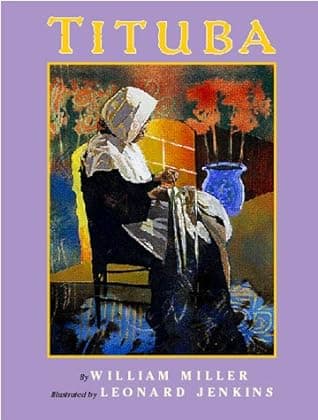
Tituba cover
Archivist's Choice

Tituba

William Miller (2000)

Genre

General

Reading Time

30 min

Key Themes

See below

Track Your Reading

Sign in to track this book

In the winter of 1692, an enslaved West Indian woman named Tituba faces accusations of witchcraft in Salem, forced to choose between her traditional folk knowledge and a false confession to save her life amidst a village gripped by fear.

Core Idea

William Miller's "Tituba" examines the Salem Witch Trials through Tituba's experience, showing how societal panic, religious fervor, and the vulnerability of marginalized people combine to create great injustice. The book argues that accusations spread quickly due to fear, a need for scapegoats, and the power of authorities who used belief systems to get false confessions. This ultimately demonstrates the human cost of rigid dogma and how easily truth can be lost in collective hysteria.
Reading time
30 min
Difficulty
Easy
✓ Read this if...
You are interested in the historical context of the Salem Witch Trials, the dangers of mass hysteria, or how marginalized individuals become scapegoats during times of crisis.
✗ Skip this if...
You are looking for an extensive, in-depth academic treatise on colonial American history or a lengthy biography.

Core idea

The central argument and framework that powers the entire book.

William Miller's "Tituba" examines the Salem Witch Trials through Tituba's experience, showing how societal panic, religious fervor, and the vulnerability of marginalized people combine to create great injustice. The book argues that accusations spread quickly due to fear, a need for scapegoats, and the power of authorities who used belief systems to get false confessions. This ultimately demonstrates the human cost of rigid dogma and how easily truth can be lost in collective hysteria.

At a glance

Reading time

30 min

Difficulty

Easy

Read this if...

You are interested in the historical context of the Salem Witch Trials, the dangers of mass hysteria, or how marginalized individuals become scapegoats during times of crisis.

Skip this if...

You are looking for an extensive, in-depth academic treatise on colonial American history or a lengthy biography.

Key Takeaways

1

The Peril of Panic and Accusation

How communal fear can quickly unravel justice and lead to devastating consequences.

Quote

The fits and dreams of two young girls set off a witch-hunt. More than eighty villagers found themselves charged with witchcraft; twenty-five lost their lives.

The Salem Witch Trials are a stark historical example of how easily mass hysteria can override reason and fair process. Initial accusations, fueled by the seemingly unexplainable 'fits and dreams' of a few children, quickly grew into widespread panic. This created a situation where suspicion became proof, and a mere accusation was enough to condemn. The book shows how fragile justice is when a community is afraid, demonstrating how a society can turn on its own members, sacrificing individuals to calm an unfounded dread. The rapid esc...

Supporting evidence

The initial events in Salem Village in the winter of 1692, where the 'fits and dreams' of two girls, followed by subsequent accusations, rapidly led to over eighty villagers being charged and twenty-five executed for witchcraft.

Apply this

Recognize early warning signs of groupthink and emotional reasoning in public discourse. Advocate for critical thinking and evidence-based decision-making, particularly when dealing with sensitive or fear-inducing topics. Support legal systems that prioritize due process and protect the accused from mob rule.


mass-hysteriascapegoatingdue-process
2

The Marginalized as Scapegoats

Vulnerable individuals, especially those with different cultural practices, are often the first targets in times of crisis.

Quote

At the center of the storm stood Tituba, a West Indian slave who was among the first accused.

Tituba's status as a West Indian slave made her naturally vulnerable in Salem's Puritan society. Her 'folk wisdom' and cultural practices, likely including traditional healing or spiritual beliefs, were foreign and thus easily misunderstood or demonized by the dominant culture. In times of collective anxiety, societies often look for an 'other' to blame, and those already on the margins—due to race, class, or cultural difference—become convenient scapegoats. Tituba's story is a clear reminder of how prejudice and xenophobia combine wi...

Supporting evidence

Tituba's identity as a West Indian slave and her 'folk wisdom' being directly linked to her accusation, placing her 'at the center of the storm' as one of the very first individuals charged with witchcraft.

Apply this

Actively challenge prejudice and stereotypes against marginalized groups. Seek to understand and appreciate diverse cultural practices rather than fearing them. Advocate for the protection of vulnerable populations during social upheavals and crises.

scapegoatxenophobiaprejudicecultural-misunderstanding
3

The Weaponization of Belief

When traditional practices are re-categorized as 'witchcraft,' it becomes a tool for control and persecution.

Quote

Was her folk wisdom really witchcraft?

The book asks whether Tituba's 'folk wisdom' was indeed witchcraft, highlighting a key difference between cultural practice and malicious intent. What one culture sees as healing or spiritual guidance, another, driven by fear and strict dogma, can condemn as evil sorcery. This re-framing turns belief into a weapon, making innocent or harmless practices evidence of evil. It demonstrates how dominant power structures can define what is 'acceptable' spirituality and what is 'dangerous,' using this definition to control, suppress disagree...

Supporting evidence

The central question posed in the book regarding Tituba's 'folk wisdom' and its reinterpretation as 'witchcraft' by the Salem community.

Apply this

Engage in critical self-reflection about one's own cultural biases. Challenge the demonization of unfamiliar spiritual or cultural practices. Support religious freedom and the right to practice diverse beliefs without persecution, as long as they don't harm others.

cultural-relativismreligious-persecutiondogma
4

The Coercion of False Confessions

In extreme circumstances, confessing to a lie can become the only path to survival.

Quote

Would she have to offer a false confession to save her life?

Tituba's difficult choice—whether to confess to witchcraft she did not commit to save her life—reveals a horrific flaw in justice systems based on fear and irrationality. When the accused is presumed guilty and truth is irrelevant, a false confession can become a rational, though morally difficult, way to survive. The book shows how severe pressure, along with a lack of credible defense, can force people to incriminate themselves, thereby continuing the cycle of accusations and 'validating' the witch-hunt. This highlights the inherent...

Supporting evidence

The profound question Tituba faces: 'Would she have to offer a false confession to save her life?', directly reflecting the historical pressure on accused witches to confess to avoid execution.

Apply this

Support legal reforms that prevent coerced confessions, such as mandatory recording of interrogations. Educate oneself on the psychology of false confessions. Advocate for a justice system that prioritizes evidence and truth over quick resolutions or confessions.

false-confessioncoercionsurvival-strategyjustice-system-flaws
5

Finding Hope Amidst Turmoil

Even in the darkest times, individuals seek and find sources of inner strength and resilience.

Quote

And where, amid so much anger and turmoil, could she turn for hope and strength?

Despite the immense pressure, fear, and injustice Tituba faced, the book's final question points to the lasting human need for hope and strength. This suggests that even when external circumstances are terrible, individuals often find internal resources or external connections that sustain them. Whether it is a deeply held personal belief, the memory of loved ones, or a simple will to survive, the search for hope in despair is a fundamental part of the human spirit. Tituba's struggle is not just about being a victim but also about the...

Supporting evidence

The concluding question of the book, 'And where, amid so much anger and turmoil, could she turn for hope and strength?', implying an active search for these qualities despite her dire circumstances.

Apply this

Cultivate personal resilience through mindfulness, strong social connections, or spiritual practices. Offer support to those facing extreme adversity. Recognize and celebrate the human capacity for hope even in seemingly hopeless situations.

resilienceinner-strengthhopehuman-spirit
6

The Power of Narrative Control

Those in power dictate the story, often erasing or distorting the experiences of the oppressed.

Quote

This is the story of her struggle and the profound questions she confronted...

William Miller writing 'Tituba' decades later underscores how marginalized voices are often erased from history. For centuries, Tituba was remembered mostly through the eyes of her accusers or as a minor detail in the Salem Witch Trials. The book tries to reclaim her story, focusing on her 'struggle' and 'important questions.' This highlights how historical power dynamics allow the dominant group to control the narrative, often reducing complex individuals to simple characters or symbols. Re-examining history through the eyes of the o...

Supporting evidence

The book itself, being a modern retelling that attempts to focus on Tituba's perspective and internal struggles, implying a previous lack of such focus in historical accounts.

Apply this

Seek out diverse historical perspectives and challenge dominant narratives. Support authors and historians who give voice to marginalized communities. Understand that history is often written by the victors, and critical analysis is necessary.

narrative-controlhistorical-erasuremarginalized-voicesrevisionist-history
7

The Contagion of Accusation

Once initiated, accusations can spread like wildfire, consuming an entire community.

Quote

The fits and dreams of two young girls set off a witch-hunt. More than eighty villagers found themselves charged with witchcraft...

The rapid increase of accusations from just two girls to over eighty villagers shows how contagious fear and suspicion can be. In a close-knit community like Salem, initial 'proof' of witchcraft, however weak, set a precedent. This allowed later accusations to gain credibility, as people feared being accused themselves or saw a chance to settle old disputes. The 'witch-hunt' metaphor is fitting, suggesting an uncontrolled spread where the lines between accuser and accused blur, and accusing others becomes a way to protect oneself or g...

Supporting evidence

The numerical escalation mentioned: from two girls' initial fits to 'more than eighty villagers' being charged, showcasing the rapid spread of accusations.

Apply this

Be wary of 'bandwagon' effects in public opinion. Cultivate an environment where dissent and questioning are encouraged, rather than suppressed. Understand the psychological pressure to conform, especially in emotionally charged situations.

groupthinksocial-contagionconformitybandwagon-effect
8

The Cost of Dogmatic Rigidity

Unquestioning adherence to rigid beliefs can lead to profound cruelty and injustice.

Quote

Was her folk wisdom really witchcraft?

The Salem Witch Trials, as Tituba's story shows, are a clear warning against unchecked dogmatism. The Puritan community's strict interpretation of scripture and their absolute belief in the literal presence of the devil made them blind to reason and compassion. Any deviation from their prescribed norms, especially practices like Tituba's folk wisdom, was immediately labeled as evil. This inflexibility prevented critical thinking, created an 'us vs. them' mentality, and ultimately justified extreme cruelty. The tragedy of Salem shows h...

Supporting evidence

The central conflict around Tituba's 'folk wisdom' being labeled 'witchcraft' within the Puritan context, demonstrating the clash between cultural practice and rigid religious dogma.

Apply this

Practice intellectual humility and be open to re-evaluating deeply held beliefs. Encourage critical thinking and questioning within all institutions, including religious and political ones. Recognize the dangers of absolute certainty and ideological purity.

dogmatismreligious-extremismintellectual-humilityintolerance
9

The Legacy of Injustice

The repercussions of past injustices can echo through generations, demanding ongoing reflection and redress.

Quote

More than eighty villagers found themselves charged with witchcraft; twenty-five lost their lives.

The sheer number of lives lost and reputations ruined in Salem left a lasting mark on American history. The book, despite its length, forces us to confront this legacy. While the immediate crisis passed, the trauma and the lessons learned (or not learned) continued to resonate. Tituba's story, as a representative of the unjustly accused, compels us to remember these events not just as historical curiosities but as cautionary tales. The ongoing need to tell and retell these stories, and to analyze their underlying causes, speaks to soc...

Supporting evidence

The stark figures of 'more than eighty villagers found themselves charged' and 'twenty-five lost their lives,' highlighting the significant human cost and lasting impact of the trials.

Apply this

Support historical education that confronts difficult truths. Participate in efforts for restorative justice and reconciliation for historical wrongs. Remain vigilant against contemporary forms of injustice and persecution, recognizing their roots in similar historical patterns.

historical-memoryrestorative-justicecautionary-talesocial-responsibility

Critical analysis

Notable Quotes

I am Tituba, a Black woman, and I was born in the year 1670 in the city of Bridgetown, in the island of Barbados.

Tituba's opening lines, establishing her identity and origin.

My mother was a slave, and her mother before her, and all the women of my family were slaves. We were born into slavery, and we lived and died in slavery.

Tituba reflecting on her lineage and the generational nature of slavery.

I learned to speak English, and a little French, and a little Spanish, and a little Dutch, and a little Portuguese. I learned to cook, and to sew, and to clean, and to wash, and to iron.

Tituba describing her early life and the skills she acquired as a slave.

I was a slave, and I was a woman, and I was Black. I was three times a slave.

Tituba emphasizing the multiple layers of her subjugation.

The devil is not a Black man, nor a white man, nor a red man. The devil is a spirit, and he can take any form he chooses.

Tituba's nuanced understanding of evil, contrasting with the Salem villagers' rigid views.

I was not afraid of the devil. I was afraid of the white people, and their God, and their laws.

Tituba's true fears, highlighting the human-made terrors over supernatural ones.

They wanted me to confess, to name names, to give them what they wanted. But I had nothing to give them, except my truth, and they did not want that.

Tituba describing the pressure to confess during the Salem witch trials.

I was a scapegoat. I was a sacrifice. I was a lamb led to the slaughter.

Tituba's realization of her role in the Salem witch trials.

The words were not mine, but theirs. They put the words in my mouth, and I spoke them.

Tituba explaining how her 'confession' was coerced and fabricated.

I saw the devil, yes, but he was not a man with horns and a tail. He was a spirit of fear, and hatred, and ignorance.

Tituba's metaphorical description of the 'devil' she truly encountered in Salem.

Freedom is not a gift. It is a struggle, a fight, a battle that must be won every day.

Tituba's reflection on the nature of freedom after her ordeal.

My story is not just my story. It is the story of all those who have been silenced, oppressed, and forgotten.

Tituba recognizing the broader significance of her narrative.

I was a witness to the madness, and I survived to tell the tale. And that, in itself, is a kind of victory.

Tituba's ultimate message of resilience and the power of storytelling.

Quiz

Test Your Knowledge

Ready to see how well you understood this book? Take our interactive quiz with 10 questions.

10
Questions
~5
Minutes
?
Best Score

Key Questions (FAQ)

Tituba was a West Indian slave living in Salem Village in 1692, and she was among the first individuals accused of witchcraft during the infamous trials. Her accusations and subsequent confession played a significant role in escalating the hysteria and validating the claims of the afflicted girls.

About the author