BookBrief
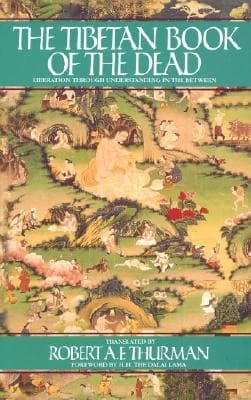
Tibetan Book of the Dead cover
Archivist's Choice

Tibetan Book of the Dead

Padmasambhava (2005)

Genre

Reference / History / Spirituality / Philosophy

Reading Time

300 min

Key Themes

See below

Track Your Reading

Sign in to track this book

This ancient Tibetan guide, like a loved one's whispered wisdom, illuminates the post-mortem journey through the Bardo, offering vivid explanations and a path to liberation or rebirth for the newly deceased.

Core Idea

The Tibetan Book of the Dead, or Bardo Thodol, guides consciousness during the intermediate state (bardo) between death and rebirth. It teaches that death is not an end but an important transition, offering chances for liberation if one recognizes the true nature of reality and one's own mind. The text gives detailed instructions, visualizations, and insights to help the deceased navigate the visions, sounds, and states in the bardo. It stresses that these are projections of one's own mind and past actions.
Reading time
300 min
Difficulty
Hard
✓ Read this if...
You are interested in ancient spiritual texts, death and dying, consciousness, or Tibetan Buddhist philosophy, and are open to dense, symbolic, and religiously-rooted concepts about the afterlife.
✗ Skip this if...
You are looking for a scientific or secular exploration of death, prefer modern self-help, or are not comfortable with spiritual or mythological frameworks regarding the afterlife.

Core idea

The central argument and framework that powers the entire book.

The Tibetan Book of the Dead, or Bardo Thodol, guides consciousness during the intermediate state (bardo) between death and rebirth. It teaches that death is not an end but an important transition, offering chances for liberation if one recognizes the true nature of reality and one's own mind. The text gives detailed instructions, visualizations, and insights to help the deceased navigate the visions, sounds, and states in the bardo. It stresses that these are projections of one's own mind and past actions.

At a glance

Reading time

300 min

Difficulty

Hard

Read this if...

You are interested in ancient spiritual texts, death and dying, consciousness, or Tibetan Buddhist philosophy, and are open to dense, symbolic, and religiously-rooted concepts about the afterlife.

Skip this if...

You are looking for a scientific or secular exploration of death, prefer modern self-help, or are not comfortable with spiritual or mythological frameworks regarding the afterlife.

Key Takeaways

1

The Bardo as a Journey, Not an End

Death is not cessation, but a transitional state offering profound opportunities for liberation.

Quote

The Great Book of Natural Liberation through Understanding in the Between

The Tibetan Book of the Dead changes how we see death. It views death not as an end, but as a journey through the 'Bardo' – the 'between' state. This is an active, experienced realm lasting up to 49 days, full of visions, sounds, and chances for consciousness to achieve liberation or a good rebirth. The book is an instruction manual, guiding the deceased through these Bardos. It stresses that awareness and understanding during this time are essential. The journey unfolds according to one's past actions, showing both terrifying and bli...

Supporting evidence

Thurman's translation emphasizes 'Natural Liberation through Understanding in the Between,' highlighting the active role of comprehension during the post-mortem state, rather than a passive experience. The text details distinct Bardo stages, each with specific visions and instructions.

Apply this

Cultivate mindfulness and self-awareness in daily life, as these faculties are crucial for navigating the Bardo. Familiarize yourself with the Bardo teachings now, so that at the time of death, recognition of the illusory nature of visions can lead to liberation rather than fear and attachment.


bardoliberationkarmarebirth
2

Mind as the Architect of Reality

All post-mortem visions, whether terrifying or blissful, are projections of one's own consciousness.

Quote

All these appearances that you see are merely the thought-forms of your own mind.

A central idea of the Tibetan Book of the Dead is that the entire Bardo experience – the peaceful deities, wrathful deities, bright lights, and frightening sounds – are not external beings or objective realities. Instead, they are projections of the deceased's own mind. This expands on the Buddhist idea that mind creates reality. During the Bardo, the mind, free from the body, shows its past actions with strong intensity. Understanding this illusory nature is the way to liberation. Fear comes from not recognizing these projections as ...

Supporting evidence

The text explicitly describes the appearance of 'wrathful deities' and 'peaceful deities' as manifestations of the deceased's own 'primal wisdoms' or 'karmic propensities,' not external divine beings. It instructs the dying to recognize these as mental projections.

Apply this

Practice recognizing the illusory nature of phenomena in daily life. Understand that your emotional reactions and perceptions are often colored by your internal state. Cultivate compassion and equanimity to purify mental imprints, leading to more favorable Bardo experiences.

mind-onlyillusionemptinessprojection
3

The Importance of Recognition

Timely recognition of Bardo phenomena as mind-projections is the pathway to freedom.

Quote

Do not be afraid of them. Do not be terrified. Know them as your own thoughts.

The entire purpose of the Bardo Thodol is to provide instructions for 'recognition.' The text guides the consciousness through the Bardo states, explaining each vision and sound, and asking the deceased to recognize them as manifestations of their own mind. This act of recognition, especially of the 'Clear Light of Reality' at the moment of death, is the best chance for liberation. Not recognizing leads to fear, attachment, and more karmic entanglement, pushing consciousness towards rebirth. The book says that even partial recognition...

Supporting evidence

The book systematically describes different Bardo stages (e.g., Chikai Bardo, Chonyid Bardo, Sidpa Bardo) and provides specific instructions for recognizing the 'clear light' or the 'wrathful deities' at each stage, explicitly stating that recognition leads to liberation.

Apply this

Develop a practice of 'self-inquiry' or 'witness consciousness' in daily life, observing thoughts and emotions without identification. This trains the mind to recognize the ephemeral nature of all phenomena, a crucial skill for Bardo navigation.

clear-lightrecognitionnon-dualityawareness
4

The Guiding Voice of the Reader

The living play a crucial role as guides, reciting the text to the deceased consciousness.

Quote

The Book is meant to be read to the person who is dying or has just died.

Unlike many spiritual texts, the Tibetan Book of the Dead is not mainly for personal study by the living (though that is encouraged). Its main role is as a 'guide' for the dead, read aloud by a lama, friend, or loved one to the deceased's consciousness. This oral reading is believed to be heard by the departing consciousness, guiding it through the Bardo. The reader's voice acts as a constant anchor, giving instructions, reassurance, and reminders of reality. This shows a belief in the persistence of consciousness and its ability to r...

Supporting evidence

Thurman's introduction and the structure of the text itself are explicitly framed as instructions for a reader to recite to a dying or recently deceased person, with direct addresses like 'O nobly born one...' throughout the main text.

Apply this

If you are with a dying loved one, consider reading comforting and guiding texts, even if you don't fully understand the Bardo. The intention and the sound itself can be a powerful support. Prepare by understanding the teachings so you can offer informed guidance.

death-ritualscompassionoral-traditionguidance
5

Karmic Imprints and Rebirth

Unresolved karma dictates the nature of Bardo experiences and the subsequent rebirth.

Quote

The karmic traces of your past actions are now manifesting before you.

The quality and path of one's Bardo experience are determined by past and current actions. Good actions lead to more peaceful visions and chances for liberation, while bad actions appear as terrifying deities, sounds, and temptations. The Bardo is not random; it is a personalized journey reflecting the individual's karmic record. If liberation is not achieved, consciousness enters the Sidpa Bardo, the 'Bardo of Becoming,' where karmic forces lead it to a specific rebirth – human, animal, hungry ghost, or other realms. The book offers ...

Supporting evidence

The text details how specific negative actions (e.g., envy, pride, desire) lead to the manifestation of particular wrathful deities or unfavorable rebirths, while virtuous actions lead to peaceful visions and higher realms. It offers instructions for recognizing the 'womb-door' of rebirth.

Apply this

Live a life of ethical conduct, compassion, and generosity. Understand that every action creates karmic imprints that will influence your future, both in this life and beyond. Cultivate positive intentions to shape a more favorable Bardo and rebirth.

karmarebirthethical-conductsidpa-bardo
6

The Spectrum of Deity Manifestations

Peaceful and wrathful deities are archetypal energies, not external gods or demons.

Quote

The Peaceful Deities are the spontaneous manifestation of your own wisdom mind; the Wrathful Deities are the fierce display of that same wisdom.

A notable part of the Bardo experience is the visions of 'peaceful' and 'wrathful' deities. These are not external gods or demons, but archetypal manifestations of the consciousness's own wisdom and energies. The peaceful deities represent enlightened mind, while the wrathful deities, with their scary looks, are fierce expressions of the same wisdom, often appearing to shock consciousness out of delusion. The instructions repeatedly tell the deceased not to fear the wrathful forms, but to recognize them as aspects of their own being, ...

Supporting evidence

The text provides intricate descriptions of the 'Forty-Two Peaceful Deities' and the 'Fifty-Eight Wrathful Deities,' explaining their symbolism and instructing the deceased to recognize them as emanations of their own mind's enlightened qualities.

Apply this

Engage in practices that integrate and transform difficult emotions. Understand that anger, fear, and desire, when purified, can become sources of wisdom and strength. Don't suppress, but transform. This prepares one to face the wrathful deities without fear.

deitiesarchetypeswisdomenlightened-mind
7

A Guide for the Living, Not Just the Dead

Understanding the Bardo offers profound insights into life, mind, and the nature of reality.

Quote

Do not wait until the journey has begun, every page should be read and memorised well ahead of time.

While a guide for the dying, the Tibetan Book of the Dead is also a philosophical and psychological text for the living. By detailing the post-mortem experience, it offers a way to understand consciousness, the impact of karma, the illusory nature of perceived reality, and opportunities for spiritual growth. Knowing its teachings can lessen the fear of death, inspire ethical living, and deepen one's spiritual practice. It encourages self-reflection and a proactive approach to spiritual development, stressing that the Bardo is an inten...

Supporting evidence

The reviewer Brian Bruya explicitly states that the book should be 'read and memorised well ahead of time,' underscoring its relevance for the living. The detailed descriptions of mental states and karmic consequences are universally applicable.

Apply this

Study the Bardo teachings not as morbid curiosity, but as a map for understanding your own mind and shaping your present and future. Integrate its insights into your meditation practice and daily ethical choices.

philosophypsychologyspiritual-practicemindfulness
8

The Power of Intention at Death

Conscious intention, even at the last moment, can significantly alter one's Bardo journey and rebirth.

Quote

Hold to a single, pure intention for liberation or a perfect rebirth.

The Book of the Dead stresses the power of intention, especially during death and throughout the Bardo. While past actions matter, a strong, conscious intention for liberation, or for a specific, good rebirth, can change karmic momentum. This supports the Buddhist belief in the mind's power. Even if liberation is not achieved, maintaining a clear and positive intention can guide consciousness towards a better rebirth, allowing it to choose a 'womb-door' that helps further spiritual progress. This highlights the individual's agency, ev...

Supporting evidence

The text provides explicit instructions for the dying to form clear intentions, such as 'I will now achieve liberation' or 'I will choose a human rebirth where I can practice the Dharma,' emphasizing the power of these mental acts.

Apply this

Practice setting clear, positive intentions in daily life. Cultivate a strong aspiration for enlightenment or for benefiting all beings. This trains the mind to maintain focus and purpose, which is invaluable during the Bardo transition.

intentionvolitionmind-powerchoice
9

The Between as a Continuum

Life, death, and rebirth are not discrete events but a continuous flow of consciousness.

Quote

The 'Between' is not just after death, but the between of every moment, every thought.

Thurman's translation suggests that the Bardo is not just a post-mortem state, but a metaphor for the continuous 'between' moments of our existence. Every transition – between thoughts, between sleep and waking, between experiences – can be seen as a mini-Bardo. This view blurs the line between life and death, presenting them as fluid phases within a larger continuum of consciousness. By understanding the Bardo's principles, one can better navigate life's constant transitions, recognizing the illusory nature of phenomena and the chanc...

Supporting evidence

While the text primarily focuses on post-mortem Bardo, the underlying Buddhist philosophy of impermanence and the mind's role in creating reality supports the idea of continuous 'between' states, making the Bardo a profound teaching for all transitions.

Apply this

Practice mindfulness of transitions in daily life – between tasks, conversations, or emotional states. Observe how your mind creates narratives and perceptions during these 'between' moments. This trains you for the ultimate transition.

impermanencecontinuummindfulnesstransitions
10

Beyond Fear: Embracing the Unknown

The book ultimately aims to alleviate the fundamental fear of death through understanding.

Quote

Do not fear, O nobly born one, for these are the natural radiance of your own mind.

At its heart, the Tibetan Book of the Dead helps overcome the universal fear of death. By explaining the post-mortem experience, detailing its stages, and giving instructions for navigation, it makes the unknown comprehensible and even navigable. The repeated emphasis on recognizing all phenomena as projections of one's own mind empowers the dying, changing their role from passive victim to active participant in their own liberation. This understanding allows for a courageous, rather than terrified, approach to death, seeing it as a f...

Supporting evidence

Throughout the text, the guiding voice constantly reassures the deceased, repeating phrases like 'Do not be afraid,' and 'Recognize this without fear,' directly addressing and seeking to dispel fear through knowledge.

Apply this

Engage with the concept of death not as an end, but as a transformation. Reflect on the impermanence of all things to diminish attachment and cultivate a sense of peace and acceptance. This will reduce fear and allow for a more conscious passing.

fear-of-deathacceptanceserenitytransformation

Critical analysis

Notable Quotes

O nobly-born, when your body and mind were separating, you must have glimpsed a pure, primordial insight, subtle, sparkling, and terrifying, brilliant, and awesome, like a shimmering mirage. Do not be afraid of it.

Instructions given at the moment of death, describing the initial Bardo of Chikhai (the Bardo of the Moment of Death).

Realize that whatever appears to you is your own projection. Recognize this to be the Bardo.

Guidance for the Bardo of Chönyid (the Bardo of Experiencing Reality), where visions and deities manifest.

Recognize the emptiness as your own mind. Recognize your own mind as emptiness.

Instructions on the nature of reality and mind in the Bardo experience.

Do not cling to the objects of desire. Do not be attracted to them. Do not be repelled by them. Be free from attachment and aversion.

Advice given to the deceased to avoid being drawn into the cycle of rebirth by desires or fears.

Whatever terrifying or frightening visions may arise, know them to be your own thought-forms.

Reassurance and explanation for the deceased experiencing frightening visions in the Bardo.

The great light of the primordial wisdom is shining. Recognize it!

Encouragement to recognize the clear light nature of consciousness at the moment of death.

Know that all appearances are the Play of Awareness, without any inherent reality.

Philosophical instruction on the illusory nature of phenomena, particularly relevant during the Bardo of Chönyid.

If you do not recognize, even a single second's distraction will lead to a new rebirth.

A stark warning about the importance of recognition and presence during the Bardo states.

Do not be afraid of the peaceful and wrathful deities. They are the spontaneous display of your own mind.

Specific guidance for the Bardo of Chönyid, where the deceased encounters various divine and demonic forms.

The Bardo is the intermediate state, a gap between two states of being, or two births.

A fundamental definition of the Bardo concept, often used in introductions to the text.

Think: 'I am dead. What should I do?' And recognize the clear light.

A practical instruction for the deceased to prompt self-awareness and recognition of the clear light at death.

The body is left behind, like a snake shedding its skin. Recognize the Bardo.

A metaphor used to describe the separation of consciousness from the physical body.

Whatever you experience, pleasant or unpleasant, is nothing but the projection of your own mind.

General advice applicable across various Bardo states, emphasizing the subjective nature of experience.

Abandon all thoughts of attachment and aversion, and enter into the state of non-thought.

Instruction to transcend conceptual thought and emotional reactivity during the Bardo experience.

Quiz

Test Your Knowledge

Ready to see how well you understood this book? Take our interactive quiz with 10 questions.

10
Questions
~5
Minutes
?
Best Score

Key Questions (FAQ)

The 'Tibetan Book of the Dead', or 'Bar do thos grol', is a mortuary text from the Nyingma sect of Tibetan Buddhism. It is traditionally recited to or by individuals nearing death to guide them through the post-mortem experience and facilitate liberation or a favorable rebirth.

About the author