BookBrief
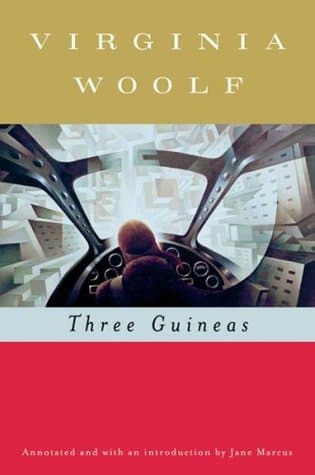
Three Guineas cover
Archivist's Choice

Three Guineas

Virginia Woolf (1938)

Genre

Politics / Philosophy

Reading Time

352 pages (approx. 9-12 hours)

Key Themes

See below

Track Your Reading

Sign in to track this book

Virginia Woolf uses three requests for money to explore women's freedom, patriarchy, and the causes of war.

Core Idea

Virginia Woolf's "Three Guineas" criticizes patriarchal society and its connection to war and inequality, especially regarding women's access to education, professions, and political influence. Woolf responds to requests for donations to prevent war, rebuild a women's college, and support a women's professional group. She argues that women should not support institutions that disempower them and perpetuate conflict. She suggests forming an 'Outsider's Society' of unpaid, un-uniformed women who, by staying independent of male-dominated structures, can keep their intellectual freedom and moral integrity, offering a different path to peace and equality.
Reading time
352 pages (approx. 9-12 hours)
Difficulty
Hard
✓ Read this if...
You are interested in feminist political philosophy, the historical context of women's rights in the early 20th century, or a powerful argument for intellectual freedom and pacifism.
✗ Skip this if...
You prefer straightforward historical accounts over an epistolary, essayistic, and often ironic style, or if you are looking for a light, quick read.

Core idea

The central argument and framework that powers the entire book.

Virginia Woolf's "Three Guineas" criticizes patriarchal society and its connection to war and inequality, especially regarding women's access to education, professions, and political influence. Woolf responds to requests for donations to prevent war, rebuild a women's college, and support a women's professional group. She argues that women should not support institutions that disempower them and perpetuate conflict. She suggests forming an 'Outsider's Society' of unpaid, un-uniformed women who, by staying independent of male-dominated structures, can keep their intellectual freedom and moral integrity, offering a different path to peace and equality.

At a glance

Reading time

352 pages (approx. 9-12 hours)

Difficulty

Hard

Read this if...

You are interested in feminist political philosophy, the historical context of women's rights in the early 20th century, or a powerful argument for intellectual freedom and pacifism.

Skip this if...

You prefer straightforward historical accounts over an epistolary, essayistic, and often ironic style, or if you are looking for a light, quick read.

Key Takeaways

1

The Price of Public Life

Women's entry into professions is conditional on challenging patriarchal structures, not merely joining them.

Quote

For by so doing we shall make that world, which considers itself so supremely important, and which has, for centuries, been engaged in wars and slaughter, a little less important.

Woolf believes women's involvement in public life, especially in professions, should not copy men's existing structures. Instead, it must question the values and institutions that have historically excluded them. The money for the college building fund is conditional: it is not just about women getting degrees, but about ensuring those degrees lead to a different kind of professional, one who does not continue the systems that cause war and inequality. The 'daughter of an educated man' must avoid conforming to the 'public' values of a...

Supporting evidence

Woolf's analysis of the 'professions' as inherently patriarchal, demanding conformity to male values and offering rewards (power, prestige) that reinforce those values. She questions the true 'freedom' offered by these professions.

Apply this

When entering traditionally male-dominated fields, actively question and challenge existing norms, rather than passively adopting them. Seek to transform the field, not just succeed within it.

patriarchy-critiqueprofessional-womensubversion
2

The 'Outsider's Society'

Women, as outsiders, possess a unique vantage point to critique and dismantle the patriarchal war machine.

Quote

As a woman, I have no country. As a woman I want no country. As a woman my country is the whole world.

Woolf states that women, denied full citizenship and participation in the 'public' sphere, are 'outsiders.' This status, far from being a drawback, offers a vital viewpoint. They are free from the nationalistic loyalties, patriotic fervor, and institutional ties that push men towards war. The 'society of outsiders' (mostly women) can criticize the 'insider's society' (the patriarchal, war-focused state). This detachment allows them to see the absurdity and destructiveness of male-driven conflicts, making them uniquely able to work for...

Supporting evidence

Woolf's refusal to give a guinea to prevent war on the terms of the 'educated man's society,' arguing that women's methods must be different precisely because they are not 'insiders.' Her emphasis on women having 'no country.'

Apply this

Embrace your 'outsider' status in any context where dominant narratives or power structures feel oppressive or destructive. Use this perspective to offer alternative solutions and critiques, rather than seeking assimilation.

outsider-perspectivegender-and-waranti-nationalism
3

The 'Unpaid' Value of Culture

The true value of culture and intellectual liberty often comes from those outside paid, institutionalized systems.

Quote

Culture and intellectual liberty are preserved not by the paid but by the unpaid; not by the professionals but by the amateurs; not by the men but by the women.

Woolf questions the idea that 'culture' and 'intellectual liberty' come only from established institutions, universities, and professional men. She argues that women, historically excluded from paid positions and formal recognition, have been important preservers and creators of culture in their private lives, often through unpaid work. This 'unpaid' work, because it is free from the corrupting influences of money, prestige, and institutional pressures, maintains a purer form of intellectual liberty. The money for 'protecting culture'...

Supporting evidence

Woolf's discussion of the 'private house' as a place where intellectual liberty can flourish, free from the demands of public life and professional conformity. The historical exclusion of women from formal education and paid professions, yet their continued intellectual and cultural contributions.

Apply this

Recognize and value intellectual and cultural contributions that exist outside of traditional, paid, or institutionally recognized channels. Support 'amateur' or grassroots efforts that foster genuine intellectual freedom.

unpaid-laborintellectual-libertygrassroots-culture
4

The Cost of Uniformity

Conformity to male professional attire and norms symbolizes a surrender of women's unique voice.

Quote

The uniform of a woman, in short, is not a uniform; it is a disguise.

Woolf uses the image of professional clothes, especially academic gowns, to show her point about conformity. While men wear uniforms to show belonging and authority, women who adopt these same uniforms risk hiding their true selves and unique perspectives. To wear the 'uniform' of the educated man – whether literal clothing or metaphorical adoption of his values, ambitions, and methods – is to give up the 'otherness' that gives women their critical power. She suggests that women should create their own attire, their own professional '...

Supporting evidence

Woolf's detailed critique of academic gowns, military uniforms, and professional attire, and her argument that women should invent their own 'dress' for the professions, reflecting their difference.

Apply this

In professional settings, consciously resist the pressure to conform to superficial norms (dress, speech, behavior) that may suppress your authentic self or unique perspective. Seek ways to express your individuality and alternative approaches.

gender-rolesconformityprofessional-identity
5

The 'Educated Man's' Legacy of War

The values fostered by male-dominated education and society are direct progenitors of war.

Quote

For we are asking you to help us to prevent war; and you are asking us to help you to prevent war. And both of us want to know how.

Woolf examines the link between the 'educated man's' values and the constant state of war. She argues that institutions like universities, the military, and the church, run by men, promote specific values: patriotism, heroism, ambition, competition, and a strict sense of hierarchy and honor. These values, while seemingly noble, are geared towards conflict and dominance. The 'private house' where women have historically been confined, in contrast, promotes values of empathy, cooperation, and less rigid social structures. Therefore, for...

Supporting evidence

Her detailed critique of the 'public schools' and universities, the military, and the church as institutions that instill the very values that lead to war and nationalistic fervor. The examples of male 'heroes' and their public accolades.

Apply this

Critically examine the underlying values and narratives of institutions and societies, especially those that perpetuate competition, hierarchy, or nationalistic pride, and consider how they might contribute to conflict.

masculinity-and-warinstitutional-critiquepeace-activism
6

The Freedom of 'Poverty'

Financial independence for women must be accompanied by a rejection of wealth accumulation and its corrupting influence.

Quote

Let us never cease from thinking—how we can make the world a better place. Let us never cease from thinking—how we can make the world a better place for our sisters and for ourselves.

Woolf argues that while financial independence is important for women, it comes with a condition. The money for professional women's employment must be given with the understanding that women will use their new economic power differently than men. They must resist the urge to accumulate wealth, seek power, or chase status, as these pursuits have historically led men to perpetuate inequality and war. Instead, women should embrace a form of 'poverty' – not destitution, but a deliberate detachment from the pursuit of excessive wealth and...

Supporting evidence

Her discussion of the 'daughters of educated men' and the specific conditions attached to the guinea for their employment – 'not for selfish ends.' The historical link between wealth, power, and war.

Apply this

When pursuing financial independence or professional success, consciously set boundaries around the pursuit of wealth and status. Prioritize ethical conduct and societal contribution over personal gain.

economic-independenceethical-livinganti-materialism
7

The Power of the 'Anonymous'

True intellectual liberty often thrives outside the spotlight of public recognition and fame.

Quote

For the most part, culture and intellectual liberty are preserved not by the paid but by the unpaid; not by the professionals but by the amateurs; not by the men but by the women.

Woolf supports the power of anonymity. Historically, women's intellectual and creative work was often done anonymously, in private, or under male pseudonyms. This lack of public recognition, while a form of oppression, also protected them from the pressures and corruptions of fame, competition, and institutional demands. She suggests that true intellectual liberty might be best kept in this 'anonymous' sphere, where ideas are pursued for their own sake, rather than for awards or money. The pursuit of fame, often a male ambition, can c...

Supporting evidence

Her contrast between the 'public' sphere of men, filled with famous names and celebrated achievements, and the 'private' sphere of women, where much cultural and intellectual work goes uncredited. The historical context of women authors publishing anonymously.

Apply this

Focus on the intrinsic value of your work and ideas, rather than external validation or public recognition. Contribute to collective efforts without needing individual credit.

anonymityintellectual-integritycollective-action
8

Refusal as Political Action

The act of refusal, particularly regarding money and traditional participation, is a potent form of feminist resistance.

Quote

Let us then, in the first place, refuse to give money to the college unless we are satisfied that it will be used for education not for display.

Woolf structures her entire book as a series of conditional refusals. She does not simply hand over the money; she critically examines the terms under which it is requested and the institutions it supports. This act of refusal, of saying 'no' or 'yes, but only if...', becomes a strong political statement. It shows that women are not just passive recipients or donors, but active agents who demand accountability and alignment with their values. By not giving unconditional support to patriarchal institutions, women can push for real refo...

Supporting evidence

The threefold structure of the book, each section addressing a guinea with conditions, questions, and sometimes a qualified refusal. Her insistence on the 'right to refuse' to fight in wars.

Apply this

Practice strategic refusal: thoughtfully decline participation or support for initiatives that do not align with your core values, and use your refusal to demand better terms or alternative approaches.

feminist-resistancenon-complianceethical-stance
9

The Personal is Political and Public

The private thoughts and experiences of women are essential for transforming public discourse and preventing war.

Quote

For the public and the private worlds are inseparably connected; the public cannot be improved unless the private is improved.

Woolf blurs the lines between the personal and the political, arguing that women's seemingly private experiences, thoughts, and frustrations are not just individual complaints but are deeply connected to the public failures of patriarchy, especially its tendency for war. Her extended 'letter' format, personal reflections, and detailed exploration of her own perspective as a woman are political acts. She shows that insights gained from an 'outsider's' private life, free from the pressures of public conformity, are essential for identif...

Supporting evidence

The entire epistolary structure of the book, which personalizes the political arguments. Her detailed descriptions of women's limited opportunities and their 'private' intellectual lives.

Apply this

Recognize that your personal experiences and observations, especially those that diverge from mainstream narratives, hold valuable insights for understanding and addressing broader societal issues. Share these perspectives thoughtfully.

personal-is-politicalfeminist-theoryprivate-vs-public
10

Inventing a New Language for Freedom

To truly dismantle patriarchy, women must develop new forms of expression and thought, beyond male frameworks.

Quote

We can best help you to prevent war not by repeating your words and following your methods but by finding new words and creating new methods.

Woolf suggests that simply adopting the language, logic, and methods of the patriarchal system will not lead to true freedom or peace. Instead, women must take on the challenging task of creating a new intellectual and linguistic framework. This involves not only criticizing existing male-centric narratives but also developing alternative ways of thinking, communicating, and organizing society. The 'daughters of educated men' have a unique chance, having been exposed to patriarchal thought, to now move beyond it and create something e...

Supporting evidence

Her repeated emphasis on women finding 'new words' and 'new methods' to prevent war and contribute to society, rather than simply echoing men. The unconventional, essay-letter form of the book itself.

Apply this

Challenge existing paradigms and seek to develop novel approaches to problems. Don't be afraid to create your own language, frameworks, or methods when existing ones feel insufficient or oppressive.

linguistic-subversionfeminist-epistemologyradical-imagination

Critical analysis

Notable Quotes

For we have to ask ourselves, here and now, do we wish to join that procession, or do we wish to separate from it, and walk some other way?

Questioning participation in traditional patriarchal systems.

The public and the private are inseparably connected. The public cannot be good unless the private is good.

Connecting personal morality to societal well-being.

As a woman, I have no country. As a woman I want no country. As a woman my country is the whole world.

Rejecting nationalism and embracing a global female identity.

How can we enter the professions and yet remain civilized human beings?

Concerns about the corrupting influence of professional life on women.

The first duty of a woman is to earn money and to have a room of her own.

Emphasizing financial independence and personal space for women.

The very word 'education' has a different sound to a woman's ear than to a man's.

Highlighting the gendered experience of education.

We can best help you to prevent war not by fighting, but by thinking.

Advocating intellectual resistance to war, especially for women.

The daughters of educated men are not less able than the sons of educated men.

Challenging assumptions about female intellectual inferiority.

Let us consider, then, how we can best help you to prevent war. And it is at once obvious that we can help you most effectively by remaining outside your professional and public life.

Suggesting women's unique position outside patriarchal institutions for peace.

The poor have no country. They have no interest in the preservation of the present state of things.

Connecting poverty and lack of national allegiance, predating war.

What more fitting gift can we offer to the educated man than the freedom of the educated woman?

Proposing female emancipation as a benefit to society as a whole.

The public world of the professions and of politics is a world in which we are not at home.

Describing women's alienation from traditional male-dominated spheres.

We are not going to fight with you, but we are going to think with you.

Distinguishing women's approach to social change from violent conflict.

Our fathers and grandfathers have been educated at public schools and universities. We have not.

Highlighting the historical disparity in educational opportunities for women.

Quiz

Test Your Knowledge

Ready to see how well you understood this book? Take our interactive quiz with 10 questions.

10
Questions
~5
Minutes
?
Best Score

Key Questions (FAQ)

'Three Guineas' is Virginia Woolf's response to three requests for monetary donations. She uses these requests as a springboard to explore the interconnectedness of patriarchy, war, and the subjugation of women, arguing that women's exclusion from public life and education contributes to societal ills, including militarism.

About the author

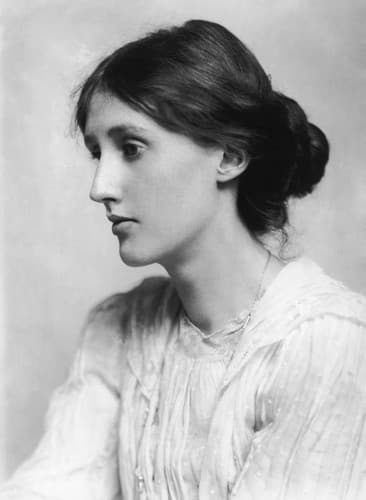
Virginia Woolf

Adeline Virginia Woolf was an English writer. She is considered one of the most important modernist 20th-century authors and a pioneer in the use of stream of consciousness as a narrative device.