BookBrief
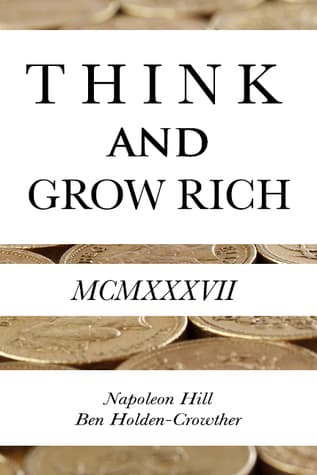
Think and Grow Rich cover
Archivist's Choice

Think and Grow Rich

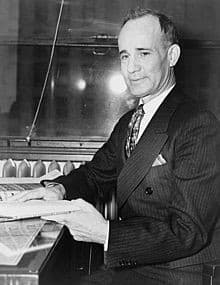
Napoleon Hill (1937)

Genre

Business / Entrepreneurship / Finance / Philosophy / Self-Help

Reading Time

240 min

Key Themes

See below

Track Your Reading

Sign in to track this book

Learn the thirteen principles of success from early 20th-century business leaders to achieve financial independence and personal fulfillment.

Core Idea

"Think and Grow Rich" states that wealth and success come from applying specific mental principles, not luck. Hill says a strong desire, faith, auto-suggestion, specialized knowledge, imagination, planning, decisive action, persistence, and collaboration through a 'Master Mind' group can turn thoughts into riches. The book suggests the mind is a powerful creative force that attracts wealth through consistent, positive thinking and practical use of these ideas.
Reading time
240 min
Difficulty
Easy
✓ Read this if...
You are an aspiring entrepreneur, business person, or anyone seeking to cultivate a success mindset and understand the psychological underpinnings of wealth creation.
✗ Skip this if...
You are looking for modern, empirically-backed financial advice, a critical analysis of economic systems, or a book that downplays the role of individual mindset in favor of systemic factors.

Core idea

The central argument and framework that powers the entire book.

"Think and Grow Rich" states that wealth and success come from applying specific mental principles, not luck. Hill says a strong desire, faith, auto-suggestion, specialized knowledge, imagination, planning, decisive action, persistence, and collaboration through a 'Master Mind' group can turn thoughts into riches. The book suggests the mind is a powerful creative force that attracts wealth through consistent, positive thinking and practical use of these ideas.

At a glance

Reading time

240 min

Difficulty

Easy

Read this if...

You are an aspiring entrepreneur, business person, or anyone seeking to cultivate a success mindset and understand the psychological underpinnings of wealth creation.

Skip this if...

You are looking for modern, empirically-backed financial advice, a critical analysis of economic systems, or a book that downplays the role of individual mindset in favor of systemic factors.

Key Takeaways

1

Burning Desire as the Starting Point

Transforming a vague wish into an intense, unwavering obsession.

Quote

Any idea that is constantly held in the mind, that is emphasized, that is acted upon, that is worked upon, will become a reality.

Hill says a 'burning desire' is the absolute basis of all achievement. It is not enough to just want something; one must develop an intense, strong drive, like a feverish determination, that overcomes all problems. This desire must be so deep that failure is not an option, and one is willing to give up everything else to reach their goal. This first spark starts imagination, fuels persistence, and provides the emotional push needed to overcome challenges on the way to success. Without this strong emotion, goals remain just wishes, una...

Supporting evidence

Hill illustrates this with the story of Edwin C. Barnes, who had an unwavering desire to work with Thomas Edison. Despite having no money and appearing as a 'tramp,' his burning desire to become Edison's partner eventually led him to achieve his goal, not as an employee, but as a business associate.

Apply this

Define a single, specific, and measurable goal. Write it down and read it aloud twice daily, morning and night, visualizing yourself already in possession of it, and feeling the emotions of having achieved it. Attach a specific date for its accomplishment and determine what you intend to give in return for it.
definite-purposepersistencefaith
2

Faith: The Visualization of Attainment

Cultivating an unwavering belief in your ability to achieve your desires.

Quote

Faith is the only known antidote for failure. Faith is the starting point of all accumulation of riches.

Hill stresses that faith is not just passive hope, but an active, positive state of mind that must be learned. It is the belief that your goal will happen, even without visible proof. He argues that the subconscious mind acts on thoughts that have emotion, especially faith. By repeatedly affirming and seeing your desired outcome with strong belief, you impress this conviction on your subconscious, which then works to make it real. This self-induced faith becomes a powerful force, attracting resources, ideas, and chances needed for suc...

Supporting evidence

Hill cites the power of auto-suggestion in developing faith, suggesting that by repeatedly telling yourself 'I can do this,' and visualizing success, you can influence your subconscious mind. He also references the power of prayer, not as begging, but as a form of self-communion that strengthens belief.

Apply this

Practice daily auto-suggestion by repeating your definite purpose statement aloud, infusing it with strong emotion and belief. Visualize yourself having already achieved your goal, experiencing the feelings of success and gratitude. Surround yourself with positive influences and avoid those who sow doubt.

auto-suggestionsubconscious-mindvisualization
3

Auto-Suggestion: Influencing the Subconscious

The deliberate practice of feeding your mind with positive, goal-oriented thoughts.

Quote

Through the principle of auto-suggestion, the mind can be trained to receive and accept only those thoughts which are conducive to its success.

Auto-suggestion is how people talk to their subconscious mind. Hill states that the subconscious mind is open to whatever thoughts are consistently put there, whether good or bad. By consciously and repeatedly impressing desired thoughts, beliefs, and goals on the subconscious, one can program it to work towards their realization. This is not passive daydreaming; it is an active, emotional process of making one's goal internal, along with the belief that it will be achieved. This practice helps to stop negative thoughts and replace th...

Supporting evidence

Hill provides a six-step method for transforming desire into its monetary equivalent, which heavily relies on auto-suggestion, including writing down the amount of money, the definite purpose, and the date, then reading it aloud twice daily, feeling and believing you already possess it.

Apply this

Write down your definite purpose and the amount of money you intend to acquire, along with the service you will render. Read this statement aloud with emotion every morning and night, visualizing yourself already in possession of the money and acting as if it's already yours. Focus on the 'what' and the 'why,' trusting your subconscious to reveal the 'how.'

subconscious-mindvisualizationdefinite-purpose
4

Specialized Knowledge vs. General Knowledge

The critical difference between knowing a little about many things and deep expertise in one.

Quote

Knowledge is only potential power. It becomes power only when, and if, it is organized into definite plans of action, and directed to a definite end.

Hill makes a key point: general knowledge, though helpful, does not create wealth. Real power comes from specialized knowledge, understood deeply and used in a specific area. He argues that you do not need to know everything yourself; instead, you must know where to find and how to organize specialized knowledge, often through a 'Master Mind' group. The main thing is to turn this specialized knowledge into concrete, actionable plans that serve a clear purpose. Without this practical use, knowledge stays inactive and fails to produce r...

Supporting evidence

Hill points to Henry Ford, who, despite having little formal education, surrounded himself with men of specialized knowledge (his 'Master Mind' group) to build his empire. He wasn't a walking encyclopedia but knew how to acquire and apply the necessary expertise.

Apply this

Identify your definite major purpose. Determine what specialized knowledge is required to achieve it. If you don't possess it, identify who does (e.g., mentors, books, courses, a Master Mind group) and devise a plan to acquire or access that knowledge. Focus on mastery in a niche rather than superficial understanding across many.

master-minddefinite-purposeorganized-planning
5

Imagination: The Workshop of the Mind

The faculty to create new ideas and combine old ones into novel solutions.

Quote

Imagination is literally the workshop wherein are fashioned all plans created by man.

Hill identifies imagination as one of the most powerful abilities of the human mind, essential for turning abstract desires into real things. He separates two forms: synthetic imagination, which rearranges existing ideas, and creative imagination, which creates entirely new ideas. Both are vital. Synthetic imagination allows for making practical plans from existing knowledge, while creative imagination, often started by strong desire and faith, uses the subconscious and universal intelligence to create truly new solutions. Cultivating...

Supporting evidence

Hill credits imagination for the invention of the automobile (Ford) and the electric light (Edison), emphasizing that these were first conceived in the mind before being materialized. He suggests that all inventions and successful businesses begin as an idea in someone's imagination.

Apply this

Regularly engage in creative exercises: brainstorm solutions to challenges without self-censoring, visualize your ideal future in vivid detail, and ask 'what if' questions. Actively seek new combinations of existing ideas to solve problems or create value. Dedicate time each day to 'mind-storming' sessions.

creative-imaginationsynthetic-imaginationdefinite-purpose
6

Organized Planning: The Crystallization of Desire

Translating vague goals into concrete, step-by-step action plans.

Quote

The successful man is the one who formulates definite plans, and carries them out.

Desire alone is not enough; it must be paired with organized, practical planning. Hill argues that a clear plan of action is the 'crystallization' of one's desire, turning it from an abstract wish into a real roadmap. This means breaking down the main goal into smaller, manageable steps, setting deadlines, and finding needed resources and collaborators. The plan must be flexible enough to adjust to unexpected situations but firm enough to give direction. Not having a well-defined plan is a main reason for failure, as it leads to aimle...

Supporting evidence

Hill advises writing down a clear plan for obtaining your desired goal, detailing specific actions, timelines, and who you will cooperate with. He emphasizes that if the first plan fails, another should be immediately created, and so on, until success is achieved.

Apply this

For your definite major purpose, create a detailed, written plan outlining every step, no matter how small. Assign deadlines to each step and identify the resources (knowledge, people, money) needed. Review and revise your plan daily, and be prepared to create new plans if initial ones fail, maintaining persistence.

definite-purposepersistencemaster-mind
7

Decision: The Mastery of Procrastination

The ability to make swift, firm choices and stick to them.

Quote

Analysis of several hundred people who had accumulated fortunes, showed that every one of them had the habit of making decisions promptly, and of changing them slowly, if and when they were changed.

Hill identifies indecision and putting things off as major enemies of success. Successful people, he observed, make decisions quickly and firmly, then stick to them unless there are strong reasons to change. This is not about being impulsive, but about having a clear goal that guides choices, along with the courage to act. Indecision creates doubt and fear, stopping action and letting chances pass. Making a decision, even an imperfect one, creates momentum and gives valuable feedback, while indecision ensures no progress. This chapter...

Supporting evidence

Hill points to Henry Ford's swift and unwavering decision to produce the Model T, despite initial resistance from his own engineers. His firm decision, backed by his definite purpose, led to immense success. Conversely, he notes that those who fail typically make decisions slowly and change them frequently.

Apply this

Cultivate the habit of making decisions promptly, especially concerning your definite purpose. Once a decision is made, commit to it fully and act on it. Avoid seeking too many opinions, which often leads to confusion and indecision. Trust your intuition and the guidance from your Master Mind group, but ultimately, make the choice yourself.

persistencedefinite-purposemaster-mind
8

Persistence: The Sustained Effort of Faith

Unwavering resolve to continue despite obstacles, setbacks, and temporary defeat.

Quote

Many years of research have convinced me that one of the most common causes of failure is the habit of quitting when one is overtaken by temporary defeat.

Persistence is the steady effort, fueled by faith and a clear purpose, that overcomes all problems. Hill considers it a mental habit that can be learned and made stronger. He argues that most people quit at the first sign of trouble, mistaking a temporary setback for permanent failure. Real success comes to those who, despite repeated problems, refuse to give up, learning from each challenge and changing their plans. Persistence is directly related to how strong one's burning desire is; the stronger the desire, the greater the persist...

Supporting evidence

Hill recounts the story of R. U. Darby, who stopped digging for gold just three feet from a rich vein. He sold his claim, and the new owner, with the help of a mining engineer, found the gold. This illustrates the tragic cost of lacking persistence. He also cites Edison's thousands of attempts to perfect the lightbulb.

Apply this

When faced with a setback, consciously remind yourself of your definite purpose and the intensity of your burning desire. Re-evaluate your plan, seek advice from your Master Mind group, but never abandon the goal itself. Develop a 'never say die' attitude and understand that temporary defeat is merely a signal to adjust your sails, not to abandon ship.

definite-purposeburning-desirefaith
9

The Master Mind: Synergy of Minds

The coordination of knowledge and effort between two or more people, in a spirit of harmony, for the attainment of a definite purpose.

Quote

No two minds ever come together without thereby creating a third, invisible, intangible force which may be likened to a third mind.

Hill's Master Mind principle is one of the most powerful ideas in the book. It means forming a group with two or more people who share a common goal, combining their specialized knowledge, experience, and energy in full agreement. This teamwork creates a 'third mind' or a shared intelligence that is much greater than what each person could do alone. The Master Mind group provides mutual support, different viewpoints, accountability, and the ability to overcome challenges that no single person could face alone. It is a strategic collab...

Supporting evidence

Hill frequently refers to Andrew Carnegie's Master Mind group, which included a hundred men who helped him accumulate his vast fortune. He also suggests that nearly all great leaders and successful individuals throughout history have consciously or unconsciously applied this principle.

Apply this

Identify 2-5 individuals whose specialized knowledge, experience, and character align with your definite purpose. Formally or informally invite them to be part of your Master Mind group. Meet regularly (weekly/monthly) to discuss challenges, share ideas, and hold each other accountable, always maintaining a spirit of harmony and mutual respect. Clarify the definite purpose of the group.

specialized-knowledgedefinite-purposeorganized-planning
10

The Brain: A Broadcasting and Receiving Station

Understanding the brain's capacity to transmit and receive thought vibrations.

Quote

The human brain is a broadcasting and receiving station for the vibration of thought.

Hill presents a fascinating, somewhat spiritual, idea: the human brain is not just a processing unit, but also a complex broadcaster and receiver of thought vibrations. He suggests that the subconscious mind, when stimulated by strong emotion and a clear purpose, can send these thought vibrations, and also receive thoughts and ideas from other minds or from 'Infinite Intelligence.' This idea supports the effectiveness of the Master Mind principle and creative imagination, suggesting that focused, emotional thoughts can attract matchin...

Supporting evidence

Hill alludes to telepathy and the ability of great leaders to 'tune in' to the minds of others or to universal wisdom. He doesn't offer hard scientific proof but presents it as a key mechanism behind the success of the principles he outlines, particularly in connection with the Master Mind.

Apply this

Cultivate a calm, receptive mental state, especially during meditation or quiet reflection, to be open to insights and ideas. When working with your Master Mind group, actively focus your thoughts on the common definite purpose, believing that collective mental energy can generate solutions. Practice sending out positive, clear intentions for your goals.

subconscious-mindmaster-mindcreative-imagination

Critical analysis

Notable Quotes

The starting point of all achievement is desire.

Emphasizing the fundamental role of desire in initiating any successful endeavor.

Whatever the mind can conceive and believe, it can achieve.

A central theme highlighting the power of belief and the mind's ability to manifest thoughts into reality.

Fears are nothing more than a state of mind.

Addressing the psychological nature of fear and its subjective origin.

The 'burning desire' to win is the only thing that will give you the 'will to win'.

Connecting intense desire directly to the determination required for victory.

Patience, persistence and perspiration make an unbeatable combination for success.

Listing key virtues essential for overcoming obstacles and achieving goals.

Every adversity, every failure, every heartache carries with it the seed of an equivalent or greater benefit.

A perspective on challenges, suggesting they contain hidden opportunities for growth and advantage.

Knowledge is only potential power. It becomes power only when, and if, it is organized into definite plans of action, and directed to a definite end.

Distinguishing between raw knowledge and its practical application to achieve specific objectives.

The brain is a broadcasting and receiving station for thought.

An analogy illustrating the mind's capacity to generate and interpret ideas, often in collaboration with others.

When you are thrown into a situation where you must either 'sink or swim,' you are very likely to swim.

Highlighting how necessity and urgent circumstances can unlock hidden potential and drive success.

Organized effort is the harmonious blending of two or more minds, working in a spirit of perfect cooperation, for the attainment of a definite objective.

Defining the 'Mastermind' principle and its power through collaborative intelligence.

Riches do not respond to wishes. They respond only to definite plans, backed by definite desires, through constant persistence.

Clarifying that wealth accumulation requires concrete action and unwavering effort, not just desires.

Indecision is the seedling of fear.

Connecting the act of postponing decisions with the emotion of fear, suggesting one often leads to the other.

Self-confidence is the first requisite to great undertakings.

Emphasizing the foundational importance of belief in oneself before embarking on significant ventures.

The subconscious mind works day and night. Through a method of repetition of thought, the subconscious mind will accept any thought you give it.

Explaining the power of the subconscious and how it can be programmed through consistent affirmations.

Lack of money is not the greatest evil; it is the root of all evil.

A provocative statement suggesting that the absence of financial resources can be a primary source of problems.

Quiz

Test Your Knowledge

Ready to see how well you understood this book? Take our interactive quiz with 10 questions.

10
Questions
~5
Minutes
?
Best Score

Key Questions (FAQ)

The core message of 'Think and Grow Rich' is that one can achieve any goal, especially financial success, by adopting a positive mental attitude, setting clear objectives, and applying specific principles outlined in the book. It emphasizes the power of thought and belief in manifesting desires.

About the author