“The game is always rigged. You just have to learn how to play it better than everyone else.”
— Cobb's cynical view on the political system and how to succeed within it.

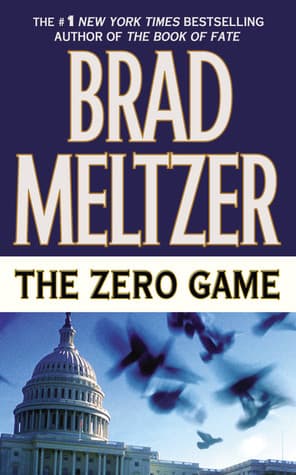
Brad Meltzer (2004)
Genre
Politics / Thriller / Mystery
Reading Time
9-10 hours
Key Themes
See below
Sign in to track this book
Two jaded Washington D.C. staffers put their lives at risk when a secret, high-stakes betting game turns deadly. They must rely on an idealistic teenage Senate page to expose a killer before they become the next victims.
Matthew Mercer and Harris Sandler, two senior congressional staffers, are bored with their D.C. careers. Matthew works for Congressman Bob Blain, and Harris for Congressman John Smith; they are best friends looking for an escape. Harris discovers 'The Zero Game,' a secret, high-stakes betting pool played by D.C. insiders. The game involves predicting seemingly random events within the Capitol, from a congressman's sneeze to bill votes. Intrigued by the thrill and potential for money, Harris convinces a reluctant Matthew to join, seeing it as a harmless diversion from their cynical lives in politics. They quickly get drawn into the game, unaware of its true, sinister nature.
The Zero Game's initial excitement quickly turns to dread when a player, Carol, is found dead. Her death is officially ruled a suicide, but Matthew and Harris are skeptical, knowing Carol was not likely to harm herself. They suspect her death is connected to The Zero Game, especially after realizing she made an unusual, specific bet just before she died. This incident shatters their view of the game as harmless, forcing them to consider they are involved in something more dangerous. Their initial curiosity turns to fear as they realize they might be next.
After Carol's death, Matthew and Harris realize they are being watched. They discover their own lives are in danger, as someone is systematically eliminating players of The Zero Game. Fearing for their safety, they go on the run, leaving their Capitol Hill offices and seeking refuge from an unseen enemy. They piece together clues, realizing the game's bets are not random but manipulated, and the stakes are far higher than money. Their flight from D.C. takes them to various hideouts, constantly looking over their shoulders as they try to understand who is behind the killings and the game's true purpose. They know they must uncover the truth before they become the next victims.
Desperate for help and unable to trust anyone in their usual circles, Matthew and Harris turn to Mallory, a bright, observant sixteen-year-old Senate page. Mallory, with her unique access to the Capitol's hidden passages and ability to move unseen, is an invaluable asset. Her idealism and sharp mind contrast with Matthew and Harris's jadedness, yet she quickly understands their serious situation. She agrees to help them, acting as their eyes and ears inside the Capitol, gathering information and relaying messages. Mallory's innocence and strong moral compass provide a much-needed anchor for the two men, who are increasingly lost in a world of betrayal and deceit.
With Mallory's help, Matthew and Harris begin to connect the dots. Mallory's access allows her to snoop in places adults cannot, and she uncovers suspicious files and communications. They learn that The Zero Game is not just about betting but is a system for manipulating political events and, possibly, for blackmail. The bets are pre-determined, and the 'players' are often pawns in a larger scheme. The killer is not just silencing witnesses but eliminating those who might expose the game's true architect. The trio realizes they are against a powerful, well-connected adversary who uses the game as a cover for more insidious operations within the heart of American government.
Mallory's knowledge of the Capitol's passages is crucial as they search for physical evidence. She guides Matthew and Harris through hidden tunnels, forgotten offices, and secret archives, revealing a side of the Capitol few ever see. These hidden spaces hold clues to the game's origins and the identities of its key players. They uncover historical documents and obscure references that suggest The Zero Game has been active for decades, evolving with each generation of D.C. power brokers. The Capitol itself becomes a character, a silent witness to power, with its walls holding secrets that could either save or condemn them.
As the investigation deepens, Matthew and Harris face a painful truth: the mastermind behind The Zero Game is someone they know and trust. The betrayal cuts deep, shaking their faith in their own judgment and in the integrity of those they worked with. This revelation forces them to re-evaluate every interaction, every casual conversation, and every seemingly unimportant detail. The betrayer's identity is a significant turning point, adding a personal dimension to the high-stakes thriller, making their quest for justice even more urgent and emotionally charged. They realize the conspiracy reaches far higher than they ever imagined, implicating figures of authority and influence.
Armed with evidence and a growing understanding of the game's true purpose, Matthew, Harris, and Mallory confront the mastermind. This climactic encounter takes place in a significant, symbolic Capitol location, heightening the tension. The mastermind, a powerful and seemingly untouchable figure, tries to manipulate and intimidate them. However, the trio stands firm, presenting the evidence they gathered. The confrontation escalates, leading to a dangerous chase and a narrow escape for the protagonists, as the mastermind uses their resources to try and silence them permanently.
Having narrowly escaped capture, Matthew, Harris, and Mallory realize that simply confronting the mastermind is not enough; they need to expose the truth to the public. They meticulously compile their evidence, including recordings, documents, and testimonies. With Mallory's connections and Matthew's media knowledge, they leak the story to a trusted journalist, ensuring it gets the attention it deserves. The revelation of The Zero Game's true nature—a system of political manipulation, blackmail, and murder—sends shockwaves through Washington, D.C., and the nation, forcing a reckoning within the corridors of power.
After the exposé, the powerful figures involved in The Zero Game face investigations and arrests. While the immediate danger ends, Matthew and Harris must deal with the consequences of their involvement and their past disillusionment. Mallory, having played a key role, is a symbol of integrity and courage. Matthew and Harris, though scarred, find redemption. They are no longer the cynical staffers they once were, having rediscovered their idealism through their fight for truth. They face a new chapter, forever changed by their terrifying journey through The Zero Game, with a renewed sense of purpose and a deeper understanding of power's true cost.
The Protagonist
Matthew transforms from a cynical, disillusioned staffer into a courageous truth-seeker, rediscovering his moral compass and fighting for justice.
The Protagonist
Harris moves from a thrill-seeking and somewhat reckless individual to a responsible and determined partner, facing the consequences of his initial choices.
The Supporting
Mallory maintains her idealism and courage, proving that integrity can thrive even in a corrupt environment, becoming a catalyst for the protagonists' redemption.
The Antagonist
The Mastermind's arc involves their gradual unmasking and eventual downfall, revealing the corrupt underbelly of power.
The Mentioned
Carol's arc is cut short, but her death catalyzes the main protagonists' journey from complacency to action.
The Supporting
Congressman Blain's arc is static, serving as a representation of the established political order that is unaware of the deeper corruption within its ranks.
The Supporting
Congressman Smith's arc is static, serving as a representation of the established political order that is unaware of the deeper corruption within its ranks.
The novel explores how power corrupts, especially in Washington D.C. The Zero Game itself is a metaphor for the hidden, unethical ways power is used. The mastermind's willingness to kill and manipulate for political gain highlights the moral decay that can come with unchecked ambition. Matthew and Harris, initially drawn to the game out of boredom and a desire for quick money, ultimately confront the deep corruption that underpins it, forcing them to re-evaluate their own involvement and the true cost of their jadedness. This theme is clear in the systematic elimination of players and the manipulation of political events for personal or institutional gain.
“In Washington, the game isn't about winning, it's about making sure everyone else loses.”
This theme is central to Matthew and Harris's character arcs. They begin the story cynical and disillusioned by their years in politics, seeing The Zero Game as a harmless distraction, a symptom of their lost idealism. However, Mallory, the young Senate page, embodies idealism and a belief in justice. Her presence acts as a moral compass, challenging their jaded views. Through their terrifying experience, Matthew and Harris are forced to confront their cynicism and, in fighting for truth, begin to rediscover a sense of purpose and the idealism they once held. The contrast highlights the struggle to maintain integrity in a corrupt system.
“Sometimes, it takes a kid to remind you what you're fighting for.”
Trust is fragile in 'The Zero Game.' Matthew and Harris's close friendship is tested, and their trust in the political system, and even in their own judgment, is shattered. The revelation of a trusted insider as the mastermind behind the game is a deep betrayal that shows the insidious nature of the conspiracy. They learn that appearances can be deceiving, and those closest to power are often the most dangerous. Their reliance on Mallory, an outsider to their inner circle, emphasizes the difficulty of finding genuine trust within a corrupt environment and the need to look beyond the obvious.
“In this town, the knife always comes from a friend's hand.”
The novel explores the power and danger of secrets, especially within government. The Zero Game itself is a closely guarded secret, operating in the Capitol's shadows. The narrative delves into the hidden passages, forgotten histories, and secret operations that exist beneath Washington D.C.'s public facade. The characters' quest involves uncovering layers of secrets, from the game's true nature to its architect's identity. The story suggests that secrets, when held by the powerful, can be used as weapons, twisting truth and enabling corruption, ultimately threatening democracy itself.
“The Capitol has more secrets than it has stones.”
A clandestine betting game that serves as the central mystery and conspiracy.
The Zero Game is the eponymous plot device, initially presented as a harmless, high-stakes betting pool among D.C. insiders. It quickly evolves into the central mystery and the engine of the plot. The game's bets, seemingly random at first, are revealed to be manipulated and pre-determined, serving as a cover for political manipulation, blackmail, and even murder. It is a symbol of the hidden corruption within the government, drawing the protagonists into a deadly conspiracy. The game's rules, history, and true purpose are gradually unveiled, driving the narrative forward.
Physical secret routes within the Capitol building, used for clandestine movement and discovery.
The intricate network of hidden passages, tunnels, and forgotten rooms within the U.S. Capitol building serves as a crucial plot device. Mallory, as a Senate page, has unique knowledge of these routes, enabling Matthew and Harris to move undetected, evade their pursuers, and access restricted areas. These hidden spaces are not just logistical tools but also symbolize the layers of secrets and clandestine operations that occur beneath the public eye of government. They provide a unique setting for suspenseful chases and the discovery of critical evidence, highlighting the physical and metaphorical hidden truths.
The initial jadedness of Matthew and Harris, which makes them susceptible to the game's allure.
Matthew Mercer and Harris Sandler's initial state of disillusionment and cynicism is a key plot device. Their boredom with their D.C. careers makes them susceptible to the allure of The Zero Game, drawing them into the conspiracy. This character trait allows the plot to initiate, as they are looking for an escape and a thrill. Their jadedness also provides a strong contrast to Mallory's idealism, highlighting the moral stakes of the story. Their journey from cynicism to a renewed sense of purpose and justice forms the core of their character arcs and the novel's thematic exploration.
“The game is always rigged. You just have to learn how to play it better than everyone else.”
— Cobb's cynical view on the political system and how to succeed within it.
“There are no secrets, only information that hasn't been uncovered yet.”
— Zack's belief in the discoverability of truth, central to the mystery.
“Power isn't about what you have, it's about what people *think* you have.”
— A reflection on the perception of power in Washington D.C.
“Every lie starts with a kernel of truth. That's what makes it so believable.”
— An observation on the nature of deception and manipulation.
“The greatest trick the devil ever pulled was convincing the world he didn't exist, but the second greatest was convincing people they couldn't make a difference.”
— A motivational thought on individual agency in the face of overwhelming forces.
“Trust is a luxury in this town, and most people can't afford it.”
— Reflecting on the pervasive distrust in the political environment.
“Sometimes, the only way to win is to change the rules.”
— A strategic insight into overcoming seemingly insurmountable obstacles.
“Fear is a powerful motivator. It can make people do things they never thought possible.”
— Understanding the psychological leverage used by antagonists.
“The past isn't dead. It's not even past. It's just waiting for you to dig it up.”
— Highlighting the lingering impact of past events and secrets.
“In a world of information overload, the most valuable commodity is not data, but context.”
— Emphasizing the importance of understanding the bigger picture.
“No one is truly anonymous in the digital age. Not if someone really wants to find you.”
— A stark reminder of the lack of privacy in modern society.
“The line between hero and villain is often just a matter of perspective.”
— Questioning moral absolutes and the complexity of character.
“Some battles aren't fought with guns, but with whispers.”
— Illustrating the subtle but potent power of rumor and manipulation.
“The truth is rarely simple, and never convenient.”
— A recognition of the often-uncomfortable nature of uncovering reality.
Ready to see how well you understood this book? Take our interactive quiz with 10 questions.

Biography coming soon.

Brett Casper
5.0

Dirk Uffelmann
4.7

Winston S. Churchill
4.5

Chimamanda Ngozi Adichie
4.5

Will Durant
4.4
Thomas Sowell
4.4

W.E.B. Du Bois
4.3

Alan Moore
4.3