BookBrief
The World As I See It cover
Archivist's Choice

The World As I See It

Albert Einstein (1990)

Genre

Politics / Biography / History / Science / Philosophy

Reading Time

120 min

Key Themes

See below

Track Your Reading

Sign in to track this book

This collection goes beyond Einstein's scientific theories, showing his humanistic thoughts on society, ethics, and the search for peace and freedom.

Core Idea

Albert Einstein's 'The World As I See It' reveals his broad and humanistic view of the world, extending past his scientific fame to show his moral, political, and philosophical beliefs. In essays, letters, and aphorisms, Einstein supports independent thought, individual freedom, and international peace as necessary for human advancement. He criticizes nationalism, militarism, and rigid beliefs, instead suggesting a universal 'cosmic religious feeling' based on wonder at the universe's order and beauty, rather than human-like gods. The book shows his belief that science is not just an intellectual pursuit but a moral one, linked to finding truth, justice, and improving humanity.
Reading time
120 min
Difficulty
Medium
✓ Read this if...
You are interested in understanding the ethical, political, and philosophical mind of one of history's greatest scientists, or if you seek inspiration for independent thought and peace.
✗ Skip this if...
You are looking for a deep dive into Einstein's scientific theories, or if you prefer a single, cohesive narrative rather than a collection of shorter pieces.

Core idea

The central argument and framework that powers the entire book.

Albert Einstein's 'The World As I See It' reveals his broad and humanistic view of the world, extending past his scientific fame to show his moral, political, and philosophical beliefs. In essays, letters, and aphorisms, Einstein supports independent thought, individual freedom, and international peace as necessary for human advancement. He criticizes nationalism, militarism, and rigid beliefs, instead suggesting a universal 'cosmic religious feeling' based on wonder at the universe's order and beauty, rather than human-like gods. The book shows his belief that science is not just an intellectual pursuit but a moral one, linked to finding truth, justice, and improving humanity.

At a glance

Reading time

120 min

Difficulty

Medium

Read this if...

You are interested in understanding the ethical, political, and philosophical mind of one of history's greatest scientists, or if you seek inspiration for independent thought and peace.

Skip this if...

You are looking for a deep dive into Einstein's scientific theories, or if you prefer a single, cohesive narrative rather than a collection of shorter pieces.

Key Takeaways

1

The Sanctity of Independent Thought

True progress stems from the individual's unburdened pursuit of truth, not collective dogma.

Quote

The really valuable thing in the pageant of human life seems to me to be not the political state, but the creative, sentient individual, the personality; it alone creates the noble and the sublime, while the mere multitude, as such, remains dull in thought and dull in feeling.

Einstein says the individual drives real progress. He argues that societal advancement, whether scientific, artistic, or ethical, comes from the independent mind, free from groupthink or state control. The group, while needed for organization, often stops new ideas and critical thinking. This view challenges ideas that put the state or group before individual freedom, suggesting that a too powerful group can slow the very progress it wants to encourage. For Einstein, an individual's freedom to explore, question, and create is not just...

Supporting evidence

Einstein's essays frequently contrast the 'dullness' of the multitude with the 'noble and sublime' creations of the individual. He often reflects on the importance of personal autonomy in scientific discovery and moral development.

Apply this

Cultivate critical thinking by actively seeking diverse perspectives and challenging popular opinions. Prioritize personal learning and independent problem-solving over blindly following trends or authority figures. Encourage environments that foster individual expression and intellectual freedom.

individualismcritical-thinkingautonomy
2

The Cosmic Religious Feeling

A profound sense of wonder and humility in the face of the universe's order transcends conventional religion.

Quote

The most beautiful emotion we can experience is the mystical. It is the sower of all true art and science. He to whom this emotion is a stranger, who can no longer wonder and stand rapt in awe, is as good as dead: his eyes are closed.

Einstein describes a 'cosmic religious feeling' not linked to specific gods or beliefs, but to an amazing recognition of the universe's complex order and deep mystery. This feeling, he says, is the source of both scientific study and artistic expression. It is a deep humility and wonder at the reason and beauty in existence, pushing people to understand and value the world beyond their immediate self-interest. This 'religion' is not about fear or reward but about a joyful respect for the cosmos, which he saw as the most mature type of...

Supporting evidence

He discusses three stages of religious development: fear-based, moral-based, and finally, the cosmic religious feeling which he attributes to great scientific and artistic minds like Spinoza.

Apply this

Practice mindfulness and observation of natural phenomena to cultivate a sense of wonder. Engage with scientific discoveries and philosophical texts that explore the vastness and complexity of the universe. Seek moments of quiet contemplation to appreciate the interconnectedness of existence.

cosmic-awespiritualityscientific-wonder
3

Education for Freedom, Not Obedience

The true purpose of education is to foster independent thought and creativity, not rote memorization or compliance.

Quote

It is not so much the knowledge that is needed as the ability to acquire knowledge, and the ability to think independently.

Einstein criticizes education systems that value fitting in and collecting facts over developing critical thinking and individual curiosity. He argues that an education focused on memorization and obedience creates obedient citizens but stops the creativity and new ideas needed for societal progress. Instead, he supports an approach that sparks a natural love of learning, encourages questioning, and allows students to follow their own interests. The goal is to produce people capable of independent thought and moral judgment, rather th...

Supporting evidence

Einstein often recounts his own struggles with the rigid German school system and praises educators who encouraged his independent thought, like his uncle Jakob and the scientific books he read on his own.

Apply this

As an educator or parent, prioritize open-ended questions and project-based learning. As a learner, actively seek to understand 'why' rather than just 'what,' and pursue topics that genuinely pique your curiosity, even if outside formal curricula.

pedagogycritical-thinkinglifelong-learning
4

The Peril of Nationalism

Nationalism is an infantile disease, undermining universal human values and fostering conflict.

Quote

Nationalism is an infantile sickness. It is the measles of mankind.

Einstein views nationalism as a dangerous and old-fashioned impulse that stops humanity from achieving lasting peace and cooperation. He sees it as a narrow-minded tribalism that puts one's own group above others, leading to suspicion, hostility, and ultimately, war. For a man who lived through two World Wars and the rise of fascism, nationalism was not just an inconvenience but a serious threat to civilization itself. He believed that true human progress came from moving past these artificial divisions and recognizing our shared huma...

Supporting evidence

His writings frequently condemn nationalism, especially in the context of the rise of Nazism and the lead-up to World War II, advocating for international cooperation and a world government.

Apply this

Actively challenge narratives that promote 'us vs. them' mentalities based on nationality. Support international organizations and initiatives that foster global cooperation and understanding. Educate oneself about diverse cultures and histories to appreciate shared human experiences.

globalismpeaceanti-nationalism
5

The Elusive Nature of Liberty

True liberty requires both freedom from external oppression and the capacity for self-governance and moral action.

Quote

My political ideal is democracy. Let every man be respected as an individual and no man idolized. It is an irony of fate that I myself have been the recipient of excessive admiration and reverence from my fellow-beings, without my own fault and, indeed, without my own desert.

Einstein's idea of freedom goes beyond just political freedom. While he supports democratic ideals and protecting individual rights from state overreach, he also suggests a deeper, internal part of freedom. True freedom, for Einstein, involves the ability to make moral choices and the courage to act according to one's conscience, even against common norms. He expresses discomfort with the 'cult of personality,' seeing it as against the democratic ideal where every person is respected, but none are worshipped. This suggests that while ...

Supporting evidence

He often speaks about the importance of 'spiritual freedom' and the inner independence that allows individuals to resist external pressures, even when facing persecution, as seen in his support for pacifists and dissidents.

Apply this

Actively participate in democratic processes. Cultivate personal integrity and the courage to stand by your convictions. Reflect on your moral compass and strive to align your actions with your values, even when it's difficult.

democracyethicsindividual-rights
6

Science as a Moral Endeavor

Scientific pursuit, while objective, is ultimately driven by a moral imperative to understand and improve the human condition.

Quote

The most important motive for work in the laboratory is not the mere desire to know, but the longing to understand, and this longing has its roots in the cosmic religious feeling.

For Einstein, science is not a separate, amoral activity. While scientific methods require objectivity, the main reason for scientific inquiry is deeply moral and spiritual. It comes from a deep desire to understand the universe, which he links to the 'cosmic religious feeling.' This understanding, he believed, could lead to a more enlightened and ethical humanity. He saw the misuse of science, especially in war, as a twisting of its true purpose. Thus, scientists have a moral duty not only for their discoveries but also for how those...

Supporting evidence

His passionate pleas for disarmament and the peaceful use of atomic energy, despite his instrumental role in its theoretical basis, underscore his belief in the moral responsibility of scientists.

Apply this

Engage with scientific advancements critically, considering their ethical implications. Support scientific research that addresses global challenges like climate change or disease. Advocate for policies that ensure scientific discoveries are used for the common good.

scientific-ethicspeacehumanitarianism
7

The Value of Solitude and Simplicity

Meaningful work and inner peace often emerge from a life free from excessive material desires and social pressures.

Quote

I am a horse for single harness, not cut out for tandem or team. For I am more inclined to follow my own path than to accommodate myself to others.

Einstein often expresses a preference for solitude and a simple life, believing that these conditions help deep thought and creative work. He avoids the luxuries of wealth, fame, and social obligations, seeing them as distractions that can hinder intellectual and spiritual growth. His famous dislike of socks, his simple clothes, and his love for sailing were not just quirks but showed a deliberate choice to minimize outside complexities. This philosophy suggests that true fulfillment comes not from external possessions or social appro...

Supporting evidence

His personal life, known for its simplicity (e.g., his dislike of socks, modest living arrangements), and his frequent retreats into solitary thought or sailing, exemplify this principle.

Apply this

Identify and minimize unnecessary material possessions and social commitments. Schedule regular periods of uninterrupted solitude for reflection, creative work, or simply being. Prioritize activities that bring genuine internal satisfaction over external validation.

minimalismcontemplationfocus
8

The Illusion of Free Will

While we act as if we are free, a deeper understanding of causality suggests our choices are predetermined.

Quote

I do not believe in free will. Schopenhauer's saying, 'Man can do what he wills but he cannot will what he wills,' has been a real inspiration to me since my youth and a comfort in the face of life's hardships and disappointments and my own mistakes.

Einstein's deterministic worldview, influenced by philosophers like Spinoza and Schopenhauer, says that human actions, like all things in the universe, are controlled by cause and effect. He finds comfort in this idea, seeing it as a way to understand human behavior with compassion rather than judgment. While acknowledging the personal experience of making choices, he suggests that from a cosmic view, our 'choices' are the certain result of past conditions and our inherent nature. This view challenges common ideas of moral responsibil...

Supporting evidence

He explicitly cites Schopenhauer's quote and frequently refers to the deterministic nature of the universe in his philosophical reflections, linking it to the predictability of physical laws.

Apply this

Practice empathy by considering the underlying causes and circumstances that shape others' behaviors. Cultivate self-compassion by understanding that your own actions are influenced by a complex web of factors. Focus on understanding and improving systems rather than solely blaming individuals.

determinismcausalityempathy
9

The Enduring Power of Wonder

Maintaining a childlike sense of curiosity is crucial for both scientific discovery and a meaningful life.

Quote

The most beautiful thing we can experience is the mysterious. It is the source of all true art and science. He to whom this emotion is a stranger, who can no longer pause to wonder and stand rapt in awe, is as good as dead: his eyes are closed.

Einstein consistently stresses the great importance of wonder and mystery as the driving force behind intellectual and creative efforts. He argues that losing the ability to feel awe at the universe's unexplainable parts is like spiritual death. This childlike curiosity, the ability to be deeply moved by the unknown, is what pushes scientists to uncover nature's secrets and artists to express its beauty. It is a call to resist becoming jaded as an adult and to constantly engage with the world with an open, questioning mind, recognizin...

Supporting evidence

His reflections on the 'cosmic religious feeling' and his personal accounts of being captivated by the mysteries of physics from a young age highlight this theme.

Apply this

Actively seek out new knowledge and experiences that challenge your understanding. Engage with children's uninhibited curiosity to rekindle your own. Allow yourself moments of pure observation and appreciation for the natural world and complex phenomena.

curiositymysteryawe
10

The Ethical Imperative of Peace

Humanity's survival depends on transcending war through international cooperation and a commitment to non-violence.

Quote

The release of atom power has changed everything except our way of thinking. Thus, we are drifting toward a catastrophe beyond conception. We shall require a substantially new manner of thinking if mankind is to survive.

Perhaps his most urgent message, especially after the development of atomic weapons, is the absolute need for peace. Einstein saw war as an old and self-destructive problem that humanity could no longer afford, particularly in an age of weapons of mass destruction. He believed that atomic power required a major change in human awareness and political organization, moving away from national rivalries towards a global system of cooperation and disarmament. His constant support for a world government and his warnings about humanity's 'sl...

Supporting evidence

His numerous letters and public statements after World War II, particularly his collaboration with Bertrand Russell on the Russell-Einstein Manifesto, passionately call for nuclear disarmament and world peace.

Apply this

Support and advocate for international diplomacy and peace initiatives. Educate yourself and others about the dangers of nuclear proliferation and the importance of global cooperation. Promote non-violent conflict resolution in personal and public life.

disarmamentworld-peaceglobal-governance

Critical analysis

Notable Quotes

The most beautiful thing we can experience is the mysterious. It is the source of all true art and all science.

Reflecting on the nature of discovery and human experience.

Peace cannot be kept by force; it can only be achieved by understanding.

Discussing international relations and the path to peace.

The important thing is not to stop questioning. Curiosity has its own reason for existence.

Emphasizing the value of curiosity and continuous learning.

Imagination is more important than knowledge. For knowledge is limited, whereas imagination embraces the entire world, stimulating progress, giving birth to evolution.

Highlighting the role of imagination in scientific and human progress.

Joy in looking and comprehending is nature's most beautiful gift.

Expressing appreciation for the human capacity for observation and understanding.

My political ideal is democracy. Everyone should be respected as an individual, but no one idolized.

Stating his political beliefs and views on individual respect.

The World is a dangerous place to live; not because of the people who are evil, but because of the people who don't do anything about it.

Reflecting on social responsibility and the inaction of good people.

A human being is a part of a whole, called by us universe, a part limited in time and space. He experiences himself, his thoughts and feelings as something separated from the rest... a kind of optical delusion of his consciousness.

Discussing the interconnectedness of humanity and the universe.

The value of a man resides in what he gives and not in what he is capable of receiving.

Offering a perspective on true human worth and contribution.

Strive not to be a success, but rather to be of value.

Advising on the pursuit of a meaningful life over mere achievement.

The right to search for truth implies also a duty; one must not conceal any part of what one has recognized to be true.

Discussing the ethical obligations of scientists and thinkers.

Reading, after a certain age, diverts the mind too much from its creative pursuits. Anyone who reads too much and uses his own brain too little falls into lazy habits of thinking.

Cautioning against excessive reading without independent thought.

The only way to escape the corrupting influence of praise is to go on working.

Reflecting on how to maintain integrity and focus amidst public acclaim.

The most incomprehensible thing about the world is that it is comprehensible.

Expressing wonder at the order and intelligibility of the universe.

Quiz

Test Your Knowledge

Ready to see how well you understood this book? Take our interactive quiz with 10 questions.

10
Questions
~5
Minutes
?
Best Score

Key Questions (FAQ)

'The World As I See It' is a collection of essays, letters, and speeches by Albert Einstein, offering insights into his personal philosophies on topics beyond physics, such as politics, ethics, peace, education, and human liberty. It provides a mosaic portrait of Einstein the man, rather than Einstein the scientist.

About the author

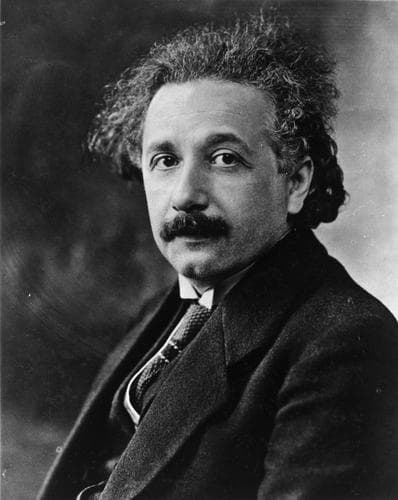
Albert Einstein

Albert Einstein was a renowned theoretical physicist whose work revolutionized our understanding of space, time, gravity, and the universe. He is best known for developing the theory of relativity, one of the two pillars of modern physics. His book, 'The World As I See It,' offers insights into his philosophical and personal views beyond his scientific contributions.