BookBrief
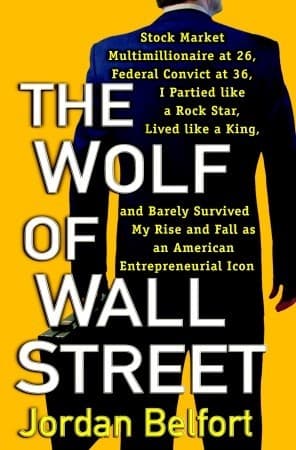
The Wolf of Wall Street cover
Archivist's Choice

The Wolf of Wall Street

Jordan Belfort (2007)

Genre

Business / Biography / Memoir / Finance

Reading Time

10-12 hours (based on 528 pages)

Key Themes

See below

Track Your Reading

Sign in to track this book

Jordan Belfort's memoir is a wild ride through the decadent 90s, where an insatiable appetite for wealth, drugs, and debauchery propelled him from selling Italian ices to orchestrating a multi-million dollar stock fraud empire, only to see it all spectacularly collapse.

Core Idea

Jordan Belfort's memoir, "The Wolf of Wall Street," shows the rapid rise and spectacular fall of a morally corrupt stockbroker who mastered high-pressure sales and deception to build a vast fortune. The book argues that unchecked ambition, coupled with an understanding of human greed and vulnerability, can lead to immense, though illicit, success. Belfort details how he used legal loopholes and outright fraud, creating a culture of excess and reckless abandon that ultimately crumbled under its own criminality. The narrative is a cautionary tale, showing that while the allure of the 'American Dream' can be distorted into a pursuit of wealth at any cost, the consequences involve personal ruin, legal repercussions, and damage to countless victims. The book's central argument is that the intoxicating power of persuasion, when untethered from ethical considerations, can manipulate both individuals and markets to achieve extraordinary, though unsustainable, gains. Belfort presents his own experiences as evidence of how a charismatic leader can cultivate a cult of personality, inspiring loyalty and complicity in fraudulent schemes. He shows the thin line between aggressive sales tactics and outright fraud, revealing how his firm operated within a perceived illusion of legality until the inevitable crash exposed the true nature of their operations. Ultimately, the book asserts that while the path to immense wealth can be paved with deception, the cost to others and the self is immeasurable, leading to an inescapable downfall and a forced confrontation with accountability.
Reading time
10-12 hours (based on 528 pages)
Difficulty
Medium
✓ Read this if...
You're fascinated by true crime in the financial world, want to understand the psychology of scammers, or enjoy memoirs about extreme excess and downfall. Also recommended if you're interested in the darker side of ambition and the consequences of unchecked greed.
✗ Skip this if...
You prefer books with clear moral lessons, find explicit accounts of drug use and hedonism gratuitous, or are looking for practical financial advice (this is a cautionary tale, not a guide).

Core idea

The central argument and framework that powers the entire book.

Jordan Belfort's memoir, "The Wolf of Wall Street," shows the rapid rise and spectacular fall of a morally corrupt stockbroker who mastered high-pressure sales and deception to build a vast fortune. The book argues that unchecked ambition, coupled with an understanding of human greed and vulnerability, can lead to immense, though illicit, success. Belfort details how he used legal loopholes and outright fraud, creating a culture of excess and reckless abandon that ultimately crumbled under its own criminality. The narrative is a cautionary tale, showing that while the allure of the 'American Dream' can be distorted into a pursuit of wealth at any cost, the consequences involve personal ruin, legal repercussions, and damage to countless victims.

The book's central argument is that the intoxicating power of persuasion, when untethered from ethical considerations, can manipulate both individuals and markets to achieve extraordinary, though unsustainable, gains. Belfort presents his own experiences as evidence of how a charismatic leader can cultivate a cult of personality, inspiring loyalty and complicity in fraudulent schemes. He shows the thin line between aggressive sales tactics and outright fraud, revealing how his firm operated within a perceived illusion of legality until the inevitable crash exposed the true nature of their operations. Ultimately, the book asserts that while the path to immense wealth can be paved with deception, the cost to others and the self is immeasurable, leading to an inescapable downfall and a forced confrontation with accountability.

At a glance

Reading time

10-12 hours (based on 528 pages)

Difficulty

Medium

Read this if...

You're fascinated by true crime in the financial world, want to understand the psychology of scammers, or enjoy memoirs about extreme excess and downfall. Also recommended if you're interested in the darker side of ambition and the consequences of unchecked greed.

Skip this if...

You prefer books with clear moral lessons, find explicit accounts of drug use and hedonism gratuitous, or are looking for practical financial advice (this is a cautionary tale, not a guide).

Key Takeaways

1

The Illusion of Legality

How 'legal' loopholes fueled massive fraud.

Quote

The game was rigged, not by breaking the law, but by expertly navigating its grey areas and exploiting the ignorance of others.

Belfort shows how Stratton Oakmont operated on the edge of legality, often crossing it but always presenting a facade of legitimate business. The 'pump and dump' scheme, while clearly unethical and eventually illegal, began by using the lack of regulation around microcap stocks and the trust clients placed in 'licensed' brokers. The firm's success was not just about high-pressure sales; it was about creating a system where the brokers, and by extension Belfort, profited from the artificial inflation of stock prices before dumping them...

Supporting evidence

Belfort details the systematic practice of 'pump and dump' where Stratton Oakmont would buy large blocks of cheap, illiquid stocks, use their sales force to aggressively hype them to clients, driving up the price, and then sell their own holdings at the peak, leaving clients holding the bag.

Apply this

Always question the 'next big thing' in investing, especially if the hype comes from a single source. Understand the underlying value and liquidity of any investment before committing. If it sounds too good to be true, it almost certainly is.

pump-and-dumpmicrocap-stocksregulatory-arbitrage
2

The Power of Persuasion (and Deception)

Belfort's 'Straight Line System' as a blueprint for high-pressure sales.

Quote

The only thing standing between you and your goal is the bullshit story you keep telling yourself as to why you can't achieve it.

Belfort's 'Straight Line System' was more than a sales technique; it was a psychological manipulation toolkit. It taught brokers to control the conversation, identify and overcome objections, and create an artificial sense of urgency and trust. The system's effectiveness lay in its ability to disarm clients, making them feel understood and valued, while simultaneously steering them towards transactions that solely benefited Stratton Oakmont. It exposes the dark side of charisma and persuasive communication when separated from ethical ...

Supporting evidence

Belfort meticulously describes the 'Straight Line System' in the book, outlining specific scripts, tonality techniques, and psychological tactics used by his brokers to maintain control of sales calls and close deals, regardless of the client's actual financial interest.

Apply this

Be critically aware of sales tactics that create urgency, promise guaranteed returns, or pressure you into quick decisions. Learn to identify red flags in communication, such as overly aggressive language or a reluctance to answer direct questions about risk.

sales-psychologymanipulationpersuasion-tactics
3

The Corrosive Nature of Excess

Unbridled wealth leading to a spiral of self-destruction.

Quote

I was a drug addict and an alcoholic, but I was also a genius.

The book is a cautionary tale about the destructive potential of unchecked wealth and hedonism. Belfort's vast fortune enabled a lifestyle of excess—drugs, prostitutes, luxury goods, and reckless spending—that ultimately consumed him. This was not merely about enjoying riches; it was a desperate, escalating chase for more extreme experiences, fueled by addiction and a sense of entitlement. The narrative shows how this relentless pursuit of gratification not only destroyed his personal life and relationships but also blurred his judgme...

Supporting evidence

Numerous anecdotes showcase this, from the sinking of his 170-foot yacht in a storm while high on Quaaludes, to the $700,000 hotel tab, the constant use of cocaine and other drugs in the office, and the hiring of a full-time staff of twenty-two for his household.

Apply this

Recognize that true fulfillment rarely comes from material possessions or fleeting pleasures. Cultivate self-discipline and seek balance in life, understanding that unchecked desires can lead to addiction and ruin, regardless of financial standing.

hedonismaddictionself-destructionaffluenza
4

The Cult of Personality

How a charismatic leader can blind followers to unethical practices.

Quote

They called me king, and they did my bidding.

Belfort's ability to inspire fierce loyalty and obedience among his brokers shows the power of a charismatic leader, even one operating on the fringes of morality. He cultivated a 'Wolf Pack' mentality, creating an environment of aggressive ambition, camaraderie, and shared illicit gains. This created a powerful 'us vs. them' dynamic, where external critics were dismissed, and internal ethical boundaries were eroded in the pursuit of wealth and Belfort's approval. The book is an example of how a compelling personality can create a cor...

Supporting evidence

The book details the lavish parties, motivational speeches, and the immense financial rewards Belfort bestowed upon his top brokers, creating a powerful incentive for loyalty and a willingness to engage in aggressive, often illegal, sales tactics.

Apply this

Be wary of leaders who demand unquestioning loyalty or create an 'us vs. them' mentality. Prioritize ethical considerations over blind allegiance, and critically evaluate the culture of any organization you join.

charismatic-leadershipgroupthinkcult-cultureorganizational-ethics
5

The Allure of the 'American Dream' (Distorted)

The dark side of relentless ambition without moral grounding.

Quote

I went from hustling Italian ices at sixteen to making hundreds of millions.

Belfort's rags-to-riches story, from selling Italian ices to becoming a multi-millionaire, embodies a distorted version of the American Dream. It celebrates the relentless pursuit of wealth and success at any cost, showing how ambition, when unmoored from ethical principles, can lead to spectacular, though illicit, achievement. The narrative highlights the societal fascination with wealth and power, even when obtained through questionable means, and the dangerous appeal of 'getting rich quick.' It forces readers to confront the questi...

Supporting evidence

Belfort frequently references his humble beginnings and relentless drive to accumulate wealth, contrasting it with the immense fortune he amassed through Stratton Oakmont, suggesting a perverted fulfillment of the American Dream.

Apply this

Define your own version of success that includes ethical considerations and personal well-being, not just financial gain. Understand that shortcuts often come with severe long-term consequences.

american-dream-critiqueunethical-ambitionwealth-worship
6

The Inevitable Crash

Even the most elaborate schemes eventually unravel.

Quote

Until it all came crashing down...

Despite Belfort's cunning and the firm's elaborate schemes, the house of cards eventually collapsed. The relentless pursuit by the SEC and FBI, coupled with internal betrayals and Belfort's own escalating recklessness, proved too much to sustain. This takeaway emphasizes that illicit gains, no matter how substantial, are built on an unstable foundation. The book is a reminder that justice, though sometimes slow, often prevails, and that the consequences of illegal actions will eventually catch up, leading to a dramatic and painful dow...

Supporting evidence

The book details the increasing scrutiny from regulatory bodies (SEC, FBI), the wiretaps, the eventual arrests of key figures, and Belfort's own plea bargain and subsequent incarceration.

Apply this

Understand that integrity is a long-term asset, and shortcuts or illegal activities carry immense personal and professional risks. Prioritize compliance and ethical conduct to build sustainable success.

consequences-of-crimeregulatory-oversightjustice-system
7

The Cost to Others

The human toll of financial fraud.

Quote

I was utterly and completely self-absorbed, oblivious to the destruction I was causing.

While often presented through Belfort's self-serving lens, the book implicitly reveals the devastating impact of his actions on countless innocent investors. These were not just abstract numbers; they were individuals and families who lost their life savings, retirement funds, and dreams due to Stratton Oakmont's predatory practices. Beyond the financial victims, the narrative also hints at the personal cost to his family—his wife, children, and parents—who were caught in the maelstrom of his greed and recklessness. This takeaway high...

Supporting evidence

While Belfort focuses on his own experiences, the sheer scale of the 'pump and dump' operations implies thousands of victims. His descriptions of his deteriorating relationship with his wife and the constant presence of security and cameras in his home also show the strain on his family.

Apply this

Consider the broader impact of your actions, especially in financial dealings. Empathy and ethical considerations should guide decision-making, recognizing that personal gain should not come at the expense of others' well-being.

victim-impactfinancial-ethicssocial-responsibility
8

The Seduction of the 'Inside Game'

The appeal of privileged information and exclusive opportunities.

Quote

We weren't just selling stocks; we were selling dreams, and the dream of being 'in on it' was the most potent of all.

Belfort understood the psychological draw of feeling 'special' or having access to privileged information. His brokers often pitched stocks as exclusive opportunities, not available to the average investor, creating a sense of urgency and perceived advantage for the client. This 'inside game' mentality made investors feel they were part of an elite club, even as they were being exploited. It speaks to a fundamental human desire for advantage and the willingness to overlook red flags when presented with the promise of easy wealth and e...

Supporting evidence

The sales scripts and techniques described by Belfort often involved creating a narrative of 'hot tips' or 'ground floor opportunities' in obscure companies, making clients believe they were getting an exclusive chance at massive returns.

Apply this

Be extremely skeptical of any investment opportunity pitched as 'exclusive' or 'secret.' True value comes from transparent information and sound analysis, not privileged access. Avoid making decisions based on FOMO (Fear Of Missing Out).

fomoinsider-trading-psychologyexclusive-opportunities
9

The Rehabilitation Narrative

A complex look at redemption and accountability post-scandal.

Quote

I lost everything, and then I found myself.

While the book largely focuses on his rise and fall, Belfort's subsequent career as a motivational speaker and author raises questions about rehabilitation and accountability. He has used his past notoriety to create a new form of success, claiming to teach ethical sales. This takeaway encourages a critical examination of how society processes and responds to individuals who have committed significant financial crimes. It prompts reflection on whether a 'tell-all' memoir and a new career are sufficient forms of atonement, and the exte...

Supporting evidence

The very existence of the book, written by Belfort himself, and his public persona as a 'reformed' individual, serves as the primary evidence for this takeaway, inviting readers to consider his motivations and the effectiveness of his 'rehabilitation.'

Apply this

Approach narratives of redemption from controversial figures with a critical eye. Evaluate actions and consistent behavior over time, rather than just words, to assess true change and accountability.

redemption-narrativeaccountabilitypublic-perceptionsecond-chances

Critical analysis

Notable Quotes

The only thing standing between you and your goal is the bullshit story you keep telling yourself as to why you can't achieve it.

Belfort's motivational philosophy on overcoming self-imposed limitations.

Let me tell you something. There's no nobility in poverty. I've been a rich man and I've been a poor man. And I choose rich every fucking time.

Belfort's blunt justification for his pursuit of wealth.

I'm not gonna die sober.

Belfort's defiant attitude toward his hedonistic lifestyle and addiction.

The year I turned 26, I made $49 million, which really pissed me off because it was three shy of a million a week.

Belfort's humorous yet revealing reflection on his insatiable greed.

Stratton Oakmont is America.

Belfort's grandiose claim about his brokerage firm representing American capitalism.

I was a master of the universe. I could do no wrong.

Belfort describing his peak of power and invincibility before his downfall.

The easiest way to make money is to create something of such value that everybody wants and go out and give and create value, the money comes automatically.

A rare moment of legitimate business advice amidst the corruption.

I had a taste for the good life, and I wasn't about to give it up.

Belfort explaining his refusal to abandon his lavish lifestyle despite the risks.

Drugs were my fuel. They gave me the energy to keep going, to keep pushing, to keep selling.

Belfort on how substance abuse fueled his relentless work ethic.

I was selling garbage to garbage men.

Belfort's candid admission about the worthless penny stocks he peddled.

The real question is this: Was all this legal? Absolutely not. But we were making more money than we knew what to do with.

Belfort's frank acknowledgment of his illegal activities driven by profit.

I built him up to be a monster, and then I became the monster.

Belfort reflecting on how he adopted the ruthless traits of his mentor.

Money doesn't just buy you a better life, better food, better cars, better pussy, it also makes you a better person.

Belfort's controversial belief that wealth improves character.

I was a young, hungry, and stupid kid who wanted to make a name for himself.

Belfort's self-assessment of his early ambitions and naivety.

Quiz

Test Your Knowledge

Ready to see how well you understood this book? Take our interactive quiz with 10 questions.

10
Questions
~5
Minutes
?
Best Score

Key Questions (FAQ)

The Wolf of Wall Street is Jordan Belfort's memoir detailing his rise and fall as the founder of Stratton Oakmont, a corrupt brokerage firm that engaged in pump-and-dump stock schemes. It chronicles his extreme wealth, rampant drug use, hedonistic lifestyle, and eventual legal consequences for securities fraud and money laundering.

About the author