BookBrief
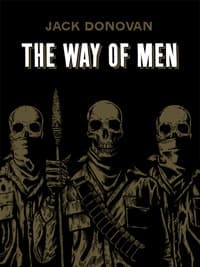
The Way of Men cover
Archivist's Choice

The Way of Men

Jack Donovan (2012)

Genre

Politics / Leadership / Relationships / Philosophy / Self-Help

Reading Time

180 min

Key Themes

See below

Track Your Reading

Sign in to track this book

Jack Donovan's 'The Way of Men' defines masculinity not by female approval or moral goodness, but by a man's capacity for survival and tactical virtue within a male group.

Core Idea

The Way of Men argues that masculinity is a group phenomenon, defined by the practical needs and virtues men require to band together for survival and competition. It is a concept between men, separate from 'goodness' or pro-social behavior. True masculinity involves developing Strength, Courage, Mastery, and Honor to be valuable and formidable within a male group, especially in a world Donovan sees as feminized and disconnected from primal male realities. The book suggests men should embrace this ancient, tribal masculinity for authenticity and resilience in a 'Bonobo Society'.
Reading time
180 min
Difficulty
Medium
✓ Read this if...
You are a man interested in a provocative and contrarian perspective on masculinity, tribalism, and male identity, particularly if you feel alienated by modern societal norms regarding gender roles and male behavior. You are looking for a philosophical framework for male self-improvement centered on primal virtues.
✗ Skip this if...
You are easily offended by essentialist, conservative, and sometimes confrontational views on gender, or if you prefer a more inclusive, progressive, or academically nuanced discussion of masculinity. If you expect a self-help book focused on improving relationships with women or navigating modern social etiquette, this is not it.

Core idea

The central argument and framework that powers the entire book.

The Way of Men argues that masculinity is a group phenomenon, defined by the practical needs and virtues men require to band together for survival and competition. It is a concept between men, separate from 'goodness' or pro-social behavior. True masculinity involves developing Strength, Courage, Mastery, and Honor to be valuable and formidable within a male group, especially in a world Donovan sees as feminized and disconnected from primal male realities. The book suggests men should embrace this ancient, tribal masculinity for authenticity and resilience in a 'Bonobo Society'.

At a glance

Reading time

180 min

Difficulty

Medium

Read this if...

You are a man interested in a provocative and contrarian perspective on masculinity, tribalism, and male identity, particularly if you feel alienated by modern societal norms regarding gender roles and male behavior. You are looking for a philosophical framework for male self-improvement centered on primal virtues.

Skip this if...

You are easily offended by essentialist, conservative, and sometimes confrontational views on gender, or if you prefer a more inclusive, progressive, or academically nuanced discussion of masculinity. If you expect a self-help book focused on improving relationships with women or navigating modern social etiquette, this is not it.

Key Takeaways

1

Masculinity as the Way of the Gang

True masculinity is defined by a man's utility and value within a male survival group, not by societal approval or individual virtue.

Quote

Manliness is about demonstrating to other men that you have what it takes to survive tough times. Manliness is about our primal nature. It’s about what men have always needed from each other if they wanted to win struggles against nature, and against other men.

Donovan argues that common definitions of masculinity are often too clean, softened, or socially engineered for modern goals. He cuts through these stories to propose a primal, evolutionary idea: masculinity is about a man's ability to help a male group, or 'gang,' survive and grow strong. It is not about being 'good' morally, nor is it about attracting women—those are secondary. Instead, it is about having traits other men would value in a fight for survival: strength, courage, mastery, and honor. This view frames masculinity as an i...

Supporting evidence

Donovan's core argument rests on an anthropological and historical interpretation of male social structures, emphasizing the historical necessity of male bonding for defense, hunting, and tribal survival. He contrasts this with modern, 'child-proofed' societies that have largely removed these primal pressures.

Apply this

Men should evaluate their actions and character not through the lens of individualistic self-help or female approval, but by asking if they possess the 'tactical virtues' that would make them valuable and respected members of a male survival unit. Focus on developing physical and mental toughness, competence, and reliability.


primal-masculinityinter-male-dynamicssurvival-gang
2

The Four Tactical Virtues

Courage, Strength, Mastery, and Honor are the essential qualities forged in the crucible of male group survival.

Quote

The Way of Men describes the four tactical virtues of the survival gang.

Donovan names four core virtues that are not abstract ideals, but practical needs for a working male survival group: Courage (facing danger), Strength (physical and mental toughness), Mastery (competence and skill), and Honor (loyalty and following the group's code). These are 'tactical' because they apply directly and are measurable in high-stakes situations. They are not 'soft' virtues like empathy or compassion, which, while valuable elsewhere, do not directly help the group overcome threats. These virtues form the basis of male re...

Supporting evidence

The book presents these virtues as universal principles observed in historical and tribal male societies, where the failure to exhibit them could mean death for the individual or the group.

Apply this

Cultivate these four virtues actively. Seek out challenges that test your courage and strength. Dedicate yourself to mastering useful skills. Uphold your word and demonstrate unwavering loyalty to those you deem worthy, understanding that honor is the currency of male respect.

tactical-virtuescouragestrengthmasteryhonor
3

Manliness vs. Goodness

Manliness is a descriptive quality of masculine effectiveness, independent of moral 'goodness' as defined by broader society.

Quote

Manliness isn’t about being a good man. There are plenty of bad guys – real jerks –who are manlier than you are, and you know it.

Donovan makes a key point: manliness is not the same as 'being a good man' in the usual sense. He states that history and experience show effective, even admirable, men in a survival situation might be seen as morally 'bad' or 'jerks' by modern standards. This challenges the common idea that masculinity means gentleness, politeness, or following a specific moral code. Manliness, in Donovan's view, is about competence and effectiveness in the male sphere of struggle and defense, regardless of whether those qualities are used for 'good'...

Supporting evidence

Donovan uses the common understanding that 'bad guys' can often exhibit undeniable physical courage, strength, and competence, which are recognized as manly qualities even if their actions are condemned.

Apply this

Separate the concept of manliness from societal dictates of 'niceness' or 'moral goodness.' Focus on developing the tactical virtues, understanding that your application of them will determine your moral standing, but their possession is what defines your manliness.

moral-relativismeffective-masculinityvirtue-ethics
4

Disengagement from a 'Bonobo Society'

Modern society's lack of meaningful struggle and emphasis on comfort leads to male disengagement and a crisis of purpose.

Quote

The Way of Men explains what men want, and why they are rapidly disengaging from our child-proofed modern world.

Donovan criticizes modern society as a 'bonobo masturbation society'—a metaphor for a world of safety, comfort, and no real threats. He says this leads to a focus on self-gratification and trivial pursuits. He argues that this 'child-proofed' environment denies men chances to test and show tactical virtues, which are essential for male self-fulfillment and group unity. Without real struggles, men become aimless, passive, and disengaged, finding no outlet for their drive to protect, build, and conquer. This results in a 'crisis of masc...

Supporting evidence

Donovan points to rising rates of male apathy, 'failure to launch,' and escapism (e.g., video games, pornography) as symptoms of this disengagement from a world that offers no meaningful challenges for masculine expression.

Apply this

Actively seek out and create 'struggles' in your life, whether through physical challenges, difficult projects, or taking on responsibilities that demand the tactical virtues. Resist the temptation to settle for comfort and passive consumption. Find or create your 'gang' to forge bonds and purpose.

male-disengagementcrisis-of-masculinitybonobo-societypurpose-void
5

Masculinity as an Intra-Male Phenomenon

The primary audience for masculine display and validation is other men, not women.

Quote

Manliness — being good at being a man — isn’t about impressing women. That’s a side effect of manliness.

Donovan argues strongly against the common idea that masculinity is mainly about attracting women. While manliness can be attractive, he says this is a secondary effect. The main drive for men to show their manliness comes from the need for acceptance, respect, and hierarchy within a male group. Historically, a man's value to his gang—his ability to protect, provide, and fight—was most important. Other men judged him on these qualities, and this peer approval was vital for survival and status. This view moves the focus from heterosexu...

Supporting evidence

Donovan's argument is rooted in the observation that men in all cultures, particularly those facing hardship, tend to form strong bonds and hierarchies based on demonstrated competence and courage, often independent of female presence or approval.

Apply this

Shift your focus from seeking female validation to earning the respect of other men through competence, reliability, and the consistent display of the tactical virtues. Cultivate strong, purposeful relationships with other men who share your values and challenges.

male-bondingintra-male-competitionmale-validationgender-roles
6

The Path Through a New Dark Age

Rejecting modern decadence, men must embrace a return to tribalism and primal virtues to forge a meaningful future.

Quote

The Way of Men examines the alternatives, and sketches a path out of our “bonobo masturbation society” through a new Dark Age.

Donovan does not just point out the problem; he offers a radical solution. He suggests that current 'bonobo society' is not sustainable and that men must prepare for a possible 'new Dark Age'—a time of social breakdown and greater hardship where tactical virtues will again be crucial for survival. This is not necessarily a call for literal societal collapse, but a metaphorical and practical embrace of a 'tribal' mindset. It means actively stepping back from the soft, feminized parts of modern life and building strong, self-reliant mal...

Supporting evidence

Donovan draws on historical periods of societal collapse and the emergence of tribal structures to suggest that human nature reverts to these primal forms when external structures fail.

Apply this

Focus on building local, resilient male networks. Develop practical skills that would be valuable in a less industrialized or secure world. Prioritize self-reliance, physical conditioning, and the cultivation of the tactical virtues within your chosen 'gang' or community.

neo-tribalismsocietal-collapseprimitivismresilience
7

Authenticity vs. Social Conformity

True masculinity requires rejecting socially acceptable narratives that suppress primal male drives.

Quote

The so-called experts give the answers that suit their masters. They tell just-so stories to protect their ideology, their religion, their way of life. They look to women for a nod of approval before speaking.

Donovan criticizes 'experts' and social institutions that tell men what masculinity 'should' be. He argues that these definitions are often self-serving, ideological, and designed to produce compliant, domesticated men rather than truly capable ones. These stories prioritize social harmony and comfort over the raw, sometimes uncomfortable, truths of male nature. He encourages men to look inward, and to their historical and biological tendencies, for answers, rather than seeking approval from external authorities or female gatekeepers....

Supporting evidence

Donovan points to the prevalence of 'toxic masculinity' rhetoric, which he views as an attempt to pathologize natural male drives, as an example of societal attempts to control and redefine masculinity.

Apply this

Question all received wisdom about masculinity. Seek out historical and anthropological accounts of male behavior. Trust your gut feelings about what makes a man effective and respected among other men, even if it contradicts popular opinion. Do not seek approval from those who do not share your understanding of manliness.

social-engineeringauthentic-masculinityideological-critiquegroupthink
8

The Primal Nature of Male Desire

Men naturally seek challenge, hierarchy, and the opportunity to prove their worth within a group.

Quote

The Way of Men explains what men want...

Donovan states that men are not blank slates, but have inherent drives from their evolutionary history. These include a desire for challenge, a need to show competence and strength, and a natural inclination towards hierarchies within male groups. This primal nature is often suppressed or misdirected in modern society, leading to frustration and apathy. When men cannot engage in meaningful struggle or earn respect through tactical virtues, their basic needs are not met. Understanding these deep-seated desires helps explain male behavi...

Supporting evidence

Donovan implicitly references evolutionary psychology, drawing parallels between the behaviors of male primates in dominance hierarchies and the innate drives of human males.

Apply this

Identify your primal desires for challenge and contribution. Actively seek out environments and activities that allow you to express these drives constructively. Embrace healthy competition and strive for excellence in areas that demand the tactical virtues, finding fulfillment in the process of proving your worth.

evolutionary-psychologymale-driveshierarchychallenge-seeking

Critical analysis

Notable Quotes

Civilization is not natural to men. It is an imposition, a discipline, a domestication.

Discussing the inherent nature of men versus societal structures.

The fundamental unit of society is not the individual, but the gang.

Challenging modern individualism and emphasizing group dynamics.

Masculinity is not a performance; it is a way of being.

Distinguishing genuine masculinity from superficial displays.

Men need a purpose, a challenge, and a tribe.

Outlining the core requirements for male fulfillment.

Moralism is the enemy of masculinity.

Arguing against prescriptive morality stifling natural male instincts.

The greatest danger to men is not war or hardship, but comfort and complacency.

Warning against the emasculating effects of modern ease.

Honor is a social construct, but it is a necessary one for men.

Exploring the role of honor in male group dynamics and self-worth.

Women are attracted to strength. Period.

A direct statement on male attractiveness from an evolutionary perspective.

Leadership is not about being liked; it's about being respected and effective.

Defining the core tenets of effective leadership.

The Way of Men is the way of the gang, the tribe, the wolf pack.

Emphasizing the inherent group-oriented nature of men.

Risk is a part of life, and for men, it is often a necessary part of defining themselves.

Highlighting the importance of challenge and danger for male identity.

Every man has a beast within. The question is whether he controls it or is controlled by it.

Discussing the primal nature of men and the need for self-mastery.

The test of a man is not how he behaves when things are good, but how he behaves when things are bad.

Defining true character through resilience and action in adversity.

To be a man is to be useful, dangerous, and a member of a group.

Summarizing the essential elements of male identity and purpose.

Quiz

Test Your Knowledge

Ready to see how well you understood this book? Take our interactive quiz with 10 questions.

10
Questions
~5
Minutes
?
Best Score

Key Questions (FAQ)

According to 'The Way of Men,' masculinity is fundamentally linked to 'The Way of The Gang.' It's about demonstrating to other men that you possess the necessary qualities and strength to survive challenging circumstances and contribute to a group's success, rather than impressing women or adhering to modern societal norms.

About the author