“When you have nothing, you have nothing to lose, and then you are free.”
— Reflecting on the harsh realities and freedom of the tribal life.

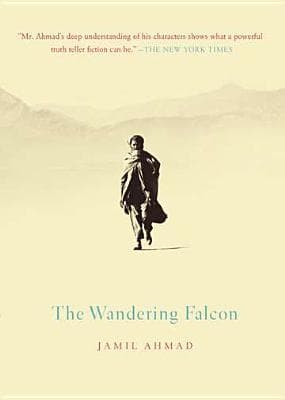
Jamil Ahmad (2011)
Genre
Lifestyle / Historical Fiction
Reading Time
240 min
Key Themes
See below
Sign in to track this book
Tor Baz, 'The Wandering Falcon,' navigates the brutal yet beautiful Federally Administered Tribal Areas, a world of ancient traditions, love, and survival at the crossroads of Pakistan, Afghanistan, and Iran.
The story begins with the account of a young couple, Zarmina and her husband, from opposing tribes. Zarmina, a beautiful woman from the Marwat tribe, runs away with a man from the hostile Ahmadzai Wazir tribe. This forbidden match starts a strong blood feud. Both Zarmina's husband and his brother are killed by her own relatives in return. Pregnant and alone, Zarmina gives birth to a boy, Tor Baz, in a hidden cave before her vengeful brothers murder her. A kind nomad finds the baby Tor Baz, and his survival shows the harshness of tribal life and the power of chance.
After his mother's death, Tor Baz is taken in by a nomadic family, specifically an old woman named Gulmina, who raises him. He spends his early years in the tribal mountains and valleys, learning to herd goats, cross the difficult land, and understand its unwritten rules. This time in his life connects him deeply to nature and builds his endurance. He knows his unclear origins but feels he belongs with the nomadic group, learning their customs and ways to survive in a hard environment.
As a young boy, Tor Baz sees a brutal fight between smugglers and another group or maybe even government forces. This event shows him the widespread violence and lack of order often found in the tribal regions. He sees the cruelty of men driven by greed and how fragile life is. This experience stays with him, making him understand the dangers hidden in daily life and strengthening his need for care and self-preservation in this tough world.
Tor Baz eventually leaves the nomadic life and lives with a group of border guards at a remote post. Here, he sees a different kind of authority and order, though it is often challenged by local tribes and the harsh environment. He learns about border control, the constant watch needed, and the often useless attempts to enforce state law in a region ruled by tribal codes. During this time, he develops a quiet strength and sharp observation skills, becoming a valuable, if unofficial, member of their small group.
One story Tor Baz hears while with the border guards involves a Frontier Corps officer seeking justice for a wrong against his family. This story highlights the deep tribal honor codes that go beyond even military rules. The officer, driven by personal revenge, carefully plans and carries out his vengeance, showing how traditional justice systems influence even modern state groups. This event further illustrates the complex mix of formal law and old customs in the tribal areas.
Tor Baz hears the story of a young woman who tries to escape an arranged marriage or a harsh husband. Her desperate attempt for freedom leads to sad results, showing the strict limits on women in this male-dominated society and the severe punishments for going against tribal norms. This story highlights how little power women have and the brutal enforcement of traditional honor codes, where even the idea of dishonor can lead to violence and death. Tor Baz watches these events, quietly understanding the unchanging rules of their world.
Tor Baz meets a wise, blind old man who deeply understands the tribal lands, their history, and the complex connections among the people. This elder, through his stories and observations, gives Tor Baz a different view of life, fate, and what belonging means. He shares old wisdom and a sense of life's and tradition's continuity, even with constant change and conflict. The blind man's insights help Tor Baz better understand his own life and the world around him.
Tor Baz's travels eventually take him across the border into Afghanistan, showing him similar but different tribal ways there. He sees the shared customs, the ongoing feuds, and the strong spirit of the people living in these remote areas. This journey expands his understanding of how tribal lands connect and the common struggles their people face, regardless of country lines. He sees the harsh realities of life, mixed with moments of unexpected kindness and friendship.
During his travels, Tor Baz hears the story of an old woman who tells a powerful tale of love, loss, and the lasting pain of separation. Her story speaks of deep emotional bonds made in a difficult world, and the sacrifices made for family and tradition. This story gives a rare look into the characters' inner emotions, contrasting with the outwardly harsh realities of their lives. It shows the human ability for love and sorrow, even amid the constant struggle for survival in the tribal areas.
As Tor Baz gets older, he becomes a resourceful and self-reliant man, skilled at moving through the difficult land and complex social rules of the tribal areas. He keeps his quiet, observant nature, moving between different communities and seeing the cycles of life, death, and conflict. He never truly settles, living up to the name 'The Wandering Falcon,' a silent watcher of a world rich in old traditions and facing the steady arrival of modern ways. His journey explores identity and belonging in a land known for its wild spirit.
Throughout his life, Tor Baz sees modern ways slowly affecting the old tribal customs. While the main traditions of honor, revenge, and hospitality stay strong, parts of the outside world—government influence, new technologies, and changing money matters—start to appear. He sees the tension between these forces, noting how some traditions are kept firmly while others slowly fade or change. This idea runs through the story, showing how a way of life under pressure can be both strong and fragile.
The story consistently shows the ongoing cycle of violence and blood feuds that mark much of tribal life. Tor Baz's own beginnings are in such a feud, and he sees many times when honor killings, revenge attacks, and old grudges guide the actions of people and whole tribes. This cycle seems almost impossible to escape, passed down through generations, shaping lives and keeping a harsh reality where justice is often personal and deadly. Tor Baz understands this violence as a basic part of his world.
While often shown as symbols of honor or under male authority, Tor Baz's experiences reveal the complex and often sad roles women play in tribal society. He sees their strength, their ability for love and sorrow, and their weakness to the harsh rules of tradition. From his mother Zarmina's fate to the runaway wife, and the old woman's tale of love, women are central to the emotional and social fabric, even as their power is severely limited. Their stories highlight the deep gender inequality in the traditional tribal system.
The physical environment of the Federally Administered Tribal Areas (FATA) is a character itself. Tor Baz's life is tied to the rough mountains, dry plains, and remote valleys. The land's harshness dictates the nomadic life, the need for strength, and the constant fight for survival. It shapes the people's character, creating both cruelty and a deep appreciation for the sparse beauty and occasional generosity of nature. The landscape is more than a backdrop; it is a strong force that controls life.
By the end of the book, Tor Baz has not found a fixed home or a clear identity, but has instead accepted his role as a constant wanderer and observer. He is a silent witness to the unfolding events of tribal life, the lasting customs, the acts of violence, and the moments of unexpected kindness. His life shows strength and adaptation, a journey through a world both brutal and beautiful. He is like the wandering falcon, flying above, yet deeply connected to, the complex and often unforgiving landscape of the FATA.
The Protagonist
Tor Baz begins as a helpless infant, growing into a resourceful and self-reliant man who accepts his fate as a perpetual wanderer, a silent observer of the tribal world.
The Supporting/Catalyst
Her brief, defiant life and tragic death establish the central conflict and the protagonist's origins.
The Supporting
She provides Tor Baz with his first sense of family and belonging, shaping his early development before he continues his solitary journey.
The Supporting
He serves as a temporary mentor, offering Tor Baz intellectual and spiritual nourishment on his journey.
The Supporting/Mentioned
Their presence illustrates the ongoing tension between state control and tribal autonomy, providing a backdrop for Tor Baz's observations.
The Mentioned/Antagonistic force
They serve as a recurring embodiment of the violence and lawlessness that Tor Baz witnesses throughout his travels.
The Supporting/Mentioned
They embody the unchanging nature of tribal law and the power structures that shape the lives of all characters.
The Mentioned/Symbolic
Her tragic story underscores the limited freedom and severe consequences for women in the tribal world.
The novel carefully shows how old tribal customs, especially those about honor, revenge, and hospitality, control almost every part of life in the FATA. Blood feuds, like the one that makes Tor Baz an orphan, are not just personal fights but deeply set social institutions. The focus on 'badal' (revenge) and 'nang' (honor) shapes alliances, conflicts, and individual lives. Even when state authority tries to step in, as with the Frontier Corps, traditional law often comes first. This idea is clear in the detailed descriptions of jirgas (councils of elders) and the unwritten rules that guide relations between tribes, showing how strong and widespread centuries-old ways are.
“For these men, a family's honour was more precious than life itself, and a slight to it could only be washed clean with blood.”
The landscape of the Federally Administered Tribal Areas (FATA) is a main character, shaping the lives and personalities of its people. Jamil Ahmad clearly describes the rugged mountains, dry plains, and remote valleys, highlighting both their unforgiving nature and their stark beauty. The environment dictates the nomadic life, the constant struggle for survival, and the strength needed to endure. Scenes of Tor Baz herding goats through dangerous passes or seeing the clear beauty of dawn over the mountains show this idea. The land creates a deep connection in its people, making them tough and self-reliant, while also inspiring a deep, almost spiritual, respect for their ancestral territory.
“The mountains, ancient and immutable, watched over them, indifferent to their fleeting lives.”
From Tor Baz's birth, caught in a blood feud, to the many stories of payback he sees, violence and revenge are shown as an almost unavoidable cycle in the tribal lands. Honor killings, revenge attacks, and old grudges define how individuals and communities interact. The novel shows how one act of violence can affect generations, keeping a brutal reality where justice is often personal and deadly. This idea highlights the widespread lawlessness and the difficulty of escaping established patterns of conflict, giving many characters a sense of fate.
“In these lands, a murder was not an end, but often the beginning of another.”
Tor Baz's journey is a search for identity and belonging in a world where stable homes are rare and loyalties often change. Orphaned and always moving, he is 'The Wandering Falcon,' never fully settled in one place or tribe. His lack of a clear tribal identity at first makes him weak but also gives him a unique view as an observer. The different groups he joins—nomads, border guards—offer temporary belonging, but his true identity remains that of an outsider, able to move through different worlds without fully joining any. This reflects the broader nomadic life and the complex, often changing, nature of identity in the FATA.
“He was a child of no tribe, and therefore, a child of all.”
The novel subtly but strongly shows the limited power and often sad situations of women in tribal society. From Zarmina's fate for going against tradition to the story of the runaway wife, women are often shown as objects of honor, goods in alliances, or victims of male-dominated rules. Their lives are limited by strict customs, and their attempts to be independent often lead to severe, even fatal, results. While their strength and ability to love are recognized, their social roles remain mostly secondary, highlighting the deep gender inequality in the traditional tribal system.
“A woman's honor was not her own, but belonged to her men, and they guarded it with their lives, and sometimes, with hers.”
The story unfolds through a series of interconnected but distinct vignettes.
The novel is structured as a collection of short, self-contained stories or episodes, loosely connected by the presence and observations of Tor Baz. Each chapter or section often focuses on a particular character, event, or tribal custom, with Tor Baz serving as the silent witness or a minor participant. This episodic nature allows the author to explore various facets of tribal life, different tribes, and diverse human experiences without being constrained by a single, linear plot. It mirrors the fragmented and itinerant nature of Tor Baz's own life, and the oral storytelling traditions prevalent in the region.
Tor Baz primarily functions as a witness to the events around him.
Tor Baz, the protagonist, rarely drives the action himself. Instead, he primarily serves as a silent, observant presence through whom the reader experiences the world of the FATA. His lack of a fixed identity and his constant movement allow him to be present in various situations – among nomads, border guards, and different tribes – providing a panoramic view of the region. This device allows the author to present a wide range of characters and customs without requiring Tor Baz to have a direct, active role in every narrative, emphasizing the objective portrayal of a complex society.
The narrative style mimics the ancient tradition of spoken tales.
The novel's prose and structure often evoke the oral storytelling traditions of the tribal regions. Stories are frequently recounted by characters, such as the blind elder or the old woman, or presented as distinct anecdotes within the larger narrative. This style gives the book an authentic, almost folkloric quality, reflecting how history, wisdom, and cultural values are passed down through generations in these communities. It lends an intimate, human voice to the often harsh realities depicted, making the reader feel as if they are listening to tales by a campfire.
The falcon represents freedom, observation, and the protagonist's nomadic spirit.
The 'Wandering Falcon' of the title is a powerful symbol for Tor Baz himself. Falcons are birds of prey, known for their keen eyesight, their ability to soar high above, and their solitary, nomadic nature. This directly reflects Tor Baz's role as a silent, observant wanderer who moves freely (or is forced to move) across the vast and dangerous landscapes of the tribal areas. He watches the human dramas unfold from a detached yet deeply understanding perspective, much like a falcon surveying its territory, embodying both resilience and a certain detachment from fixed allegiances.
“When you have nothing, you have nothing to lose, and then you are free.”
— Reflecting on the harsh realities and freedom of the tribal life.
“The desert does not forgive. It takes what it wants, and it gives back nothing.”
— Describing the unforgiving nature of the desert landscape and its impact on the people.
“A man's worth is in his honour, and his honour is in his word.”
— Highlighting the traditional values and importance of reputation in the tribal society.
“To be a woman in these lands is to be a shadow, to be unseen, unheard, unremembered.”
— A poignant observation on the subordinate role and limited agency of women in the tribal culture.
“Blood calls to blood, and a man must answer.”
— Referring to the powerful ties of kinship and the demands of tribal loyalty.
“The past is a burden, but it is also a map.”
— Considering how history and tradition shape the present and future of the nomadic people.
“They say the mountains are the abode of jinns, but I say they are the abode of forgotten men.”
— A character's musing on the isolation and forgotten existence of those living in the remote mountains.
“Justice is a luxury for those who have a roof over their heads.”
— Commentary on the lack of formal justice for the nomadic and marginalized communities.
“The wind carries the whispers of the dead, and the living must listen.”
— Evoking the strong sense of ancestral presence and the weight of history in the tribal consciousness.
“Every journey is a prayer, and every step is a hope.”
— Reflecting on the constant movement and enduring hope of the wandering tribes.
“Fear is a companion that walks with every man in the wilderness.”
— Acknowledging the constant dangers and anxieties faced by those living in harsh, untamed environments.
“The law of the rifle is quicker than the law of the book.”
— Illustrating the prevalence of self-justice and violence in areas where state law holds little sway.
“A man without land is a bird without a nest.”
— Emphasizing the deep connection between identity, belonging, and territory for the tribal people.
“Silence is the language of the mountains, and its meaning is often harsh.”
— Describing the stark, unyielding nature of the mountainous regions and the difficult truths they reveal.
Ready to see how well you understood this book? Take our interactive quiz with 10 questions.