BookBrief
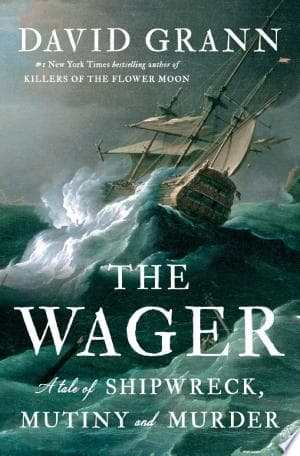
The Wager cover
Archivist's Choice

The Wager

David Grann (2023)

Genre

General

Reading Time

12 Minutes

Key Themes

See below

Track Your Reading

Sign in to track this book

Shipwrecked survivors of a secret British war mission tell wildly conflicting tales of mutiny and murder, forcing a court martial to unravel the brutal truth of their desperate struggle for survival on a desolate island.

Core Idea

David Grann's "The Wager" reconstructs the harrowing true story of a British warship, the Wager, that shipwrecked off the coast of Patagonia in 1741. The book delves into the extreme conditions and moral decay that plagued the survivors, leading to mutiny, murder, and ultimately, a sensational court-martial back in England. Grann explores themes of survival, leadership, class conflict, and the unreliable nature of human testimony when faced with unimaginable hardship.
Difficulty
Medium

Core idea

The central argument and framework that powers the entire book.

David Grann's "The Wager" reconstructs the harrowing true story of a British warship, the Wager, that shipwrecked off the coast of Patagonia in 1741. The book delves into the extreme conditions and moral decay that plagued the survivors, leading to mutiny, murder, and ultimately, a sensational court-martial back in England. Grann explores themes of survival, leadership, class conflict, and the unreliable nature of human testimony when faced with unimaginable hardship.

At a glance

Difficulty

Medium

Key Takeaways

1

The Fragility of Order

Extreme conditions strip away societal norms, revealing humanity's primal struggle for dominance.

Quote

The thin veneer of civilization, so carefully constructed and maintained in polite society, quickly eroded under the relentless assault of starvation, exposure, and despair.

Grann shows how the British Navy's rigid hierarchy and discipline collapsed on Wager Island. Away from Admiralty rules, the crew became lawless, fighting among themselves and scrambling for supplies. This was more than a breakdown of command; it was a complete unraveling of social order. The initial unity from shared danger quickly turned into paranoia and violence. This shows that even strong authority structures depend on external conditions and basic necessities. The book's best insight is its clear picture of this decline, showing...

Supporting evidence

The rapid shift from a disciplined naval crew to two distinct, hostile camps (one led by Captain Cheap, the other by Gunner Cozens and later John Bulkeley) vying for control over dwindling supplies and the very narrative of their survival.

Apply this

Leaders in high-stress environments should actively cultivate shared purpose and address basic needs proactively to prevent the erosion of group cohesion and the emergence of destructive internal conflicts.


2

Narrative as Survival

Controlling the story of events can be as crucial as physical survival, especially when facing judgment.

Quote

For those who survived the Wager's wreck, the battle for their lives did not end on the desolate island; it merely shifted to the realm of words, where competing narratives clashed with life-and-death stakes.

The core of 'The Wager' depends on the different stories from the two groups of survivors. Grann explains how each group carefully created a story to clear themselves and blame the others. This was not just about truth; it was about reputation, freedom, and survival. The first group's story of heroic endurance was a well-planned public relations move, which the second group later challenged with claims of mutiny and tyranny. This shows the power of storytelling, especially when there is no clear evidence, to shape how people see thing...

Supporting evidence

The stark contrast between the thirty survivors' initial hero's welcome in Brazil and their subsequent indictment as mutineers after the three castaways from Chile presented a counter-narrative.

Apply this

Understand that in any crisis, multiple perspectives will emerge, and the ability to articulate a coherent, credible account is vital for influencing public opinion and official judgment.

3

The Imperial Gaze

The Wager's saga reveals the inherent brutality and hypocrisy embedded within the British imperial project.

Quote

The court martial was not merely a trial of men, but a tacit judgment on the very ideals of empire—its promises of order, justice, and civilization often crumbling under the weight of its own ambition and cruelty.

Grann quietly but effectively argues that the events on the Wager and the court martial reveal the darker side of 18th-century British imperialism. The 'secret mission' to capture a Spanish treasure ship, the terrible conditions on board, the disregard for common sailors' lives, and the strict, often unfair, naval law all reflect the larger imperial project. 'Civilization' was promoted, yet the behavior of some officers and the system itself was far from humane. The trial aimed not just to find fault but to maintain the image of an pe...

Supporting evidence

The almost casual cruelty of officers like Captain Cheap, the use of impressment to staff ships, and the disproportionate severity of naval law for 'mutiny' compared to abuses of power by officers.

Apply this

When examining historical events, look beyond surface narratives to identify the underlying societal and political systems that shaped individual actions and outcomes, particularly concerning power dynamics.

4

Leadership Under Duress

The extreme pressures of survival expose distinct and often disastrous leadership styles.

Quote

In the crucible of Wager Island, the true mettle of command was tested, revealing that authority alone was insufficient; empathy, adaptability, and the ability to inspire trust were paramount, yet often absent.

Captain Cheap and Gunner Cozens show two different, yet flawed, leadership styles on Wager Island. Cheap, though in command, struggled with illness and could not adapt his strict naval discipline to the needs of survival, which pushed away much of his crew. Cozens, however, used his charm and understanding of the common sailors' complaints to build a rival group, but his leadership was opportunistic and brutal. Grann notes that in such terrible situations, effective leadership needs more than rank; it requires genuine care for the cre...

Supporting evidence

Captain Cheap's insistence on maintaining strict naval protocols and his violent outbursts, contrasted with Cozens's manipulation of crew sentiment and his eventual violent overthrow of Cheap's authority.

Apply this

Effective leadership in crises demands flexibility, empathy, and the ability to foster cooperation, rather than solely relying on formal authority or fear.

5

The Allure of the Prize

The pursuit of unimaginable wealth often blinds individuals and empires to immense risks and moral compromises.

Quote

The phantom of the treasure galleon, 'the prize of all the oceans,' exerted an almost supernatural pull, driving men and nations to extremes of endurance and cruelty.

The whole Wager expedition was based on chasing the Spanish treasure galleon. Grann illustrates how this chance for great wealth fueled the British war effort and motivated sailors, despite the known dangers of sailing around Cape Horn. This 'prize of all the oceans' became a strong, almost mythical, motivator that overshadowed a realistic look at risk and human cost. The obsession with this treasure explains why the Wager continued its dangerous journey, ultimately leading to its destruction. This is a warning about how the promise o...

Supporting evidence

The detailed accounts of the British fleet's relentless, often reckless, pursuit of the Spanish treasure ships, despite mounting casualties from scurvy and the treacherous weather of Cape Horn.

Apply this

Before committing to high-stakes ventures, critically evaluate if the perceived rewards are distorting your assessment of risks and ethical considerations.

6

The Psychological Toll of Isolation

Prolonged isolation and deprivation profoundly distort perception, judgment, and sanity.

Quote

The desolation of Wager Island was not merely physical; it was a psychological abyss that swallowed men whole, twisting their minds with paranoia, delusion, and a profound sense of abandonment.

Grann clearly describes the mental decline of the Wager's crew during their months stranded on the isolated island. Starvation, exposure, and the constant sameness of their lives led to widespread paranoia, hallucinations, and a loss of clear thinking. This is especially clear in the increasingly odd behavior of Captain Cheap and many common sailors, which added to the internal conflict. The book highlights how the human mind, when pushed to its limits, struggles to stay connected to reality, making cooperation and good decisions almo...

Supporting evidence

The detailed descriptions of men succumbing to scurvy, but also to 'madness,' including instances of irrational fear, suspicion, and violent outbursts among the crew on the island.

Apply this

Recognize the immense psychological impact of prolonged stress and isolation, and prioritize mental well-being and clear communication in any survival or crisis scenario.

7

Justice as a Performance

Court martials, particularly in imperial contexts, often prioritized institutional image over impartial truth.

Quote

The Admiralty's court martial was less a search for unvarnished truth and more a carefully orchestrated performance, designed to uphold the sanctity of naval law and the image of a just empire.

The court martial that ends 'The Wager' is presented not as a neutral search for truth, but as a way to control the story and uphold the British Admiralty's authority. Grann reveals how political concerns, social class, and the need to maintain naval discipline heavily influenced the legal process. Officers, despite their own mistakes, often received more leniency, while common sailors faced harsh penalties. This shows how 'justice' in such situations can be very subjective and serve larger institutional interests rather than purely i...

Supporting evidence

The differing treatment of officers versus common sailors, the emphasis on the charge of mutiny (a capital offense) over potential abuses by officers, and the pressure on witnesses to conform to certain narratives.

Apply this

Be critical of official inquiries and legal processes, especially when powerful institutions are involved, understanding that they may serve purposes beyond simply finding objective truth.

8

The Unsung Heroes of Resilience

Beyond the official narratives, the extraordinary resilience of common sailors often goes unacknowledged.

Quote

While history often focuses on the captains and the courts, it was the unyielding, often anonymous, fortitude of the common sailor that truly defined the limits of human endurance.

Among the drama of mutiny and court martial, Grann quietly points out the amazing resilience of the ordinary sailors. These men, often forced into service, endured unimaginable hardships—scurvy, starvation, terrible weather, and harsh officers—yet many found the will to survive. The building of the fragile boat, the 'Speedwell,' and its difficult 3,000-mile journey, shows their cleverness and strong will. Their stories, often overshadowed by power struggles, show a deep part of the human spirit when facing overwhelming difficulty. Thi...

Supporting evidence

The detailed description of the common sailors' arduous labor in salvaging materials from the wreck, constructing the 'Speedwell' with minimal tools, and their incredible feat of navigation and endurance across the open ocean.

Apply this

Seek out and appreciate the contributions of all individuals within a system, recognizing that significant resilience and ingenuity often reside outside formal leadership roles.

9

The Mutability of Memory

Traumatic events profoundly shape and distort individual and collective memory over time.

Quote

Memory, particularly of profound trauma, is not a fixed record but a fluid, often self-serving construct, reshaped by pain, loyalty, and the desperate need for vindication.

Grann emphasizes that the survivors' memories of the Wager disaster were not fixed. Over time, and influenced by their experiences, loyalties, and the need to protect themselves, their accounts differed greatly. What one man remembered as selfless leadership, another recalled as tyranny. This changing nature of memory, especially with extreme trauma and high stakes (like a court martial), makes figuring out the 'truth' very complex. The book shows that even eyewitness accounts are unreliable, filtered through personal biases and the p...

Supporting evidence

The conflicting testimonies presented at the court martial, where men who shared the same experiences recounted drastically different versions of key events, such as the shooting of Cozens or the decision to leave Captain Cheap behind.

Apply this

When evaluating historical or personal accounts of traumatic events, consider the inherent biases and distortions that memory can introduce, and seek corroborating evidence from multiple, diverse sources.

10

Nature's Indifference

The raw power of nature serves as an impartial, overwhelming force, exposing human vulnerability.

Quote

Against the boundless, indifferent power of the sea and the desolate land, human squabbles and ambitions were rendered utterly trivial.

Throughout the story, Grann consistently reminds the reader of nature's overwhelming power. The Wager's wreck was not just due to human error, but the fierce storms of Cape Horn. The island itself was a desolate, unforgiving place, offering little food. This constant, uncaring force of nature acts as a strong opponent, making the crew's internal conflicts seem small. It highlights human fragility and the ultimate unimportance of human arguments when faced with such elemental power. While the human drama is central, the book never lets...

Supporting evidence

The vivid descriptions of the Wager's battering by storms around Cape Horn, the ship's eventual wreck on the 'uncharted' island, and the constant struggle for food and fresh water in a barren environment.

Apply this

Cultivate respect for natural forces and recognize the limits of human control when operating in extreme environments; prioritize preparedness and humility.

Critical analysis

Notable Quotes

Quiz

Test Your Knowledge

Ready to see how well you understood this book? Take our interactive quiz with 10 questions.

10
Questions
~5
Minutes
?
Best Score

Key Questions (FAQ)

'The Wager' by David Grann recounts the harrowing true story of a British naval ship that wrecked off the coast of Patagonia in 1742. It details the struggle for survival of the shipwrecked crew and the dramatic court martial that followed, which aimed to uncover the truth behind conflicting accounts of mutiny and leadership.

About the author

David Grann

David Grann is a renowned nonfiction author and staff writer for The New Yorker. He is best known for his critically acclaimed books "Killers of the Flower Moon: The Osage Murders and the Birth of the FBI" and "The Wager: A Tale of Shipwreck, Mutiny and Murder." Grann's work often delves into compelling historical mysteries and true crime narratives with meticulous research and gripping storytelling.