BookBrief
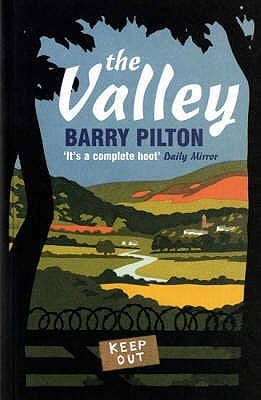
The Valley cover
Archivist's Choice

The Valley

Barry Pilton (2006)

Genre

General

Reading Time

240 min

Key Themes

See below

Track Your Reading

Sign in to track this book

In 1980s Nant Valley, a remote Welsh village clinging to tradition, its struggling residents find their insular world hilariously upended when outsiders mistakenly crown their hardship an idyllic paradise.

Core Idea

Barry Pilton's "The Valley" examines the romanticized idea of rural life, showing it to be a mix of economic trouble, family conflict, and feigned authenticity. It suggests that while progress and outside views challenge traditional ways, a strong group identity, often shown through passive aggression and humor, helps communities resist, adapt, and redefine their place as things change. The book argues that extreme nostalgia and uncritical progress are both risky, instead favoring a careful understanding of how communities keep their identity amid outside pressures and internal divides.
Reading time
240 min
Difficulty
Medium
✓ Read this if...
You enjoy satirical takes on rural life, want to understand the complexities behind 'authentic' communities, or appreciate humor as a lens for societal critique.
✗ Skip this if...
You prefer serious, academic analyses of socio-economic issues, or dislike British dry wit and subtle character-driven narratives.

Core idea

The central argument and framework that powers the entire book.

Barry Pilton's "The Valley" examines the romanticized idea of rural life, showing it to be a mix of economic trouble, family conflict, and feigned authenticity. It suggests that while progress and outside views challenge traditional ways, a strong group identity, often shown through passive aggression and humor, helps communities resist, adapt, and redefine their place as things change. The book argues that extreme nostalgia and uncritical progress are both risky, instead favoring a careful understanding of how communities keep their identity amid outside pressures and internal divides.

At a glance

Reading time

240 min

Difficulty

Medium

Read this if...

You enjoy satirical takes on rural life, want to understand the complexities behind 'authentic' communities, or appreciate humor as a lens for societal critique.

Skip this if...

You prefer serious, academic analyses of socio-economic issues, or dislike British dry wit and subtle character-driven narratives.

Key Takeaways

1

The Myth of Rural Idyll

City dwellers project romantic fantasies onto struggling rural communities.

Quote

The outsiders saw what they wanted to see: a haven untainted by the very world they sought to escape, not the hardscrabble reality we lived every day.

Pilton skillfully breaks down the city's romantic view of country life, showing it as a harmful idea. For the Nant Valley residents, their home is not a pretty escape but a place of financial trouble, cultural isolation, and the slow loss of old ways. The 'outsiders' arrive burdened by their own unhappiness with modern life, looking for an imagined simplicity that never truly existed. This clash shows a basic misunderstanding: the valley is not a prepared experience for tired city people, but a real community dealing with its own prob...

Supporting evidence

The initial arrival of the 'outsiders' and their immediate, uncritical embrace of Nant Valley's aesthetic, contrasting sharply with the locals' weary acceptance of their lot. The outsiders' willingness to pay inflated prices for dilapidated properties, driven by their fantasy rather than market value.

Apply this

Before making assumptions about any community, especially those perceived as 'simpler' or 'traditional,' engage with its actual inhabitants to understand their lived experiences, challenges, and aspirations. Avoid projecting personal desires onto external environments.

rural-romanticismcultural-misunderstanding
2

Economic Desperation Breeds Opportunity

Hardship can lead communities to exploit external perceptions for survival.

Quote

When you're staring at an empty larder, a fool and his money are a godsend, even if that fool thinks he's buying a piece of heaven.

The book clearly shows how money problems can push a community to change, even if it means playing into outside misunderstandings. The Nant Valley locals, facing fewer jobs and chances, quickly see the 'outsiders'' romantic view of their home as a possible help. This is not just selfish manipulation, but a desperate act to survive. They learn to act out the 'perfect life' the newcomers want, creating a trade-off where the valley's 'realness' becomes something to sell. This highlights the unclear ethics that arise when survival depends...

Supporting evidence

The quick wit and collective decision-making of the villagers to capitalize on the outsiders' naivety, such as selling 'authentic' local crafts or services at inflated prices, and exaggerating the valley's rustic charm.

Apply this

Understand that economic pressure can significantly influence behavior and decision-making within communities. When observing seemingly 'authentic' cultural displays, consider the underlying economic realities that might be shaping them.

economic-survivalcultural-commodification
3

The Power of Collective Identity

Shared adversity and a distinct way of life forge an unyielding communal bond.

Quote

We were Nant, and that meant something. It meant we stuck together, even when we were arguing amongst ourselves, especially when 'they' came poking their noses in.

Pilton clearly shows the strong group identity of the Nant Valley residents. Their shared past, language (Welsh), and ongoing struggles against both nature and the coming modern world have created a strong bond. This identity is not just about where they live; it is a way of being, a set of unspoken rules, and a deep distrust of anything 'other.' While sometimes leading to isolation, this group spirit is also their biggest strength, helping them to resist, adapt, and even subtly use the 'outsiders.' It shows how trouble can strengthen...

Supporting evidence

The villagers' ability to communicate non-verbally or in Welsh to exclude outsiders, their shared jokes and knowing glances, and their collective, often unspoken, agreement on how to deal with the newcomers.

Apply this

Recognize the strength and resilience that strong collective identities provide, particularly in the face of external pressures. When integrating into a new community, respect and understand its existing bonds and unspoken rules rather than attempting to impose your own.

communal-resiliencecultural-insularitywelsh-identity
4

Generational Divide and the Pull of Progress

Younger generations face a difficult choice between tradition and modern opportunity.

Quote

The old ways were dying, and us young ones, we knew it. But leaving Nant felt like a betrayal, even if staying meant no future.

Below the community's united front against outsiders, Pilton subtly points out the internal tension between generations. The younger Nant Valley residents face a hard choice: stay true to their heritage and face limited opportunities, or seek chances in the 'modern world,' possibly leaving their roots. The arrival of outsiders, with their different values and clear wealth, only makes this conflict worse. It makes the younger generation face the harsh realities of their future, where the valley's charm might not be enough for a good li...

Supporting evidence

The quiet discontent of some younger characters, their longing for different experiences, and the unspoken pressure to either stay and uphold tradition or leave for better jobs and a more 'modern' life.

Apply this

When addressing community development, consider the specific needs and aspirations of different age groups. Recognize that 'progress' can be a double-edged sword, offering opportunities while simultaneously threatening traditional ways of life.

generational-conflictrural-exodusmodernization
5

The Performance of Authenticity

Communities can strategically 'perform' their culture to meet external expectations.

Quote

We learned quickly what they wanted to see, what made them ooh and aah. So we gave it to them, a little bit more 'rustic' here, a dash more 'traditional' there.

Pilton's story skillfully explores the idea of 'acted authenticity.' The Nant Valley villagers are not just being themselves; they are purposefully changing their behavior, appearance, and even their local 'charm' to fit the outsiders' romantic ideas. This is not necessarily lying, but a practical response to a perceived demand. They understand the market for their 'perfect life' and become good at presenting it, turning their daily lives into a show for their city visitors. This brings up questions about what 'true' authenticity mean...

Supporting evidence

The villagers' strategic use of Welsh language in front of outsiders (or lack thereof), their exaggerated reactions to 'quaint' events, and their willingness to sell 'hand-crafted' items that might not be entirely local or traditional.

Apply this

Be critical of 'authentic' experiences marketed to tourists or newcomers. Recognize that cultural displays can be influenced by economic incentives and external expectations, leading to a curated version of reality.

cultural-performancetourism-impactauthentic-experience
6

Resistance through Passive Aggression

Subtle defiance and quiet mockery become powerful tools against perceived invasion.

Quote

They thought they were buying into our world, but they never truly understood that we were always a step ahead, laughing behind their backs, in Welsh.

The Nant Valley locals, instead of openly fighting, use many clever passive-aggressive tactics to show their control and keep their culture. This subtle resistance ranges from pretending not to understand and strategically forgetting things to inside jokes and conversations in Welsh that purposely leave out the outsiders. It is a type of psychological battle, allowing the villagers to both profit from and subtly make fun of their new neighbors. This shows how clever less powerful groups can be in showing their power without direct con...

Supporting evidence

The villagers' use of their native language to share private jokes or discuss outsiders in their presence, their slow and deliberate pace in situations where outsiders expect efficiency, and their collective 'forgetfulness' about certain local customs when questioned.

Apply this

Observe non-verbal cues and subtle communication patterns when interacting with communities. Recognize that resistance doesn't always manifest as open conflict; it can be expressed through nuanced, often culturally specific, passive-aggressive behaviors.

passive-resistancecultural-agencyinsider-outsider-dynamics
7

The Perils of Unchecked Nostalgia

Romanticizing the past without understanding its realities can lead to exploitation.

Quote

They wanted a past that never really was, and we were more than happy to sell them a piece of it, even if it was just a story.

Pilton criticizes the dangers of too much nostalgia, especially when it drives a wish to escape modern life. The 'outsiders' are not just looking for a quiet life; they are actively seeking a romanticized, perfect version of the past that exists more in their minds than in reality. This longing for the past makes them easy to exploit, as they are willing to ignore real hardship and even clear lies in their search for this imagined perfect life. The book serves as a warning, showing how wishing for a simpler time, separated from real h...

Supporting evidence

The outsiders' willingness to believe exaggerated tales of local history or 'traditional' practices, and their dismissal of any evidence that contradicts their romanticized view of the valley.

Apply this

Approach historical narratives and 'traditional' lifestyles with a critical eye, understanding that all periods have complexities and challenges. Be wary of idealizing the past as an escape from present difficulties.

nostalgia-traphistorical-revisionismromantic-escapism
8

The Fragility of 'Progress'

Modern conveniences and external influences can disrupt established social structures.

Quote

They brought their fancy gadgets and their city ways, and slowly, without anyone quite realizing it, the old rhythm of Nant started to falter.

While the Nant Valley first benefits from the outsiders' money, Pilton subtly shows how fragile this 'progress' is in the long run. The flow of new money, different values, and modern comforts starts to break down the social structure that made the valley special. Old roles change, new tensions appear, and the community's isolation, once a strength, starts to crack under outside influences. The book suggests that even 'positive' outside changes can have unexpected bad results, messing up established ways of life that, while perhaps ha...

Supporting evidence

The introduction of new technologies by the outsiders, the changing dynamics within local businesses due to new customers, and the subtle shifts in power or social standing among villagers.

Apply this

When introducing external changes or 'improvements' to a community, consider the potential ripple effects on existing social structures, power dynamics, and cultural norms. Prioritize sustainable integration over rapid, disruptive change.

social-disruptioncultural-erosionunintended-consequences
9

Humor as a Coping Mechanism

Wry wit and dark humor provide solace and social cohesion in difficult times.

Quote

If you couldn't laugh at the absurdity of it all, you'd just sit down and cry. And crying never paid the bills.

A key trait of the Nant Valley residents is their sharp, often dark, humor. Pilton shows this wit not just as entertainment, but as a vital way to cope with hardship and the silly parts of their situation. It helps them deal with their money problems, the condescension of the outsiders, and the general unfairness of life without giving up hope. This shared humor also strengthens their group identity, creating an 'in-group' language and view that further binds them together while also separating them from the 'others.' It is a strong e...

Supporting evidence

The numerous instances of sarcastic remarks, understated jokes, and shared laughter among the villagers, often at the expense of the outsiders' naivety or their own difficult circumstances.

Apply this

Recognize the role of humor in cultural contexts, particularly in communities facing adversity. It can be a powerful indicator of resilience, social cohesion, and a unique worldview.

dark-humorcultural-resiliencesocial-cohesion
10

The Enduring Power of Place

Despite challenges, a deep connection to land and heritage persists.

Quote

Nant was more than just a place on a map; it was in our bones, in the very air we breathed, and no amount of outsiders could ever change that.

Finally, Pilton highlights the deep and lasting power of place for the Nant Valley community. Despite their money troubles, the appeal of the outside world, and the disruptive effect of the 'outsiders,' there is a clear, almost spiritual, bond the villagers have to their valley. It is not just a home; it is a core part of their identity, woven into their history, language, and shared memory. This deep connection suggests that while outside forces can bring change and challenges, the basic nature of a place and its people can be very s...

Supporting evidence

The villagers' deep-rooted resistance to leaving, their pride in their Welsh heritage, and the unspoken understanding that despite everything, Nant is where they belong, even for the younger generation contemplating departure.

Apply this

Understand that for many communities, the concept of 'place' extends far beyond geography, encompassing deep cultural, historical, and emotional ties. Respecting this connection is crucial in any interaction or intervention.

sense-of-placecultural-heritagecommunity-resilience

Critical analysis

Notable Quotes

The Valley was like a deep breath held for generations, a pocket of the past stubbornly refusing to exhale.

Describing the isolated nature of the valley and its people at the beginning of the book.

Change, when it finally arrived, didn't come with a fanfare. It seeped in, like water finding a crack in a dam.

Reflecting on the slow, almost imperceptible way modernity begins to affect the valley.

He understood then that some truths were too large for words, best left to the quiet understanding of shared experience.

A character's realization about unspoken bonds and knowledge within the community.

Progress, they called it. But sometimes, what you gained in convenience, you lost in soul.

A character's cynical view on the trade-offs of modern development.

The past wasn't dead; it was merely sleeping, and the slightest tremor could wake it with a start.

Highlighting how historical events and grievances still resonate within the valley.

There's a fine line between preserving heritage and being trapped by it.

A discussion about the challenges the valley faces in maintaining its identity.

The mountains had seen it all, and their silence was a testament to the fleeting nature of human concerns.

Contemplating the enduring landscape against the backdrop of human drama.

Fear was a powerful architect, building walls where none existed before.

Observing how suspicion and fear can divide people, even within a close-knit community.

Sometimes the greatest strength lay not in resisting the tide, but in learning how to swim with it.

A character's pragmatic approach to adapting to inevitable changes.

The old ways were not always the best ways, but they carried the weight of generations.

A nuanced view on traditional practices and their inherent value, despite potential flaws.

Gossip in the Valley wasn't just idle talk; it was the social fabric, woven tight with threads of curiosity and judgment.

Describing the pervasive and influential role of gossip in the insular community.

He learned that loyalty, in such a place, was a currency more valuable than any coin.

A character understanding the importance of personal allegiances within the valley's social structure.

The silence of the Valley wasn't empty; it was full of history, whispers, and the steady pulse of life.

Reflecting on the profound and meaningful quietness of the isolated setting.

To truly know a place, you had to taste its dust, feel its wind, and listen to the stories its oldest inhabitants carried.

Emphasizing the immersive experience required to understand the valley's essence.

Quiz

Test Your Knowledge

Ready to see how well you understood this book? Take our interactive quiz with 10 questions.

10
Questions
~5
Minutes
?
Best Score

Key Questions (FAQ)

'The Valley' is a humorous novel set in a remote Welsh village during the 1980s. It explores the cultural clash between the traditional, struggling inhabitants of Nant Valley and well-meaning 'outsiders' who romanticize their way of life.

About the author

Barry Pilton is a British author known for his non-fiction work, "The Valley." This book offers a vivid and often humorous account of his experiences living in a remote village in the French Alps. Pilton's writing is characterized by its keen observational detail and engaging narrative style, drawing readers into the unique challenges and charms of rural life.