“I can't go on, I'll go on.”
— The concluding line of the novel, encapsulating the protagonist's perpetual struggle and unwilling continuation.

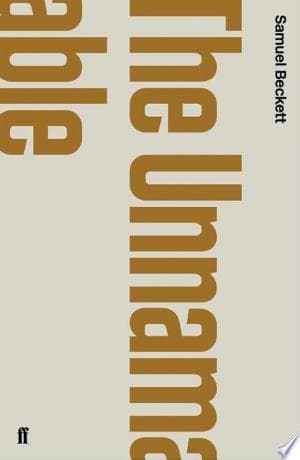
Samuel Beckett (2012)
Genre
Philosophy
Reading Time
180 min
Key Themes
See below
Sign in to track this book
Trapped in an endless monologue, the Unnamable grapples with the futility of language and the relentless compulsion to speak, even as he yearns for the oblivion of silence and the cessation of self.
“I can't go on, I'll go on.”
— The concluding line of the novel, encapsulating the protagonist's perpetual struggle and unwilling continuation.
“Where now? Who now? When now?”
— A recurring set of questions that highlight the narrator's disorientation and lack of identity.
“All these words, all these words, what are they for?”
— The narrator's frustration with language and its perceived inadequacy to express his condition.
“The essential is never to arrive, never to be anywhere, but to be always on the way.”
— A reflection on the nature of existence as an endless process rather than a destination.
“I am obliged to speak. I shall never be silent. Never.”
— The narrator's inescapable compulsion to articulate his thoughts, despite the pain it causes.
“It's a poor trick to be a man, I've had enough of it.”
— A lament about the burden and limitations of human existence.
“I don't know who I am, I don't know where I am, I don't know if I am.”
— A concise summary of the narrator's profound uncertainty about his own being and reality.
“You must go on. I can't go on. You must go on. I'll go on.”
— An internal dialogue that captures the relentless pressure to continue despite an overwhelming desire to stop.
“The thing to do is to be silent, but I can't.”
— The narrator's recognition of the potential peace in silence, contrasted with his inability to achieve it.
“Perhaps I am not I.”
— A simple yet profound statement questioning the very core of self and identity.
“To be nothing, that is what I am trying to be.”
— The narrator's aspiration to shed all attributes and achieve a state of non-being.
“There are no questions but those of which I know nothing.”
— A statement highlighting the narrator's state of utter ignorance and confusion regarding fundamental truths.
“I am in the world, that is to say, I am in the shit.”
— A crude but honest assessment of the human condition and the perceived misery of existence.
“It's not me, it's not I, it's not a person, it's not a thing, it's not a being, it's not a nothing.”
— An exhaustive attempt to define what the narrator is not, emphasizing his elusive and undefinable nature.
Ready to see how well you understood this book? Take our interactive quiz with 10 questions.
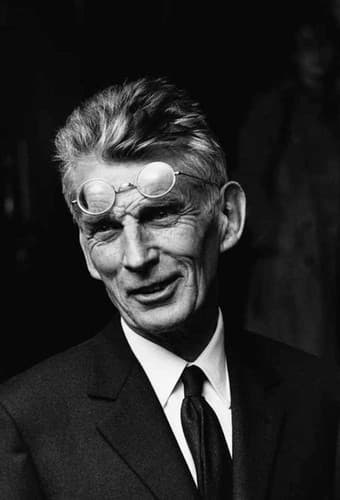
Samuel Barclay Beckett was an Irish novelist, dramatist, short story writer, theatre director, poet, and literary translator. His literary and theatrical work features bleak, impersonal and tragicomic experiences of life, often coupled with black comedy and nonsense. His work became increasingly minimalist as his career progressed, involving more aesthetic and linguistic experimentation, with techniques of repetition and self-reference. He is considered one of the last modernist writers, and one of the key figures in what Martin Esslin called the Theatre of the Absurd.

Jeff Olson
4.4
Thomas Sowell
4.4
Walter Brueggemann
4.3
Rhonda Byrne
4.3

Robin Wall Kimmerer
4.3
George S. Clason
4.3
Elliot Aronson
4.3

Joseph Campbell
4.3