BookBrief
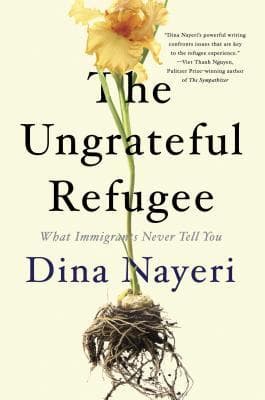
The Ungrateful Refugee cover
Archivist's Choice

The Ungrateful Refugee

Dina Nayeri (2019)

Genre

Politics / Biography / Memoir

Reading Time

450 min

Key Themes

See below

Track Your Reading

Sign in to track this book

Dina Nayeri exposes the emotional and political burdens refugees face, combining her own escape from Iran with stories of others seeking asylum.

Core Idea

Dina Nayeri's "The Ungrateful Refugee" argues that expecting gratitude from refugees is a dehumanizing burden. Refugees must present a simplified version of their trauma for hosts. Nayeri uses her family's journey from Iran to Oklahoma, along with stories of asylum seekers in Europe, to show an impossible situation. Refugees must prove real suffering and idealized resilience, all while navigating bureaucratic systems that demand specific, sometimes made-up, stories. The book questions the 'good refugee' idea. It says refugees have a right to express complexity, anger, and even 'ingratitude,' showing their full humanity beyond victimhood or endless thanks. It criticizes the Western view that often simplifies refugee experiences, hiding their ongoing trauma and constant search for identity and belonging.
Reading time
450 min
Difficulty
Medium
✓ Read this if...
You want to understand the profound psychological and systemic challenges faced by refugees beyond typical media narratives, and are interested in a nuanced, critical perspective on immigration, identity, and the performance of gratitude.
✗ Skip this if...
You prefer a straightforward, statistics-driven analysis of immigration, or are uncomfortable with a memoir that delves deeply into the emotional complexities and ethical ambiguities of the refugee experience.

Core idea

The central argument and framework that powers the entire book.

Dina Nayeri's "The Ungrateful Refugee" argues that expecting gratitude from refugees is a dehumanizing burden. Refugees must present a simplified version of their trauma for hosts. Nayeri uses her family's journey from Iran to Oklahoma, along with stories of asylum seekers in Europe, to show an impossible situation. Refugees must prove real suffering and idealized resilience, all while navigating bureaucratic systems that demand specific, sometimes made-up, stories. The book questions the 'good refugee' idea. It says refugees have a right to express complexity, anger, and even 'ingratitude,' showing their full humanity beyond victimhood or endless thanks. It criticizes the Western view that often simplifies refugee experiences, hiding their ongoing trauma and constant search for identity and belonging.

At a glance

Reading time

450 min

Difficulty

Medium

Read this if...

You want to understand the profound psychological and systemic challenges faced by refugees beyond typical media narratives, and are interested in a nuanced, critical perspective on immigration, identity, and the performance of gratitude.

Skip this if...

You prefer a straightforward, statistics-driven analysis of immigration, or are uncomfortable with a memoir that delves deeply into the emotional complexities and ethical ambiguities of the refugee experience.

Key Takeaways

1

The Burden of Gratitude

Refugees are often expected to perform endless gratitude, obscuring their humanity and inherent rights.

Quote

The refugee, by virtue of their status, is often stripped of their right to complain, to demand, to simply be, without the constant performance of thankfulness.

Nayeri argues that host nations' expectation of constant gratitude from refugees is a dehumanizing burden. This demand forces refugees into a performative role. Their real struggles, criticisms, and basic human needs are overshadowed by the need to appear thankful. This 'gratitude narrative' often justifies the host nation's perceived kindness instead of acknowledging the refugee's right to safety and dignity. It creates a power imbalance, making it hard for refugees to speak for themselves, express unhappiness, or fully integrate as ...

Supporting evidence

Nayeri recounts her own childhood experiences in Italy and America, where even as a child, she felt the pressure to constantly express thanks, internalizing the idea that her very existence was a gift. She juxtaposes this with the stories of other refugees who censor their true feelings and experiences during asylum interviews, fearing that any perceived lack of gratitude could jeopardize their case.

Apply this

For individuals, challenge the narrative that refugees owe perpetual gratitude. Recognize their inherent rights and humanity. For policymakers, design integration programs that empower refugees to voice concerns and participate actively, rather than demanding passive thankfulness. Focus on rights-based approaches over charity models.


refugee-rightsgratitude-narrativedehumanization
2

The Art of Storytelling for Survival

Truth in asylum claims is often less about objective fact and more about crafting a narrative that aligns with host country expectations.

Quote

The asylum seeker's truth is not merely what happened, but what can be believed, what can be understood, what fits the pre-approved narrative of suffering.

Nayeri shows the paradox in the asylum process. Refugees must tell their 'truth,' but this truth must fit a narrow, often Western, idea of persecution and suffering to be believed. Asylum seekers become skilled storytellers, editing their complex, traumatic experiences into easy-to-understand, dramatic stories that fit the legal and emotional frameworks of their interviewers. This often means simplifying details, leaving out things that might seem 'unbelievable' or 'ungrateful,' and even adding details to meet the high bar of 'credibl...

Supporting evidence

Nayeri details the case of a closeted queer man seeking asylum, who struggles with how to articulate his identity and fear of persecution in a way that will be understood and accepted by officials. She also describes translators' roles in shaping these narratives, sometimes advising refugees to emphasize certain aspects or downplay others to increase their chances of success, highlighting the gap between lived experience and official requirements.

Apply this

For asylum systems, recognize the inherent biases in 'credibility' assessments. Train interviewers to understand trauma-informed storytelling and cultural differences in narrative. Focus on corroborating facts where possible, rather than solely on narrative coherence. For advocates, help refugees understand the narrative expectations without forcing them to compromise their integrity.

asylum-processnarrative-constructiontrauma-informed-carecredibility-assessment
3

The Invisibility of Everyday Trauma

Beyond dramatic escape, the daily indignities and psychological toll of refugee life are often overlooked.

Quote

The true suffering of a refugee is not just in the flight, but in the long, grinding wait, the small defeats, the constant uncertainty that chips away at the soul.

Nayeri questions the common idea of refugee life. This idea often focuses on dramatic escapes and immediate dangers, ignoring the cumulative trauma of the 'waiting period' and resettlement. The book describes the crushing boredom, loss of purpose, systemic indignities, and psychological toll of living in limbo—in camps, temporary housing, or even after resettlement. Constant uncertainty, inability to plan, loss of social status, and daily microaggressions cause a deep, widespread suffering. This suffering is often less visible but as ...

Supporting evidence

Nayeri vividly describes her family's time in the crumbling Italian hotel-turned-refugee camp, where days were filled with tedium, anxiety, and the slow erosion of dignity. She also shares stories of refugees in Greece and other European countries, stuck in bureaucratic labyrinths for years, their lives on hold, their aspirations deferred indefinitely, leading to profound depression and hopelessness.

Apply this

For aid organizations and governments, broaden the scope of refugee support beyond immediate survival needs to include robust mental health services, meaningful activities, and opportunities for skill development and social connection during all stages of displacement. Recognize the long-term psychological impacts of prolonged uncertainty. For individuals, cultivate empathy for the 'invisible' struggles of refugees beyond the initial dramatic narratives.

invisible-traumarefugee-campspsychological-impactprotracted-displacement
4

The Illusion of the 'Good Refugee'

Host nations often create an arbitrary ideal of the 'deserving' refugee, marginalizing those who don't fit the mold.

Quote

The 'good refugee' is a phantom, a construct designed to control and categorize, to separate the 'worthy' from the 'unworthy,' often along lines of perceived docility and economic utility.

Nayeri examines the 'good refugee' concept. This is an idealized figure—often young, educated, grateful, and politically acceptable—that host countries implicitly or explicitly seek. This idea creates a dangerous hierarchy, favoring some refugees and marginalizing others who don't fit the mold. Those seen as 'good' are often considered more deserving of asylum and resources. Those who are older, less educated, more outspoken, or don't fit Western cultural norms are viewed with suspicion or resentment. This arbitrary categorization den...

Supporting evidence

Nayeri discusses how her own family, fleeing the Iranian Revolution, was perceived differently from refugees fleeing other conflicts, partly due to their relative education and middle-class background. She also highlights the challenges faced by refugees who are seen as 'economic migrants' or those whose stories don't align with a simplistic 'victim' narrative, making their asylum claims harder to prove credible.

Apply this

Governments and immigration bodies must dismantle the 'good refugee' archetype and adopt a universal rights-based approach to asylum, recognizing that all individuals fleeing persecution deserve protection, regardless of their background or perceived 'worthiness.' Media should avoid perpetuating stereotypes that create these artificial divisions among refugees.

refugee-stereotypesdeservingnessasylum-policyhuman-rights
5

The Loss of Self and Identity

Fleeing one's home often means shedding a former identity, leading to a profound sense of loss and disorientation.

Quote

To become a refugee is to become an expert in the art of disappearance, of shedding the old self, sometimes willingly, often not.

Nayeri explores the psychological impact of losing one's original identity when becoming a refugee. It is more than a change of address; it is a forced shedding of cultural context, social status, professional identity, and personal history. A doctor becomes a cleaner, a respected elder becomes dependent, a citizen becomes stateless. This shift causes disorientation, grief, and often shame. Refugees constantly navigate the gap between who they were and who they are seen to be in their new environment. They struggle to reconcile their ...

Supporting evidence

Nayeri reflects on her own transformation from a confident Iranian child to a shy, 'ungrateful' American immigrant, grappling with the loss of her Persian identity and the need to conform. She shares stories of highly educated professionals who arrive in host countries only to find their qualifications unrecognized, their expertise undervalued, and their former status completely erased, leading to immense psychological distress.

Apply this

Host nations should implement programs that recognize and validate refugees' prior skills and experiences, offering pathways for professional re-qualification and social integration that respect their past identities. Communities should create welcoming spaces that encourage refugees to share their stories and cultural heritage, fostering a sense of belonging and continuity.

identity-losscultural-displacementresettlement-challengespsychological-impact
6

The Power of Small Acts of Kindness

Amidst systemic failures, individual acts of empathy and compassion offer crucial lifelines.

Quote

In the vast machinery of bureaucracy and indifference, a single human connection, a moment of genuine kindness, can be a revelation, a reminder of one's own humanity.

While Nayeri criticizes systemic problems, she also shows the impact of individual acts of kindness. These small gestures—a friendly word, a warm meal, a patient official, a moment of real connection—contrast with the dehumanizing bureaucracy and societal prejudices refugees face. These moments are not just about practical help; they are affirmations of humanity. They remind refugees that they are seen, valued, and not alone. They offer brief but important breaks from constant anxiety and alienation, fueling hope and resilience. Nayer...

Supporting evidence

Nayeri recalls a moment of unexpected kindness from a hotel manager during her family's time in Italy, which offered a brief sense of normalcy and dignity. She also recounts stories of volunteers who go above and beyond, providing not just material support but emotional solace, and the deep gratitude refugees feel for these personal connections amidst overwhelming systemic indifference.

Apply this

Individuals should recognize the power of their own empathy and take small, actionable steps to support refugees in their communities, whether through volunteering, offering a kind word, or advocating for more humane policies. Organizations should integrate human-centered approaches into their programs, emphasizing personal connection and dignity alongside practical assistance.

empathyhuman-connectioncompassionvolunteerism
7

The Myth of a 'New Beginning'

Resettlement is not an end to the journey, but a complex, ongoing process of negotiation with the past.

Quote

There is no true 'new beginning' for a refugee. The past is not erased; it is a ghost that walks beside you, shaping every step of the present.

The idea that resettlement offers a clean slate, a 'new beginning,' is comforting but false, Nayeri says. For refugees, the past is always present. It influences their current experiences and future goals. Trauma, loss, and memories of home continue to shape their lives, even in a safe new country. Integration is not about forgetting or replacing the past. It is about learning to live with it, to weave it into a new, combined identity. The pressure to simply 'move on' or 'forget' can be isolating and psychologically damaging, preventi...

Supporting evidence

Nayeri's own experience of constantly revisiting her Iranian childhood memories and grappling with their influence on her adult life in America exemplifies this. She describes how the smells of certain foods, the sound of a language, or a particular cultural reference can instantly transport refugees back to their past, demonstrating that the 'new beginning' is always interwoven with what came before.

Apply this

Societies should move beyond simplistic notions of 'integration' and understand it as a long-term, complex process that involves acknowledging and supporting refugees in processing their past. Provide resources for cultural preservation and community building that allow refugees to maintain connections to their heritage. Avoid pressuring refugees to assimilate entirely.

resettlementintegrationcultural-memorytrauma-recovery
8

The Arbitrary Nature of 'Danger'

Western governments often privilege certain forms of danger while dismissing others, shaping who is deemed 'worthy' of asylum.

Quote

The calculus of danger is a Western invention, often blind to the nuanced, pervasive threats that don't fit our neat categories of war and political persecution.

Nayeri critiques how Western governments and asylum systems often use a narrow, arbitrary definition of 'danger' and 'persecution.' They tend to prioritize overt political persecution or war-zone violence. They downplay or dismiss other equally life-threatening dangers, such as systemic discrimination, gender-based violence, economic collapse, or the slow erosion of human rights. This selective recognition of danger creates a biased system. Refugees fleeing certain threats are deemed more 'legitimate' than others, regardless of the ac...

Supporting evidence

Nayeri contrasts the perceived legitimacy of political dissidents fleeing the Iranian Revolution with the often-skeptical reception of those fleeing less 'dramatic' but equally dangerous situations, like pervasive social discrimination or economic collapse that makes life unlivable. She also highlights how definitions of persecution can exclude gender-based violence or persecution based on sexual orientation, forcing individuals to contort their stories to fit outdated legal definitions.

Apply this

Policymakers should broaden their understanding of persecution to include a wider range of threats and vulnerabilities, moving beyond a narrow, state-centric view of danger. Asylum laws should be updated to reflect contemporary forms of persecution, ensuring that all individuals facing credible threats receive protection, regardless of the 'type' of danger. Advocates should highlight diverse forms of persecution in their work.

asylum-criteriapersecution-definitionsgeopolitical-biashuman-rights-law
9

The Resilience of Cultural Connection

Despite displacement, refugees find solace and strength in maintaining cultural ties and traditions.

Quote

Even in the starkest of new realities, the taste of home, the sound of a familiar song, the shared ritual, becomes a defiant act of remembrance and survival.

Despite losses and challenges, Nayeri shows the power of cultural connection for refugees. Far from being a barrier to integration, maintaining ties to one's culture—through food, language, stories, and rituals—provides psychological anchors. These connections offer comfort, a sense of continuity, and a link to a past that might otherwise be erased. They become spaces of solace and community, fostering resilience and mental well-being. Cooking a traditional meal, speaking one's native language, or sharing stories from home is not just...

Supporting evidence

Nayeri describes the scene of women gathering to prepare traditional noodles, finding joy and connection in the shared culinary ritual. She also reflects on the importance of her mother's stories and the Persian language in maintaining her own connection to her heritage, even years after leaving Iran.

Apply this

Host communities and organizations should actively support and celebrate the cultural traditions of refugees, providing spaces and resources for cultural exchange and preservation. Recognize that cultural maintenance is a key component of successful integration and mental well-being, rather than a barrier.

cultural-preservationcommunity-buildingresiliencecultural-identity
10

Beyond the 'Swarm': Individuality and Complexity

The dehumanizing 'swarm' metaphor reduces refugees to a faceless mass, obscuring their individual stories and complexities.

Quote

The 'swarm' is a convenient fiction, a way to avoid seeing the individual faces, the distinct stories, the myriad reasons why people flee.

Nayeri confronts the 'swarm' metaphor often used in media and politics to describe refugees. This metaphor, she argues, is dehumanizing. By reducing diverse individuals with unique histories, talents, and traumas to an undifferentiated, threatening mass, it strips them of their agency, humanity, and right to individual consideration. This abstraction makes it easier to justify exclusionary policies and dismiss their suffering. Nayeri's book counters this dangerous generalization. It presents individual narratives, forcing readers to s...

Supporting evidence

Throughout the book, Nayeri weaves her own vivid, detailed memoir with the specific, nuanced stories of various refugees she meets – the queer man, the loving couple, the struggling mother. Each narrative is distinct, highlighting different motivations, challenges, and aspirations, directly refuting the idea of a homogenous 'swarm.'

Apply this

Media organizations and politicians must cease using dehumanizing language like 'swarm' or 'flood' when referring to refugees. Individuals should actively seek out and amplify diverse refugee narratives to counter simplistic generalizations. Focus on the individual stories and experiences rather than broad, abstract numbers.

dehumanizing-languagemedia-representationindividualityanti-refugee-rhetoric

Critical analysis

Notable Quotes

The refugee, by definition, is ungrateful. This is her first political act.

Explaining the central thesis of her book and the title's meaning.

To be a refugee is to be an expert in the art of the provisional.

Describing the constant state of uncertainty and temporary solutions for refugees.

We are told to be grateful for the crumbs, while others feast on the whole loaf.

Reflecting on the disparity between the expectations placed on refugees and the privileges of citizens.

The truth is a luxury that few refugees can afford.

Discussing how refugees often have to tailor their stories to fit asylum criteria, even if it means omitting or altering details.

Memory is not a static archive; it is a living, breathing thing that changes with each retelling.

Exploring the fluid nature of memory, especially when recounting traumatic events for official purposes.

The language of bureaucracy is designed to strip you of your humanity.

Describing the dehumanizing process of navigating asylum systems and official interviews.

Every refugee carries a library of unspoken stories.

Highlighting the depth and complexity of individual refugee experiences that are often unheard.

The act of leaving is an act of creation.

Reflecting on how fleeing one's home forces a reinvention of self and identity.

To be seen as fully human, and not just a 'refugee,' is a constant battle.

Addressing the struggle against stereotypes and the desire for individual recognition.

There is no 'right' way to be a refugee.

Challenging the rigid expectations and judgments placed upon those seeking asylum.

The past is a country you can never truly leave, even when you cross borders.

Discussing the lasting impact of one's homeland and past experiences, regardless of physical relocation.

Hope, for a refugee, is not a luxury; it is a necessity, a muscle that must be continually exercised.

Emphasizing the vital role of hope in enduring the challenges of the refugee journey.

The stories we tell about ourselves are the only things that truly belong to us.

Underscoring the importance of personal narrative and agency in a life often dictated by external forces.

Integration is not a one-way street; it requires effort and understanding from both sides.

Arguing against the notion that refugees alone are responsible for adapting to a new society.

The greatest cruelty is to deny someone their own narrative.

Highlighting the harm in imposing a pre-determined story on refugees or dismissing their personal accounts.

Quiz

Test Your Knowledge

Ready to see how well you understood this book? Take our interactive quiz with 10 questions.

10
Questions
~5
Minutes
?
Best Score

Key Questions (FAQ)

Dina Nayeri's 'The Ungrateful Refugee' is a memoir and non-fiction book that explores the complex realities of refugee life. It interweaves Nayeri's personal story of fleeing Iran and seeking asylum with the experiences of other refugees, challenging common perceptions and expectations placed upon them.

About the author

Dina Nayeri is an Iranian-American author whose work often explores themes of exile, displacement, and identity. Her acclaimed memoir, "The Ungrateful Refugee," offers a powerful and nuanced account of her family's experience fleeing Iran and seeking asylum in the West. Nayeri's writing is lauded for its lyrical prose and unflinching honesty, earning her critical recognition for its contribution to contemporary nonfiction narratives.