BookBrief
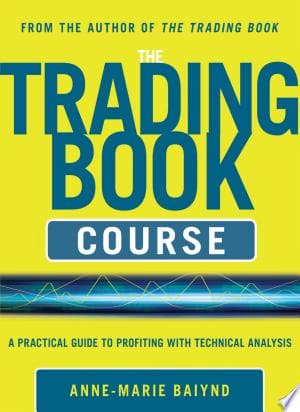
The Trading Book Course: A Practical Guide to Profiting with Technical Analysis cover
Archivist's Choice

The Trading Book Course: A Practical Guide to Profiting with Technical Analysis

Anne-Marie Baiynd (2012)

Genre

General

Reading Time

12 Minutes

Key Themes

See below

Track Your Reading

Sign in to track this book

Master the art of profitable trading with hands-on exercises and expert insights into technical analysis and market psychology.

Core Idea

"The Trading Book Course" by Anne-Marie Baiynd offers a practical, step-by-step guide to profiting in financial markets through technical analysis. The central argument is that by understanding and applying specific technical indicators, chart patterns, and risk management strategies, traders can develop a systematic approach to identifying high-probability trade setups and executing them profitably. Baiynd emphasizes the importance of discipline, emotional control, and continuous learning alongside the technical skills to achieve consistent success in trading.
Difficulty
Medium

Core idea

The central argument and framework that powers the entire book.

"The Trading Book Course" by Anne-Marie Baiynd offers a practical, step-by-step guide to profiting in financial markets through technical analysis. The central argument is that by understanding and applying specific technical indicators, chart patterns, and risk management strategies, traders can develop a systematic approach to identifying high-probability trade setups and executing them profitably. Baiynd emphasizes the importance of discipline, emotional control, and continuous learning alongside the technical skills to achieve consistent success in trading.

At a glance

Difficulty

Medium

Key Takeaways

1

Mastering Market Condition Identification

Before any trade, accurately diagnose the market's current state to inform strategy.

Quote

Accurately identify market conditions before beginning to trade—which is the key to determining the best entry and exit points possible.

This book's main insight is that successful trading begins not with picking a stock, but with understanding the current market. Baiynd argues that trading without knowing if the market is trending, consolidating, or reversing is like sailing without a map. Recognizing conditions like strong uptrends, downtrends, or sideways movement helps you choose the right technical tools and risk management strategies. For example, a trending market might favor trend-following indicators, while a range-bound market calls for support and resistance...

Supporting evidence

The book's entire premise is built around this foundational step, with subsequent chapters detailing how to evaluate trends, peaks, support/resistance, and price patterns as components of market condition identification.

Apply this

Before every trade, conduct a top-down analysis of the broader market (e.g., S&P 500), then the sector, and finally the individual stock to ascertain the dominant market condition. Use multiple timeframes to confirm the trend's strength and direction.


2

The Synergy of Technical Analysis and Trading Psychology

Combine objective chart analysis with disciplined emotional control for optimal trading outcomes.

Quote

Combine powerful technical analysis with smart trading psychology to increase your chances of success even more!

Baiynd states that technical analysis alone, no matter how advanced, is not enough for consistent profits. The book says that the 'human element'—psychology—is often a trader's weakest point. Fear, greed, impatience, and overconfidence can override even the best technical strategies, leading to impulsive decisions and big losses. The course helps traders develop mental strength, stressing the need to stick to a trading plan, manage risk, and learn from mistakes without emotional attachment. This approach recognizes that successful tra...

Supporting evidence

The book highlights the integration of 'smart trading psychology' alongside technical tools, suggesting exercises and case studies that implicitly address common psychological pitfalls.

Apply this

Develop a written trading plan that includes entry/exit rules and risk management. During live trading, regularly pause to check emotional state. After trades, review decisions objectively, noting where psychology influenced adherence to the plan.

3

Practical Application Through Virtual Practice

Hands-on exercises and case studies are indispensable for developing trading proficiency.

Quote

The only path to successful trading is practice. The Trading Book Course provides the virtual practice you need so that you can hit the ground running toward real profits in the actual marketplace.

This is a key strength of the book: its focus on practical, hands-on learning. Unlike many theoretical trading guides, Baiynd's approach emphasizes that understanding technical concepts is only the first step. True skill comes from repeated practice in a simulated environment. The 'course' aspect means a structured learning path where readers actively engage with concepts, rather than just reading. Case studies of real traders and real trades are valuable learning tools, showing both successful strategies and common mistakes. This pra...

Supporting evidence

The description explicitly states, 'Filled with activities, exercises, and expert advice,' and 'includes case studies of real traders making real trades to clearly illustrate what you should do and what you should avoid.'

Apply this

Actively work through all exercises provided. If the book doesn't provide enough, use a simulator or paper trading account to practice applying each technical concept (e.g., identifying support/resistance, drawing trendlines) on historical and live charts before risking real money.

4

The Power of Price/Volume Relationships

Volume confirms price action, providing critical validation for trends and reversals.

Quote

The Trading Book Course provides everything you need to evaluate: ...Price/Volume Relationships...

Baiynd correctly points out the importance of price/volume relationships. While price shows what is happening, volume shows how strong the conviction is behind that movement. A strong price move on high volume is generally more reliable than the same move on low volume. Conversely, a price reversal with high volume can signal a real shift in sentiment, while a reversal on low volume might be a temporary pullback. This insight helps avoid 'fakeouts' and confirms technical signals. For example, a breakout above resistance on low volume ...

Supporting evidence

Price/Volume Relationships are specifically listed as a key evaluation area within the book's content.

Apply this

Always analyze volume alongside price. Look for increasing volume on trend-confirming moves and decreasing volume on pullbacks within a trend. Be wary of breakouts or breakdowns on unusually low volume.

5

Utilizing Support and Resistance for Strategic Entry/Exit

Identify key price levels where buying and selling pressure historically shift.

Quote

The Trading Book Course provides everything you need to evaluate: ...Support/Resistance...

Support and resistance levels are basic parts of technical analysis, and Baiynd's focus on them is appropriate. These are not just arbitrary lines but zones where market memory and collective psychology often lead to predictable reactions. Support is a price level where buying is strong enough to stop a downtrend, while resistance is where selling is strong enough to stop an uptrend. Understanding how to find, draw, and interpret these levels is essential for finding good entry points (e.g., buying near support in an uptrend) and exit...

Supporting evidence

Support/Resistance is explicitly listed as a core topic covered in the course.

Apply this

On every chart, identify and mark at least two significant support and resistance levels. Observe how price reacts to these levels, looking for bounces, breakthroughs, and retests. Use these zones to set stop-loss orders and profit targets.

6

Decoding Price Patterns for Future Movement

Recognize recurring chart formations that forecast potential price direction.

Quote

The Trading Book Course provides everything you need to evaluate: ...Price Patterns...

Price patterns are visual representations of supply and demand over time, and Baiynd's inclusion of them is important. From classic patterns like head and shoulders, double tops/bottoms, and triangles to flags and pennants, these formations offer clues about future price direction and potential movement. The book likely teaches how to identify these patterns, understand what they mean (reversal or continuation), and measure potential price targets. While no pattern is 100% accurate, recognizing them provides a statistical advantage. T...

Supporting evidence

Price Patterns are explicitly listed as a key area of evaluation within the course content.

Apply this

Regularly review charts across different timeframes to identify common price patterns. Practice drawing trendlines and boundaries for patterns like triangles or channels. Confirm pattern validity with other indicators like volume or momentum before making trading decisions.

7

Leveraging Moving Averages for Trend Confirmation

Use moving averages to smooth price data and identify trend direction and strength.

Quote

The Trading Book Course provides everything you need to evaluate: ...Moving Averages...

Moving Averages (MAs) are essential tools for trend analysis, and Baiynd's coverage is key. They provide a smoothed view of price action, making it easier to see the underlying trend by removing short-term noise. The book likely details various types of MAs (Simple, Exponential) and how best to use them, such as using shorter MAs for fast trends and longer MAs for broader market direction. Crossovers of different MAs (e.g., a 50-day MA crossing above a 200-day MA) often serve as strong buy or sell signals. Also, MAs can act as dynamic...

Supporting evidence

Moving Averages are specifically mentioned as one of the key indicators covered in the course.

Apply this

Experiment with different moving average periods (e.g., 20, 50, 200-period EMAs) to find what works best for your chosen timeframe. Use MA crossovers for trend confirmation and as dynamic support/resistance levels. Never use MAs in isolation; always combine with other indicators.

8

Interpreting Momentum Indicators for Overbought/Oversold Conditions

Gauge the speed and strength of price changes to anticipate reversals.

Quote

The Trading Book Course provides everything you need to evaluate: ...Momentum Indicators

Momentum indicators, such as RSI, Stochastic Oscillator, or MACD, are important for measuring the speed of price changes and finding potential overbought or oversold conditions. Baiynd's inclusion of these tools is vital because they offer insights into the internal strength of a move, often signaling exhaustion before price itself reverses. For example, an RSI reading above 70 suggests an asset is overbought and might pull back, while a reading below 30 indicates oversold conditions. However, a limitation of momentum indicators is th...

Supporting evidence

Momentum Indicators are explicitly listed as a key evaluation area within the course content.

Apply this

Integrate at least one momentum indicator (e.g., RSI, Stochastic) into your analysis. Look for divergences between price and momentum as potential early warning signs of trend weakness. Use overbought/oversold signals in conjunction with support/resistance and price patterns for higher probability trades.

9

The Imperative of a Structured Learning Path

A 'course' format is essential for building robust trading skills systematically.

Quote

The Trading Book Course provides everything you need to evaluate: Trends * Peaks * Price/Volume Relationships * Support/Resistance * Price Patterns * Moving Averages * Momentum Indicators

The title 'The Trading Book Course' implies a structured, step-by-step approach to learning technical analysis, which is an often-overlooked part of trader development. Many aspiring traders jump from indicator to indicator without a clear plan. Baiynd's course format, in contrast, suggests a logical progression from basic concepts (like identifying market conditions and trends) to more advanced tools (like specific indicators and patterns). This systematic learning helps build a strong understanding, ensuring that each new piece of k...

Supporting evidence

The comprehensive list of topics covered ('Trends * Peaks * Price/Volume Relationships * Support/Resistance * Price Patterns * Moving Averages * Momentum Indicators') implies a structured curriculum designed for thorough understanding.

Apply this

Treat learning trading as a formal course. Master each concept before moving to the next. Create a personal study plan, including dedicated time for reading, practicing, and reviewing your progress.

Critical analysis

Notable Quotes

Quiz

Test Your Knowledge

Ready to see how well you understood this book? Take our interactive quiz with 10 questions.

10
Questions
~5
Minutes
?
Best Score

Key Questions (FAQ)

The Trading Book Course is a practical, hands-on guide designed to help traders improve their decision-making using technical analysis. It focuses on identifying market conditions, combining technical tools with trading psychology, and providing practice through exercises and case studies.

About the author

Anne-Marie Baiynd

Anne-Marie Baiynd is a prominent author and educator in the field of financial trading. She is best known for her comprehensive guides, "The Trading Book Course" and "The Trading Book," which offer practical insights into technical analysis, trading systems, and market psychology. Baiynd's work is highly regarded for its clarity and actionable advice for traders of all levels.