“There are no new jokes, only new audiences. And new ways of telling them.”
— Laurie discussing humor and storytelling.

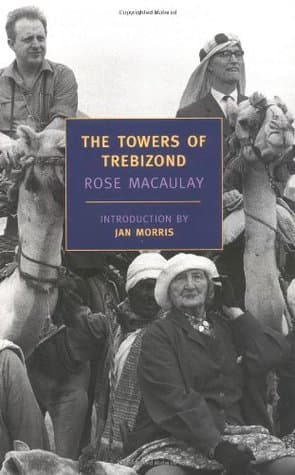
Rose Macaulay (1956)
Genre
Lifestyle / Historical Fiction
Reading Time
296 min
Key Themes
See below
Sign in to track this book
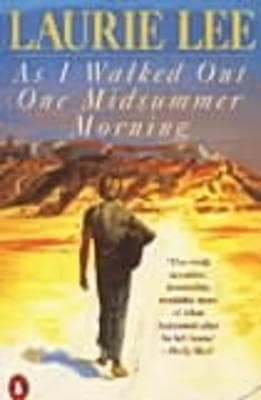
On a camel-back journey through 1950s Turkey, an eccentric Englishwoman navigates ancient empires, modern evangelists, and the pain of lost love.
The novel begins with Aunt Dot's iconic line, "Take my camel, dear," after High Mass, immediately setting an eccentric tone. Laurie narrates her journey with her aunt and Father Hugh Chantry-Pigg, an Anglican priest, on a mission to Trebizond. Their stated goal is to study women's roles in Turkey and promote Anglo-Catholicism, but their true motives are often hidden. Laurie, troubled by a past love, observes her companions' habits: Aunt Dot's unpredictable statements and Father Hugh's earnest, if sometimes naive, religious passion. They navigate the first parts of their journey, dealing with logistics, cultural differences, and the underlying tension of their individual quests, which are not simple academic pursuits.
In Istanbul, the group immediately faces travel challenges. Laurie, Aunt Dot, and Father Hugh try to navigate the busy city, its mix of ancient history and modern life, and the practicalities of their mission. They encounter bureaucracy and cultural misunderstandings, often leading to funny situations, especially through Aunt Dot's unique interactions. During this time, Laurie thinks about her past and the deep sense of loss that fills her thoughts, quietly contrasting her inner turmoil with the outer absurdity of their trip. Their first experiences in Istanbul show the blend of comedy and sadness that defines the novel, as the characters' surface goals start to clash with their deeper, unacknowledged motivations.
As the group travels east from Istanbul, the journey becomes more unusual. Aunt Dot's insistence on buying a camel, named Horace, adds another layer of absurdity, making their progress slow and often unpredictable. They cross different landscapes, from modern roads to more remote, old paths, meeting various people: local villagers, other travelers, and even a group of American evangelists led by Billy Graham. These encounters offer both humor and reflection, as the characters' different views clash. Laurie continues to observe the world through her personal grief, while Aunt Dot and Father Hugh stick to their unique ideas of their mission, sometimes unaware of the realities around them.
The journey includes several small crises and unusual meetings. The group deals with stubborn police, who are often puzzled by their goals and methods, causing delays and funny interrogations. More mysteriously, they meet people who seem to be sorcerers or practitioners of local magic, offering potions and predictions. These interactions add a touch of fantasy to the otherwise grounded, though eccentric, travel story. Laurie, often distant, watches these events with a sharp, analytical eye, noting the conflict between the rational and the superstitious. These episodes show the novel's exploration of different belief systems and the human need to find meaning in both the ordinary and the extraordinary.
A memorable episode is the group's chance meeting with Billy Graham and a bus of Southern American evangelists on tour. This meeting creates a fascinating and humorous clash of religious cultures and ideas. Father Hugh, with his Anglican views, finds himself in a lively, if sometimes awkward, discussion with the fervent Protestants. Aunt Dot, always irreverent, watches the scene with amusement and detached curiosity. Laurie, while noting the differences, also thinks about the shared human desire for faith and spiritual searching, even as her own faith is tied to her personal sorrow. The interaction highlights the novel's look at religious diversity and the sometimes funny, sometimes deep ways people express their beliefs.
After their difficult and eventful journey, the group finally arrives in Trebizond. The city, with its ancient walls and history as a former Byzantine empire, deeply affects Laurie. She is struck by the echoes of past civilizations and the strong sense of continuity and decay. This arrival changes the narrative's tone, becoming more thoughtful and sad. Laurie thinks about the rise and fall of empires, the fleeting nature of human efforts, and history's lasting power to shape the present. Her observations about Trebizond mix with her personal thoughts on loss and memory, as the ancient ruins seem to mirror the ruins of her own heart. The city becomes a strong symbol of both lasting beauty and unavoidable decline.
In Trebizond, Father Hugh Chantry-Pigg works earnestly, though sometimes misguidedly, on his mission to promote Anglo-Catholicism and study women's roles. He tries to engage with local religious figures and communities, often meeting polite confusion or resistance. His efforts, though well-intentioned, are often hampered by his lack of understanding of Turkish culture and religious practices, leading to funny misunderstandings. Aunt Dot, meanwhile, continues her eccentric observations, offering her unique, often cynical, comments on the events. Laurie, seeing Father Hugh's sincere but ultimately futile efforts, thinks more about faith, cultural exchange, and the human desire to impose one's beliefs on others, even as she deals with her own spiritual doubts.
Throughout the journey, and especially in Trebizond, Laurie's inner world is dominated by her grief for Vere, her married lover who died. Her memories of their secret affair, their deep connection, and the pain of his loss are woven through the story, providing a sad contrast to the outer comedic events. She constantly revisits their past, analyzing their relationship, her guilt and love, and the deep emptiness left by his absence. These inner thoughts show the depth of her sorrow and her struggle to connect her past with her present. Trebizond, with its ancient echoes of loss and lasting beauty, serves as a strong background for her thoughts, making her personal tragedy feel both intimate and universal.
While supposedly studying women's roles, Aunt Dot's true agenda is more radical than Father Hugh's. She is very interested in promoting women's liberation, often in ways that shock or amuse those around her. Her methods are unconventional, involving direct and often blunt questions about women's lives, and she challenges traditional norms without fear. Her observations and actions highlight the complexities of gender roles and societal expectations, especially in a cross-cultural setting. Laurie observes her aunt's spirited, though sometimes naive, activism, which adds another layer to the novel's exploration of social change and individual action, contrasting with Father Hugh's more conservative religious goals.
As their time in Trebizond ends, the group's various, often conflicting, missions begin to fall apart. Father Hugh's Anglo-Catholic efforts have had limited success, Aunt Dot's women's liberation work has met with curiosity and resistance, and Laurie's inner search for peace remains unsolved. The practicalities of their return trip, including Horace the camel's fate, become new challenges. The characters, though perhaps not achieving their initial goals, have changed from their experiences. The journey back is marked by reflection and a subtle shift in their views, as the external adventures have mixed with their internal lives, leaving them with a deeper, if more complicated, understanding of themselves and the world.
As the journey continues, Laurie's internal struggle reaches a peak. Her constant grief for Vere, combined with the religious and historical thoughts from Trebizond, forces her to confront her sorrow's depth and her faith's fragility. She grapples with questions of sin, redemption, and the meaning of love and loss in a world that often seems uncaring. Her spiritual crisis is deeply personal, different from Father Hugh's theological pursuits or Aunt Dot's social activism. This period of intense thought includes moments of despair and a longing for comfort, highlighting the novel's exploration of human suffering and the search for meaning in tragedy. The lively, often absurd, outer world contrasts sharply with her inner desolation.
The travelers eventually return, but the journey's end does not neatly resolve Laurie's pain. While the outer adventures finish, her inner struggle with grief and loss continues. The novel suggests that some sorrows are not easily overcome but become a permanent part of one's identity. Laurie returns to her ordinary life, but it is now filled with memories of Vere and the experiences of Trebizond. Her thoughts on love, death, and faith are left somewhat open, emphasizing the complexity of the human condition. Her companions' humor and eccentricity contrast sadly with her lasting melancholy, showing the novel's main idea of finding beauty and meaning amidst deep sadness.
The Protagonist
Laurie begins the journey consumed by grief and guilt, and while the external events offer distraction and new perspectives, her core sorrow remains, becoming an integrated part of her identity rather than being resolved.
The Supporting
Aunt Dot remains largely unchanged in her eccentric and opinionated nature, serving as a constant source of external amusement and challenge to the more conventional characters.
The Supporting
Father Hugh's unwavering devotion and slightly out-of-touch approach remain consistent, providing a steady, if sometimes uncomprehending, presence amidst the journey's chaos.
The Mentioned
As a deceased character, Vere has no arc but his memory evolves in Laurie's mind, moving from raw grief to a more integrated, albeit still painful, part of her past.
The Supporting
Horace remains a constant, if often uncooperative, presence, symbolizing the material realities and absurdities of the journey.
The Mentioned
As a real-life figure, Billy Graham has no narrative arc within the novel, but his appearance serves as a symbolic encounter for the characters.
The Supporting
These characters serve a functional role, consistently representing the practical challenges and humorous misunderstandings of the journey.
The Supporting
These characters appear sporadically, serving to introduce elements of the mysterious and the culturally distinct into the narrative.
The main theme is Laurie's deep and lasting grief for Vere, her deceased married lover. Her inner thoughts are always filled with memories of him, their complex affair, and the pain of his absence. This theme is explored through her reflections on love, sin, and the difficulty of finding meaning after such a loss. The lively, often absurd, external journey contrasts sadly with her inner desolation, showing how personal sorrow can color one's view of the world. For example, Trebizond's ancient ruins often reflect the 'ruins' of her own heart.
“One does not get over things, one carries them with one. One lives with them, they are part of one. And one must go on living.”
The novel explores various kinds of spiritual and existential searches. Father Hugh represents traditional, institutional faith (Anglo-Catholicism), earnestly, though somewhat naively, trying to spread his beliefs. Aunt Dot, though secular, has her own 'mission' of women's liberation, driven by a different kind of conviction. Laurie, however, deals with a more personal spiritual crisis, questioning God's existence, sin's nature, and the possibility of comfort in suffering. The meeting with Billy Graham's evangelists and local mystics broadens the range of belief systems, showing the diverse ways humans seek meaning in a complex world.
“What was faith? A leap in the dark, a surrender, a passionate affirmation? Or just a habit of mind, a comfortable adherence?”
The novel is full of eccentricity, mainly through Aunt Dot and her unusual way of traveling and living. From buying a camel to her blunt statements, her actions fill the story with humor and a sense of the absurd. The oddness of their mission—Anglo-Catholicism and women's rights in rural Turkey—further highlights this theme. This lighthearted absurdity often contrasts sharply with Laurie's deep sorrow, creating a bittersweet tone. The funny situations show the inherent strangeness of human behavior and the often comical clashes that happen when different cultures and personalities meet.
“Take my camel, dear,' said my aunt Dot, as she climbed down from this animal on her return from High Mass.”
The journey through Turkey provides a rich setting for exploring cultural differences and the challenges of cross-cultural understanding. The characters, especially Father Hugh and Aunt Dot, often misunderstand local customs and beliefs, leading to humorous but also insightful moments. The meeting with Billy Graham's American evangelists adds another layer, showing diversity within Western cultures. Laurie, as the observer, often thinks about the difficulty of truly knowing another culture, and how one's own background shapes perceptions. The novel quietly questions the effectiveness of imposing one's values on others.
“It was difficult, she thought, to know what was in the minds of these people, so polite, so remote, so entirely other.”
The weight of history, both personal and societal, is a key theme. Laurie constantly relives her past with Vere, and her memories are a living presence. Similarly, the ancient ruins and historical importance of places like Trebizond bring thoughts of past empires, conflicts, and the passage of time. The novel suggests that the past is never truly gone but continues to shape the present, both for individuals and for civilizations. The mix of ancient ruins with modern life shows this continuity, highlighting how echoes of what once was still resonate.
“The past, she reflected, was not a country one left behind, but a country one carried within, its landscapes altering with every step.”
The story is told through Laurie's subjective and grief-stricken perspective.
The entire novel is narrated in the first person by Laurie. This device allows for deep access to her internal world, her profound grief for Vere, and her introspective reflections on faith and loss. However, her perspective is often colored by her sorrow and detachment, making her a somewhat unreliable narrator regarding the objective reality of events, particularly compared to the more outwardly focused observations of her companions. This subjective lens emphasizes the emotional core of the story and allows the reader to experience the world through her unique, melancholic filter, highlighting the contrast between external absurdity and internal pain.
The novel constantly places humorous, absurd events alongside profound personal sorrow.
This device is central to the novel's unique tone. The external plot is often filled with farcical situations, eccentric characters (Aunt Dot, Father Hugh), and comedic misunderstandings. These lighthearted elements are constantly juxtaposed with Laurie's deep, internal grief and existential questioning. This contrast creates a bittersweet and poignant effect, preventing the novel from becoming either purely humorous or overly sentimental. It reflects the complexity of life, where joy and sorrow often coexist, and allows for a deeper exploration of human resilience and the search for meaning amidst suffering.
The physical journey to Trebizond mirrors Laurie's internal journey of grief and self-discovery.
The physical expedition from Istanbul to Trebizond is more than just a travelogue; it serves as a powerful metaphor for Laurie's internal journey. As she traverses diverse landscapes and encounters various cultures, she simultaneously navigates the landscapes of her own grief, memory, and spiritual questioning. The challenges and discoveries of the external trip parallel her internal struggles and insights. The destination of Trebizond, with its ancient history and echoes of lost empires, symbolically reflects the 'ruins' of her own heart and the enduring presence of the past, making the physical journey a vehicle for profound psychological exploration.
The ancient city represents the persistence of history, loss, and the beauty of decay.
Trebizond is not merely a destination but a potent symbol. As a historical city that was once a powerful Byzantine empire, it embodies the rise and fall of civilizations, the transience of human endeavors, and the enduring presence of history. For Laurie, its ancient ruins and layered past resonate deeply with her personal sense of loss and the 'ruins' of her own heart after Vere's death. It symbolizes the bittersweet beauty of decay, the way that even in decline, there is a profound sense of continuity and meaning. The city acts as a mirror for her internal state, making her personal tragedy feel universal.
“There are no new jokes, only new audiences. And new ways of telling them.”
— Laurie discussing humor and storytelling.
“It is always a mistake to suppose that because a thing is old, it is therefore out of date.”
— Laurie reflecting on ancient customs and traditions.
“Life is a journey, not a destination. But it is always nice to have a destination, even if you never reach it.”
— Laurie contemplating the meaning of life and travel.
“Love, like religion, is a mystery, and should not be too closely examined.”
— Laurie's thoughts on the nature of love and faith.
“The past is a foreign country; they do things differently there.”
— A general reflection on historical differences, though famously from another novel, it captures a core theme of the book's historical setting and perspective.
“It is a peculiar thing, the way that some people can be so certain of what they believe, and others so uncertain.”
— Laurie observing the varying degrees of faith among her companions.
“The greatest adventures are not always those that take us to the furthest places, but those that take us to the furthest reaches of ourselves.”
— Laurie's internal reflections on personal growth amidst her travels.
“Trebizond, a name that hums with history, a place where East meets West, and past meets present.”
— Laurie's initial impressions of Trebizond.
“One travels not to escape life, but for life not to escape us.”
— A reflection on the motivations behind travel and exploration.
“There is a kind of freedom in not knowing what comes next, a thrilling uncertainty.”
— Laurie embracing the unpredictable nature of her journey.
“The world is full of ghosts, some visible, some not, but all of them leaving their traces.”
— Laurie contemplating the lingering presence of history and memory.
“Religion, like everything else, is a matter of taste. Some prefer it plain, some highly spiced.”
— Laurie's observations on the diverse expressions of religious belief.
“To be truly alive, one must risk being truly lost.”
— Laurie's philosophical musings on the importance of taking chances.
“The greatest truths are often found in the strangest places, whispered by the most unlikely voices.”
— Laurie reflecting on unexpected sources of wisdom during her travels.
Ready to see how well you understood this book? Take our interactive quiz with 10 questions.

Biography coming soon.