BookBrief
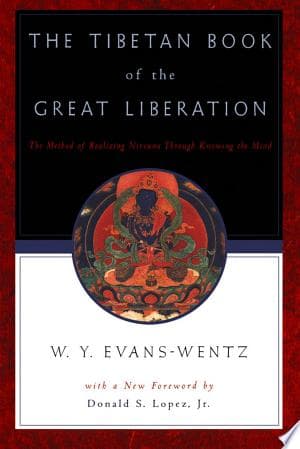
The Tibetan Book of the Great Liberation cover
Archivist's Choice

The Tibetan Book of the Great Liberation

W. Y. Evans-Wentz (2000)

Genre

General

Reading Time

1200 min

Key Themes

See below

Track Your Reading

Sign in to track this book

This text explores Padma-Sambhava's ancient yogic path to Enlightenment through direct knowledge of the cosmic One Mind, bypassing traditional techniques. Insights from Evans-Wentz and C.G. Jung illuminate this journey into Tibetan Buddhism.

Core Idea

This book translates and comments on a Tibetan text that states the One Mind is ultimate reality, beyond all dualities and standard spiritual practices. It suggests true liberation comes from directly recognizing this inherent, unconditioned Mind, moving past gradual paths of lower yogas. The text, based on Padma-Sambhava's teachings and enlightened by figures like Guru Phadampa Sangay, guides readers to this supreme Mahāyāna path, stressing self-realization.
Reading time
1200 min
Difficulty
Hard
✓ Read this if...
You are interested in advanced Mahāyāna Buddhist philosophy, particularly the Dzogchen or Mahamudra traditions, and seek a deep exploration of the concept of 'One Mind' and direct realization.
✗ Skip this if...
You are looking for an introductory text to Buddhism, practical meditation guides, or a book focused on the historical or cultural aspects of Tibet rather than its highest philosophical and mystical teachings.

Core idea

The central argument and framework that powers the entire book.

This book translates and comments on a Tibetan text that states the One Mind is ultimate reality, beyond all dualities and standard spiritual practices. It suggests true liberation comes from directly recognizing this inherent, unconditioned Mind, moving past gradual paths of lower yogas. The text, based on Padma-Sambhava's teachings and enlightened by figures like Guru Phadampa Sangay, guides readers to this supreme Mahāyāna path, stressing self-realization.

At a glance

Reading time

1200 min

Difficulty

Hard

Read this if...

You are interested in advanced Mahāyāna Buddhist philosophy, particularly the Dzogchen or Mahamudra traditions, and seek a deep exploration of the concept of 'One Mind' and direct realization.

Skip this if...

You are looking for an introductory text to Buddhism, practical meditation guides, or a book focused on the historical or cultural aspects of Tibet rather than its highest philosophical and mystical teachings.

Key Takeaways

1

The Primacy of One Mind

Enlightenment through direct realization of the cosmic All-Consciousness.

Quote

By knowing the One Mind, the cosmic All-Consciousness, without recourse to the postures, breathings, and other techniques associated with the lower yogas, one can attain Enlightenment.

This book presents a direct path to enlightenment, stating that it does not depend on external practices or difficult physical disciplines. Instead, 'Great Liberation' comes from directly realizing the 'One Mind'—a universal, cosmic consciousness. This idea shifts focus from external ritual to internal recognition, suggesting that the path to transcendence is inherent and accessible through deep self-awareness, not through a set of actions. It challenges the common view of spiritual attainment as a long process, instead framing it as ...

Supporting evidence

The core teaching attributed to Padma-Sambhava, which emphasizes 'knowing the One Mind' as the sole and sufficient means for attaining Enlightenment, distinguishing it from 'lower yogas' that rely on physical or breath techniques.

Apply this

Cultivate practices of deep introspection and meditation aimed at recognizing the underlying unity of consciousness, rather than focusing solely on external spiritual disciplines. Question assumptions about the necessity of complex rituals for spiritual growth.

one-mindcosmic-consciousnessmahayanaenlightenment
2

Beyond Lower Yogas

Transcendence without physical postures or breathwork.

Quote

Such attainment can happen, as shown here, by means of knowing the One Mind... without recourse to the postures, breathings, and other techniques associated with the lower yogas.

The text clearly separates its 'Supreme Path' from 'lower yogas,' which typically include physical postures (asanas), breath control (pranayama), and other body-based practices. This distinction is important because it suggests that while these techniques have their place, they are not the ultimate way to 'Great Liberation.' The book promotes a more direct, mental-spiritual approach, where realizing the One Mind removes the need for these preparatory or supporting methods. It implies a higher, more immediate form of spiritual practice...

Supporting evidence

The explicit contrast drawn in the book between the 'yogic method of attaining Enlightenment' through 'knowing the One Mind' and the exclusion of 'postures, breathings, and other techniques associated with the lower yogas.'

Apply this

When seeking spiritual growth, evaluate whether your current practices are truly addressing the core of consciousness or are merely external forms. Experiment with meditation styles that prioritize direct awareness over physical manipulation.

lower-yogassupreme-pathtranscendencespiritual-practice
3

The Bardo Thödol Context

Part of a lineage of treatises on achieving transcendence.

Quote

The original text for this volume belongs to the Bardo Thödol series of treatises concerning various ways of achieving transcendence, a series that figures into the Tantric school of the Mahāyāna.

This volume is part of the rich tradition of the Bardo Thödol series, Tantric Mahāyāna texts that guide individuals through states of transition and towards transcendence. Understanding this context is key, as it frames 'Great Liberation' not just as an individual achievement but as part of a larger, established spiritual framework. The Bardo Thödol series is known for posthumous liberation, but this text extends its principles to liberation within life, emphasizing the continuity of consciousness and the possibility of awakening at a...

Supporting evidence

Evans-Wentz's editorial note explicitly stating that 'The original text for this volume belongs to the Bardo Thödol series of treatises concerning various ways of achieving transcendence.'

Apply this

To fully grasp the teachings, explore other texts within the Bardo Thödol series to understand the broader philosophical landscape. Recognize that individual spiritual insights often arise from a lineage of wisdom, not in isolation.

bardo-thodoltantric-buddhismmahayanatibetan-buddhism
4

Padma-Sambhava's Legacy

The legendary guru's secret doctrines and life story.

Quote

Padma-Sambhava's text per se is preceded by an account of the great guru's own life and secret doctrines.

The book includes the core text attributed to Padma-Sambhava and provides important biographical context and insights into his 'secret doctrines.' This inclusion is significant because it connects abstract spiritual teachings to the life and experience of a revered historical figure. Padma-Sambhava, the 'Lotus-Born,' is credited with establishing Buddhism in Tibet, and his teachings are fundamental to the Nyingma school. Understanding his journey from India to Tibet and his unique insights helps explain the deep nature of 'Great Liber...

Supporting evidence

The structural organization of the book, where 'Padma-Sambhava's text per se is preceded by an account of the great guru's own life and secret doctrines.'

Apply this

When studying spiritual texts, seek to understand the life and context of the author or attributed source. Consider how the teacher's personal journey might illuminate the meaning and intent of their teachings.

padma-sambhavatibetan-buddhism-historygurusecret-doctrines
5

Augmenting Wisdom with Guru Phadampa Sangay

Supplementary teachings deepen the path to liberation.

Quote

It is followed by the testamentary teachings of the Guru Phadampa Sangay, which are meant to augment the thought of the other gurus discussed herein.

The inclusion of Guru Phadampa Sangay's final teachings shows the layered and connected nature of Tibetan wisdom. These teachings are not a replacement but an addition, enriching and expanding upon core concepts from Padma-Sambhava and other gurus. This approach highlights that spiritual truth is often multifaceted, benefiting from diverse views and complementary insights. Phadampa Sangay, a key figure in the Pacifying of Suffering (Zhije) tradition, offered perspectives that stress the practical use of wisdom in easing suffering, pro...

Supporting evidence

Evans-Wentz's description of Phadampa Sangay's teachings as 'testamentary teachings... which are meant to augment the thought of the other gurus discussed herein.'

Apply this

Actively seek out diverse perspectives and complementary teachings within a spiritual tradition to gain a more comprehensive understanding. Don't settle for a single interpretation, but rather allow different masters to illuminate different facets of truth.

guru-phadampa-sangaytestamentary-teachingsspiritual-augmentationtibetan-masters
6

Evans-Wentz's Lucid Introduction

A century-page guide to key Buddhist concepts.

Quote

The former presents a 100-page General Introduction that explains several key names and notions (such as Nirvāna, for starters) with the lucidity, ease, and sagacity that are this scholar's hallmark.

W. Y. Evans-Wentz's extensive General Introduction is a valuable resource for Western readers, serving as a comprehensive glossary and philosophical primer. His ability to explain complex Buddhist concepts like Nirvāṇa with clarity is important for making these deep teachings accessible. This introductory material bridges the cultural and linguistic gap, ensuring readers can approach the main text with a basic understanding, rather than getting lost in unfamiliar terms. It shows the importance of a well-guided entry point into esoteri...

Supporting evidence

The description of Evans-Wentz's '100-page General Introduction that explains several key names and notions (such as Nirvāna, for starters) with the lucidity, ease, and sagacity that are this scholar's hallmark.'

Apply this

Before diving into complex spiritual texts, dedicate time to understanding the foundational terminology and philosophical framework. Utilize scholarly introductions and commentaries as essential guides, especially when encountering unfamiliar traditions.

evans-wentzgeneral-introductionnirvanabuddhist-concepts
7

Jung's Collective Unconscious Parallel

Equating the Enlightened Mind with Western psychological concepts.

Quote

The latter offers a Psychological Commentary that weighs the differences between Eastern and Western modes of thought before equating the 'collective unconscious' with the Enlightened Mind of the Buddhist.

C. G. Jung's Psychological Commentary offers a bridge between Eastern spiritual wisdom and Western psychoanalytic thought. His controversial but compelling idea that the 'collective unconscious' is like the 'Enlightened Mind' of Buddhism provides a Western psychological framework for understanding the profound cosmic consciousness central to the book. This comparison not only validates Eastern insights within a Western scientific paradigm but also encourages a deeper, more integrated understanding of the human psyche's potential for u...

Supporting evidence

The explicit statement that C. G. Jung's 'Psychological Commentary... equates the 'collective unconscious' with the Enlightened Mind of the Buddhist.'

Apply this

Explore interdisciplinary connections between spiritual traditions and psychology. Consider how concepts from different fields might illuminate each other, fostering a more holistic understanding of consciousness and human potential.

carl-jungcollective-unconsciousenlightened-mindeast-west-psychology
8

The Mahāyāna's Supreme Path

Revealing the highest yogic method for liberation.

Quote

The Tibetan Book of the Great Liberation... speaks to the quintessence of the Supreme Path, or Mahāyāna, and fully reveals the yogic method of attaining Enlightenment.

This book embodies the 'essence of the Supreme Path,' or Mahāyāna Buddhism, which focuses on the Bodhisattva ideal and the liberation of all beings. The 'yogic method' revealed here is not about physical contortion but about deep mental and spiritual insight, directly accessing the 'One Mind.' This positions the text as a high-level teaching within the Mahāyāna tradition, offering a direct and powerful route to Enlightenment that aligns with the Mahāyāna's goal of universal awakening. It suggests a path that is both intellectually sop...

Supporting evidence

The introductory description of the book as speaking 'to the quintessence of the Supreme Path, or Mahāyāna, and fully reveals the yogic method of attaining Enlightenment.'

Apply this

Engage with Mahāyāna philosophy, seeking to understand the core tenets of universal compassion and enlightenment. Look for methods that emphasize direct realization over elaborate ritual, aligning with the 'Supreme Path' described.

mahayana-buddhismsupreme-pathyogic-methodbodhisattva
9

A Timeless Message

Ancient wisdom made accessible for modern seekers.

Quote

The Tibetan Book of the Great Liberation, which was unknown to the Western world until its first publication in 1954, speaks to the quintessence of the Supreme Path...

Despite its ancient origins and initial obscurity to the Western world, the main message of 'The Tibetan Book of the Great Liberation' remains relevant. Its focus on directly realizing the One Mind, without physical techniques, offers a timeless path to liberation that resonates with today's spiritual seekers. The book's journey from an unknown manuscript to an acclaimed text published by Oxford shows the lasting power and universal applicability of these teachings. It reminds us that fundamental truths cross cultural and historical b...

Supporting evidence

The historical context provided: 'unknown to the Western world until its first publication in 1954,' and its subsequent re-publication by Oxford in new editions, indicating its lasting significance.

Apply this

Approach ancient spiritual texts with an open mind, recognizing that their core messages may hold profound relevance for modern life. Seek to extract the universal principles that transcend specific cultural or historical contexts.

timeless-wisdommodern-spiritualityuniversal-truthsancient-texts

Critical analysis

Notable Quotes

All sentient beings have been our mothers, and in that way, the kindness of sentient beings is immeasurable.

Reflecting on the interconnectedness of all life and the basis for compassion.

The mind is the source of all happiness and all suffering. When the mind is purified, suffering ceases.

Highlighting the central role of the mind in one's experience of reality.

Recognize that the nature of mind is emptiness, luminosity, and unceasing compassion.

Describing the fundamental qualities of the enlightened mind.

Liberation is not something to be attained in some distant future; it is the recognition of what you already are.

Emphasizing that enlightenment is a realization, not an acquisition.

Do not seek for the Buddha outside yourself; for the Buddha is your own mind.

A central teaching on the immanence of Buddhahood within each individual.

The root of suffering is attachment, and the root of attachment is ignorance.

Explaining the causal chain leading to suffering in samsara.

By meditating on impermanence, one develops detachment from worldly concerns.

The practice of contemplating impermanence as a path to liberation.

All phenomena are like a dream, an illusion, a bubble, a shadow, like dew or a flash of lightning. Thus they should be seen.

A classic analogy used to describe the illusory nature of phenomenal existence.

The greatest enemy is not others, but the unmastered mind.

Pointing to internal struggles as the primary obstacle to spiritual progress.

When the mind is free from concepts, it is naturally peaceful and clear.

Describing the state of mind when it transcends conceptual thought.

To benefit others is the ultimate purpose of spiritual practice.

Highlighting the bodhisattva ideal and altruism in the path.

Do not cling to anything, and do not reject anything. Simply rest in the natural state.

Instruction on non-duality and resting in the primordial state of mind.

The path to liberation is not found in external rituals, but within the depths of one's own being.

Critiquing reliance on external forms over internal realization.

Realization is not a process of adding something, but of removing the veils that obscure the truth.

Explaining realization as an unveiling rather than an accumulation.

Quiz

Test Your Knowledge

Ready to see how well you understood this book? Take our interactive quiz with 10 questions.

10
Questions
~5
Minutes
?
Best Score

Key Questions (FAQ)

This book explores the Mahayana 'Supreme Path' and the yogic method of achieving Enlightenment through understanding the 'One Mind' or 'Cosmic All-Consciousness.' It emphasizes mental realization over physical yoga techniques.

About the author