BookBrief
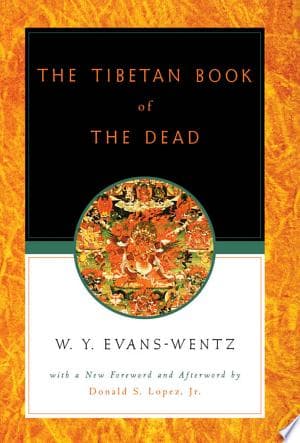
The Tibetan Book of the Dead cover
Archivist's Choice

The Tibetan Book of the Dead

W. Y. Evans-Wentz (2000)

Genre

General

Reading Time

12 Minutes

Key Themes

See below

Track Your Reading

Sign in to track this book

A guide to the afterlife, this ancient Tibetan text offers comfort and wisdom for the dying and a new view on life for the living.

Core Idea

"The Tibetan Book of the Dead" (Bardo Thodol) is a guide for the deceased through the Bardo, the intermediate state between death and rebirth, according to Tibetan Buddhist beliefs. It outlines the various visions, sounds, and experiences one encounters during this liminal period, providing instructions and reminders to help the consciousness achieve liberation from the cycle of rebirth (samsara) or, failing that, to secure a favorable reincarnation. The text is meant to be read aloud to the dying or deceased, serving as an auditory beacon for the disembodied consciousness navigating the often terrifying and confusing post-mortem landscape. The book emphasizes the impermanence of existence and the mind's power to shape reality, even after death. It teaches that the peaceful and wrathful deities encountered in the Bardo are not external entities but projections of one's own mind, stemming from karmic imprints. By recognizing these projections as such, and by remembering the teachings, the consciousness can transcend the illusions of the Bardo and achieve enlightenment or a higher rebirth, thereby mitigating suffering and advancing on the path to ultimate liberation.
Difficulty
Hard

Core idea

The central argument and framework that powers the entire book.

"The Tibetan Book of the Dead" (Bardo Thodol) is a guide for the deceased through the Bardo, the intermediate state between death and rebirth, according to Tibetan Buddhist beliefs. It outlines the various visions, sounds, and experiences one encounters during this liminal period, providing instructions and reminders to help the consciousness achieve liberation from the cycle of rebirth (samsara) or, failing that, to secure a favorable reincarnation. The text is meant to be read aloud to the dying or deceased, serving as an auditory beacon for the disembodied consciousness navigating the often terrifying and confusing post-mortem landscape.

The book emphasizes the impermanence of existence and the mind's power to shape reality, even after death. It teaches that the peaceful and wrathful deities encountered in the Bardo are not external entities but projections of one's own mind, stemming from karmic imprints. By recognizing these projections as such, and by remembering the teachings, the consciousness can transcend the illusions of the Bardo and achieve enlightenment or a higher rebirth, thereby mitigating suffering and advancing on the path to ultimate liberation.

At a glance

Difficulty

Hard

Key Takeaways

1

The Bardos: A Map of Consciousness Beyond Death

The book's core teaching outlines three intermediate states of being between death and rebirth.

Quote

The intermediate state of the Bardo Thödol provides a detailed roadmap for the deceased's consciousness, guiding them through the bewildering post-mortem journey.

The Tibetan Book of the Dead, or Bardo Thödol, guides one through three main Bardos: the Chikhai Bardo (the moment of death), the Chönyid Bardo (experiencing reality as a dream-like state), and the Sidpa Bardo (the impulse towards rebirth). This detailed map of consciousness after death is the book's strongest insight. It provides a practical, if complex, manual for the dying and their caregivers. It suggests the mind does not stop at death but changes, with each change offering chances for freedom or continued rebirth. The precise de...

Supporting evidence

The entire text is structured around these three Bardos, with specific instructions and prayers for each stage, reflecting centuries of Tibetan Buddhist contemplative practice.

Apply this

For the living, understanding the Bardos can foster a deeper appreciation for the impermanence of life and encourage spiritual practice to prepare for death. For those attending the dying, reciting the text can offer solace and a perceived spiritual aid for the transitioning consciousness.

2

A Guide for the Living, Not Just the Dead

Originally intended as a manual for consciousness in life, the book's insights transcend its mortuary use.

Quote

This book... was originally understood as a guide not only for the dead but also for the living.

While known as a 'mortuary text,' The Tibetan Book of the Dead also aims to help the living find enlightenment. The experiences described in the Bardos—the clear light of reality, the frightening visions, the karmic impulses—are seen as reflections of daily mental processes, but more intense. By learning about these states while alive, practitioners hope to achieve freedom at death. This view challenges the Western idea of death as an end, instead seeing it as a key moment for spiritual understanding. The book is a contemplative tool,...

Supporting evidence

The foreword by Donald S. Lopez explicitly states the book's original intention as a guide for both the living and the dead, highlighting its broader philosophical and spiritual relevance beyond its ceremonial use.

Apply this

Practicing mindfulness and meditation to recognize the dream-like nature of reality and to cultivate compassion can prepare one for the Bardo experiences, diminishing fear and increasing the likelihood of conscious liberation.

3

The Clear Light: The Ultimate Opportunity

The moment of death presents a fleeting chance for ultimate liberation through recognizing primordial consciousness.

Quote

At the moment of death, the Primary Clear Light of Reality dawns upon the consciousness, offering the supreme opportunity for liberation.

The Chikhai Bardo describes the immediate post-mortem experience when the 'Primary Clear Light of Reality' appears. This is the most important moment, representing the basic, unconditioned nature of consciousness. The book stresses that if the dying person can recognize this clear light as their true nature, they can achieve liberation (nirvana). This idea is powerful, suggesting that enlightenment is not just a distant goal but an inherent potential that becomes clear at death. The challenge is for the individual to stay aware and no...

Supporting evidence

The detailed instructions within the Chikhai Bardo section specifically guide the consciousness to recognize and merge with the Clear Light, underscoring its pivotal role.

Apply this

Cultivating non-dual awareness and recognizing the luminous nature of mind during life can strengthen the capacity to apprehend the Clear Light at death, potentially leading to liberation.

4

Karma and Rebirth: The Cycle's Engine

The Bardo experience is shaped by past actions and culminates in the karmic impulse towards a new existence.

Quote

The visions and experiences within the Bardos are not external, but manifestations of one's own karmic imprints.

The Tibetan Book of the Dead connects deeply with karma and rebirth. The frightening or joyful visions in the Chönyid Bardo are not external gods or demons but projections of one's own karma. The final Bardo, the Sidpa Bardo, explains how one seeks a new birth, driven by karmic tendencies and desires. This part of the text shows the deep responsibility individuals have for their actions, as these actions directly shape their experiences after death and their future lives. This idea may be hard for Western readers who do not believe in...

Supporting evidence

The descriptions of 'wrathful deities' and 'peaceful deities' are consistently explained as projections of the mind, shaped by past karma, in the Chönyid Bardo.

Apply this

Engaging in ethical conduct, cultivating positive emotions, and understanding the impermanence of all phenomena can create positive karmic imprints, leading to more favorable Bardo experiences and future rebirths.

5

The Power of Recitation and Ritual

The text is a performative guide, meant to be read aloud to aid the transitioning consciousness.
Quote

The recitation of the Bardo Thödol in the presence of the dead or dying person is central to its traditional use.

A key part of The Tibetan Book of the Dead is its use in rituals. It is meant not just to be read, but to be recited aloud to the deceased, sometimes for days after physical death. The belief is that consciousness, even after leaving the body, can still hear and understand the instructions, guiding it through the unfamiliar Bardos. This practice shows the connection between the living and the dead in Tibetan tradition and the role of ritual in providing comfort, direction, and spiritual help. It highlights the power of sound and inten...

Supporting evidence

The introductory sections and the context provided by Evans-Wentz and Lopez repeatedly emphasize its traditional role as a text recited at the bedside of the dying.

Apply this

For those grieving, participating in such rituals, even if only mentally, can provide a sense of agency and connection, offering a structured way to honor and assist the departed.

6

Western Reception and Cultural Appropriation

The book's journey to the West reveals evolving interpretations and challenges of cultural transfer.

Quote

Lopez traces the whole history of the late Evans-Wentz's three earlier editions of this book, fully considering the work of contributors to previous editions (C. G. Jung among them), the sections that were added by Evans-Wentz along the way, the questions surrounding the book's translation, and finally the volume's profound importance in engendering both popular and academic interest in the religion and culture of Tibet.

Donald S. Lopez's foreword in the fourth edition explains the book's complex reception in the West. From pre-war theosophists to beat poets, hippies, and hospice movements, each group found different meanings in its pages. This shows how interpretations can change and the difficulties in translating and sharing sacred texts across different cultures. Evans-Wentz's own additions and interpretations, along with contributions from C. G. Jung, shaped its early Western understanding, sometimes leading to misunderstandings or a loss of its ...

Supporting evidence

Lopez's detailed historical account in the foreword, discussing various editions and audiences, directly supports this takeaway.

Apply this

Approaching such texts with an awareness of their historical and cultural context, and being critical of one's own projections, can lead to a more nuanced and respectful understanding.

7

Psychological Resonance: Jung's Influence

C. G. Jung's commentary offered a psychological framework for understanding the Bardo experiences.

Quote

Jung interpreted the deities and visions of the Bardo as archetypal projections of the collective unconscious.

C. G. Jung's psychological commentary saw The Tibetan Book of the Dead as an exploration of the human mind. He viewed the peaceful and wrathful deities, the frightening sounds, and the clear light not as external things but as archetypes from the collective unconscious, appearing as the ego dissolves at death. This psychological view helped Western readers who might find the Buddhist cosmology difficult. While this interpretation made the book more popular, it arguably shifted its focus from its original goal of salvation to a more se...

Supporting evidence

C. G. Jung's extensive psychological commentary included in earlier editions (and referenced by Lopez) is a direct source for this interpretation.

Apply this

Examining one's dreams, fears, and aspirations through a Jungian lens can offer a personal 'Bardo-like' journey, revealing archetypal patterns and preparing the mind for profound transitions.

8

Death as a Science: A Unique Contribution

The book offers an unparalleled 'science of death and dying' among sacred texts.

Quote

As a contribution to the science of death and dying... The Tibetan Book of the Dead is unique among the sacred texts of the world, for its socio-cultural influence in this regard is without comparison.

The Tibetan Book of the Dead stands out for its careful and organized description of the death process, making it a 'science of death and dying' in a spiritual context. Unlike many other sacred texts that offer general promises of an afterlife, this book provides detailed descriptions of consciousness after death, including specific timelines, visions, and mental states. This level of detail, with instructions for navigating these states, offers a framework that connects with modern interests in consciousness studies and end-of-life c...

Supporting evidence

Lopez's foreword explicitly highlights the book's uniqueness in contributing to a 'science of death and dying,' emphasizing its detailed nature.

Apply this

Engaging with the book can encourage individuals and healthcare professionals to approach death not as a taboo, but as a profound process worthy of study and conscious engagement, potentially influencing end-of-life care practices.

9

The Impermanence of Form and the Illusion of Self

The Bardo journey is a radical teaching on the non-existence of a permanent, individual self.

Quote

Recognize all phenomena in the Bardo as the illusory projections of your own mind, without inherent reality.

A core, though challenging, teaching in The Tibetan Book of the Dead is the impermanence of all things and the illusory nature of a fixed, individual self. The Bardo experiences are repeatedly called 'projections of one's own mind,' urging the deceased to recognize them as such and not cling to them as real. This radical non-duality is key to achieving liberation. The body's dissolution is just the first step in a larger process of breaking down the illusion of self, leading to the potential recognition of pure consciousness without i...

Supporting evidence

Throughout the Chönyid Bardo, the text instructs the consciousness to recognize all visions, both terrifying and peaceful, as 'mind-stuff' or 'illusory projections,' emphasizing their lack of inherent reality.

Apply this

Practicing self-inquiry and understanding the impermanence of thoughts, emotions, and physical sensations can weaken attachment to a fixed self, fostering a sense of interconnectedness and preparing for the ultimate letting go.

10

Padmasambhava's Hidden Treasures: The Terma Tradition

The book's legendary origin as a 'hidden treasure' adds to its mystique and spiritual authority.

Quote

According to legend, Padma-Sambhava was compelled to hide [his books] during his visit to Tibet in the late 8th century... because the Tibetans of that day and age were somehow unprepared for their teachings.

The story of Padma-Sambhava hiding the Bardo Thödol as 'terma' (hidden treasure) to be found later is more than a charming tale; it is a key part of its spiritual authority within Tibetan Buddhism. This tradition suggests that important teachings are revealed when humanity is ready for them, giving the text a sense of timeliness and preordained meaning. For Western readers, this narrative adds mystery and wonder, supporting the idea of ancient wisdom returning to meet modern needs. It speaks to the cyclical nature of spiritual underst...

Supporting evidence

The book description explicitly states the legend of Padma-Sambhava hiding the text, providing the foundational narrative for the terma tradition.

Apply this

This concept encourages an openness to 'rediscovering' ancient wisdom in modern contexts, fostering a sense of continuity with spiritual traditions while adapting them to present-day understanding.

Critical analysis

Notable Quotes

Quiz

Test Your Knowledge

Ready to see how well you understood this book? Take our interactive quiz with 10 questions.

10
Questions
~5
Minutes
?
Best Score

Key Questions (FAQ)

The Tibetan Book of the Dead, as translated by W. Y. Evans-Wentz, is a sacred text traditionally used as a mortuary guide. It describes the experiences of death and rebirth through three intermediate states, intended for both the dying and the living.

About the author