BookBrief
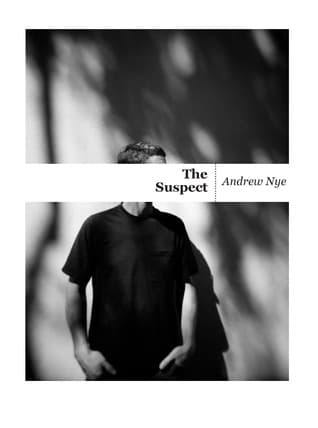
The Suspect cover
Archivist's Choice

The Suspect

Andrew C. Nye (2011)

Genre

General

Reading Time

12 Minutes

Key Themes

See below

Track Your Reading

Sign in to track this book

In the dusty depths of a bookseller's forgotten trunk, a collection of poems surfaces amidst a perplexing disappearance, hinting at a life as mysterious as the narrative it contains.

Core Idea

Andrew C. Nye's "The Suspect" is a concise yet impactful short story that delves into the psychological complexities of guilt, perception, and the ambiguity of truth within the confines of a police interrogation. It challenges the reader to question the reliability of memory and confession, suggesting that external pressure and internal turmoil can shape a narrative that may or not align with reality. The core argument is that the process of interrogation is not merely about uncovering facts, but also about constructing a story, and the 'truth' can become a malleable concept under duress.
Difficulty
Easy

Core idea

The central argument and framework that powers the entire book.

Andrew C. Nye's "The Suspect" is a concise yet impactful short story that delves into the psychological complexities of guilt, perception, and the ambiguity of truth within the confines of a police interrogation. It challenges the reader to question the reliability of memory and confession, suggesting that external pressure and internal turmoil can shape a narrative that may or not align with reality. The core argument is that the process of interrogation is not merely about uncovering facts, but also about constructing a story, and the 'truth' can become a malleable concept under duress.

At a glance

Difficulty

Easy

Key Takeaways

1

The Enigma of Authorship

The collection's origin story creates a profound distance between reader and creator.

Quote

The poems in this volume were found in a manila envelope packed in an unaddressed 13" x 11" x 3" USPS medium flat-rate box covered in a 99% cotton burgundy and gold tablecloth at the bottom of an antique steamer trunk inside the basement residence of a bookseller.

The book's most striking feature, even before the poems, is its story of discovery. The elaborate description of how these poems were found—from a specific USPS box, under a precise tablecloth, within an antique trunk, in a missing bookseller's basement—immediately creates mystery. This is not just a preface; it frames the entire reading experience. It makes the reader confront questions of authorship, intent, and literary legacy. We are not just reading poems; we are engaging with a found object, a relic whose creator's identity and ...

Supporting evidence

The detailed description of the discovery process on page 1.

Apply this

When encountering art or literature, consider how its presentation or origin story influences your interpretation and perceived connection to the creator.


2

The Bookseller's Shadow

The missing bookseller serves as an absent author figure, casting a long shadow over the collection.

Quote

Authorities came across the documents while searching the bookseller's apartment after neighbors had reported him missing. The bookseller was last seen walking with an orange tabby on a street in the rainy part of Seattle.

The bookseller is not just a custodian of the poems; he becomes a spectral presence, an inferred author, or at least an important go-between. His disappearance, coupled with the discovery of these personal documents in his home, gives the collection a melancholic and speculative quality. The detail of him being last seen with an 'orange tabby on a street in the rainy part of Seattle' is a poignant, almost cinematic image that personalizes his absence. This vivid, yet incomplete, sketch invites readers to project their own theories and...

Supporting evidence

The description of the bookseller's disappearance and last sighting on page 1.

Apply this

Consider how the biographical details, or lack thereof, of an artist can influence your understanding and emotional response to their work.

3

The Unaddressed Box and Intent

The lack of an address on the USPS box suggests either a deliberate anonymity or an unfulfilled intention.

Quote

an unaddressed 13" x 11" x 3" USPS medium flat-rate box

The detail of the USPS box being 'unaddressed' is potent. It immediately raises questions about the original intent behind packaging these poems. Was the box meant to be sent somewhere but never was? Was it a collection for personal keeping, or perhaps a delayed attempt at publication? The unaddressed nature could imply a fear of exposure, a lack of confidence, or simply a life interrupted before the final step could be taken. This ambiguity is important; it prevents the reader from settling on a single interpretation of the poems' pu...

Supporting evidence

The specific mention of the 'unaddressed' box on page 1.

Apply this

When evaluating any creative work, ponder the potential intentions of the creator and how the work's presentation might reflect or obscure those intentions.

4

Layers of Concealment

The multiple layers of packaging reflect a profound need for secrecy or preservation.

Quote

manila envelope packed in an unaddressed...box covered in a 99% cotton burgundy and gold tablecloth at the bottom of an antique steamer trunk

The number of protective layers—manila envelope, USPS box, tablecloth, steamer trunk—speaks volumes about the perceived value or secrecy of these poems. This is not casual storage; it is a deliberate act of concealment or preservation. The 'burgundy and gold tablecloth' adds a touch of domesticity and perhaps sentimental value, contrasting with the utilitarian nature of the box and trunk. This elaborate nesting suggests that the contents were either highly personal, potentially scandalous, or simply cherished. The act of uncovering th...

Supporting evidence

The sequential description of the items: envelope, box, tablecloth, trunk on page 1.

Apply this

Consider how the physical presentation and context of a text can be as significant as its content, offering clues to its meaning and importance.

5

The Implied 'Suspect'

The book's title, combined with its origin, positions the bookseller as a potential 'suspect' in a literary mystery.

Quote

The Suspect

The title 'The Suspect' takes on a fascinating double meaning when considered alongside the origin story. Initially, one might assume it refers to a character within the poems, but the framing narrative immediately shifts the focus. The missing bookseller, whose acquaintances were unaware of his steamer trunk, becomes 'the suspect'—not necessarily of a crime, but of a literary deception, a hidden life, or an unexplained artistic endeavor. He is suspected of being the author, of having secrets, of orchestrating this elaborate discovery...

Supporting evidence

The book's title 'The Suspect' alongside the narrative of the missing bookseller on page 1.

Apply this

When interpreting a text, actively consider how the title guides your expectations and frames your initial understanding of the content.

6

The Unknowing Acquaintances

The revelation that no one knew about the trunk deepens the bookseller's enigmatic persona.

Quote

When questioned about the matter, all known aquaintances had no idea that the bookseller had ever owned a steamer trunk.

This detail is important for understanding the bookseller's character. The fact that his closest acquaintances were entirely unaware of such a significant possession—an antique steamer trunk, no less—paints a picture of a man with a carefully compartmentalized life, or perhaps a deep inner world hidden from public view. This information reinforces the idea that the poems are not just 'found' but are revelations of a secret self. It suggests loneliness or intentional solitude, where his most cherished or vulnerable creations were kept ...

Supporting evidence

The statement about aquaintances' ignorance of the trunk on page 1.

Apply this

Reflect on how much of a person's inner life remains hidden from even their closest associates, and how this might manifest in their creative output.

7

The Significance of 'Antique Steamer Trunk'

The specific choice of an antique steamer trunk evokes themes of travel, forgotten journeys, and hidden histories.

Quote

at the bottom of an antique steamer trunk

The choice of an 'antique steamer trunk' is not arbitrary. Steamer trunks are relics of a bygone era of long-distance travel, often associated with grand journeys, migration, and the carrying of precious possessions across oceans. This detail gives the poems a sense of accumulated history and perhaps a suggestion of untold voyages, both literal and metaphorical. It implies that these poems are not merely static documents but artifacts that have themselves traveled through time or represent the emotional baggage of a life. The trunk it...

Supporting evidence

The specific mention of an 'antique steamer trunk' on page 1.

Apply this

Pay attention to the specific objects and their historical or cultural connotations within a narrative, as they often carry symbolic weight.

8

The 'Rainy Part of Seattle' and Mood

The setting detail subtly establishes a melancholic and introspective mood for the entire collection.

Quote

The bookseller was last seen walking with an orange tabby on a street in the rainy part of Seattle.

The brief, evocative mention of 'the rainy part of Seattle' sets a masterful mood. Seattle's reputation for persistent rain immediately suggests introspection, melancholy, quiet contemplation, and perhaps isolation. This environmental detail subtly colors the emotional landscape of the poems before a single line is read. It suggests that the poems found within might explore themes of solitude, longing, or a quiet internal world, fitting perfectly with the narrative of a disappearing bookseller and his hidden literary treasures. This s...

Supporting evidence

The description of the bookseller's last sighting in 'the rainy part of Seattle' on page 1.

Apply this

Observe how specific environmental or geographical details in a narrative can powerfully influence the overall mood and tone of a work.

9

The '99% Cotton Burgundy and Gold Tablecloth'

This specific detail adds a touch of domesticity and personal care amidst the mystery.

Quote

covered in a 99% cotton burgundy and gold tablecloth

Amidst the mystery of a missing person and a hidden trunk, the precise description of the '99% cotton burgundy and gold tablecloth' stands out. This detail is specific and domestic, suggesting a level of care and personal attachment that contrasts with the impersonal nature of a USPS box or a cold basement. It hints at a life lived with small comforts and aesthetic preferences, possibly hinting at the bookseller's own character or the sentimental value he placed on the poems. The specific colors, burgundy and gold, often connote richn...

Supporting evidence

The specific description of the tablecloth's material and color on page 1.

Apply this

Consider how seemingly mundane or decorative details can provide significant insight into character, care, or the emotional weight of objects within a narrative.

10

The Absence of Genre

The lack of explicit genre classification for the poems themselves leaves interpretation open-ended.

Quote

The poems in this volume...

While the origin story is rich with detail, the text deliberately avoids categorizing the poems themselves beyond simply 'poems.' There is no mention of them being lyrical, epic, confessional, or experimental. This absence of genre classification is a powerful choice, forcing the reader to approach the content without preconceived notions or stylistic expectations. It aligns perfectly with the 'found' nature of the collection, as if the poems are raw data awaiting interpretation rather than a polished, categorized work. This allows th...

Supporting evidence

The phrase 'The poems in this volume' and the lack of further description on page 1.

Apply this

When encountering new creative works, try to suspend judgment based on genre labels and allow the work itself to define its own terms of engagement.

Critical analysis

Notable Quotes

Quiz

Test Your Knowledge

Ready to see how well you understood this book? Take our interactive quiz with 10 questions.

10
Questions
~5
Minutes
?
Best Score

Key Questions (FAQ)

'The Suspect' is a collection of poems discovered in a mysterious manila envelope. The circumstances of its discovery are unusual, found within a USPS box, a tablecloth, and an antique steamer trunk in a bookseller's basement.

About the author

Andrew C. Nye

Andrew C. Nye is the author of the non-fiction book, "The Suspect." His work often delves into true crime and investigative journalism, examining complex cases with a meticulous approach. Nye's writing aims to provide readers with a comprehensive understanding of the events and the individuals involved.