BookBrief
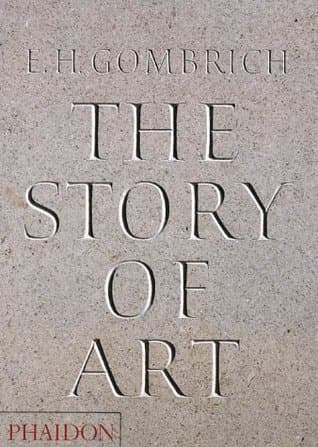
The Story of Art cover
Archivist's Choice

The Story of Art

E.H. Gombrich (1950)

Genre

Reference / History / Creativity

Reading Time

1140 min

Key Themes

See below

Track Your Reading

Sign in to track this book

Explore thousands of years of human creativity, from ancient cave art to modern masterpieces, with Gombrich's classic account, updated with new insights into art's changing story.

Core Idea

E.H. Gombrich's "The Story of Art" states that art does not exist in general; only artists and their works exist. These works are shaped by specific cultural, historical, and psychological contexts. The book challenges the idea of an 'innocent eye,' arguing that our view and enjoyment of art are always influenced by traditions, expectations, and the ongoing process of 'making and matching.' It shows how art develops not through a straight line towards perfect beauty, but through problems, solutions, and new ideas, driven by the artist's goal, support, and the desire to show the world in new ways.
Reading time
1140 min
Difficulty
Medium
✓ Read this if...
You want a comprehensive, accessible, and engaging introduction to the history of Western art, emphasizing the evolution of artistic problems and solutions rather than a mere chronological catalog. Ideal for those seeking to understand the 'why' behind artistic changes and the continuous human impulse to create.
✗ Skip this if...
You are looking for a highly specialized academic text on a specific art period, a critical theory-heavy analysis, or a book that extensively covers non-Western art forms. Its scope is broad, and its interpretations, while foundational, may not align with all contemporary art historical perspectives.

Core idea

The central argument and framework that powers the entire book.

E.H. Gombrich's "The Story of Art" states that art does not exist in general; only artists and their works exist. These works are shaped by specific cultural, historical, and psychological contexts. The book challenges the idea of an 'innocent eye,' arguing that our view and enjoyment of art are always influenced by traditions, expectations, and the ongoing process of 'making and matching.' It shows how art develops not through a straight line towards perfect beauty, but through problems, solutions, and new ideas, driven by the artist's goal, support, and the desire to show the world in new ways.

At a glance

Reading time

1140 min

Difficulty

Medium

Read this if...

You want a comprehensive, accessible, and engaging introduction to the history of Western art, emphasizing the evolution of artistic problems and solutions rather than a mere chronological catalog. Ideal for those seeking to understand the 'why' behind artistic changes and the continuous human impulse to create.

Skip this if...

You are looking for a highly specialized academic text on a specific art period, a critical theory-heavy analysis, or a book that extensively covers non-Western art forms. Its scope is broad, and its interpretations, while foundational, may not align with all contemporary art historical perspectives.

Key Takeaways

1

The 'Innocent Eye' is a Myth

Art appreciation requires understanding context, not just looking.

Quote

There is no such thing as art in general. There are only artists.

Gombrich shows that one cannot approach art with a completely 'innocent eye' and appreciate it without any previous knowledge. Our view is always shaped by our culture, history, and personal experiences. To truly understand art, one must try to grasp the artist's goals, the norms of their time, and the problems they aimed to solve. Without this context, we might misinterpret symbols, miss new techniques, and fail to connect with the work. This approach does not over-intellectualize art; it enriches the viewing experience by providing ...

Supporting evidence

Gombrich often illustrates this by showing how different cultures or periods depicted similar subjects (e.g., human figures) using vastly different conventions, which only make sense when understood within their specific artistic traditions and purposes.

Apply this

When encountering a new artwork, don't just react; pause and research its historical period, the artist's biography, and the cultural context. What problems were artists of that era trying to solve? What were the prevailing artistic conventions? This active inquiry will deepen your understanding beyond mere aesthetic judgment.


art-history-contextperception-biasart-appreciation
2

The Evolution of 'Making and Matching'

Artistic progress is a continuous cycle of convention, problem-solving, and innovation.

Quote

The history of art is the history of solving artistic problems.

Gombrich presents art history not as a straight line of 'progress' toward realistic depiction, but as artists dealing with and solving specific problems within their time's conventions. Artists do not simply copy nature; they 'make' representations based on existing patterns and then 'match' them to reality, refining their methods. This 'making and matching' process explains why older art looks less 'realistic' to us today. Artists worked with different goals for representation and technical limits, often favoring symbolic meaning ove...

Supporting evidence

He details how Egyptian art relied on conceptual schemata (e.g., showing all parts of the body from their most characteristic angle) rather than optical reality, and how Greek artists gradually developed more convincing anatomical representations by observing and refining these schemata. Later, the Renaissance mastery of perspective (e.g., Leonardo's Last Supper) was a solution to the problem of depicting three-dimensional space on a two-dimensional surface.

Apply this

When observing art, especially from earlier periods, try to identify the specific artistic 'problem' the artist was attempting to solve. Was it rendering depth, capturing emotion, depicting movement, or representing a deity? Understanding this will reveal the ingenuity of their solutions, even if they differ from modern conventions.

artistic-conventionsschematarepresentational-artartistic-innovation
3

No Absolute Standards of Beauty

Beauty in art is culturally and historically contingent, not universal.

Quote

There are good reasons for the fact that we like some works of art better than others, but there is no such thing as absolute beauty.

Gombrich argues against the idea of universal, unchanging standards of beauty. What one culture or period finds beautiful, another might see as strange or even ugly. This relativity also applies to the purpose of art itself. Some art aims to teach, some to please, some to remember, and some to challenge. Judging all art by one standard of 'beauty' is outdated and ignores the variety of human artistic expression. Appreciation requires an open mind, willing to engage with different aesthetic values and understand the criteria by which t...

Supporting evidence

He contrasts different artistic traditions, such as the idealized forms of classical Greek sculpture with the more emotionally charged and 'imperfect' figures of medieval art, or the symbolic complexity of Egyptian reliefs with the naturalism of Dutch genre painting. Each was considered 'beautiful' and effective within its own cultural framework.

Apply this

Challenge your own preconceived notions of beauty. When you encounter art that doesn't immediately appeal to you, instead of dismissing it, ask: 'What was this artist trying to achieve? What were the aesthetic values of their time and place?' This shift in perspective can unlock new avenues of appreciation.

aesthetic-relativitycultural-relativismart-criticismsubjectivity-of-beauty
4

The Power of Patronage and Purpose

The 'why' behind art profoundly shapes its 'what' and 'how'.

Quote

The greatest changes in art have often been brought about not by artists wanting to do new things, but by patrons wanting new things done.

Art is rarely made in isolation. Gombrich consistently highlights the role of patronage—by the Church, royalty, wealthy merchants, or the state—in deciding the subject, size, materials, and even style of artworks throughout history. The reason art was commissioned (e.g., religious devotion, political messages, personal status, scientific illustration) greatly influenced its form and content. Understanding the patron's wishes and the art's social role gives important insight into its creation and effect. This relationship shows that ar...

Supporting evidence

The vast cathedrals and altarpieces of the Middle Ages and Renaissance (e.g., Van Eyck's Ghent Altarpiece, Michelangelo's Sistine Chapel ceiling) directly reflect the power and wealth of the Church. Similarly, the portraits and mythological scenes of the Baroque era often served to glorify monarchs and aristocrats, while Dutch genre painting catered to a burgeoning merchant class.

Apply this

When analyzing an artwork, consider who commissioned it and for what purpose. How might the patron's agenda have influenced the artist's choices? What message was the artwork intended to convey to its original audience? This lens reveals art's often-overlooked political and social dimensions.

art-patronageart-functionsocio-economic-influencecommissioned-art
5

The Renaissance: Rebirth and Revolution

A pivotal era where science, humanism, and art converged.

Quote

The great revolution of the Renaissance was the discovery of perspective.

Gombrich describes the Renaissance not just as an art movement but as a major cultural change that refocused human experience and reason. The 'rebirth' of classical ideas, along with growing scientific inquiry, led to significant advances in art. Mastery of linear perspective, accurate anatomy, and the depiction of natural light allowed artists to create an unprecedented illusion of reality. During this period, artists like Leonardo da Vinci and Michelangelo were seen not just as craftspeople but as thinkers, combining artistic skill ...

Supporting evidence

He highlights key innovations like Brunelleschi's discovery of linear perspective, Masaccio's realistic figures, and Leonardo's sfumato and anatomical studies. The detailed analysis of works like Leonardo's 'Last Supper' and Botticelli's 'Birth of Venus' demonstrates the Renaissance's blend of classical inspiration, naturalistic observation, and technical prowess.

Apply this

When studying Renaissance art, focus on how artists employed perspective, chiaroscuro, and anatomical knowledge to create a sense of depth and realism. Compare these techniques to earlier periods to fully grasp the revolutionary nature of their achievements. Consider how their scientific curiosity informed their artistic output.

renaissance-artlinear-perspectivehumanismscientific-art
6

Expression Over Perfection: The Rise of Emotion

Art's purpose shifted from ideal forms to conveying inner feeling.

Quote

The artist who wants to express emotion must exaggerate.

While earlier periods often aimed for perfect beauty or clear stories, Gombrich shows how art developed to prioritize strong emotion and personal experience. This change becomes clear in periods like the Baroque, Romanticism, and Expressionism. Artists began to intentionally distort forms, use dramatic lighting, and employ bright colors not for realism, but to create strong feelings in the viewer. This move away from strict adherence to classical rules or naturalistic representation opened the way for modern art's exploration of the i...

Supporting evidence

The dramatic intensity and movement of Baroque art (e.g., Bernini's 'Ecstasy of St. Teresa'), the emotional turmoil depicted by Goya or Delacroix in Romanticism, and the raw, unpolished power of artists like Kollwitz or Nolde in Expressionism, all exemplify this drive to prioritize feeling over conventional beauty or perfect form.

Apply this

When viewing art from these emotionally charged periods, ask yourself: 'What emotion is the artist trying to convey?' and 'How do their artistic choices (color, line, composition, distortion) contribute to this emotional impact?' Allow yourself to feel rather than solely analyze.

baroque-artromanticismexpressionismemotional-expression-in-art
7

The Enduring Legacy of the 'Primitive'

Non-Western art and early forms profoundly influenced modernism.

Quote

The greatest artists are those who succeed in making us see the world with new eyes.

Gombrich's inclusion of 'primitive' art—from cave paintings to non-Western tribal art—is important, especially for understanding modernism. These forms were not just historical curiosities; they offered modern artists a significant break from Western academic traditions. The directness, symbolic power, and abstract qualities of these arts inspired artists to move beyond strict naturalism and explore new ways of showing reality, emotion, and spiritual ideas. This re-evaluation challenged the ethnocentric biases of Western art history a...

Supporting evidence

He discusses how artists like Picasso were deeply influenced by African masks and sculpture, leading to the development of Cubism. Similarly, the directness and expressive power of prehistoric cave paintings are presented as foundational examples of human artistic endeavor, predating and informing later developments.

Apply this

Look for the echoes of 'primitive' or non-Western art in modern and contemporary works. How did these earlier forms liberate artists from traditional constraints? Explore art from diverse cultures to broaden your understanding of what art can be and achieve beyond Western paradigms.

primitive-artmodernismcubismcross-cultural-influence
8

The Artist as Rebel and Innovator

Artistic progress often stems from challenging established norms.

Quote

Every generation finds its own way of seeing and representing the world.

Throughout 'The Story of Art,' Gombrich repeatedly features artists who, instead of conforming, broke away from common styles and conventions. From Giotto's move from Byzantine stiffness to Manet's striking realism, or the abstract experiments of Pollock and Brancusi, new ideas often come from not being satisfied with the current state. These 'rebels' often faced initial criticism or misunderstanding. However, their willingness to experiment, to see the world differently, and to invent new visual languages ultimately expanded what art...

Supporting evidence

The initial scandal surrounding Manet's 'Olympia' or the abstract forms of Brancusi's sculptures, which challenged traditional notions of representation and beauty. Jackson Pollock's drip paintings (e.g., 'One, Number 31, 1950') represent a radical break from conventional painting techniques and easel painting.

Apply this

When encountering art that feels challenging or even ugly, resist immediate judgment. Instead, consider what conventions the artist might be rebelling against. What new visual language are they trying to forge? This approach can transform initial discomfort into profound insight.

artistic-rebellionavant-gardeart-innovationmodern-art
9

Art's Enduring Human Connection

Despite changes, art remains a fundamental human impulse to communicate.

Quote

There is no such thing as 'art.' There are only artists.

Despite the wide historical range and many styles covered, Gombrich's main message is one of continuity: the human desire to create and communicate visually stays constant. Whether it is a prehistoric cave painting, a Renaissance fresco, or a contemporary installation, art is a powerful way for humans to understand their world, express beliefs, and connect with others across time and space. The forms may change, the purposes may evolve, but the basic drive to leave a mark, tell a story, or create a feeling through visual means is a co...

Supporting evidence

The book begins with the earliest cave paintings and concludes with modern experimental art, demonstrating a continuous thread of human creativity and problem-solving across millennia. The inclusion of diverse artists from various periods and cultures underscores the universality of the artistic impulse.

Apply this

Approach every artwork, regardless of its era or style, as an attempt by another human being to communicate something meaningful. Try to understand the 'message' or 'experience' the artist intended to share, recognizing the shared humanity that underpins all artistic endeavor.

human-conditionartistic-communicationuniversal-artart-as-language
10

The Importance of Looking (and Re-looking)

Active engagement and repeated viewing unlock deeper understanding.

Quote

The greatest obstacle to experiencing art is our reluctance to discard old habits and prejudices.

Gombrich does not just present history; he actively teaches the reader how to look at art. He stresses that real appreciation comes from active, engaged viewing, not passive looking. This often means letting go of old ideas, being open to unfamiliar forms, and taking time to truly notice details. He suggests that art is not always immediately clear and that deeper understanding often requires repeated exposure and a willingness to learn. Art's richness unfolds slowly, rewarding those who invest their time and curiosity in its study.

Supporting evidence

His detailed descriptions of specific artworks, like Van Eyck's Ghent Altarpiece or Van der Weyden's Descent from the Cross, guide the reader through a process of observation, pointing out details and contextual elements that might otherwise be missed. The fuller captions in this edition further encourage this deep looking.

Apply this

When visiting a museum or gallery, resist the urge to rush. Choose a few artworks and spend significant time with each, observing every detail, considering its composition, color, and subject. Return to artworks you've seen before; you'll often discover new layers of meaning and appreciation upon re-looking.

active-viewingart-observationvisual-literacycritical-thinking-art

Critical analysis

Notable Quotes

There really is no such thing as Art. There are only artists.

Opening statement of the book, defining the scope.

The history of art, therefore, is not a history of progress in technical accomplishment, but a history of changing demands and changing solutions.

Discussing the evolution of art and the motivations behind it.

All art is in some sense an imitation of nature.

Exploring the fundamental relationship between art and the natural world.

The Greek artists had discovered how to make a statue look really alive.

Highlighting the revolutionary advancements of ancient Greek sculpture.

The more we know about the period in which a work of art was made, the better we shall understand it.

Emphasizing the importance of historical context for art appreciation.

The artist is not a camera, but a mind.

Distinguishing artistic creation from mere mechanical reproduction.

Perhaps the most important thing that happened in art in the fifteenth century was the discovery of perspective.

Identifying a pivotal innovation in Renaissance painting.

Every generation, every country, every artist, has seen art in a different way.

Underscoring the diversity and subjectivity in the perception of art.

The greatest revolution in art since the discovery of perspective was not a new technical device but a new attitude of mind.

Referring to the shift towards modern art and its conceptual underpinnings.

What matters in art is not to be original, but to be good.

Challenging the modern obsession with originality over quality.

The history of art is not a history of masterpieces only; it is also a history of mistakes.

Acknowledging that artistic development involves trials and errors.

The artist, like the scientist, is a discoverer.

Comparing the exploratory nature of artistic and scientific endeavors.

There is no surer way to kill enjoyment than to be told that we ought to enjoy something.

Discussing the subjective nature of aesthetic pleasure and avoiding prescriptive judgments.

Art is a bridge across time.

Reflecting on art's ability to connect different periods and cultures.

Quiz

Test Your Knowledge

Ready to see how well you understood this book? Take our interactive quiz with 10 questions.

10
Questions
~5
Minutes
?
Best Score

Key Questions (FAQ)

Gombrich's 'The Story of Art' is celebrated for its accessible narrative that demystifies art history, making it understandable and engaging for both beginners and seasoned enthusiasts. It emphasizes the continuous evolution of art through historical context and the artist's perspective, rather than a mere catalog of masterpieces.

About the author