BookBrief
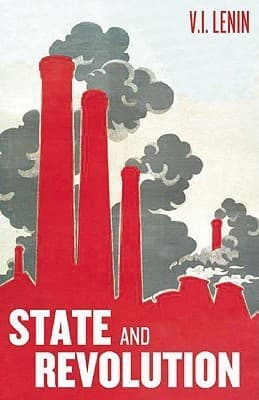
The State and Revolution cover
Archivist's Choice

The State and Revolution

Vladimir Lenin

Genre

Politics / History / Economics / Philosophy

Reading Time

180 min

Key Themes

See below

Track Your Reading

Sign in to track this book

Lenin dissects the capitalist state as an instrument of class oppression, arguing for its revolutionary overthrow and replacement by the dictatorship of the proletariat as the true path to human liberation.

Core Idea

Lenin argues that the state is an instrument of class oppression, a tool for one class to suppress another. He believes it cannot be reformed and must be violently overthrown by the working class. He asserts that the bourgeois state, even in its most democratic forms, is a dictatorship of the bourgeoisie, and destroying it is necessary for communism. After this revolution, a 'dictatorship of the proletariat' is needed as a transitional phase to suppress former exploiters and solidify the new social order. This will eventually lead to the 'withering away' of the state as class distinctions disappear.
Reading time
180 min
Difficulty
Medium
✓ Read this if...
You want to understand the theoretical justifications for communist revolution, the Marxist-Leninist view of the state, or the historical origins of Soviet political thought directly from its primary architect.
✗ Skip this if...
You are looking for a nuanced critique of state power from a liberal or anarchist perspective, or if you are not interested in dense, polemical political theory advocating for violent revolutionary change.

Core idea

The central argument and framework that powers the entire book.

Lenin argues that the state is an instrument of class oppression, a tool for one class to suppress another. He believes it cannot be reformed and must be violently overthrown by the working class. He asserts that the bourgeois state, even in its most democratic forms, is a dictatorship of the bourgeoisie, and destroying it is necessary for communism. After this revolution, a 'dictatorship of the proletariat' is needed as a transitional phase to suppress former exploiters and solidify the new social order. This will eventually lead to the 'withering away' of the state as class distinctions disappear.

At a glance

Reading time

180 min

Difficulty

Medium

Read this if...

You want to understand the theoretical justifications for communist revolution, the Marxist-Leninist view of the state, or the historical origins of Soviet political thought directly from its primary architect.

Skip this if...

You are looking for a nuanced critique of state power from a liberal or anarchist perspective, or if you are not interested in dense, polemical political theory advocating for violent revolutionary change.

Key Takeaways

1

The State as an Instrument of Class Oppression

The state is not a neutral arbiter but a tool for one class to dominate another.

Quote

The state is a special organization of force: it is an organization of violence for the suppression of some class.

Lenin rejects the liberal idea of the state as a neutral entity above class interests, designed to resolve differences. He argues the state emerged because class conflicts became too great to reconcile. It is a system—including armies, police, prisons, and bureaucracy—created and maintained by the economically dominant class to suppress subordinate classes. Its main job is to legitimize and enforce the exploitation that comes with the current economic system. This view states that any 'order' the state maintains is, in reality, the or...

Supporting evidence

Engels' analysis in 'The Origin of the Family, Private Property and the State,' which Lenin frequently references, detailing the historical emergence of the state from tribal societies as a response to the development of private property and class divisions.

Apply this

When analyzing political policies or legal frameworks, ask whose interests these structures ultimately serve and which class benefits most from their enforcement. Challenge the idea of state neutrality in class-divided societies.


class-strugglestate-powerbourgeois-state
2

The Necessity of Violent Revolution

The bourgeois state cannot be reformed; it must be overthrown by force.

Quote

The supersession of the bourgeois state by the proletarian state is impossible without a violent revolution.

Lenin strongly dismisses the idea of a peaceful transition to socialism through parliament or gradual reforms. He argues that the bourgeois state is designed to protect capitalist property and will use its coercive tools to resist any challenge to this order. Therefore, the working class cannot simply 'take over' the existing state machinery; it must destroy it. This violent overthrow is not random destruction but a necessary step to establish a new social order free from exploitation. The state's violence against the working class re...

Supporting evidence

The failures of the Paris Commune (1871) to fully dismantle the old state apparatus, which Lenin interprets as a key lesson on the need for decisive revolutionary action against the existing state.

Apply this

Evaluate political movements for their understanding of state power: do they aim to reform the existing system or fundamentally dismantle and replace it? Consider the historical efficacy of reformist versus revolutionary approaches to systemic change.

proletarian-revolutionsmash-the-staterevolutionary-violence
3

The Dictatorship of the Proletariat

A temporary but necessary state for suppressing the bourgeoisie and transitioning to communism.

Quote

The dictatorship of the proletariat is the organization of the vanguard of the oppressed as the ruling class for the purpose of suppressing the oppressors.

After the violent overthrow of the bourgeois state, Lenin says a new state, the 'dictatorship of the proletariat,' must be established. This is not a state of universal freedom but a temporary phase where the working class, now in power, uses state force to suppress resistance from former exploiters and prevent a capitalist return. It is 'democratic' for the majority (the working class and poor peasants) but dictatorial towards the former ruling class. Its purpose is to solidify the revolution, remove capitalist remnants, and prepare ...

Supporting evidence

Marx's concept of the 'dictatorship of the proletariat' derived from his analysis of the Paris Commune, which Lenin elaborates upon as a necessary post-revolutionary phase.

Apply this

When considering post-revolutionary societies, analyze the mechanisms put in place to consolidate power, suppress counter-revolution, and facilitate the transition away from previous economic systems. Reflect on the challenges of maintaining revolutionary gains against internal and external threats.

proletarian-statetransitional-stateclass-suppression
4

Democracy Under Capitalism vs. Communism

Bourgeois democracy is a limited, hypocritical form masking class rule; true democracy emerges after class abolition.

Quote

Democracy for an insignificant minority, democracy for the rich — that is the democracy of capitalist society.

Lenin argues that 'democracy' in capitalist societies is limited and misleading. While it grants formal equality, it maintains actual inequality because of private ownership of the means of production, which limits the freedom and participation of the working class. The 'freedoms' of speech, assembly, and press are mostly available to those with economic power, making it 'democracy for the rich.' True, full democracy, according to Lenin, can only appear after classes and the state are abolished, in a communist society where economic e...

Supporting evidence

Lenin critiques the limitations of universal suffrage and parliamentary systems under capitalism, arguing they do not fundamentally alter the economic power dynamics that dictate political outcomes.

Apply this

Critically examine contemporary democratic systems: whose voices are amplified, whose interests are prioritized, and what economic realities limit genuine participation for different social classes? Consider how economic power translates into political influence.

bourgeois-democracyproletarian-democracyformal-vs-actual-freedom
5

The Withering Away of the State

The state is a temporary necessity that will become obsolete in a fully communist society.

Quote

The state will be able to wither away completely when society can apply the rule: 'From each according to his ability, to each according to his needs.'

Unlike anarchists who advocate for the immediate abolition of the state, Lenin emphasizes that the state is a necessary evil during the transition from capitalism to communism. However, he also believes it will eventually disappear. Once class conflicts are gone, the means of production are socialized, and there is enough abundance for distribution to be based on need, the state's coercive role will become unnecessary. There will be no classes to suppress, no private property to protect, and no need for a special apparatus of violence...

Supporting evidence

Engels' concept of the state 'dying out' rather than being 'abolished' after the proletarian revolution, which Lenin interprets as a gradual process of diminishing necessity.

Apply this

When evaluating visions of future societies, distinguish between those that advocate for a permanent state apparatus and those that foresee its eventual obsolescence. Consider the conditions necessary for a stateless society to emerge and function effectively.

stateless-societycommunismend-of-state
6

Opportunism and the Betrayal of Revolution

Reformist socialists betray the revolutionary essence of Marxism by clinging to bourgeois state mechanisms.

Quote

The opportunists of today, by preaching unity with the capitalists, betray the proletariat and the revolution.

Lenin spends much time criticizing 'opportunists' and 'social-chauvinists' within the socialist movement who, in his view, had abandoned the revolutionary core of Marxism. These individuals or groups, often linked to the Second International, advocated for gradual reforms within the existing capitalist state, participation in bourgeois parliaments, and even support for their national bourgeoisies during imperialist wars. Lenin condemns this as a betrayal of the working class, arguing that it disarms the working class, creates false ho...

Supporting evidence

Lenin's sharp critique of figures like Karl Kautsky, who he argues distorted Marx's teachings by advocating for a peaceful, parliamentary path to socialism and downplaying the necessity of revolution.

Apply this

Analyze political movements for signs of 'opportunism': do they prioritize short-term gains within the existing system over fundamental systemic change? How do they balance reformist efforts with revolutionary goals, if at all?

opportunismsocial-democracyrevisionism
7

The Commune as a Model for Proletarian Rule

The Paris Commune offered a concrete, albeit short-lived, example of a new type of state.

Quote

The Commune was a new type of state, substituting the broken state machine with a new, genuinely democratic one.

Lenin analyzes Marx's and Engels' interpretations of the Paris Commune (1871) as a key historical example. He sees it not just as an uprising but as the first attempt at a 'dictatorship of the proletariat,' showing how the working class could 'smash' the old state machinery and replace it with a new, different form. Key features included direct democracy, elected and recallable officials paid average workers' wages, the abolition of a standing army in favor of an armed populace, and the combination of legislative and executive functio...

Supporting evidence

Marx's 'The Civil War in France,' which details the organizational structure and political innovations of the Paris Commune, serves as a primary reference for Lenin.

Apply this

When considering models for revolutionary governance, study historical examples like the Commune for practical lessons on dismantling old power structures and instituting new forms of popular control. How can principles like recallability and direct accountability be implemented in modern political systems?

paris-communedirect-democracyworkers-self-management
8

The Inevitability of State Violence

The state, by its very nature, relies on and systematically deploys violence to maintain order.

Quote

Democracy is a state which recognizes the subordination of the minority to the majority, i.e., an organization for the systematic use of violence by one class against the other, by one section of the population against another.

Lenin's definition of democracy, as quoted, is direct: he views any state, including a democratic one, as an organization for the systematic use of violence. This violence is not an occasional problem but an inherent feature, needed to enforce the will of the dominant class or group on the minority. Under capitalism, this means the violence of the bourgeoisie against the working class. Even in a 'democracy,' the state's apparatus (police, military, courts) works to suppress dissent and maintain existing power structures through force ...

Supporting evidence

The historical record of state suppression of workers' movements, strikes, and protests, where state forces are consistently deployed to protect capitalist property and order.

Apply this

When observing state actions, particularly in response to social unrest or challenges to authority, identify the underlying mechanisms of violence, both overt and subtle, and whose interests they ultimately serve. Question the narrative that state violence is solely for 'order' or 'security' without considering its class dimensions.

state-violencecoercionclass-repression
9

The Need for a Vanguard Party

A disciplined, ideologically clear party is essential to lead the proletariat to revolution.

Quote

Without a revolutionary theory there can be no revolutionary movement.

While not explicitly detailed in 'State and Revolution,' the implicit need for a vanguard party, a central idea in Lenin's thought, supports the entire argument. The complex task of understanding and dismantling the state, managing the transition, and educating the masses against opportunism requires a highly organized, disciplined, and theoretically strong political party. This party, made up of the most conscious and advanced members of the working class, acts as the revolution's general staff, providing leadership, ideological clar...

Supporting evidence

Lenin's earlier work 'What Is To Be Done?' (1902) lays out the organizational principles of the vanguard party, which are essential for the successful execution of the revolutionary project described in 'State and Revolution.'

Apply this

When evaluating revolutionary movements, assess the role and effectiveness of their organizational structure and leadership. How do they ensure ideological coherence and strategic unity among their members? Consider the challenges of maintaining revolutionary principles against internal and external pressures.

vanguard-partyrevolutionary-leadershippolitical-organization
10

Marxism vs. Anarchism on the State

Marxists advocate for a transitional state; anarchists demand immediate abolition.

Quote

We do not at all disagree with the anarchists on the question of the abolition of the state as an aim. We maintain that, to achieve this aim, we must temporarily make use of the instruments, resources, and methods of state power against the exploiters.

Lenin clarifies the important difference between Marxists and anarchists regarding the state. While both aim for a stateless society, their paths diverge sharply. Anarchists advocate for the immediate and complete abolition of the state after revolution, believing it to be inherently oppressive no matter who controls it. Lenin, however, argues that the state, as the dictatorship of the proletariat, is a necessary, though temporary, tool. It must be used to suppress the defeated bourgeoisie and solidify the new socialist order before i...

Supporting evidence

Lenin explicitly addresses the arguments of Bakunin and other anarchists, contrasting their views on state abolition with the Marxist perspective of a transitional proletarian state.

Apply this

When analyzing political philosophies that advocate for radical social change, identify their specific proposals regarding the role and necessity of state power during and after a revolution. Distinguish between those that envision a transitional state and those that reject any form of state authority.

anarchismmarxismstate-abolition

Critical analysis

Notable Quotes

The State is a special organisation of force: it is an organisation of violence for the suppression of some class.

Defining the nature of the state in capitalist society.

The replacement of the bourgeois by the proletarian state is impossible without a violent revolution.

Arguing against reformism and for revolutionary action.

The state withers away insofar as there are no longer any privileged classes, insofar as there is no longer any need to suppress any class, any exploitation, insofar as there is no longer any need for any special machinery of suppression…

Explaining the Marxist concept of the 'withering away' of the state in communism.

Democracy for an insignificant minority, democracy for the rich — that is the democracy of capitalist society.

Critiquing bourgeois democracy as a tool of class oppression.

The more complete democracy is, the sooner it becomes unnecessary. The more democratic the 'state' which consists of armed workers, and which is 'no longer a state in the proper sense of the word,' the more rapidly does every form of state begin to wither away.

Connecting the highest form of democracy (dictatorship of the proletariat) with the eventual disappearance of the state.

The liberation of the oppressed class is impossible not only without a violent revolution, but also without the destruction of the apparatus of state power which was created by the ruling class and which is embodied in it.

Emphasizing the need to smash the existing state apparatus, not just seize it.

The Paris Commune was the first attempt by a proletarian revolution to smash the bourgeois state machine; and it was the political form 'at last discovered' by which to replace the smashed machine.

Analyzing the historical significance of the Paris Commune as a model for the future proletarian state.

We set ourselves the ultimate aim of abolishing the state, i.e., all organised and systematic violence, all violence against people in general.

Stating the ultimate goal of communism regarding the state and violence.

The essence of Marx's teaching on the state is assimilated by the opportunists in such a way as to leave only the recognition of the state as an organ of class rule, and they completely forget what follows from this recognition: that the liberation of the oppressed class is impossible not only without a violent revolution, but also without the destruction of the apparatus of state power...

Critiquing opportunists for distorting Marxist theory on the state.

Instead of deciding once in three or six years which member of the ruling class is to represent and repress the people in parliament, universal suffrage is to serve the people, organised in communes, as individual suffrage serves every other employer in the search for the workers, foremen and accountants for his business.

Describing the more direct and accountable form of representation in the Commune-type state.

Until the 'higher' phase of communism arrives, the socialists demand the strictest control by society and by the state over the measure of labor and the measure of consumption...

Explaining the role of the state in the transition period of socialism.

The working class, having conquered political power, must smash the old machinery of state, must replace it by a new one, a new organisation of the armed workers, of the type of the Paris Commune.

Summarizing the practical task of the proletarian revolution regarding the state.

The necessity of systematically imbuing the masses with *this* and precisely this view of violent revolution lies at the root of *all* the teachings of Marx and Engels.

Underlining the centrality of violent revolution in Marxist theory, against reformist interpretations.

For the state to wither away completely, complete communism is necessary.

Clarifying that the withering away is a process tied to the achievement of full communism.

Quiz

Test Your Knowledge

Ready to see how well you understood this book? Take our interactive quiz with 10 questions.

10
Questions
~5
Minutes
?
Best Score

Key Questions (FAQ)

Lenin argues that the state is an instrument of class oppression, inherently designed to maintain the dominance of one class over another. He posits that the proletariat must seize state power, smash the existing bourgeois state machinery, and establish a dictatorship of the proletariat as a transitional phase towards a classless, stateless communist society.

About the author