BookBrief
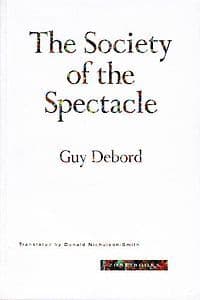
The Society of the Spectacle cover
Archivist's Choice

The Society of the Spectacle

Guy Debord (1988)

Genre

Politics / History / Creativity / Philosophy

Reading Time

160 min

Key Themes

See below

Track Your Reading

Sign in to track this book

Debord's critique shows how capitalism turns real life into an alienating display of images and goods.

Core Idea

Guy Debord's "The Society of the Spectacle" argues that modern capitalist society changes all parts of life into a 'spectacle.' This spectacle is not just images; it is how people relate to each other through images, replacing real life with representations. The spectacle becomes the main way society is organized. It turns human relationships, time, and even the desire for change into goods. This keeps things as they are through false ideas and passive buying. Debord says that in the spectacle, real human actions and existence are taken over by appearances, which leads to separation and the loss of critical thought and action. The book asks for revolutionary action to break down the spectacle and get back to real human experience. It stresses that the spectacle's power comes from presenting itself as a unified, unavoidable reality, while also splitting up and isolating people.
Reading time
160 min
Difficulty
Hard
✓ Read this if...
You are interested in critical theory, media studies, the philosophy of capitalism, or understanding how consumer culture and mass media shape our perception of reality and social relations.
✗ Skip this if...
You prefer straightforward narratives, dislike abstract philosophical analysis, or are looking for practical self-help advice rather than a dense critique of modern society.

Core idea

The central argument and framework that powers the entire book.

Guy Debord's "The Society of the Spectacle" argues that modern capitalist society changes all parts of life into a 'spectacle.' This spectacle is not just images; it is how people relate to each other through images, replacing real life with representations. The spectacle becomes the main way society is organized. It turns human relationships, time, and even the desire for change into goods. This keeps things as they are through false ideas and passive buying. Debord says that in the spectacle, real human actions and existence are taken over by appearances, which leads to separation and the loss of critical thought and action. The book asks for revolutionary action to break down the spectacle and get back to real human experience. It stresses that the spectacle's power comes from presenting itself as a unified, unavoidable reality, while also splitting up and isolating people.

At a glance

Reading time

160 min

Difficulty

Hard

Read this if...

You are interested in critical theory, media studies, the philosophy of capitalism, or understanding how consumer culture and mass media shape our perception of reality and social relations.

Skip this if...

You prefer straightforward narratives, dislike abstract philosophical analysis, or are looking for practical self-help advice rather than a dense critique of modern society.

Key Takeaways

1

Life as a Spectacle

Modern society transforms authentic life into a mere representation.

Quote

The entire life of societies in which modern conditions of production prevail presents itself as an immense accumulation of spectacles. All that was once directly lived has moved away into a representation.

Debord says the spectacle is not images, but how people relate through images. It is a system that replaces real human experience and social interaction with mediated representations. This is not just about media; it is about how capitalism shapes our entire reality, turning everything from work to free time into something to observe rather than truly live. The spectacle separates people from their own lives, changing active participation into passive thought. It is a total force, making sure that even rebellion often becomes another ...

Supporting evidence

Debord's entire theoretical framework is built upon a Hegelian and Marxist critique, where alienation under capitalism extends beyond labor to encompass all aspects of existence, manifesting as the spectacle.

Apply this

Actively question the 'reality' presented by media, advertising, and even social interactions. Seek out unmediated experiences, direct participation, and authentic relationships that resist commodification and representation. Prioritize genuine engagement over passive consumption.

alienationcommodificationreification
2

The Spectacle's Unifying Power

It integrates all forms of human activity into a single, dominant logic of consumption and image.

Quote

The spectacle is the moment when the commodity has attained the total occupation of social life.

The spectacle does not just show images; it actively combines all social activities under its control. It acts as the 'general reason for the existing system,' making sure all parts of life — work, free time, culture, politics — are understood and experienced through its mediated view. This combination creates a seemingly consistent, but false, reality. Different opinions or other ways of living are either ignored, taken over, or shown in a way that supports the spectacle's power. It is a complex way of social control that stops real ...

Supporting evidence

Debord points to the way mass media, advertising, and consumer culture seamlessly blend together to create a singular, all-encompassing narrative that reinforces capitalist values and social norms.

Apply this

Identify how seemingly disparate activities (e.g., watching a political debate, buying groceries, attending a concert) are presented and consumed through a similar, spectacle-driven logic. Seek out diverse, non-commodified forms of cultural expression and social interaction.

totalitarianismhegemonysocial-control
3

Time Commodification

Authentic, lived time is replaced by a spectacle-driven, pseudo-cyclical time.

Quote

The time of production, commodity-time, is an infinite accumulation of equivalent intervals.

Debord says the spectacle changes our experience of time. Instead of real, lived time — marked by unique experiences and historical change — we are subject to a 'pseudo-cyclical' time set by production and consumption. This is the time of work, the time of goods cycles, and the time of endlessly repeated spectacles (e.g., seasonal sales, holidays, predictable media stories). This standardized, measurable time separates us from our own historical power, making it seem like nothing truly new or transformative can happen. It creates a se...

Supporting evidence

The relentless cycle of fashion trends, planned obsolescence, and the constant 'new and improved' versions of products, all designed to keep consumption perpetually in motion.

Apply this

Consciously break free from the dictated rhythms of consumption and work. Engage in activities that foster a sense of genuine historical connection or personal development. Prioritize experiences that create unique memories over repetitive, spectacle-driven leisure.

pseudo-timehistorical-alienationcapitalist-rhythm
4

The Rise of Passive Observation

Active participation in life is supplanted by passive contemplation of images.

Quote

The spectacle is capital accumulated to the point where it becomes image.

One of the spectacle's most harmful effects is turning people from active subjects into passive observers. Instead of directly experiencing and shaping their world, people are encouraged to watch a mediated reality. This passivity goes beyond entertainment; it affects politics, social interaction, and even personal identity. The spectacle presents a world 'ready-made' for consumption, where a person's role is simply to choose from pre-defined options or to identify with pre-made images. This shift from 'being' to 'having' and then to ...

Supporting evidence

The rise of reality television, social media influencers, and political campaigns that rely heavily on image-making and soundbites rather than substantive engagement.

Apply this

Actively participate in local communities, engage in direct action, and create your own content and experiences rather than solely consuming what is presented. Question the 'truth' of what you see and hear, seeking out diverse perspectives and direct sources.

passivityconsumerismdisengagement
5

False Consciousness & Unity

The spectacle manufactures a deceptive sense of social cohesion and consensus.

Quote

The spectacle is the bad dream of modern imprisoned society which ultimately expresses nothing but its wish to sleep.

The spectacle helps maintain social order by creating a false sense of unity and agreement. It presents a seemingly calm world where conflicts are either smoothed over or shown as isolated problems, not systemic issues. This manufactured unity is vital for hiding the real problems and conflicts within capitalist society. By creating a shared, though artificial, reality, the spectacle discourages critical thought and group action. It creates 'false consciousness' where people accept the dominant ideas, believing the world shown to them...

Supporting evidence

Mainstream news coverage that often frames social unrest as isolated incidents of deviance rather than symptoms of deeper systemic problems, or political narratives that emphasize unity while ignoring class divisions.

Apply this

Actively seek out marginalized voices and alternative media sources. Engage in critical analysis of dominant narratives and question claims of universal consensus. Recognize and challenge instances where conflict and dissent are suppressed or misrepresented.

ideologypropagandasocial-cohesion
6

The Spectacle's Inescapability

Even attempts to resist the spectacle often become integrated into its logic.

Quote

The spectacle is diffuse and ubiquitous. It is the reigning social form.

One of Debord's most troubling insights is how unavoidable the spectacle seems. It is not just a phenomenon but a basic structure of modern life, making it very hard to opt out or truly resist. Any attempt to create an 'alternative' often risks being taken over, turned into a commodity, and shown again within the spectacle itself. Counter-cultures become niche markets; revolutionary ideas become marketable styles. This is because the spectacle is so widespread that it sets the very terms of engagement. It is not just what we see, but ...

Supporting evidence

The commercialization of 'punk' aesthetics, the adoption of activist slogans by corporate advertising, or the way social media platforms monetize dissent and protest.

Apply this

Be critically aware of how counter-cultural movements or alternative lifestyles can be commodified. Focus on creating genuinely autonomous spaces and practices that operate outside of the spectacle's logic, prioritizing direct action and non-mediated forms of resistance.

co-optationrecuperationtotalizing-system
7

The Decline of Authenticity

Genuine experience and direct human connection are replaced by mediated, inauthentic substitutes.

Quote

All that was once directly lived has moved away into a representation.

The spectacle destroys authenticity. As direct experience is replaced by mediated images, the real substance of life lessens. Relationships are mediated through screens, political involvement is reduced to watching debates, and even personal identity becomes a curated performance for an audience. This results in deep separation, not just from what we produce, but from ourselves and each other. The search for 'real' experiences becomes a commodity itself, sold back to us in packaged forms (e.g., 'authentic' travel experiences, 'real' a...

Supporting evidence

The rise of influencer culture where personal lives are meticulously curated and broadcast, or the commodification of 'experiences' like glamping or 'authentic' cultural tours.

Apply this

Prioritize direct, unmediated interactions with people and environments. Engage in activities that require genuine skill and presence, rather than passive consumption. Cultivate self-awareness and personal values independent of external validation or popular trends.

authenticityalienationhyperreality
8

Critique Through Practice

True liberation requires a revolutionary transformation of everyday life, not just political theory.

Quote

The critique of the spectacle is the critique of the separation of human beings from their activity and the unification of this separation.

Debord's criticism is not just academic; it is a call to action. He believed the spectacle could only be overthrown through revolutionary practice that changes daily life itself. This is not about simply changing who is in power, but fundamentally changing the social relations that produce the spectacle. It involves taking back power, direct participation, and creating situations where real human interaction and self-expression can happen. The Situationists, Debord's group, famously used tactics like 'dérive' (drifting through cities)...

Supporting evidence

The Situationist International's practical activities and theoretical tracts, which aimed to provoke a radical re-evaluation and transformation of urban space and daily routines.

Apply this

Engage in creative and disruptive practices that challenge established norms and mediated experiences. Actively participate in shaping your environment and social interactions. Seek to build autonomous communities and spaces that foster direct, unmediated life.

situationismdétournementpraxis
9

The Spectacle and Urbanism

The design of cities reinforces the spectacle's logic of separation and consumption.

Quote

Urbanism is the precise seizure of the natural and human environment by capitalism, which, by its logic, must reconstitute this environment as spectacular territory.

Debord also criticized city planning, saying that modern cities are designed to help the spectacle rather than real human interaction. City spaces are often set up to maximize consumption, control movement, and separate people into isolated units (e.g., residential areas, commercial districts, transport routes). Public spaces, when they exist, are often cleaned up and turned into commodities, becoming stages for consumption or passive observation rather than places for spontaneous social life and political involvement. This 'spectacul...

Supporting evidence

The proliferation of shopping malls, gated communities, and heavily policed public squares designed for tourism rather than local community life.

Apply this

Critically analyze urban environments. Seek out and create truly public, uncommodified spaces for gathering and interaction. Engage in 'dérive' (aimless wandering) to experience the city beyond its intended routes and functions, discovering hidden potentials.

urbanismpsychogeographyspatial-alienation
10

From 'Having' to 'Appearing'

The ultimate goal of the spectacle is to shift value from possession to mere representation.

Quote

The first phase of the domination of the economy over social life brought into the definition of all human accomplishment the obvious degradation of *being* into *having*... The present phase of total occupation of social life by the accumulated results of the economy leads to a general sliding from *having* to *appearing*.

Debord describes a historical progression in capitalist separation. At first, under early capitalism, the focus was on 'having' — accumulating material possessions. However, in the advanced stage of the spectacle, the emphasis shifts even further to 'appearing' — presenting an image of having, regardless of the real substance. This means what matters most is not what one truly possesses or experiences, but how one appears to possess or experience it within the mediated reality of the spectacle. This strong focus on appearance drives a...

Supporting evidence

The explosion of social media where personal identities are meticulously crafted and displayed, often prioritizing likes and followers over genuine connection or achievement; the rise of 'fake it till you make it' culture.

Apply this

Prioritize genuine self-development and meaningful experiences over the pursuit of external validation or a curated online persona. Challenge the societal pressure to 'perform' success or happiness, focusing instead on internal well-being and authentic relationships.

identity-crisissuperficialitysocial-media-critique

Critical analysis

Notable Quotes

The whole life of those societies in which modern conditions of production prevail presents itself as an immense accumulation of spectacles. All that was once directly lived has become mere representation.

The opening lines, defining the spectacle.

The spectacle is not a collection of images, but a social relation among people, mediated by images.

Clarifying the nature of the spectacle beyond just visual media.

The spectacle is the bad dream of a modern society in chains, and which ultimately expresses nothing but its wish for sleep. The spectacle is the guardian of sleep.

Describing the somniferous and repressive function of the spectacle.

The spectacle is the affirmation of appearance and the affirmation of all human life, namely social life, as mere appearance.

Highlighting the superficiality and inauthenticity imposed by the spectacle.

The spectacle, understood in its totality, is both the result and the project of the dominant mode of production. It is not a supplement or decoration added to the real world, but the heart of this real world's unreality.

Emphasizing the spectacle's centrality to capitalist production.

The more he accepts recognizing himself in the dominant images of need, the less he understands his own existence and his own desires.

Discussing how the spectacle distorts individual self-perception and desires.

The society which carries the spectacle within itself is above all the producer of commodities.

Connecting the spectacle directly to commodity production and consumerism.

The commodity is nothing but a thing which is in reality a social relation.

A Marxist-inspired definition of the commodity's social essence.

In the world of the spectacle, the only thing that is true is the moment of its appearance.

Pointing out the ephemeral and superficial nature of truth in a spectacular society.

The spectacle is the stage on which a false life is played out.

A concise summary of the spectacle's role in presenting inauthentic existence.

The critique of the spectacle is the theory of moments or of the free construction of situations.

Introducing the concept of 'situations' as a method of resistance.

The spectacular organization of starvation, for example, is the concrete expression of the fact that the society has gone beyond the stage of abundant social guarantees for everyone.

Linking the spectacle to the management of poverty and social control.

History itself, insofar as it is the activity of human beings, is the creation of their own world.

Emphasizing human agency in shaping history and society.

The spectacle is the reconstruction of the world on a false basis.

A powerful summary of how the spectacle fundamentally distorts reality.

Quiz

Test Your Knowledge

Ready to see how well you understood this book? Take our interactive quiz with 10 questions.

10
Questions
~5
Minutes
?
Best Score

Key Questions (FAQ)

Debord argues that modern society is dominated by the 'spectacle,' a pervasive system of images, media, and commodities that mediates all human relationships and experiences. This spectacle is not just a collection of images but a social relation among people, mediated by images, that replaces genuine life with a simulated one.

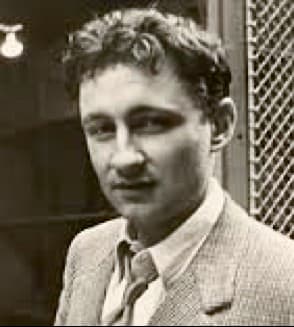
About the author