BookBrief
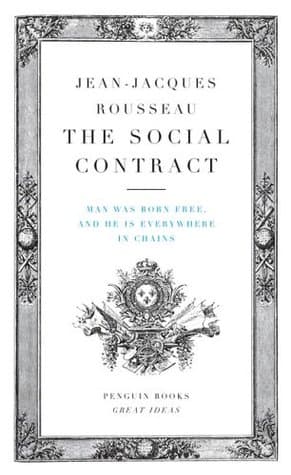
The Social Contract cover
Archivist's Choice

The Social Contract

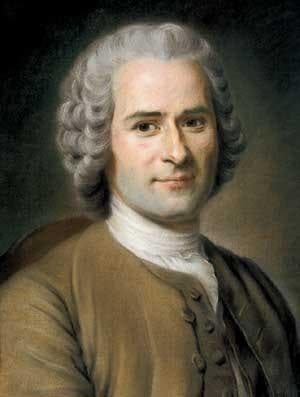
Jean-Jacques Rousseau (1913)

Genre

Politics / History / Philosophy

Reading Time

180 min

Key Themes

See below

Track Your Reading

Sign in to track this book

Rousseau's work questions how governments are formed, arguing that people are truly free only when they agree to a 'social contract' that creates and is subject to sovereign power.

Core Idea

Rousseau argues that a state achieves true freedom and moral legitimacy when individuals collectively give up their natural liberties to the 'general will' of the community through a 'social contract.' This general will, which always aims for the common good and cannot be divided or given away, forms the basis of sovereign power. When people follow laws based on this general will, they obey themselves and gain a higher civil freedom, rather than just obeying an outside authority.
Reading time
180 min
Difficulty
Hard
✓ Read this if...
You are interested in the foundational theories of modern political thought, the concept of popular sovereignty, or the philosophical underpinnings of collective freedom and civic duty.
✗ Skip this if...
You prefer practical policy discussions over abstract political philosophy, or you are looking for a light, easily digestible read on governance.

Core idea

The central argument and framework that powers the entire book.

Rousseau argues that a state achieves true freedom and moral legitimacy when individuals collectively give up their natural liberties to the 'general will' of the community through a 'social contract.' This general will, which always aims for the common good and cannot be divided or given away, forms the basis of sovereign power. When people follow laws based on this general will, they obey themselves and gain a higher civil freedom, rather than just obeying an outside authority.

At a glance

Reading time

180 min

Difficulty

Hard

Read this if...

You are interested in the foundational theories of modern political thought, the concept of popular sovereignty, or the philosophical underpinnings of collective freedom and civic duty.

Skip this if...

You prefer practical policy discussions over abstract political philosophy, or you are looking for a light, easily digestible read on governance.

Key Takeaways

1

The Paradox of Freedom and Chains

Humanity's natural liberty is universally suppressed by societal structures.

Quote

Man is born free; and everywhere he is in chains.

Rousseau's famous opening challenges a basic assumption of his time: that political power is natural or given by God. He says humans are born free, able to act as they wish. Yet, this natural freedom is quickly limited by society's customs, laws, and institutions. These 'chains' are not always obvious tyrannies but can be the subtle, widespread limits set by property, social class, and even systems meant to keep order. This contradiction sets up his question of how legitimate political power can exist without destroying individual fre...

Supporting evidence

Rousseau's entire philosophical project in 'The Social Contract' is a response to this initial observation, seeking to reconcile natural freedom with civil society.

Apply this

Reflect on the 'chains' in your own life – social expectations, economic pressures, or unexamined norms. Consider if these constraints genuinely serve a greater good or merely limit authentic self-expression and freedom.

natural-libertysocial-constraintsparadox-of-freedom
2

The Social Contract's Core

Legitimate authority stems from a voluntary agreement among all citizens.

Quote

The problem is to find a form of association which will defend and protect with the whole common force the person and goods of each associate, and in which each, while uniting himself with all, may still obey himself alone, and remain as free as before.

Rousseau rejects any idea that power comes from natural right, strength, family, or divine command. Instead, he argues that the only legitimate basis for political power is a 'social contract.' This is a mutual agreement where individuals give up their natural freedom to the community's collective 'General Will.' By doing this, they gain civil freedom, which is freedom under the law. This agreement creates a moral, collective body, the 'Sovereign,' which represents the will of all its members. The key is that each person, by giving th...

Supporting evidence

Rousseau explicitly outlines the terms of this contract, emphasizing the 'total alienation of each associate, together with all his rights, to the whole community.'

Apply this

When evaluating laws or governmental policies, ask whether they genuinely stem from a collective agreement that benefits all equally, or if they serve particular interests. Advocate for participatory governance where the 'will of the people' is genuinely consulted and acted upon.

social-contractlegitimate-authorityvoluntary-agreement
3

The Indivisible General Will

The collective good, not individual desires, should guide the state.

Quote

The general will is always upright and always tends to the public advantage; but the deliberations of the people do not always have the same rectitude.

For Rousseau, the 'General Will' is not simply the total of individual wills (the 'Will of All'), but a distinct, unified will focused on the common good. It is always right and always benefits the whole community. This idea is important: the General Will cannot be divided or given away. When people act together based on the General Will, they are truly free because they are obeying a law they themselves made for their own benefit. Moving away from this collective goal, even by majority vote, risks creating factions or serving private...

Supporting evidence

Rousseau distinguishes between the 'General Will' and the 'Will of All,' arguing that the latter is merely a sum of private interests, while the former considers only the common interest.

Apply this

When participating in group decisions, whether in a community, workplace, or political context, strive to identify and advocate for solutions that genuinely benefit the entire collective, rather than just your personal preferences or those of a specific subgroup.

general-willcommon-goodindivisible-sovereignty
4

Sovereignty of the People

True political power resides solely and inalienably with the collective citizenry.

Quote

Sovereignty, for the same reason that it is inalienable, is indivisible; for will either is general, or it is not; it is the will of the body of the people, or of only a part of it.

Rousseau's idea of sovereignty is new: it belongs only to the people, acting as a group, and cannot be given away or split. This means that representatives, like members of parliament, are just agents of the people, not their rulers. Any attempt to transfer or divide this sovereignty (for example, into separate legislative, executive, and judicial branches) misunderstands its nature. The people, as the Sovereign, are the ultimate law-makers, and their collective will, shown through the General Will, is the highest authority. This idea...

Supporting evidence

He argues that 'the moment a people chooses representatives, it is no longer free; it no longer exists.'

Apply this

Actively engage in civic processes, understanding that your voice contributes to the collective sovereignty. Question political systems that diminish direct citizen participation, and advocate for mechanisms that empower direct democratic expression of the General Will.

popular-sovereigntydirect-democracyinalienable-power
5

Law as an Expression of Freedom

Obeying laws we prescribe for ourselves is the truest form of liberty.

Quote

Obedience to a law which we prescribe to ourselves is liberty.

This is a deep new definition of freedom. For Rousseau, true freedom is not the unrestrained ability to do anything one wants (natural liberty). Instead, it is the ability to live under laws that one, as a member of the sovereign body, helped create for the common good. When people follow the General Will and its laws, they are not giving up their freedom but gaining a higher form of freedom—civil liberty. These laws, because they come from all citizens' collective will and aim for the common good, apply equally to everyone, ensuring ...

Supporting evidence

Rousseau defines civil liberty as 'moral liberty, which alone makes man truly master of himself; for the mere impulse of appetite is slavery, while obedience to a law which we prescribe to ourselves is liberty.'

Apply this

Actively participate in the democratic process, understanding that your contribution to law-making is an act of self-governance. When you follow laws, recognize that you are, in an ideal Rousseauvian sense, obeying yourself and your collective will, not an external oppressor.

civil-libertymoral-freedomself-legislation
6

The Role of the Legislator

A wise, almost divine figure is needed to guide a nascent society towards good laws.

Quote

He who dares to undertake the establishment of a people should feel himself capable of changing human nature, of transforming each individual, who by himself is a perfect and solitary whole, into part of a greater whole.

Rousseau acknowledges a major practical problem: how can an uneducated public, often focused on private interests, know the General Will and make good laws? His solution is the 'Legislator'—a wise, almost mythical figure, separate from the Sovereign, who proposes laws that match the common good. This person must have great insight, be unbiased, and be able to convince people to adopt laws they might not immediately see as beneficial. The Legislator's role is not to rule but to guide a state's basic constitution, effectively 'changing ...

Supporting evidence

He cites historical examples like Lycurgus of Sparta and Calvin in Geneva as embodying the characteristics of a great Legislator.

Apply this

When considering foundational changes or reforms in any organization or society, recognize the immense challenge of guiding collective will towards a greater good. Seek out leaders who demonstrate profound understanding, impartiality, and the ability to inspire collective action, rather than just personal ambition.

legislatorcivic-virtuefoundational-laws
7

Government vs. Sovereign

Government is merely the executor of the Sovereign's will, not its master.

Quote

The government is only the minister of the sovereign.

Rousseau makes an important difference between the Sovereign (the collective people expressing the General Will) and the Government (the executive body that carries out the laws). The Government is just an agent or 'minister' of the Sovereign, tasked with enforcing laws and keeping civil and political freedom. It does not have sovereignty itself, nor does it have its own will separate from the General Will. Rousseau looks at different forms of government—monarchy, aristocracy, democracy—and suggests that the best form depends on a sta...

Supporting evidence

He argues that the act of instituting government is not a contract, but a law, and that the magistrates are merely 'officers of the sovereign.'

Apply this

Hold elected officials and governmental bodies accountable, reminding them that their power is derived from and subordinate to the people. Advocate for transparency and mechanisms that ensure the government remains a servant, not a master, of the collective will.

governmentsovereignexecutive-powerseparation-of-powers
8

Civil Religion and Moral Unity

A shared civic faith is essential to bind citizens to the social contract.

Quote

There is therefore a purely civil profession of faith of which the Sovereign should fix the articles, not exactly as religious dogmas, but as sentiments of sociability, without which it is impossible to be a good citizen or a faithful subject.

Knowing that laws alone might not create true civic virtue, Rousseau suggests a 'civil religion'—a set of simple beliefs that promote social unity and loyalty to the state. This is not about religious doctrines, but about moral principles needed to be a good citizen, such as belief in God, an afterlife with rewards for justice, and the sacredness of the social contract. While people are free to hold private religious beliefs, the state can banish anyone who breaks the civil religion's rules, making civic virtue a public duty. This con...

Supporting evidence

The articles of this civil religion include belief in a powerful, intelligent, beneficent divinity, the happiness of the just, the punishment of the wicked, and the sanctity of the social contract and laws.

Apply this

Consider the unspoken 'civic creeds' or shared values that underpin your community or nation. Reflect on how these values are reinforced and whether they genuinely foster unity and common good, or if they exclude and divide. Advocate for shared values that are truly inclusive and promote justice for all.

civil-religionmoral-unitycivic-virtuesocial-cohesion
9

The Dangers of Faction and Representation

Divisions and delegated power corrupt the General Will and undermine true liberty.

Quote

If, when the people, being furnished with adequate information, held its deliberations, the citizens had no communication one with another, the grand total of the small differences would always give the general will, and the decision would always be good. But when factions arise, and partial associations are formed at the expense of the great association, the will of each of these associations becomes general in relation to its members, while it remains particular in relation to the State.

Rousseau dislikes factions, political parties, and even representatives, seeing them as harmful to the General Will. He argues that when people discuss issues, they should do so individually, without forming groups. Factions bring in private interests that distort collective judgment, leading to a 'will of all' (sum of private wills) rather than the pure 'General Will.' Similarly, he believes sovereignty cannot be represented; once people elect representatives, they give up their freedom, and the state effectively stops being a true r...

Supporting evidence

Rousseau argues that the English people, for instance, are only free during parliamentary elections; once elected, they are enslaved.

Apply this

Be wary of political parties and special interest groups that prioritize their own agendas over the common good. Seek out opportunities for direct democratic participation and encourage dialogue that transcends partisan divides, focusing on shared societal benefits.

factionsrepresentationprivate-interestscorruption-of-will
10

Forced to Be Free

Individuals who resist the General Will must be compelled to obey for their own good.

Quote

Whoever refuses to obey the general will shall be compelled to do so by the whole body. This means nothing less than that he will be forced to be free.

This is perhaps Rousseau's most controversial and disturbing statement, yet it follows logically from his ideas. If the General Will truly represents the common good, and if obeying it is the highest form of freedom (civil liberty), then an individual who resists it acts against their own best interest and against the very freedom they gain through the social contract. Therefore, the group has a right, even a duty, to 'force' such an individual to conform. This compulsion is not seen as tyranny but as an act of liberation, guiding the...

Supporting evidence

This concept is a direct consequence of his definition of civil liberty and the nature of the social contract.

Apply this

Critically examine any ideology or system that justifies coercion or suppression of individual dissent in the name of a collective 'good' or 'true freedom.' While communal well-being is important, question the methods and potential for abuse when individual liberty is forcibly overridden.

forced-to-be-freecivic-obediencetotalitarianism-critiqueindividual-vs-collective

Critical analysis

Notable Quotes

Man is born free; and everywhere he is in chains.

Opening line of Book I, Chapter I, setting the stage for the entire work.

The problem is to find a form of association which will defend and protect with the whole common force the person and goods of each associate, and by means with which each, uniting with all, nevertheless obeys only himself and remains as free as before.

Defining the fundamental problem the social contract aims to solve.

Each of us puts his person and all his power in common under the supreme direction of the general will, and in our corporate capacity, we receive each member as an indivisible part of the whole.

Describing the act of forming the sovereign through the social contract.

The general will is always right and tends to the public advantage.

Asserting the inherent rectitude and purpose of the general will.

To renounce liberty is to renounce being a man, to surrender the rights of humanity and even its duties.

Arguing against the legitimacy of slavery or absolute submission.

Force does not create right, and we are obliged to obey only legitimate powers.

Distinguishing between power based on might and power based on moral authority.

The social compact establishes among the citizens an equality of such a kind, that they all engage themselves under the same conditions and ought all to enjoy the same rights.

Highlighting the equality established among citizens by the social contract.

What man loses by the social contract is his natural liberty and an unlimited right to everything that tempts him and that he can get; what he gains is civil liberty and proprietorship of all he possesses.

Outlining the trade-offs involved in moving from the state of nature to civil society.

The impulse of mere appetite is slavery, while obedience to a law which we prescribe to ourselves is liberty.

Distinguishing between freedom as license and freedom as self-governance.

The sovereign, being formed merely of the individuals who compose it, has — and can have — no interest contrary to theirs; and consequently the sovereign power need give no guarantee to its subjects.

Explaining why the sovereign (the people) cannot act against its own interests.

The public force, then, needs an agent of its own to unite it and put it in action according to the directions of the general will, to serve as a means of communication between the State and the Sovereign, and to do for the collective person more or less what the union of soul and body does for man.

Describing the necessity and role of government (the executive power).

There is often a great deal of difference between the will of all and the general will; the latter considers only the common interest, while the former takes private interest into account, and is no more than a sum of particular wills.

Clarifying the crucial distinction between individual desires and the collective good.

The limits of the sovereign power are co-extensive with the public utility, and cannot go beyond the general conventions.

Defining the boundaries of the sovereign's legitimate authority.

As soon as public service ceases to be the principal concern of the citizens, and they prefer to serve with their purses rather than with their persons, the State is already on the verge of ruin.

Warning against civic apathy and the decline of active participation in governance.

Quiz

Test Your Knowledge

Ready to see how well you understood this book? Take our interactive quiz with 10 questions.

10
Questions
~5
Minutes
?
Best Score

Key Questions (FAQ)

'The Social Contract' argues that legitimate political authority comes not from natural rights or divine power, but from a pact or 'social contract' among all citizens. This contract establishes a collective sovereign power that aims to serve the general will of the people, ensuring liberty and equality.

About the author