BookBrief
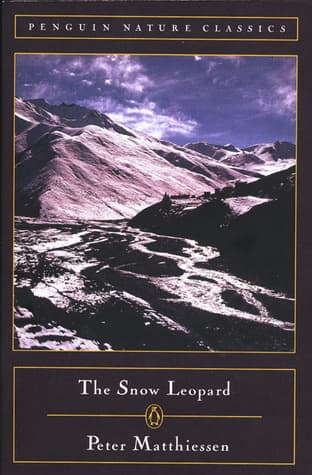
The Snow Leopard cover
Archivist's Choice

The Snow Leopard

Peter Matthiessen (1978)

Genre

Lifestyle / Biography / Memoir / Philosophy

Reading Time

9-12 hours

Key Themes

See below

Track Your Reading

Sign in to track this book

In the Himalayas' harsh beauty, a spiritual search for the snow leopard becomes a journey of self-discovery and acceptance of impermanence.

Core Idea

Peter Matthiessen's "The Snow Leopard" follows his 1973 expedition to Nepal's Dolpo region with zoologist George Schaller. Their goal was to observe Himalayan blue sheep and, hopefully, the snow leopard. Beyond the physical travel, the book is an internal journey, a pilgrimage after personal loss and in pursuit of spiritual understanding. Matthiessen, a Zen Buddhist student, explores impermanence, the illusion of self, and reality. The stark, grand Himalayan landscape serves as both setting and a prompt for reflection. The story considers how all life connects and how sacredness exists in everyday things. Ultimately, it suggests that the true goal of any search is not the object itself, but the transformation that happens during the search, and the embrace of the present moment.
Reading time
9-12 hours
Difficulty
Medium
✓ Read this if...
You are drawn to contemplative travelogues, spiritual memoirs, or explorations of Zen Buddhist philosophy intertwined with nature writing. It's for those who appreciate detailed observation of the natural world alongside deep introspection and a willingness to sit with profound, often unanswerable, questions.
✗ Skip this if...
You prefer fast-paced adventure narratives, a clear plot with a definitive resolution, or a purely scientific account of wildlife. If you're not interested in philosophical musings on life, death, and the self, or if you find detailed descriptions of arduous treks without much dialogue tedious, this might not be for you.

Core idea

The central argument and framework that powers the entire book.

Peter Matthiessen's "The Snow Leopard" follows his 1973 expedition to Nepal's Dolpo region with zoologist George Schaller. Their goal was to observe Himalayan blue sheep and, hopefully, the snow leopard. Beyond the physical travel, the book is an internal journey, a pilgrimage after personal loss and in pursuit of spiritual understanding. Matthiessen, a Zen Buddhist student, explores impermanence, the illusion of self, and reality. The stark, grand Himalayan landscape serves as both setting and a prompt for reflection. The story considers how all life connects and how sacredness exists in everyday things. Ultimately, it suggests that the true goal of any search is not the object itself, but the transformation that happens during the search, and the embrace of the present moment.

At a glance

Reading time

9-12 hours

Difficulty

Medium

Read this if...

You are drawn to contemplative travelogues, spiritual memoirs, or explorations of Zen Buddhist philosophy intertwined with nature writing. It's for those who appreciate detailed observation of the natural world alongside deep introspection and a willingness to sit with profound, often unanswerable, questions.

Skip this if...

You prefer fast-paced adventure narratives, a clear plot with a definitive resolution, or a purely scientific account of wildlife. If you're not interested in philosophical musings on life, death, and the self, or if you find detailed descriptions of arduous treks without much dialogue tedious, this might not be for you.

Key Takeaways

1

The Illusion of Self

Our perceived 'I' is a constantly shifting construct, not a fixed entity.

Quote

There is no 'I' at all, and so of course 'I' can't be lost.

Matthiessen, through his difficult trek and exposure to Buddhist ideas, considers the idea of the self. He realizes that the 'I' we hold onto is mostly an illusion, a collection of changing experiences, memories, and desires. This realization is freeing, not a loss. If there is no fixed 'self,' then the worries and attachments linked to keeping it safe become meaningless. The journey itself, with its physical demands and mental quiet, removes these layers of self-identity. This reveals a more basic, connected awareness. This reflects ...

Supporting evidence

Matthiessen's internal monologues and reflections on his own ego, particularly in the face of the vast, indifferent Himalayas, serve as the primary evidence. His discussions with George Schaller, a fellow scientist, and his observations of the local Sherpa people's detached acceptance of life and death further reinforce this idea.

Apply this

Practice mindfulness and meditation to observe thoughts and emotions without identifying with them. Recognize that personal setbacks or triumphs are temporary states, not defining characteristics of a permanent self. Cultivate a sense of interconnectedness with nature and other beings.

anatmanego-dissolutionmindfulness
2

The Search is the Destination

True pilgrimage lies in the act of seeking, not in reaching a specific goal.

Quote

The search is what anyone would undertake who was not so much searching for the snow leopard or any one thing as he was searching for the notion of the snow leopard, that is, the spirit that could reveal itself as the snow leopard.

While Matthiessen's main goal is to see the snow leopard, the deeper purpose of his journey goes beyond this single aim. He discovers that the real pilgrimage is the journey itself – the physical effort, the mental discipline, the immersion in nature, and the internal thoughts that come up. The snow leopard becomes a symbol, an 'idea,' representing a deep spiritual understanding or an encounter with the wild, untamed core of existence. Expecting to find the leopard is less important than the transformation that happens while looking f...

Supporting evidence

Matthiessen's frequent reflections on the meaning of his quest, his acceptance of not seeing the leopard, and his profound satisfaction derived from the journey itself, regardless of the outcome. The arduousness of the trek, which forces him to confront his own limitations and preconceived notions.

Apply this

Embrace the process of learning and growth in any endeavor, rather than solely focusing on the end result. Find joy and meaning in the effort and the experience. Redefine 'success' as the journey itself, not just the attainment of a specific goal.

spiritual-journeyprocess-over-outcomepilgrimage
3

Nature as Mirror

The wilderness reflects our inner landscape, revealing both beauty and struggle.

Quote

The great ranges of the Himalayas, to Matthiessen, are 'the highest altar of the earth.'

The stark, grand Himalayan landscape reflects Matthiessen's inner world. The physical challenges of the trek—the cold, the altitude, the huge mountains—force him to face his own physical and mental limits. At the same time, the stunning beauty and deep silence of the wilderness bring a sense of awe and spiritual thought. The external environment directly affects his internal state, removing surface concerns and bringing him closer to basic questions about existence, death, and his place in nature. The mountains are not just scenery; t...

Supporting evidence

Matthiessen's detailed descriptions of the Himalayan landscape, its flora and fauna, and his visceral reactions to its harshness and beauty. His frequent shifts between external observation and internal reflection, where the two often intertwine.

Apply this

Spend time in nature, even if it's a local park, and consciously observe how the environment impacts your mood and thoughts. Use time in nature for introspection and self-reflection. Recognize the interconnectedness between human experience and the natural world.

nature-therapyeco-spiritualitywilderness-contemplation
4

The Sacred in the Mundane

Even the simplest daily acts can become opportunities for spiritual practice.

Quote

The goal of life is to make your heartbeat match the beat of the universe, to match your nature with Nature.

Matthiessen observes the Sherpa people and their Buddhist practices, noting how their spiritual devotion is part of daily life. Unlike Western ideas of spirituality often limited to specific rituals or places, for the Sherpas, every action – from making tea to walking a dangerous path – has meaning and respect. This integrated approach to life and spirituality shows that the sacred is not separate from the everyday, but is within it. The difficult trek itself, with its repeated movements and focus on basic survival, becomes a form of ...

Supporting evidence

Matthiessen's observations of the Sherpa way of life, their rituals, their resilience, and their peaceful demeanor. His own experience of the trek, where simple acts like walking, eating, and resting take on heightened significance due to the extreme conditions.

Apply this

Approach daily tasks with intention and mindfulness, whether it's cooking, cleaning, or working. Find moments of quiet reflection and gratitude in routine activities. See everyday challenges as opportunities for growth and spiritual practice.

mindful-livingeveryday-spiritualityzen-practice
5

The Impermanence of All Things

Accepting change and loss is fundamental to understanding reality.

Quote

All of life is a coming-to-terms with impermanence.

Impermanence (anicca), a key Buddhist principle, is a repeated theme throughout Matthiessen's journey. He sees the temporary beauty of the mountain landscape, the brief presence of wildlife, and the natural cycle of life and death. The harsh conditions of the Himalayas highlight how fragile human existence is and how all things constantly change. Matthiessen deals with personal losses, including his wife's recent death, and finds comfort and understanding in the Buddhist view that holding onto what is temporary only causes suffering. ...

Supporting evidence

Matthiessen's reflections on his personal grief, his observations of the changing seasons and weather in the mountains, and his discussions on Buddhist philosophy with his companion, George Schaller. The constant threat of avalanches and the harshness of the environment.

Apply this

Practice letting go of attachments to outcomes, possessions, or even specific states of being. Acknowledge and process grief and loss as natural parts of life. Cultivate an appreciation for the present moment, knowing it is unique and transient.

aniccanon-attachmentgrief-acceptance
6

The Paradox of Solitude

True solitude can lead to profound connection, not isolation.

Quote

In the wilderness, 'we come to terms with our true selves, and with the true nature of things.'

Despite being with George Schaller and a team of Sherpas, Matthiessen experiences deep periods of internal quiet during his trek. This forced isolation, away from modern life's distractions, allows him to explore his own mind, face his thoughts and feelings, and connect with a deeper sense of self. Surprisingly, this quiet does not lead to loneliness but to a deep sense of connection with the natural world and, eventually, with all beings. By removing surface social interactions, he finds a more basic connection to the universal consc...

Supporting evidence

Matthiessen's extensive internal monologues and philosophical ruminations throughout the book. His descriptions of the quiet moments spent observing nature alone, and how these moments lead to profound insights.

Apply this

Schedule regular periods of quiet reflection or solitude, even if it's just 15 minutes a day. Engage in activities that encourage introspection, such as journaling, walking in nature, or meditation. Recognize that being alone doesn't equate to being lonely.

introspectioncontemplationmindful-solitude
7

The Value of the Unseen

What we don't 'find' can be more significant than what we do.

Quote

The snow leopard is a symbol of the spiritual quest itself, not its fulfillment.

Matthiessen's failure to clearly see the snow leopard, despite his strong desire and difficult journey, becomes one of the book's most important lessons. The 'unseen' snow leopard goes beyond its physical form to become a strong symbol. It represents the elusive nature of enlightenment, the mystery of the wild, and the idea that some of life's deepest truths cannot be directly grasped but are experienced through the process of seeking. The leopard's absence makes Matthiessen look inward, to find meaning not in external approval or ach...

Supporting evidence

Matthiessen's ultimate acceptance and even embrace of not seeing the snow leopard. His philosophical reflections on what the leopard 'represents' rather than what it 'is.' The entire narrative builds towards this point, where the lack of an outcome becomes the outcome.

Apply this

Focus on the learning and growth derived from challenging experiences, regardless of whether a specific goal was achieved. Appreciate the journey of discovery, even if the 'answer' remains elusive. Recognize that some of life's most profound lessons come from ambiguity or unfulfilled expectations.

spiritual-symbolismelusive-truthprocess-oriented-thinking
8

The Interconnected Web of Life

All existence is part of a single, interdependent tapestry.

Quote

All things are linked, and one thing cannot exist without the other.

Throughout his journey, Matthiessen observes the complex relationships between different parts of the Himalayan ecosystem – the blue sheep, the snow leopard, the plants, the weather, and the people. He sees how each part plays a role, and how a change in one affects the others. This ecological awareness extends to a spiritual realization, mirroring the Buddhist idea of dependent origination (pratītyasamutpāda), where all things happen because of other things. Matthiessen comes to understand that he, too, is an inseparable part of this...

Supporting evidence

Matthiessen's detailed observations of animal behavior, plant life, and geological formations. His reflections on the delicate balance of the ecosystem and the impact of human presence. His conversations with George Schaller about the scientific understanding of these interdependencies.

Apply this

Consider the ripple effect of your actions on others and the environment. Cultivate empathy and compassion by recognizing shared humanity and interconnectedness. Support sustainable practices that honor the delicate balance of ecosystems.

dependent-originationecological-awarenessunity-consciousness
9

Doubt as a Path to Truth

Questioning and uncertainty are essential for genuine spiritual growth.

Quote

The path to enlightenment is often paved with doubt and uncertainty.

Matthiessen openly struggles with his own doubts, especially about the more mystical parts of Tibetan Buddhism. He does not just accept doctrines but constantly questions, tests, and thinks about the experiences and teachings he finds. This honesty and willingness to live with uncertainty are important for his spiritual growth. Instead of being a problem, his doubt acts as a filter, helping him tell real insights from surface beliefs. It shows that true understanding often comes from careful questioning and personal experience, not fr...

Supporting evidence

Matthiessen's internal debates and struggles with Buddhist concepts, his scientific background influencing his perspective, and his candid admissions of doubt throughout the narrative. His discussions with Schaller, who represents a more purely scientific viewpoint.

Apply this

Embrace critical thinking and questioning in your own spiritual or philosophical inquiries. Don't shy away from uncertainty; see it as an opportunity for deeper exploration. Allow personal experience and reflection to guide your understanding, rather than solely relying on external dogma.

critical-spiritualityintellectual-honestyepistemological-doubt
10

The Call of the Wild Within

The untamed wilderness reflects and awakens our own primal nature.

Quote

Wildness is not found in nature alone, but in the human heart.

Matthiessen's journey into the physical wilderness of the Himalayas is also a journey into the 'wild' parts of his own mind. The raw, untamed environment removes the layers of civilization, allowing him to reconnect with more basic instincts, emotions, and a deeper, less tamed self. The snow leopard, as a symbol of wildness, purity, and elusive power, represents this untamed aspect in both nature and humans. By immersing himself in this wild landscape, Matthiessen aims to re-establish a connection with this essential, instinctive part...

Supporting evidence

Matthiessen's visceral reactions to the harshness and beauty of the wilderness, his reflections on his own 'animal' nature, and his deep respect for the wild creatures he encounters. The metaphorical significance of the snow leopard throughout the narrative.

Apply this

Seek out experiences that challenge your comfort zone and allow you to connect with your more instinctual self. Spend time in genuinely wild places. Recognize and honor the 'wild' aspects of your own personality, creativity, and intuition.

primal-selfreconnection-to-natureauthentic-living

Critical analysis

Notable Quotes

The greatest joy is to be a part of the world, to be aware of the world, to be present in the world, and to be able to respond to the world.

Reflecting on his journey and connection to nature in the Himalayas.

All things are impermanent, all things are in process, all things are without fixed self.

Meditating on Buddhist principles amidst the harsh mountain landscape.

The Snow Leopard itself is a symbol of the ultimate quest, the unattainable, the pure spirit.

Contemplating the elusive nature of the animal and its symbolic meaning.

To be truly alive, one must be willing to die.

Reflecting on the risks and challenges of the expedition, and the intensity of life in the mountains.

We are a part of everything, and everything is a part of us.

Experiencing a profound sense of unity with nature during his trek.

The mind is like a monkey, jumping from branch to branch.

Observing the restless nature of his own thoughts during meditation attempts.

It is not the goal that matters, but the journey.

Realizing the true value of the arduous trek, regardless of whether he sees the snow leopard.

The world itself is the only guru.

Acknowledging the lessons learned from direct experience and observation of the natural world.

Silence is not the absence of sound, but the absence of self.

Finding deep peace and a sense of dissolution of ego in the profound quiet of the mountains.

Suffering is not a punishment; it is a purification.

Enduring physical hardships and emotional pain, and finding spiritual meaning in them.

One must be empty to be filled.

Discussing the concept of letting go of preconceptions and desires to truly experience something new.

The true voyage of discovery consists not in seeking new landscapes, but in having new eyes.

A reflection on how his perception and inner state transformed during the journey.

There is no 'other'; there is only 'this'.

A profound realization of non-duality and the interconnectedness of all existence.

Quiz

Test Your Knowledge

Ready to see how well you understood this book? Take our interactive quiz with 10 questions.

10
Questions
~5
Minutes
?
Best Score

Key Questions (FAQ)

Matthiessen's primary purpose was to accompany naturalist George Schaller on an expedition to study the Himalayan blue sheep in the Crystal Mountain range of Nepal. However, a significant underlying motivation was the hope of glimpsing the elusive snow leopard, a creature rarely seen by humans.

About the author