BookBrief
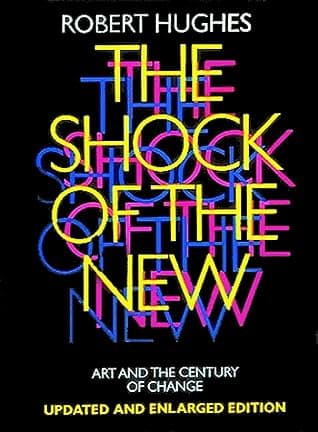
The Shock of the New cover
Archivist's Choice

The Shock of the New

Robert Hughes (1981)

Genre

Reference / History / Creativity / Philosophy

Reading Time

12-15 hours

Key Themes

See below

Track Your Reading

Sign in to track this book

Robert Hughes's "The Shock of the New" takes readers on a journey through a century of modern art, explaining the changes from Cubism to Pop Art.

Core Idea

Robert Hughes's "The Shock of the New" argues that 20th-century modern art was a direct response to the societal, technological, and political changes of its time. Hughes shows how artists, reacting to industrialization, world wars, and mass media, broke from traditional forms and experimented. Their works often challenged the public. He believes this change was not just about style but a shift in thinking, showing new ideas about reality, the artist's role, and art's ability to reflect and shape a modern world. The book states that modernism's search for newness and its rejection of the past led to a legacy where the avant-garde became part of institutions, and the market increasingly decided value. Hughes criticizes art's commodification and intellectualization. At the same time, he celebrates the power of artistic vision to provoke, enlighten, and challenge common thought, even as the nature of that challenge changed throughout the century.
Reading time
12-15 hours
Difficulty
Medium
✓ Read this if...
You want a comprehensive, opinionated, and highly readable history of 20th-century modern art, seen through the lens of social and political change. Perfect if you're curious about movements like Cubism, Surrealism, Abstract Expressionism, and Pop Art, and their broader cultural context.
✗ Skip this if...
You are looking for a purely academic, dispassionate analysis of art history, or if you prefer a less critical and more celebratory view of every aspect of modern art. Also, if you dislike strong authorial voice and occasional polemics.

Core idea

The central argument and framework that powers the entire book.

Robert Hughes's "The Shock of the New" argues that 20th-century modern art was a direct response to the societal, technological, and political changes of its time. Hughes shows how artists, reacting to industrialization, world wars, and mass media, broke from traditional forms and experimented. Their works often challenged the public. He believes this change was not just about style but a shift in thinking, showing new ideas about reality, the artist's role, and art's ability to reflect and shape a modern world.

The book states that modernism's search for newness and its rejection of the past led to a legacy where the avant-garde became part of institutions, and the market increasingly decided value. Hughes criticizes art's commodification and intellectualization. At the same time, he celebrates the power of artistic vision to provoke, enlighten, and challenge common thought, even as the nature of that challenge changed throughout the century.

At a glance

Reading time

12-15 hours

Difficulty

Medium

Read this if...

You want a comprehensive, opinionated, and highly readable history of 20th-century modern art, seen through the lens of social and political change. Perfect if you're curious about movements like Cubism, Surrealism, Abstract Expressionism, and Pop Art, and their broader cultural context.

Skip this if...

You are looking for a purely academic, dispassionate analysis of art history, or if you prefer a less critical and more celebratory view of every aspect of modern art. Also, if you dislike strong authorial voice and occasional polemics.

Key Takeaways

1

Modernism's Radical Break

Art shattered tradition, embracing abstraction and the subjective experience.

Quote

The belief that there could be a single, universally accepted form of beauty, a single 'correct' way of seeing the world, was shattered by the early 20th century.

Hughes argues that modern art was a philosophical break from centuries of artistic tradition. Artists like Picasso and Braque, with Cubism, did not just show reality differently; they questioned how reality is represented, removing perspective and objective truth. This era was defined by a drive for newness and a rejection of academic rules, pushing art into abstraction and emotional expression. It was an effort to create something new, often shocking, and personal, showing the fragmentation and speed of modern life. This break create...

Supporting evidence

The emergence of Cubism, particularly Picasso's 'Les Demoiselles d'Avignon,' as a pivotal moment that fragmented traditional perspective and figuration.

Apply this

When encountering contemporary art, approach it not with a demand for literal representation, but as a potential exploration of ideas, emotions, or new visual languages. Look for the artist's intent to challenge or redefine established norms.
cubismabstractionmodernism
2

Art as Social Mirror

Modern art reflected and critiqued the tumultuous societal changes of its time.

Quote

Art became a diagnostic instrument, registering the tremors and upheavals of a century convulsed by war, ideology, and technological change.

Hughes says that modern art was tied to the social and political turmoil of the 20th century. From industrialization's optimism and terror to the two World Wars, the rise of totalitarianism, and the Cold War, artists often responded to these changes. Movements like German Expressionism, Surrealism, and Pop Art were not just aesthetic choices but comments on anxiety, the subconscious, consumerism, and mass media. Art often critically showed societal problems, psychological distress, or the absurdities of modern life, making it a histor...

Supporting evidence

Otto Dix's stark depictions of post-WWI German society, or the anti-war sentiment embedded in Dada and Surrealist works, directly addressing political and social anxieties.

Apply this

When studying historical periods, consider the art produced during that time as a primary source. Analyze how artists responded to their contemporary environment, looking beyond aesthetics to uncover social commentary and cultural anxieties.

expressionismsurrealismsocial-commentary
3

The Cult of the Avant-Garde

The relentless pursuit of novelty often led to both innovation and self-parody.

Quote

The avant-garde, once a genuinely radical force, increasingly became an institution, generating its own conventions of rebellion.

Hughes critically looks at the paradoxical nature of the avant-garde. While it started as a force for breaking boundaries and challenging the status quo, the constant demand for 'the new' became its own tradition. The pressure to shock, innovate, and differentiate led to many movements, some important, others short-lived or cynical. This cycle, driven by critics and collectors, risked turning artistic exploration into a game of novelty. Hughes suggests that this institutionalization of rebellion sometimes lessened its impact, making r...

Supporting evidence

The rapid succession of movements in the post-WWII era, where each new 'ism' sought to displace the last, sometimes with more emphasis on theoretical justification than genuine visual innovation.

Apply this

Approach claims of 'revolutionary' art with a critical eye. While appreciating novelty, also consider the substance, longevity, and genuine artistic merit beyond mere shock value or theoretical pronouncements.

avant-gardeinnovationart-market
4

The Artist as Myth

The persona of the modern artist became as significant as the art itself.

Quote

The artist, no longer merely a craftsman, became a prophet, a shaman, a rebel – a figure whose life story was woven into the fabric of their creations.

Hughes observes how the 20th century saw the rise of the 'artist as genius' idea, where the artist's personality, life story, and often unusual lifestyle became central to understanding and valuing their work. From Picasso's persona to Frida Kahlo's personal stories, the artist's identity became part of their art. This, increased by media and market forces, often overshadowed the skill or conceptual depth of the art itself, creating a cult of personality. While sometimes helping to understand the work, it also risked romanticizing suf...

Supporting evidence

The widespread fascination with artists like Salvador Dalí, whose public antics and personal life were as much a part of his brand as his surrealist paintings.

Apply this

Separate the artist's biography from the artwork itself, at least initially. While context is important, strive to analyze the art's visual language and conceptual content independently before allowing biographical details to color your interpretation.

artist-personamyth-makingbiography
5

The Rise of Photography and Mass Media

New technologies fundamentally altered art's purpose and perception.

Quote

Once the camera could record the world with ruthless accuracy, painting was freed to explore what the camera could not: the inner landscape, the subjective vision, the very nature of perception.

Hughes points out the effect of photography and later, mass media, on modern art. With the camera taking over realistic depiction, painting was free from needing to imitate reality. This freedom allowed artists to explore abstraction, expressionism, and conceptual art, looking at inner worlds and theories instead of outward appearances. At the same time, many images in magazines, advertisements, and television changed how people saw visual information. Pop Art, in particular, used this new visual language, blurring the lines between h...

Supporting evidence

The emergence of Pop Art, with artists like Andy Warhol directly referencing advertising imagery and celebrity culture, demonstrating art's engagement with mass media.

Apply this

Consider how new technologies (e.g., AI art, NFTs) are currently impacting the art world. Analyze if they are liberating artists, challenging traditional definitions, or creating new forms of 'mimicry' or 'representation' in a contemporary context.

photographymass-mediapop-artdigital-art
6

The Enduring Power of Craft

Despite conceptual turns, the mastery of materials remained crucial.

Quote

No amount of theoretical justification can compensate for a lack of visual intelligence and sheer manual dexterity.

Hughes, while valuing new ideas, supports the importance of craft and visual skill. He argues that even in abstract or spontaneous works, a strong understanding of materials, composition, and color is often present. He criticizes cases where theoretical claims outweigh visual impact or technical ability. For Hughes, the 'shock' of the new was often made stronger by the artist's ability to use their chosen medium with skill, even if the goal was to disrupt. This idea emphasizes that true artistic innovation rarely comes from ignoring t...

Supporting evidence

Hughes's admiration for artists like Henri Matisse, whose seemingly simple forms were the result of decades of rigorous drawing and color study, or the meticulous construction behind a Cubist collage.

Apply this

When evaluating art, look beyond the immediate shock or concept. Consider the artist's command of their medium, the quality of execution, and how these elements contribute to or detract from the overall impact and message.

craftsmanshipvisual-literacytechnique
7

Art's Political Entanglement

Modern art was often weaponized by or reacted against political ideologies.

Quote

From the utopian dreams of the Russian avant-garde to the brutal suppressions of Nazi Germany, art was never neutral ground in the political arena.

Hughes shows how modern art became connected with the political changes of the 20th century. Avant-garde movements like Constructivism first aligned with revolutionary ideas, believing art could create a new society. In contrast, totalitarian regimes, like Nazism and Soviet Communism, suppressed 'degenerate' modern art, promoting realistic propaganda instead. This shows art's ability to be both a tool for freedom and a target of authoritarian control. The 'shock of the new' that challenged common values also made it a threat to regime...

Supporting evidence

The state-sponsored denunciation of Expressionist and Cubist art as 'degenerate' in Nazi Germany, contrasted with the initial embrace of Constructivism in early Soviet Russia before its eventual suppression.

Apply this

When analyzing art from politically charged periods, research the dominant ideologies and power structures of the time. Understand how artists navigated these forces, whether through overt resistance, subtle critique, or forced conformity, to gain a deeper appreciation of their choices.

political-artpropagandacensorship
8

The Ambiguity of Meaning

Modern art often resisted singular interpretation, embracing complexity and subjectivity.

Quote

One of the great gifts of modern art was its insistence that meaning is not fixed, but fluid, open to the viewer's engagement and interpretation.

A main trait of modern art, as Hughes observes, is its move away from clear stories or agreed-upon meanings. Unlike much pre-modern art, which often had clear religious or historical roles, modern works often presented ambiguities, open questions, and subjective experiences. This shift required viewers to be more active in interpreting, inviting personal engagement rather than passive viewing. From Surrealism's dreamscapes to Minimalism's pure forms, artists challenged the idea of a single 'correct' interpretation, reflecting a wider ...

Supporting evidence

The multiple interpretations of Marcel Duchamp's 'Fountain,' which challenged the very definition of art and authorship, or the open-ended psychological narratives of Surrealist paintings.

Apply this

When faced with art that seems 'meaningless' or difficult, resist the urge to immediately dismiss it. Instead, engage with it actively: what emotions does it evoke? What questions does it raise? What personal associations come to mind? Allow for multiple interpretations.

ambiguityinterpretationsubjectivityconceptual-art
9

Art's Market Transformation

The commodification of art profoundly reshaped its production and reception.

Quote

As the century wore on, the art market became less a place for connoisseurship and more a casino, with prices driven by speculation and fashion.

Hughes critically examines the increasing role of the art market in defining modern art's value and direction. He argues that while patronage has always existed, the 20th century saw an increase in art's commodification, where financial speculation, celebrity, and trends began to have too much influence. The 'shock of the new' was often magnified and then absorbed by a market looking for the next sensation. This led to situations where a piece's monetary value could overshadow its artistic merit, and artists were pressured to produce ...

Supporting evidence

The skyrocketing prices of works by certain artists in the post-war period, often driven by a few influential collectors and dealers, creating a speculative bubble.

Apply this

When encountering discussions about art, particularly its 'value,' question whether the conversation is centered on artistic merit, cultural impact, or purely financial speculation. Understand the market's influence but don't let it solely dictate your appreciation.

art-marketcommodificationspeculation
10

The Cycle of Rebellion and Assimilation

What was once radical inevitably became mainstream, then history.

Quote

Every avant-garde movement, no matter how fiercely it proclaimed its independence, eventually found itself absorbed into the very history it sought to escape.

Hughes concludes that modern art's main characteristic is its cycle of rebellion, innovation, and eventual acceptance. Each 'shock of the new,' from Cubism to Pop Art, started as a radical change, challenging norms and causing strong reactions. However, over time, these revolutionary ideas became understood, accepted, and integrated into art history. What was once scandalous became classic, and what was once avant-garde became academic. This process shows art history's dynamic nature, where new generations build upon, react against, a...

Supporting evidence

The journey of Impressionism, initially derided and rejected by the Salon, eventually becoming one of the most beloved and canonical art movements.

Apply this

Recognize that contemporary art, no matter how challenging or unconventional, is part of a continuous historical trajectory. Consider how it builds upon, reacts to, or reinterprets past movements, understanding that today's 'shock' may be tomorrow's 'classic.'

art-historyassimilationcanon

Critical analysis

Notable Quotes

The shock of the new is not just a matter of style; it is a matter of history.

Introduction, discussing how modern art reflects historical changes.

Art does not exist in a vacuum; it is a product of its time.

Analysis of art's connection to social and political contexts.

The avant-garde is always a minority, but it is the minority that changes the world.

Reflection on the role of avant-garde artists in driving cultural shifts.

Modernism was not a style but a state of mind.

Defining Modernism beyond aesthetic movements.

The camera changed painting forever, forcing artists to find new ways of seeing.

Discussion on photography's impact on 19th-century art.

Great art is always an act of rebellion against the past.

Commentary on how innovation in art challenges tradition.

The city became the new subject of art, a landscape of machines and crowds.

Describing urbanization's influence on early 20th-century art.

Art is a lie that makes us realize truth.

Paraphrasing Picasso to discuss art's deceptive nature and insight.

The cult of the new often leads to the tyranny of fashion.

Critique of how novelty can overshadow artistic substance.

Every artist is a child of his time, but the great ones transcend it.

Reflecting on how artists both reflect and surpass their era.

Abstraction was not an escape from reality but a deeper engagement with it.

Defending abstract art as a meaningful exploration of form.

The history of modern art is a history of misunderstood genius.

Noting how pioneering artists often faced initial rejection.

Technology did not kill painting; it gave it new life.

Arguing that technological advances inspired artistic innovation.

Beauty in art is not about prettiness but about intensity of feeling.

Redefining beauty in the context of modern artistic expression.

Quiz

Test Your Knowledge

Ready to see how well you understood this book? Take our interactive quiz with 10 questions.

10
Questions
~5
Minutes
?
Best Score

Key Questions (FAQ)

'The Shock of the New' is a comprehensive history of modern art from the late 19th century to the 1970s, exploring movements like Cubism, Surrealism, and Pop Art through a blend of art criticism, cultural history, and philosophy, accompanied by over 250 color illustrations.

About the author