BookBrief
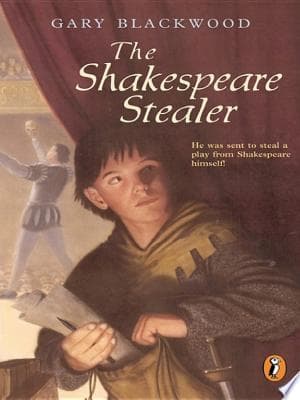
The Shakespeare Stealer cover
Archivist's Choice

The Shakespeare Stealer

Gary Blackwood (2000)

Genre

General

Reading Time

240 min

Key Themes

See below

Track Your Reading

Sign in to track this book

An orphan skilled in shorthand must infiltrate Shakespeare's Globe Theatre to steal the 'Hamlet' manuscript, navigating Elizabethan London's dangerous world while balancing loyalty, thievery, and the stage's appeal.

Core Idea

Widge, a young orphan, is forced by his master to steal the script of Shakespeare's Hamlet using his shorthand skills. During his mission in Elizabethan London, Widge faces moral choices, questions his identity, and finds a surprising sense of belonging and empathy within the theater company he was sent to betray. The story shows how art changes people and challenges ideas of good and bad, leading Widge to choose loyalty and self-discovery over a life of crime.
Reading time
240 min
Difficulty
Easy
✓ Read this if...
You enjoy historical fiction set in Elizabethan England, stories about personal transformation, or tales involving the world of theater and Shakespeare.
✗ Skip this if...
You prefer fast-paced thrillers or dislike historical settings with period-specific language.

Core idea

The central argument and framework that powers the entire book.

Widge, a young orphan, is forced by his master to steal the script of Shakespeare's Hamlet using his shorthand skills. During his mission in Elizabethan London, Widge faces moral choices, questions his identity, and finds a surprising sense of belonging and empathy within the theater company he was sent to betray. The story shows how art changes people and challenges ideas of good and bad, leading Widge to choose loyalty and self-discovery over a life of crime.

At a glance

Reading time

240 min

Difficulty

Easy

Read this if...

You enjoy historical fiction set in Elizabethan England, stories about personal transformation, or tales involving the world of theater and Shakespeare.

Skip this if...

You prefer fast-paced thrillers or dislike historical settings with period-specific language.

Key Takeaways

1

The Perilous Gift of Shorthand

A unique skill can be both a blessing and a curse, dictating one's fate.

Quote

Widge possessed a peculiar talent, a gift for 'charactery' that marked him for a life of servitude and subterfuge.

Widge's rare shorthand ability, 'charactery,' is central to his early life and the plot's start. This skill, far from helping him personally, first traps him in a life of being used. His first master makes him copy sermons for money, and his next, more dangerous master, Falconer, uses this talent for stealing plays. This shows how special abilities, without personal control, can become burdens. The story explores the ethical problems of using a gift for illegal reasons and the fight to take back control of one's talents and future, in...

Supporting evidence

Widge's initial life under Dr. Bright and his subsequent 'purchase' by Falconer, both driven by the utility of his shorthand for their respective schemes.

Apply this

Reflect on your unique skills. Are you using them in ways that align with your values, or are external pressures dictating their application? Seek opportunities to leverage your talents for personal growth and ethical pursuits.

skill-exploitationautonomyethical-dilemmas
2

Finding Family in Unexpected Places

Belonging can emerge from shared experiences, even amidst deception.

Quote

He had never known a true family, yet among these players, a sense of belonging began to take root, despite his secret mission.

Widge, an orphan passed from one master to another, has never known the comfort or safety of a family. His entry into the Lord Chamberlain's Men at the Globe Theatre is at first only a business deal, a way to an end. But as he spends more time with the actors—sharing meals, rehearsing, and experiencing the friendship of theater life—he starts to form real connections. This unexpected sense of belonging challenges his loyalty to Falconer and highlights the deep human need for connection. The book nicely shows how shared goals and real ...

Supporting evidence

Widge's growing affection for characters like Sander, Chris Beeston, and particularly Mr. Pope, who shows him kindness and mentorship, contrasting sharply with his previous solitary existence.

Apply this

Actively seek communities where you feel accepted and valued. Be open to forming connections with people from different backgrounds, as true belonging often arises from shared experiences and mutual respect.

found-familybelongingcommunityhuman-connection
3

The Transformative Power of Empathy

Understanding others' perspectives can fundamentally alter one's own moral compass.

Quote

To steal a sermon was one thing, but to steal a play, a work of art that brought joy to so many... the implications weighed heavily on his conscience.

Widge's first moral understanding comes from survival—he does what he must to avoid punishment. His task to steal 'Hamlet' at first seems no different from copying sermons. However, as he joins the theater company, he starts to see the play not just as words, but as a living performance, a team effort, and a source of deep entertainment and meaning for both actors and audience. He develops empathy for Shakespeare, for the players who put their hearts into their roles, and for the audience whose lives are made richer by the stories. Th...

Supporting evidence

Widge's internal struggle and growing reluctance to transcribe the play, especially after experiencing the joy and dedication of the actors and witnessing the audience's reaction.

Apply this

Before making decisions that impact others, try to understand their perspectives and feelings. Cultivating empathy can lead to more ethical choices and a deeper appreciation for the human experience.

empathymoral-compassperspective-takingethical-decision-making
4

The Allure and Illusion of the Stage

Theatre offers both escapism and a mirror to reality, blurring the lines between performance and truth.

Quote

The stage was a world unto itself, where men became women, kings became paupers, and stories came alive with a breath that felt more real than life outside.

The Globe Theatre is shown as a lively, almost magical place where everyday life changes. For Widge, who has lived a grim and lonely existence, the stage is a discovery. He is fascinated by the costumes, the detailed language, the dramatic performances, and how actors take on different personalities. This dive into Elizabethan theater not only gives him a sense of wonder but also teaches him about human nature, storytelling, and the power of illusion. The book shows how theater can be a strong tool for both entertainment and social co...

Supporting evidence

Widge's initial awe and fascination upon entering the Globe, his observations of the actors' transformations, and his eventual participation in the plays.

Apply this

Engage with art forms like theatre, literature, or film. Allow yourself to be transported, and reflect on how these creative expressions can offer new perspectives on life and society.

theatre-magicillusion-vs-realitystorytellingart-as-mirror
5

The Double-Edged Sword of Identity

Assuming a false identity can provide freedom, but at the cost of one's true self.

Quote

He was Widge, but he was also 'the new boy,' 'the apprentice,' and for a time, even 'Hamlet.' Each role offered a different skin, a different way to be.

Widge's journey involves a constant negotiation of identity. At first, his circumstances—an orphan, a servant—define him. When he goes into the Globe, he takes on the role of an eager apprentice, which allows him to observe and learn. But this false identity causes an inner conflict, as he struggles to balance his mission with his growing attachment to the players. The book further explores identity through the actors themselves, who constantly change roles on stage, blurring the lines between their true selves and their characters. W...

Supporting evidence

Widge's internal monologues about his secret, his fear of exposure, and his eventual decision to reveal his true intentions, leading to his rejection of Falconer's influence.

Apply this

Reflect on the different 'roles' you play in your life. Are they authentic to who you are, or are you performing for others? Strive to align your external actions with your internal values to foster a strong sense of self.

identity-crisisauthenticityrole-playingself-discovery
6

The Value of Art and Intellectual Property

Creative works hold intrinsic worth, deserving protection from theft and exploitation.

Quote

A play was not merely words on a page; it was a creation, a livelihood, a piece of someone's very soul.

The whole idea of 'The Shakespeare Stealer' centers on the attempted theft of intellectual property—Shakespeare's 'Hamlet.' The book quietly but effectively shows the value of creative works. For Falconer, the play is something to be stolen and profited from. For Shakespeare and the Lord Chamberlain's Men, it is their income, their passion, and a sign of their artistic talent. The story emphasizes the effort and creativity involved in writing and performing plays, making the theft not just a financial crime, but a violation of artisti...

Supporting evidence

Falconer's ruthless pursuit of the play for his rival company, contrasted with the players' dedication to protecting their work and their pride in performing it.

Apply this

Support artists and creators by respecting intellectual property. Purchase original works, give credit where it's due, and understand the value of creativity beyond its monetary price.

intellectual-propertyartistic-integritycreative-valuecopyright
7

Courage in the Face of Fear

True bravery isn't the absence of fear, but the decision to act despite it.

Quote

His knees knocked, his heart pounded, but a new resolve, foreign and fierce, began to stir within him. He would not be a thief.

Widge spends much of his early life driven by fear—fear of his masters, fear of punishment, fear of being alone. His first obedience to Falconer's demands comes directly from this fear. However, as his loyalties shift and his conscience awakens, he faces a much greater fear: defying a dangerous man and possibly endangering his new community. His choice to resist Falconer and protect the play is a deep act of courage. This is not a showy, heroic bravery, but a quiet, inner determination to do what is right, even when the personal cost ...

Supporting evidence

Widge's internal struggle and ultimate confrontation with Falconer, where he actively chooses to protect his friends and the play, risking his own safety and future.

Apply this

Identify situations where fear holds you back from doing what you believe is right. Practice small acts of courage to build your capacity for larger, more significant stands.

braverymoral-courageovercoming-fearinner-strength
8

The Nuance of Good and Evil

Few characters are purely good or purely evil; motivations often lie in a grey area.

Quote

Even the villain, he realized, had his reasons, twisted though they might be, born of ambition and a desperate need to succeed.

While Falconer is clearly the bad guy, the book avoids making him a simple evil character. His motives, though ruthless, come from a desire for success and perhaps a bitter rivalry in the tough world of Elizabethan theater. Similarly, Widge himself is not an inherently 'good' character at the start; he is a product of his circumstances, capable of deceit and self-preservation. The players, while generally kind, are also human, with their own faults and quirks. This detailed portrayal of characters adds depth and realism, suggesting th...

Supporting evidence

Falconer's backstory hinted at, and the various personalities and occasional squabbles among the Lord Chamberlain's Men, showcasing their human imperfections.

Apply this

When evaluating others' actions, try to consider their potential motivations and circumstances, rather than immediately labeling them as 'good' or 'bad.' This fosters understanding and reduces judgment.

moral-ambiguitycharacter-complexityhuman-naturenuance
9

The Enduring Legacy of Shakespeare

Beyond the plots, Shakespeare's work reflects timeless human experiences.

Quote

The words, even when he couldn't grasp their full meaning, held a power, a resonance that spoke of things true and eternal.

Even for a young, uneducated boy like Widge, Shakespeare's 'Hamlet' has a strong impact. While Widge first focuses on copying the words, he gradually becomes absorbed in the story's themes of revenge, madness, and loyalty. The book implicitly celebrates Shakespeare's lasting genius, showing how his plays captivated audiences then and still resonate today. It highlights that Shakespeare's true value lies not just in his historical importance, but in his deep understanding of the human condition, which crosses time and cultural barriers...

Supporting evidence

Widge's increasing fascination with the plot and characters of 'Hamlet,' and the palpable excitement and engagement of the audiences at the Globe Theatre.

Apply this

Revisit classic literature or art forms that might initially seem intimidating. Look beyond the surface to find universal themes and emotional truths that connect with your own experiences.

shakespearean-legacytimeless-themesliterary-impactcultural-heritage
10

The Unseen Work Behind the Magic

Behind every grand spectacle lies meticulous effort, collaboration, and often, unseen sacrifice.

Quote

He saw the grime, the sweat, the endless rehearsals, the careful crafting of props and costumes—the true engine behind the illusion of the stage.

Widge's time in the Globe Theatre offers a unique behind-the-scenes look, showing the extensive work and dedication needed to bring a play to life. He sees not just the glamorous performances, but also the long rehearsals, the building of sets, the management of costumes, and the coordination of many people. This look backstage demystifies the 'magic' of theater, showing it to be the result of collaborative effort, skill, and sheer hard work. It supports the idea that any impressive outcome, whether artistic or otherwise, is built on ...

Supporting evidence

Widge's observations of the actors' daily routines, the stagehands' work, the costume department, and the general operations of the theatre, which he initially overlooked.

Apply this

When admiring a finished product or performance, take a moment to consider the unseen effort, teamwork, and persistence that went into its creation. This cultivates a deeper appreciation and respect.

behind-the-scenescollaborationwork-ethicprocess-over-product

Critical analysis

Notable Quotes

There are more things in heaven and earth, Horatio, than are dreamt of in your philosophy.

Widge overhears this line from 'Hamlet' during a rehearsal, reflecting on the mysteries of life and his own changing world.

A man's true worth is not in the clothes he wears, but in the heart he carries.

Spoken by Simon Bass to Widge, emphasizing inner character over outward appearance, particularly when Widge is concerned about his humble origins.

To thine own self be true, and it must follow, as the night the day, thou canst not then be false to any man.

Another line from 'Hamlet' that Widge hears, which resonates with his personal struggle to be honest about his past and his true intentions.

The stage is a mirror, reflecting life back to us, so we might learn from it.

Mr. Shakespeare explaining the purpose of theatre to his acting company, and indirectly to Widge, who is learning about the craft.

Fear is a poor master. It makes slaves of us all.

Julian offers this wisdom to Widge, encouraging him to overcome his anxieties about Bass and embrace his new life with the Lord Chamberlain's Men.

Words are powerful things, Widge. They can build up, or they can tear down.

Mr. Armin, the fencing master, discussing the dual nature of language, which is particularly relevant to Widge's skill in shorthand and his initial task to steal words.

A true friend is a treasure beyond price.

Widge's internal reflection on his growing bond with Julian and Sander, realizing the value of their companionship compared to the material wealth he once sought.

One cannot truly appreciate the light until one has known the darkness.

Mr. Shakespeare, perhaps in a moment of philosophical reflection, discussing the necessity of contrast in human experience, which mirrors Widge's journey from a difficult past to a brighter present.

It is not where you come from, but where you are going, that truly matters.

Spoken by Mr. Heminges to Widge, reassuring him about his origins and encouraging him to look forward to his future with the company.

The greatest theft is to steal a man's hope.

Widge's internal thought as he considers the manipulative nature of Simon Bass, who exploited Widge's lack of hope and ambition.

Every man has a part to play, no matter how small.

Mr. Armin encouraging Widge about his place within the acting company, highlighting that everyone's contribution is important.

Truth, like a good play, will always find its audience.

Mr. Shakespeare offering a metaphorical comparison between the enduring power of truth and the appeal of a well-written drama, which Widge is beginning to understand.

A lie, once told, has a way of growing, until it consumes the teller.

Widge's internal realization as his initial deception about stealing the play becomes more complicated and burdensome, weighing on his conscience.

Sometimes, the best way to find yourself is to lose yourself in something greater.

Widge's reflection on how joining the Lord Chamberlain's Men, and becoming part of their collaborative world, helped him discover his true self and purpose.

Quiz

Test Your Knowledge

Ready to see how well you understood this book? Take our interactive quiz with 10 questions.

10
Questions
~5
Minutes
?
Best Score

Key Questions (FAQ)

The Shakespeare Stealer is a historical adventure novel set in Elizabethan England, following an orphan named Widge who possesses a unique talent for shorthand. He is forced by his master to infiltrate the Globe Theatre and steal William Shakespeare's play, Hamlet.

About the author