BookBrief
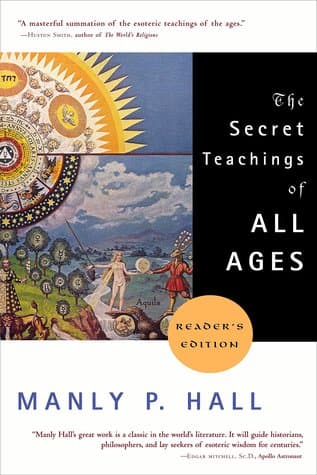
The Secret Teachings of All Ages cover
Archivist's Choice

The Secret Teachings of All Ages

Manly P. Hall (2007)

Genre

Reference / History / Spirituality / Philosophy

Reading Time

1000+ min

Key Themes

See below

Track Your Reading

Sign in to track this book

Manly P. Hall's major work explores the hidden wisdom of ancient cultures, guiding readers through forgotten rituals, symbols, and philosophies to reveal humanity's spiritual heritage.

Core Idea

Manly P. Hall's "The Secret Teachings of All Ages" argues that a consistent, hidden tradition of divine wisdom underlies all major world religions, philosophies, and mythologies throughout history. This universal truth, often expressed through allegory, symbolism, and ritual, describes humanity's spiritual origin, purpose, and destiny. The book explains these doctrines, showing a narrative of cosmic law, human potential, and the path to enlightenment through self-mastery and universal principles.
Reading time
1000+ min
Difficulty
Hard
✓ Read this if...
You are deeply interested in comparative religion, occult history, ancient wisdom traditions, and the symbolic language embedded in myths and philosophies, and are prepared for a comprehensive, dense, and often speculative exploration.
✗ Skip this if...
You prefer empirically verifiable history, concise summaries, or a modern, scientific perspective on spirituality, or if you are not prepared for extensive theological and philosophical exegesis.

Core idea

The central argument and framework that powers the entire book.

Manly P. Hall's "The Secret Teachings of All Ages" argues that a consistent, hidden tradition of divine wisdom underlies all major world religions, philosophies, and mythologies throughout history. This universal truth, often expressed through allegory, symbolism, and ritual, describes humanity's spiritual origin, purpose, and destiny. The book explains these doctrines, showing a narrative of cosmic law, human potential, and the path to enlightenment through self-mastery and universal principles.

At a glance

Reading time

1000+ min

Difficulty

Hard

Read this if...

You are deeply interested in comparative religion, occult history, ancient wisdom traditions, and the symbolic language embedded in myths and philosophies, and are prepared for a comprehensive, dense, and often speculative exploration.

Skip this if...

You prefer empirically verifiable history, concise summaries, or a modern, scientific perspective on spirituality, or if you are not prepared for extensive theological and philosophical exegesis.

Key Takeaways

1

The Enduring Esoteric Core

Beneath surface religions lies a universal, hidden wisdom tradition.

Quote

The Secret Teachings of All Ages is an encyclopedia of ancient and medieval symbolism... and the occult and esoteric philosophies of the world.

Hall argues that despite outward differences, the world's major religions and philosophies share a common core. This 'secret teaching' is not hidden to be malicious, but because its truths are often veiled in allegory, myth, and symbolism, making them accessible only to those ready to seek deeper understanding. This underlying unity suggests a single, ancient wisdom continuously reinterpreted across cultures and times, forming a chain of spiritual and philosophical growth. Understanding this core helps one see how seemingly different ...

Supporting evidence

Hall meticulously details the parallels between Egyptian mysteries, Greek philosophy (e.g., Platonism), Hermeticism, Kabbalah, Rosicrucianism, and Freemasonry, showing how similar cosmological, ethical, and spiritual principles are encoded within their respective traditions.

Apply this

Approach diverse spiritual traditions not as isolated phenomena, but as different facets of a single, universal quest for truth. Seek out the symbolic language and allegorical narratives within any spiritual text to uncover its deeper, intended meaning, rather than taking it purely literally.
esoteric-traditionperennial-philosophyuniversal-symbolism
2

Symbolism as the Language of the Soul

Symbols are not mere decorations, but keys to unlocking universal truths.

Quote

Symbols are the language of the mysteries. They are a universal language, common to all peoples and all ages.

Hall believes that symbols are the main way esoteric knowledge has been kept and passed down. They cross language and cultural barriers, speaking directly to the subconscious. Each symbol holds complex ideas, historical stories, and spiritual principles that cannot be fully said in literal words. A symbol's true meaning is not fixed but reveals deeper insights as the seeker's understanding grows. To grasp ancient wisdom, one must learn to 'read' the symbolic language in art, architecture, rituals, and sacred texts.

Supporting evidence

Hall dedicates extensive chapters to decoding specific symbols like the pyramid, the cross, the serpent, the sun, and various geometric forms, demonstrating their consistent esoteric interpretations across different cultures (e.g., the serpent representing wisdom, healing, or eternity in various traditions).

Apply this

Actively look for symbolic meaning in everyday life, art, and literature. When encountering a symbol, don't just identify it; contemplate its potential layers of meaning, its historical context, and how it might relate to broader philosophical or spiritual concepts. Keep a journal of symbols and your interpretations.

hermetic-symbolismarchetypal-symbolssacred-geometry
3

The Quest for Self-Mastery

Esoteric traditions universally emphasize inner transformation and control over one's nature.

Quote

Man is a miniature universe, and the laws that govern the macrocosm are mirrored in the microcosm of his own being.

A repeated theme in all 'secret teachings' is the need for self-improvement and higher awareness. Hall shows that ancient mystery schools were not just about learning secrets, but about a process of initiation that changed the individual. This change involves understanding one's inner self, mastering lower impulses, and aligning with universal cosmic principles. The goal is to evolve from an ordinary human state to an enlightened condition, achieving balance between material and spiritual existence. This journey is often shown as a he...

Supporting evidence

Hall discusses the rigorous ethical and spiritual training required for initiates in the Eleusinian Mysteries, the Pythagorean brotherhood, and the alchemical process of transmuting base metals into gold as a metaphor for transforming the lower self into the higher self.

Apply this

Engage in practices that promote self-awareness and self-discipline, such as meditation, introspection, or ethical contemplation. View personal challenges as opportunities for growth and 'initiation,' striving to integrate your spiritual aspirations with your daily actions.

spiritual-alchemygnosisinner-initiation
4

The Occulted History of Knowledge

History is a narrative of hidden wisdom, often suppressed or misunderstood by mainstream accounts.

Quote

Much of the world's most profound wisdom has been preserved, not in open texts, but in the guarded traditions of secret societies and mystery schools.

Hall questions common historical accounts by stating that much of humanity's deepest knowledge has been deliberately or accidentally obscured. He suggests that some truths were considered too powerful or dangerous for most people, leading to their preservation within exclusive groups and mystery schools. This 'hidden' history is not a modern conspiracy theory, but reflects a historical pattern of knowledge being protected, perhaps to prevent misuse or to ensure its transmission only to those deemed worthy. Understanding this view requ...

Supporting evidence

Hall traces the lineage of esoteric knowledge from ancient Egypt and Chaldea through the Gnostics, Knights Templar, Rosicrucians, and Freemasons, arguing that these groups acted as custodians of ancient wisdom during periods of religious persecution or societal upheaval.

Apply this

Approach historical accounts with a critical eye, considering what might be missing or symbolically veiled. Research the philosophical underpinnings and possible esoteric connections of historical figures and movements, rather than accepting surface-level explanations.

hidden-historymystery-schoolsesoteric-lineage
5

Cosmology as a Moral Compass

Ancient cosmologies are not just theories of the universe, but blueprints for ethical living.

Quote

The universe is a vast organism, and man, as a part of it, is governed by the same laws that operate throughout the cosmos.

For Hall, ancient cosmologies were more than scientific ideas; they were detailed moral and spiritual frameworks. Understanding the universe's structure – its divine hierarchies, planetary influences, and cycles – directly shaped human ethics, society, and individual spiritual growth. By understanding one's place in this grand cosmic design, one could find principles of right action and align one's life with universal harmony. The universe (macrocosm) and human being (microcosm) are linked, meaning disorder in the individual reflects ...

Supporting evidence

Hall extensively covers the Hermetic principle of 'As Above, So Below,' explaining how the structure of the heavens (e.g., astrological influences) was believed to directly impact terrestrial events and human character, thus providing a basis for understanding fate and free will within a divine plan.

Apply this

Consider how your personal actions and inner state might resonate with broader universal principles. Explore different cosmological models (e.g., astrological charts, Qabalistic Tree of Life) not just for predictive purposes, but for insights into your character and spiritual path.

hermetic-cosmologymacrocosm-microcosmastral-influences
6

The Architect of the Universe

The concept of a Divine Architect is central to understanding cosmic order and human potential.

Quote

The Grand Architect of the Universe is not merely a theological concept, but a symbolic representation of the organizing intelligence behind all creation.

Hall often mentions the 'Grand Architect of the Universe,' an idea common in Freemasonry and other esoteric traditions. This figure is not necessarily a personal god like in Abrahamic religions, but an impersonal, intelligent force or principle that orders and sustains the cosmos. This architectural metaphor highlights the universe's inherent design, precision, and underlying mathematical harmony. Understanding this 'Architect' inspires awe and suggests that humans, being made in its image, have the potential for creative intelligence...

Supporting evidence

Hall discusses the role of sacred geometry and numerology in ancient temple construction and philosophical systems (e.g., Pythagoreanism), illustrating how these practices sought to emulate the divine order and precision of the cosmic architect.

Apply this

Cultivate an appreciation for the order and beauty in the natural world, seeing it as evidence of an intelligent design. Engage in creative pursuits or problem-solving with the mindset of a 'builder,' applying principles of order, balance, and foresight.

divine-geometrycosmic-orderfreemasonry
7

The Cyclic Nature of Existence

Ancient wisdom reveals life, death, and rebirth as part of an eternal, cyclical process.

Quote

Life is a series of cycles, and death is but a transition from one state of being to another.

Hall emphasizes that many ancient traditions saw existence not as a straight line from birth to death, but as an eternal cycle of creation, preservation, and dissolution, seen in both the cosmos and individual lives. This includes ideas like reincarnation, the precession of the equinoxes marking long ages, and nature's seasonal rhythms. This cyclical view offers comfort and perspective, suggesting that endings are just new beginnings, and all experiences contribute to an ongoing evolutionary journey. It also implies a responsibility t...

Supporting evidence

Hall explores the Egyptian concept of the soul's journey through the Duat (underworld) to rebirth, the Hindu doctrines of Samsara and Karma, and the cyclical nature of time as understood by Mayan and other ancient calendrical systems.

Apply this

Embrace the natural cycles of change in your own life, recognizing that periods of 'death' or endings often precede new beginnings. Reflect on how your present actions might impact your future, fostering a sense of long-term responsibility and interconnectedness.

reincarnationsamsaracosmic-cycles
8

The Power of the Spoken Word

Vibration and sound are fundamental creative forces in the universe.

Quote

In the beginning was the Word, and the Word was with God, and the Word was God.

Drawing from various traditions, Hall highlights the deep importance of sound, vibration, and the spoken word as creative and transformative forces. From the 'Logos' in Greek philosophy and Christianity to the 'OM' in Hinduism, the idea that the universe began with a divine utterance or vibration is common. This implies that words and sounds have inherent power, able to shape reality, influence consciousness, and aid spiritual connection. Understanding this principle encourages careful speech, the use of mantra, and appreciation for t...

Supporting evidence

Hall discusses the use of sacred chants and incantations in ancient rituals, the power attributed to divine names in Kabbalah, and the philosophical concept of the 'Word' as the active principle of creation.

Apply this

Be conscious of the words you speak and the sounds you create, recognizing their potential impact. Explore the practice of mantra or affirmations to influence your inner state and outer reality. Listen to and create music with an awareness of its vibrational and emotional effects.

logosvibrational-energymantra
9

The Role of the Initiate

True wisdom requires personal dedication, ethical conduct, and a journey of initiation.

Quote

The mysteries were not for the curious, but for the earnest seeker after truth, who was willing to undergo a rigorous discipline.

Hall clarifies that 'secret teachings' were never simply given; they were earned through initiation. This process involved not just intellectual learning, but also moral cleansing, psychological testing, and spiritual discipline. The initiate had to show worthiness, discretion, and a strong commitment to truth. This strict path ensures that deep knowledge is not misused and that the person is ready to use such powerful insights responsibly. The initiate's journey symbolizes the human soul's quest for enlightenment, requiring persisten...

Supporting evidence

Hall describes the various stages of initiation within ancient mystery schools, often involving periods of solitude, fasting, meditation, and symbolic death and rebirth, such as those found in the Eleusinian or Mithraic mysteries.

Apply this

Recognize that deep understanding and personal transformation require effort and commitment. Approach learning not as passive reception, but as an active process of engagement, self-reflection, and ethical practice. Seek mentors or communities that encourage rigorous personal growth.

esoteric-initiationmystery-cultsspiritual-discipline
10

The Fusion of Science and Spirit

Ancient wisdom saw no division between the material and the metaphysical.

Quote

To the ancients, science and religion were inseparable. The universe was a living, intelligent organism, not a collection of dead matter.

A key insight from Hall's work is that ancient cultures did not separate science and spirituality as modern Western thought does. Their understanding of the cosmos, human anatomy, and natural events was filled with metaphysical meaning. Astronomy was astrology, medicine was tied to spiritual healing, and mathematics was sacred geometry. This holistic view suggests that all parts of existence are connected and moved by intelligent principles. Reintegrating this perspective can lead to a deeper and more meaningful engagement with both t...

Supporting evidence

Hall illustrates this through the integration of astronomical observations with mythological narratives, the use of specific plant and mineral properties for both physical and spiritual healing, and the application of numerological principles in architecture and music.

Apply this

Seek connections between scientific discoveries and philosophical or spiritual concepts. Explore fields like quantum physics or consciousness studies that challenge purely materialist views. Cultivate a sense of wonder and reverence for the natural world, recognizing its inherent intelligence and interconnectedness.

hermetic-philosophyholistic-worldviewsacred-science

Critical analysis

Notable Quotes

Man's search for truth has been an unceasing struggle to pierce the veil of illusion and discover the reality that lies beyond.

Introduction to the grand scope of humanity's quest for ultimate knowledge.

The initiated of antiquity were not concerned with the superficialities of existence, but with the profound verities that govern life and consciousness.

Discussing the focus of ancient mystery schools and philosophical traditions.

Symbolism is the language of the Mysteries. To know this language is to hold a master key to the understanding of all esoteric knowledge.

Emphasizing the importance of symbolic interpretation in understanding mystical traditions.

The universe is a vast living organism, and man, though seemingly insignificant, is a microcosm containing all the principles of the macrocosm.

Explaining the hermetic principle of 'as above, so below' and humanity's place in the cosmos.

Philosophy is not merely a system of thought, but a way of life, a path to wisdom, and a means of achieving spiritual liberation.

Defining the true purpose and practice of philosophy beyond academic study.

The gods of the ancients were not merely mythological figures, but personifications of cosmic laws and divine intelligences.

Interpreting ancient mythologies as allegories for deeper spiritual and natural truths.

Ignorance is the root of all suffering, and knowledge, properly applied, is the antidote.

A foundational statement on the human condition and the role of enlightenment.

The greatest treasures of the world are not found in gold or jewels, but in the wisdom of the ages, preserved in the hearts and minds of illumined beings.

Reflecting on the true value of spiritual and intellectual heritage.

Every creature is a living hieroglyph, and the entire world a book, whose pages are covered with symbols, whose characters are the forms of life.

Discussing the omnipresence of divine symbolism in nature.

True education consists not merely in acquiring facts, but in the development of the inner faculties and the awakening of the spiritual nature.

Critiquing conventional education and advocating for a holistic approach.

The soul of man is a spark of the Divine, capable of boundless expansion and ultimately of reunion with its source.

Explaining the divine potential and ultimate destiny of the human soul.

The hidden wisdom of the ages is not truly hidden, but veiled from those who lack the understanding to perceive it.

Clarifying that esoteric knowledge is not concealed, but requires readiness to comprehend.

The true initiate seeks not power over others, but mastery over self, for in self-mastery lies the key to all legitimate power.

Distinguishing between worldly power and spiritual self-control.

Man is a creature of memory, not only of his personal past, but of the collective spiritual heritage of his race and the universe.

Exploring the concept of ancestral and cosmic memory within the human psyche.

Quiz

Test Your Knowledge

Ready to see how well you understood this book? Take our interactive quiz with 10 questions.

10
Questions
~5
Minutes
?
Best Score

Key Questions (FAQ)

Manly P. Hall's 'The Secret Teachings of All Ages' is a comprehensive encyclopedia exploring ancient mythology, rituals, symbolism, and the arcane mysteries from various cultures and historical periods. It serves as a codex to the world's occult and esoteric traditions, covering a vast array of hidden wisdom.

About the author