BookBrief
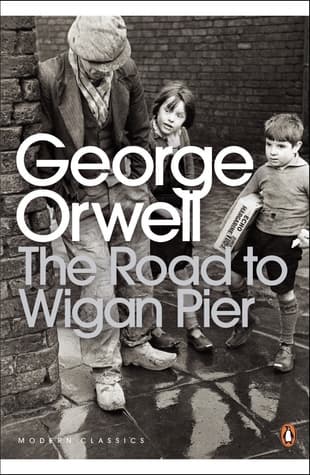
The Road to Wigan Pier cover
Archivist's Choice

The Road to Wigan Pier

George Orwell (1724)

Genre

Politics / Biography / History / Economics

Reading Time

270 min

Key Themes

See below

Track Your Reading

Sign in to track this book

Orwell's journey into 1930s Britain's industrial areas shows the harshness of poverty and class, creating a strong criticism of social injustice that still matters today.

Core Idea

George Orwell's "The Road to Wigan Pier" criticizes the poor conditions and unfairness faced by the working class in industrial northern England during the 1930s. He argues that their suffering is not just about money but also affects their minds and spirits. Through detailed personal stories, Orwell shows how poverty limits people and how machines and unemployment make people feel less human. He challenges middle-class socialists to understand working-class life instead of just discussing theories. He believes a real socialist movement must overcome class prejudice by respecting manual labor and moving past intellectual snobbery. If it fails, he warns, people might turn to fascism.
Reading time
270 min
Difficulty
Medium
✓ Read this if...
You want a powerful, firsthand account of poverty's human cost and a critical examination of class dynamics and political ideologies in 1930s Britain. Essential for understanding Orwell's political thought.
✗ Skip this if...
You are looking for a purely academic economic analysis or prefer not to engage with potentially uncomfortable reflections on class prejudice and socialist critiques.

Core idea

The central argument and framework that powers the entire book.

George Orwell's "The Road to Wigan Pier" criticizes the poor conditions and unfairness faced by the working class in industrial northern England during the 1930s. He argues that their suffering is not just about money but also affects their minds and spirits. Through detailed personal stories, Orwell shows how poverty limits people and how machines and unemployment make people feel less human. He challenges middle-class socialists to understand working-class life instead of just discussing theories. He believes a real socialist movement must overcome class prejudice by respecting manual labor and moving past intellectual snobbery. If it fails, he warns, people might turn to fascism.

At a glance

Reading time

270 min

Difficulty

Medium

Read this if...

You want a powerful, firsthand account of poverty's human cost and a critical examination of class dynamics and political ideologies in 1930s Britain. Essential for understanding Orwell's political thought.

Skip this if...

You are looking for a purely academic economic analysis or prefer not to engage with potentially uncomfortable reflections on class prejudice and socialist critiques.

Key Takeaways

1

The Invisible Chains of Poverty

Poverty's insidious grip extends beyond material deprivation, eroding dignity and spirit.

Quote

The people have been ground into the dust till they are not even aware of their own degradation.

Orwell states that poverty in industrial England was not just a lack of money. It was a force that took away people's humanity. The constant fight to survive, poor living conditions, and lack of hope created a mental burden as heavy as the physical one. This made many working-class poor seem to accept their situation, their spirit broken by an economic system designed to keep them down. It was a cycle of hopelessness where simply existing left no room for ambition or even knowing a better life was possible.

Supporting evidence

Orwell's vivid descriptions of the 'slum-dwellers' in northern England, who, despite their dire circumstances, often seemed resigned or even indifferent to their squalor, having adapted to a life of constant deprivation.

Apply this

When addressing social inequality, look beyond monetary solutions to also consider the psychological and social impacts of poverty. Policies should aim to restore dignity and agency, not just provide basic necessities, by fostering opportunities for growth and self-improvement.


social-inequalitydignity-of-laboreconomic-disempowerment
2

The Hypocrisy of Middle-Class Socialism

Orwell critiques the disconnect between middle-class socialists and the working-class they claim to represent.

Quote

The truth is that, to many middle-class Socialists, the working class are not human beings, but an abstraction.

Orwell, who was a socialist, strongly criticizes the way middle-class intellectuals approached socialism. He says that many socialists, despite good intentions, did not understand working-class life. Their ideas were often abstract, their language condescending, and their personal prejudices against the working class (from class snobbery and dislike of their perceived 'smell' or 'ugliness') prevented real unity. This separation alienated the people they wanted to help, making their efforts ineffective and causing distrust that harmed ...

Supporting evidence

Orwell's personal anecdotes of encountering middle-class socialists who expressed disgust at the physical realities of working-class life, or whose theoretical discussions bore little resemblance to the lived experiences of miners and laborers.

Apply this

For effective advocacy, bridge the gap between theory and lived experience. Engage directly with the communities being served, listen authentically, and challenge personal biases that might hinder genuine connection and understanding. Avoid imposing solutions from an ivory tower.

class-dividesocialist-critiqueintellectual-elitism
3

The Dignity of Manual Labor

Despite its harshness, manual labor imbues workers with a profound sense of purpose and camaraderie.

Quote

It is only when you see them in the mass, as they are when they are doing some kind of manual work, that you begin to understand their strength and their endurance.

Orwell's time living with miners and factory workers shows an unexpected dignity and strength in harsh conditions. He acknowledges the physical toll and dangers, but he observes that manual labor, especially mining, creates a unique bond and a clear sense of purpose. The men's physical ability, their reliance on each other, and their shared endurance build a powerful, often unspoken, camaraderie. This shared struggle, far from being entirely degrading, creates resilience and a distinct pride that intellectual work often lacks. This ch...

Supporting evidence

Orwell's detailed account of descending into the coal mines, describing the immense physical effort, the teamwork required, and the almost heroic endurance of the miners, contrasting it with the perceived softness of intellectual work.

Apply this

Recognize and value the contributions of all forms of labor. Policies should not only protect workers but also celebrate the inherent dignity and skill involved in manual trades, ensuring fair compensation and opportunities for respect that counteract societal biases.

working-class-pridelabor-solidarityhuman-endurance
4

The Peril of Mechanization

Technological advancement, without social foresight, can exacerbate unemployment and human suffering.

Quote

Every new improvement in machinery seems to throw more men out of work.

Orwell clearly shows how the increase of machines in the 1930s, especially in industries like coal mining, caused widespread unemployment and poverty. While machines made things more efficient, they also made human labor unnecessary, leaving thousands of skilled workers jobless. This technological progress, without social support or retraining, became a cruel irony for the working class. It created a situation where societal advancement directly led to individual ruin, showing a major flaw in capitalist development that valued profit ...

Supporting evidence

Orwell's observation of declining employment in the mines due to new machinery, leading to vast numbers of men with no work and no prospects, and the subsequent growth of 'dole queues' and 'tramping' in search of work.

Apply this

As automation and AI advance, policymakers must proactively address the potential for job displacement. This includes investing in comprehensive retraining programs, exploring universal basic income, and fostering new industries that create meaningful employment, ensuring technological progress benefits all, not just a few.

automation-impacttechnological-unemploymentsocial-responsibility
5

The Destructive Power of Class Prejudice

Deep-seated class prejudices hinder social progress and foster division.

Quote

The real problem is that we have got to get rid of this class-distinction business.

Orwell examines how widespread class prejudice is a basic barrier to social unity and real change. He admits his own middle-class biases, such as a dislike of the working-class 'smell,' recognizing these often unconscious prejudices as irrational but powerful. This class snobbery, he argues, is not just about money but about cultural and social signs that create a gap between groups. It prevents empathy, creates resentment, and weakens any group effort toward a fairer society, making real socialist ideals hard to achieve.

Supporting evidence

Orwell's candid self-reflection on his own initial revulsion towards the working class, particularly their perceived dirtiness and lack of refinement, which he later recognized as a product of his upbringing and a barrier to understanding.

Apply this

Actively challenge and dismantle internal and external class prejudices. Promote policies and cultural narratives that emphasize shared humanity and common interests across social strata. Encourage inter-class dialogue and experiences to break down inherited biases.

class-consciousnesssocial-prejudicecultural-barriers
6

The Psychological Burden of the Dole

Unemployment benefits, while necessary, create a soul-crushing dependency and idleness.

Quote

The most terrible thing about unemployment is not the poverty, but the idleness.

Orwell argues that the 'dole' (unemployment benefit) system, though it prevented starvation, caused a different kind of suffering: the mental pain of forced idleness. Men, used to hard work and the respect it brought, found themselves without purpose, their days long and boring. This lack of meaningful activity led to a deep sense of uselessness, depression, and loss of self-worth. It made men passive, their lives controlled by the state, further breaking their spirit and separating them from society. The physical lack was severe, but...

Supporting evidence

Orwell's observations of men on the dole in northern towns, who spent their days in aimless wandering, playing cards, or sitting in silence, their faces reflecting a deep weariness and lack of hope, despite having enough to eat.

Apply this

Social welfare programs should integrate opportunities for meaningful engagement, skill development, and community participation, not just financial aid. Focus on empowering individuals to regain agency and purpose, rather than simply sustaining their existence in idleness.

unemployment-impactpsychological-distresssocial-welfare
7

The Illusion of Progress

Material improvements can mask deeper societal failings and persistent inequalities.

Quote

The modern world is so ugly that we have to make it ugly in order to live in it.

Orwell questions the idea that small improvements in living standards, like cleaner factories or slightly better housing, mean real societal progress. He argues that beneath modern appearances, basic injustices and inequalities continue, often in more hidden ways. The 'ugliness' he mentions is not just about looks but about morality and spirit: the ugliness of a system that allows widespread poverty when there is plenty, and the ugliness of a culture that puts profit before human well-being. These 'improvements' often distract from de...

Supporting evidence

Orwell's critique of modern conveniences and 'progress' that often came at the cost of human dignity or genuine communal well-being, such as standardized housing that lacked character or the relentless pursuit of efficiency that dehumanized labor.

Apply this

Critically evaluate claims of progress. Look beyond surface-level statistics or material improvements to assess the genuine impact on human dignity, equality, and well-being. Advocate for holistic progress that addresses systemic injustices, not just cosmetic changes.

social-critiquefalse-progresssystemic-inequality
8

The Smell of Humanity

Sensory experiences, even unpleasant ones, are vital for empathy and understanding.

Quote

The characteristic smell of the working class is something that you have to get used to.

Orwell directly discusses a strong, often unspoken, part of class difference: the 'smell' of the working class. He confronts his own middle-class dislike of this perceived odor, seeing it as a powerful, almost unconscious barrier to empathy and unity. By forcing himself to face and overcome this sensory prejudice, he argues that truly understanding someone's difficulties means engaging with all parts of their reality, even uncomfortable ones. This 'smell' becomes a symbol for all the unappealing realities of poverty that detached inte...

Supporting evidence

Orwell's candid admission of his initial revulsion to the 'smell' associated with the working class, and his subsequent realization that overcoming this prejudice was essential to genuinely connect with and understand their lives.

Apply this

Seek out immersive experiences to understand different communities. Challenge sensory biases and discomforts as they can be subtle barriers to empathy. Prioritize direct, unfiltered engagement over abstract analysis to foster genuine understanding and connection.

sensory-biasempathy-buildingimmersive-journalism
9

The Importance of Personal Testimony

First-hand accounts are indispensable for exposing truth and driving social change.

Quote

I was trying to make my own observations, not merely to collect statistics.

Orwell's work shows the value of personal, immersive journalism over detached data analysis. By living among the working class, sharing their small meals, living in their poor housing, and going into their dangerous mines, he gained an understanding that no amount of academic research could provide. His honesty, about both the conditions and his own biases, gives his story great credibility and emotional impact. This direct involvement turns abstract social problems into clear, human experiences. It makes it impossible for readers to ...

Supporting evidence

The entire structure of 'The Road to Wigan Pier,' particularly the first half, which is a detailed, first-person account of Orwell's travels and experiences living with the working class, sharing their homes and working conditions.

Apply this

For effective advocacy and problem-solving, prioritize qualitative data and personal narratives alongside quantitative analysis. Encourage diverse voices and lived experiences to inform policy and public discourse, ensuring that human stories drive understanding and action.

investigative-journalismqualitative-researchsocial-advocacy
10

The Flawed Appeal of Fascism

Socialism's internal divisions and intellectual snobbery inadvertently make fascism more appealing.

Quote

One of the most important things in the world is to be able to make a decent living.

Orwell suggests that the socialist movement's own flaws — its internal disagreements, its intellectual distance, and its failure to appeal to the common person's immediate needs and biases — unintentionally made ideas like fascism more appealing. He saw that ordinary people, disappointed by what they saw as impractical and condescending socialist intellectuals, might be drawn to the superficial strength, unity, and promise of order offered by fascist movements. While fully condemning fascism, Orwell's analysis is a warning: a movement...

Supporting evidence

Orwell's critical examination of the various factions within the socialist movement and their inability to present a unified, appealing front to the working class, contrasted with the perceived decisiveness of authoritarian alternatives.

Apply this

Political movements must address the tangible needs and concerns of the populace, not just theoretical ideals. Foster unity, communicate clearly, and avoid intellectual elitism to build broad-based support and prevent the rise of extremist ideologies by offering practical, humane solutions.

political-polarizationextremismsocialist-strategy

Critical analysis

Notable Quotes

The truth is that many ordinary people, perhaps an actual majority, do still cling to the belief that 'Socialism' means sharing out, a sort of glorified Sunday-school treat with everybody forced to be unselfish and 'advanced'.

Orwell critiques common misconceptions about socialism in the working class.

The most evil masterminds are those who appear in their own eyes to be good.

Reflecting on the self-deception of oppressive systems and their leaders.

I sometimes think that the price of liberty is not so much eternal vigilance as eternal dirt.

Commenting on the squalid living conditions of the poor as a barrier to freedom.

The miner's job would be as much beyond my power as it would be to perform on the flying trapeze or to win the Grand National.

Orwell admires the physical endurance of coal miners he observed.

We are living in a world in which nobody is free, in which hardly anybody is secure, in which it is almost impossible to be honest and to remain alive.

A bleak assessment of societal conditions during the Great Depression.

The working classes smell.

Orwell quotes a middle-class prejudice he aims to dissect and challenge.

To the ordinary working man, the sort you would meet in any pub on Saturday night, Socialism does not mean much more than better wages and shorter hours and nobody bossing you about.

Describing the practical, rather than ideological, appeal of socialism to workers.

The real secret of class distinctions in the West... is summed up in four frightful words... The lower classes smell.

Analyzing deep-seated class prejudices beyond economic factors.

It is only when you meet someone of a different culture from yourself that you begin to realize what your own beliefs really are.

Orwell's reflection on his experiences among the working class in northern England.

The world is a raft sailing through space with, potentially, plenty of provisions for everybody; the idea that we must all cooperate and see to it that everyone does his fair share of the work and gets his fair share of the provisions, seems so blatantly obvious that one would say that no one could possibly fail to accept it unless he had some corrupt motive for clinging to the present system.

Arguing for the logical simplicity of socialist principles against entrenched interests.

You and I and the editor of the Times Lit. Supp., and the Nancy poets and the Archbishop of Canterbury and Comrade X, author of Marxism for Infants—all of us really owe the comparative decency of our lives to poor drudges underground, blackened to the eyes, with their throats full of coal dust, driving their shovels forward with arms and belly muscles of steel.

Acknowledging the debt society owes to manual laborers like miners.

The trouble with competitions is that somebody wins them.

Critiquing competitive capitalism and its inherent inequalities.

The real question is not whether the machine is good or bad, but who controls the machine.

Discussing industrialization and the distribution of its benefits.

I am not arguing, of course, that the working class are perfect; only that they are not so likely to be wrong as the middle class.

Orwell's defense of working-class perspectives against middle-class biases.

Quiz

Test Your Knowledge

Ready to see how well you understood this book? Take our interactive quiz with 10 questions.

10
Questions
~5
Minutes
?
Best Score

Key Questions (FAQ)

'The Road to Wigan Pier' is George Orwell's searing account of working-class life in the industrial heartlands of Yorkshire and Lancashire during the 1930s. It combines vivid descriptions of social injustice, slum housing, mining conditions, and unemployment with Orwell's political analysis and personal reflections.

About the author

George Orwell

Eric Arthur Blair, better known by his pen name George Orwell, was an English novelist, essayist, journalist, and critic. His work is characterised by lucid prose, social criticism, opposition to totalitarianism, and support of democratic socialism.