BookBrief
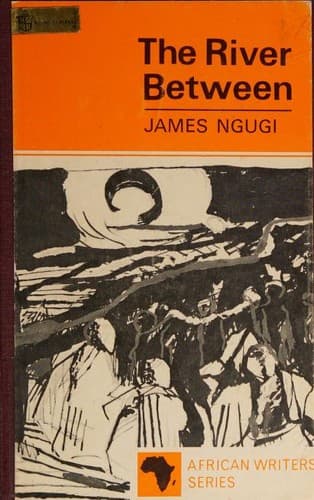
The River Between cover
Archivist's Choice

The River Between

Ngugi wa Thiongo

Genre

General

Reading Time

4 hours

Key Themes

See below

Track Your Reading

Sign in to track this book

In the heart of Kenya, two villages divided by a river and clashing traditions find their hopes for unity and progress embodied, then shattered, by the tragic love of a young man and woman caught between the old ways and the new.

Core Idea

Ngũgĩ wa Thiong'o's "The River Between" explores the profound and often tragic clash between traditional Gikuyu culture and the encroaching influence of Christian colonialism in early 20th-century Kenya. The novel centers on Waiyaki, a young man torn between his community's ancestral heritage and the perceived progress offered by Western education and religion. He endeavors to unite his people, who are increasingly divided by the new faith and its rejection of indigenous customs like female circumcision, a practice central to Gikuyu identity. His vision for reconciliation, however, is ultimately undermined by the very forces he seeks to bridge, highlighting the inherent difficulties in navigating cultural hybridity and the destructive power of ideological polarization. The narrative delves into the complexities of leadership, demonstrating how even well-intentioned efforts can be misinterpreted or exploited in times of profound cultural upheaval. Waiyaki's role as a 'chosen one' to lead his people to salvation, whether through traditional wisdom or modern education, becomes a heavy burden, ultimately leading to his tragic downfall. The novel implicitly critiques the colonial project's disruption of indigenous societies, not just through direct oppression but also by creating internal schisms that tear communities apart from within, making genuine unity an elusive dream.
Reading time
4 hours
Difficulty
Medium
✓ Read this if...
You are interested in post-colonial literature, the impact of colonialism on indigenous cultures, the complexities of leadership during cultural change, or narratives that explore the tension between tradition and modernity. It's also a great read if you appreciate stories of tragic heroes and the challenges of love across societal divides.
✗ Skip this if...
You prefer fast-paced plots with clear-cut resolutions. The novel is more meditative and focuses on character psychology and cultural dynamics, with a somewhat somber and ultimately tragic tone.

Core idea

The central argument and framework that powers the entire book.

Ngũgĩ wa Thiong'o's "The River Between" explores the profound and often tragic clash between traditional Gikuyu culture and the encroaching influence of Christian colonialism in early 20th-century Kenya. The novel centers on Waiyaki, a young man torn between his community's ancestral heritage and the perceived progress offered by Western education and religion. He endeavors to unite his people, who are increasingly divided by the new faith and its rejection of indigenous customs like female circumcision, a practice central to Gikuyu identity. His vision for reconciliation, however, is ultimately undermined by the very forces he seeks to bridge, highlighting the inherent difficulties in navigating cultural hybridity and the destructive power of ideological polarization.

The narrative delves into the complexities of leadership, demonstrating how even well-intentioned efforts can be misinterpreted or exploited in times of profound cultural upheaval. Waiyaki's role as a 'chosen one' to lead his people to salvation, whether through traditional wisdom or modern education, becomes a heavy burden, ultimately leading to his tragic downfall. The novel implicitly critiques the colonial project's disruption of indigenous societies, not just through direct oppression but also by creating internal schisms that tear communities apart from within, making genuine unity an elusive dream.

At a glance

Reading time

4 hours

Difficulty

Medium

Read this if...

You are interested in post-colonial literature, the impact of colonialism on indigenous cultures, the complexities of leadership during cultural change, or narratives that explore the tension between tradition and modernity. It's also a great read if you appreciate stories of tragic heroes and the challenges of love across societal divides.

Skip this if...

You prefer fast-paced plots with clear-cut resolutions. The novel is more meditative and focuses on character psychology and cultural dynamics, with a somewhat somber and ultimately tragic tone.

Key Takeaways

1

The Clash of Cultures

Traditional Gikuyu customs confront the encroaching influence of Christian missionaries.

Quote

Circumcision was the central rite in the tribal re-affirmation of the individual into the whole community. It was the symbol of a world, of a way of life, that had been there, would be there, forever.

The novel vividly portrays the cultural collision between the established Gikuyu traditions, particularly the rite of female circumcision, and the arrival of Christian missionaries who condemn these practices. This conflict is not merely external but internalizes within the community, dividing families and villages. The missionaries offer education and a new spiritual path, promising 'enlightenment' and 'salvation,' but at the cost of abandoning deeply rooted ancestral customs. This tension creates a schism, forcing characters to choo...

Supporting evidence

The narrative directly illustrates this through the establishment of mission schools, the condemnation of female circumcision by figures like Joshua, and the subsequent split between the adherents of traditional ways and Christian converts.

Apply this

When encountering new ideas or cultures, critically examine how they challenge your existing beliefs and values, and consider the potential for both growth and loss in adopting or rejecting them.
cultural-syncretismcolonialismcultural-identity
2

Leadership and Division

The struggle for community leadership exacerbates existing cultural and religious rifts.

Quote

A people's religion and culture are the roots of their life. If you cut them, they will wither and die.

The book explores how the contest for leadership, particularly between Waiyaki and Joshua, intensifies the divisions within the Gikuyu community. Waiyaki, initially seen as a potential unifier, aims to blend the best of both worlds – traditional wisdom and Western education – but struggles to gain full acceptance from either side. Joshua, a fervent Christian convert, seeks to impose a strict, uncompromising Christian doctrine, rejecting all traditional practices. This power struggle isn't just about who leads, but which ideology will ...

Supporting evidence

Waiyaki's attempts to establish his own school combining traditional and modern teachings, contrasted with Joshua's fervent sermons against Gikuyu customs and his excommunication of those who deviate.

Apply this

In leadership roles, prioritize understanding and empathy for diverse perspectives to foster unity, rather than deepening divisions through rigid adherence to a single ideology.

community-leadershipideological-conflictsocial-fragmentation
3

The Burden of the Chosen One

Waiyaki's perceived destiny to unite his people becomes an overwhelming and ultimately tragic burden.

Quote

Waiyaki was the symbol of hope, the hope for a future that would transcend the past, a future that would embrace the best of two worlds.

Waiyaki is burdened from childhood with the prophecy that he will be the savior of his people, destined to lead them out of their current crisis. This expectation, nurtured by his father Chege, drives his pursuit of education and his vision for a united Gikuyu society that selectively integrates aspects of Western learning while preserving Gikuyu identity. However, this 'chosen one' status proves to be a double-edged sword. It isolates him, sets unrealistic expectations, and ultimately makes him a target when his actions, particularly...

Supporting evidence

Chege's constant reminders to Waiyaki about the prophecy, Waiyaki's dedication to establishing a new school, and the community's eventual turning against him for his perceived transgressions.

Apply this

Be wary of placing undue expectations or 'savior' roles on individuals, as it can lead to immense pressure, isolation, and ultimately hinder genuine collective progress.

prophecyhero's-journeytragic-hero
4

Love Across the Divide

The forbidden love between Waiyaki and Nyambura symbolizes the potential for unity, yet also its tragic impossibility.

Quote

Love was a thing of the heart, a thing of the body, a thing of the soul. It knew no boundaries, no tribe, no custom.

The relationship between Waiyaki, a proponent of Gikuyu heritage, and Nyambura, the daughter of the staunch Christian convert Joshua, is central to the novel's thematic exploration of division and unity. Their love transcends the rigid boundaries imposed by their respective communities and ideologies. Nyambura, despite her Christian upbringing, finds herself drawn to Waiyaki's vision and the beauty of traditional life, while Waiyaki is captivated by her spirit. Their mutual affection represents a glimmer of hope that the two warring f...

Supporting evidence

The development of their secret relationship, the community's outrage upon its discovery, and their eventual banishment and presumed death at the hands of the villagers.

Apply this

Recognize that genuine human connection can bridge ideological gaps, but also understand that deeply entrenched societal prejudices can tragically prevent such connections from flourishing.

forbidden-loveintercultural-relationshipssocial-prejudice
5

Education as a Double-Edged Sword

Western education offers progress but also alienates individuals from their cultural roots.

Quote

Education was the key to the future, the key to progress. But what progress, if it meant forgetting who you were?

The novel portrays education as a powerful, yet ambiguous force. For Waiyaki, acquiring Western knowledge is crucial for his people's advancement and for understanding the colonizers. He believes it can be integrated with traditional Gikuyu wisdom to create a stronger, more resilient community. However, the mission schools, while providing literacy and new skills, actively seek to dismantle Gikuyu culture, teaching that traditional customs are 'primitive' and 'sinful.' This creates a dilemma for those who attend: they gain new opportu...

Supporting evidence

Waiyaki's journey through mission schools, his desire to build his own school that respects Gikuyu traditions, and the contrasting outcomes for characters like Joshua who fully embrace mission education and reject their past.

Apply this

When pursuing knowledge or adopting new systems, actively seek ways to integrate them with your existing cultural and personal identity, rather than allowing them to erase it.

westernizationcultural-assimilationpostcolonial-education
6

The Power of Tradition

Ancestral customs, though challenged, remain a potent force for identity and resistance.

Quote

The hills were sacred. They were the symbol of a people's collective being, a people's history, a people's hope.

Despite the relentless pressure from Christian missionaries and the allure of Western education, the novel demonstrates the enduring power and significance of Gikuyu traditions. Practices like female circumcision, while controversial, are deeply intertwined with the community's sense of identity, coming-of-age rituals, and spiritual beliefs. For many, abandoning these customs is seen as a betrayal of their ancestors and a loss of what makes them Gikuyu. The resistance to change, embodied by characters like Chege and the elders, is not...

Supporting evidence

The passionate defense of female circumcision by the elders and the 'Kiama,' the traditional council, and the unwavering belief in the spiritual significance of the land.

Apply this

Respect and understand the deep-seated significance of cultural traditions, even if they differ from your own, as they often form the bedrock of a community's identity.

cultural-preservationindigenous-knowledgeancestral-worship
7

The Hypocrisy of Conversion

Some converts embrace Christianity for personal gain or out of fear, rather than genuine faith.

Quote

They had taken the white man's God, but they had not taken the white man's heart. They were still Gikuyu, only now they were Gikuyu with a different kind of anger.

The novel subtly critiques the motivations behind some conversions to Christianity. While some characters like Joshua genuinely believe in the new faith, others seem to adopt it for pragmatic reasons, such as access to education, economic opportunities, or social status within the new colonial order. This often leads to a superficial embrace of Christian tenets, where the outward display of piety masks underlying resentments, cultural biases, and even a deeper adherence to traditional superstitions. The extreme zealotry of some conver...

Supporting evidence

Joshua's rigid adherence to Christian doctrine and his unforgiving stance against any traditional practice, even towards his own daughters, suggesting an underlying harshness rather than pure compassion.

Apply this

When evaluating religious or ideological shifts, look beyond outward displays and consider the deeper motivations and potential for hypocrisy or self-interest.

religious-conversioncolonial-mentalitysocial-climbing
8

The Landscape as a Character

The hills and rivers are not just settings but embody the spiritual and historical essence of the Gikuyu people.

Quote

The two ridges were the world, and in between them was the river Honia, a river of life, a river of sorrow, a river of hope.

The physical landscape of the two ridges, Kameno and Makuyu, and the river Honia that flows between them, are imbued with profound symbolic meaning. The ridges represent the ancestral homes, the spiritual heartland of the Gikuyu, and become physical manifestations of the community's division. The river Honia, meaning 'healer' or 'restorer,' paradoxically acts as a separator, highlighting the growing chasm between traditionalists and converts. The sacred hills, especially their peaks, are sites of ancient rituals and embody the collect...

Supporting evidence

The frequent descriptions of the ridges, the river, and the sacredness of the hills, particularly during communal gatherings and Waiyaki's moments of reflection.

Apply this

Recognize the profound impact of physical environments on cultural identity and collective memory, and consider how landscapes can symbolize deeper societal divisions or connections.

environmental-symbolismsacred-landscapecultural-geography
9

The Limits of Reconciliation

Despite genuine efforts, deep-seated divisions can make true reconciliation impossible.

Quote

The time for talking was over. The time for choice had come. And in that choice lay the seeds of their destruction.

Waiyaki's central ambition is to unite his people, to find a 'third way' that synthesizes the best of Gikuyu tradition and Western knowledge. He genuinely believes in reconciliation and understanding between the warring factions. However, the novel tragically illustrates the limits of such efforts when confronted with entrenched ideological and cultural divides, fueled by external colonial forces and internal resistance to change. The community's inability to forgive Waiyaki's perceived transgressions, particularly his relationship wi...

Supporting evidence

Waiyaki's consistent efforts to teach and unite, contrasted with the unwavering opposition from both the traditionalist Kiama and the fervent Christians like Joshua, culminating in his condemnation.

Apply this

Understand that while reconciliation is a noble goal, some societal divisions, especially when manipulated by external forces, can become so profound that genuine unity becomes an insurmountable challenge.

social-reconciliationunresolved-conflictpolarization

Critical analysis

Notable Quotes

The white man's God was not the same as the God of the black people.

Reflecting on the clash of cultures and religions brought by colonialism.

Circumcision was the biggest thing in the tribe, for it was the gate to manhood.

Describing the profound cultural significance of the initiation rite.

A people's spirit was not a thing to be changed overnight.

Highlighting the resilience of cultural identity in the face of external pressures.

He felt that the new faith was not for him, for it denied the very things that made him a man.

Muthoni's internal conflict between traditional values and Christian teachings.

There was a river flowing between them, and the river was the divide.

Metaphor for the growing chasm between the two ridges, representing conflicting ideologies.

The land was everything. It was the food, the drink, the air, and the life.

Emphasizing the deep spiritual and practical connection the community has with their land.

Education was the key, the key to the white man's power and wisdom.

Joshua's belief in the transformative power of Western education.

He saw a future where the people would be united, a future where the river would be crossed.

Waiyaki's vision for reconciliation and unity between the divided communities.

The new religion brought division, not peace.

Observing the actual impact of Christianity on the community.

To forget the past was to lose oneself.

A reflection on the importance of remembering one's heritage and history.

Love was not enough to bridge the chasm between two worlds.

Reflecting on the tragic outcome of Muthoni's attempt to reconcile traditions through personal choice.

The old ways were not necessarily wrong, nor were the new ways necessarily right.

A nuanced perspective on the clash between tradition and modernity.

He felt like a man caught between two currents, unable to choose which way to go.

Waiyaki's internal struggle to navigate the conflicting demands of tradition and progress.

Quiz

Test Your Knowledge

Ready to see how well you understood this book? Take our interactive quiz with 10 questions.

10
Questions
~5
Minutes
?
Best Score

Key Questions (FAQ)

The central conflict revolves around the clash between traditional Gikuyu culture, epitomized by rituals like female circumcision, and the encroaching influence of Christianity and Western education. This division creates a rift within the community and within families, forcing characters to choose sides and grapple with their identities.

About the author

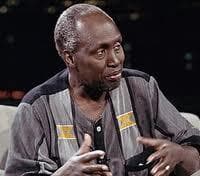
Ngugi wa Thiongo

Ngũgĩ wa Thiong'o is a Kenyan author and academic who writes primarily in Gikuyu and who formerly wrote in English. He has been described as having been "considered East Africa's leading novelist". His work includes novels, plays, short stories, and essays, ranging from literary and social criticism to children's literature. He is the founder and editor of the Gikuyu-language journal Mũtĩiri. His short story The Upright Revolution: Or Why Humans Walk Upright, is translated into 100 languages from around the world.