BookBrief
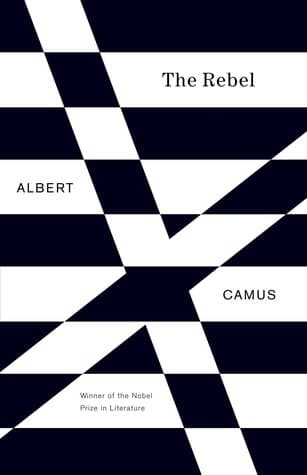
The Rebel cover
Archivist's Choice

The Rebel

Albert Camus

Genre

Politics / History / Philosophy

Reading Time

320 min

Key Themes

See below

Track Your Reading

Sign in to track this book

Camus examines humanity's urge to revolt, from its ancient roots to modern history, showing how the desire for freedom often leads to new forms of oppression.

Core Idea

Albert Camus's "The Rebel" explores the philosophy behind rebellion, distinguishing it from revolution. Camus argues that rebellion is an assertion of human dignity, a refusal of unacceptable conditions. It is a 'no' that also affirms a 'yes' to a shared human value or limit. He traces rebellion's history from individual metaphysical protests against life's absurdity and the death of God to collective political revolutions, especially those of the 20th century. He shows how these revolutions often betray the original spirit of rebellion by embracing nihilism, absolute freedom, and justifying murder for abstract ideals. Camus argues that true rebellion, unlike totalitarian revolution, always considers its inherent limits and respects human life and solidarity. It is a constant balance between freedom and justice, a struggle for moderation against extreme ideologies and the worship of history. The book is a reflection on the human condition, the ethics of action, and the search for meaning in a world without inherent purpose. It advocates for 'Mediterranean thought,' which values clear thinking, balance, and recognizing shared humanity.
Reading time
320 min
Difficulty
Hard
✓ Read this if...
You are interested in the philosophical distinction between rebellion and revolution, the ethical implications of political action, or a deep dive into existentialist thought beyond individual alienation, particularly how it intersects with history and ethics.
✗ Skip this if...
You are looking for a straightforward historical account of rebellions, a simple guide to political activism, or prefer highly empirical and less abstract philosophical arguments.

Core idea

The central argument and framework that powers the entire book.

Albert Camus's "The Rebel" explores the philosophy behind rebellion, distinguishing it from revolution. Camus argues that rebellion is an assertion of human dignity, a refusal of unacceptable conditions. It is a 'no' that also affirms a 'yes' to a shared human value or limit. He traces rebellion's history from individual metaphysical protests against life's absurdity and the death of God to collective political revolutions, especially those of the 20th century. He shows how these revolutions often betray the original spirit of rebellion by embracing nihilism, absolute freedom, and justifying murder for abstract ideals. Camus argues that true rebellion, unlike totalitarian revolution, always considers its inherent limits and respects human life and solidarity. It is a constant balance between freedom and justice, a struggle for moderation against extreme ideologies and the worship of history. The book is a reflection on the human condition, the ethics of action, and the search for meaning in a world without inherent purpose. It advocates for 'Mediterranean thought,' which values clear thinking, balance, and recognizing shared humanity.

At a glance

Reading time

320 min

Difficulty

Hard

Read this if...

You are interested in the philosophical distinction between rebellion and revolution, the ethical implications of political action, or a deep dive into existentialist thought beyond individual alienation, particularly how it intersects with history and ethics.

Skip this if...

You are looking for a straightforward historical account of rebellions, a simple guide to political activism, or prefer highly empirical and less abstract philosophical arguments.

Key Takeaways

1

The Metaphysics of Rebellion

Rebellion is an affirmation of human dignity against an absurd world.

Quote

I rebel—therefore we exist.

Camus believes rebellion is not just destructive; it is a basic human response to life's absurdity and unfairness. It affirms a shared human value, a 'limit' the rebel will not cross, even when faced with an indifferent world or oppressive systems. This 'no' to an intolerable situation also implies a 'yes' to something more valuable within humanity. It is a spontaneous stand against humiliation, a demand for clarity, and a recognition of common dignity that goes beyond individual suffering. By saying 'no,' the rebel sets a boundary, a...

Supporting evidence

Camus's analysis of the slave who, despite a life of subservience, reaches a point where he says 'no' to the master, risking death to assert a fundamental right and dignity.

Apply this

Recognize that moments of personal or collective defiance, even seemingly small ones, often stem from a deep-seated affirmation of value and a refusal to tolerate an unacceptable condition. Use this understanding to empathize with and analyze acts of rebellion, seeing beyond mere destruction to the underlying assertion of human worth.

absurdityhuman-dignitynihilismsolidarity
2

From Rebellion to Revolution: The Dangerous Leap

Revolution, unlike rebellion, often seeks to establish an absolute, leading to tyranny.

Quote

The rebel wants to be all or nothing; he wants to be at one with the world or to destroy it.

Camus distinguishes between rebellion and revolution. Rebellion asserts limits and defends shared human values. Revolution, however, often tries to go beyond these limits, aiming for a complete change of society and human nature. This pursuit of the absolute, whether a 'city of man' or a perfect future, leads to the worship of history, reason, or a specific ideology. In doing so, it justifies any method to achieve its goals, sacrificing individual lives and present freedoms for a promised future. This shift from a relative 'no' to an ...

Supporting evidence

Camus's extensive historical analysis of the French Revolution, particularly the Reign of Terror, where the pursuit of absolute freedom and virtue led to mass executions and the establishment of a new form of tyranny.

Apply this

Be wary of ideologies or movements that promise absolute solutions or demand the sacrifice of present freedoms for a distant, perfect future. Critically examine the means employed by any movement, understanding that the pursuit of an absolute ideal often corrupts the initial noble impulse.

totalitarianismutopianismideologyhistorical-determinism
3

The Deicide of Modernity

The death of God paved the way for the deification of man and history.

Quote

When man kills God, he kills himself.

Camus argues that the modern age's rejection of God, while seemingly freeing, removed the ultimate source of morality and limits. In the absence of God, humanity began to worship itself, reason, or history. This 'deicide' led to a dangerous shift where humans, trying to become God, felt justified in imposing their will absolutely, often through violence. If there is no higher moral authority, all values become relative, and the only remaining 'value' can be power. This nihilistic outcome allows for mass murder and oppression to be rat...

Supporting evidence

Camus connects Nietzsche's proclamation of God's death to the rise of totalitarian ideologies (Nazism, Stalinism) that sought to replace divine authority with an absolute human-made order, often involving the extermination of 'unfit' individuals or classes.

Apply this

Reflect on the sources of your own moral framework. Understand that the absence of a transcendent moral anchor can lead to a dangerous relativism where 'anything is permitted,' potentially justifying extreme actions. Seek to establish internal limits and values that are not solely dependent on human consensus or fleeting historical trends.

nihilismatheismexistentialismmoral-relativism
4

The Limits of Absolute Freedom

True freedom recognizes limits; absolute freedom leads to servitude.

Quote

Absolute freedom is the right of the strongest, not the value of the just.

Rebels initially seek freedom from oppression. However, Camus warns that pursuing absolute freedom, without moral or humanistic limits, inevitably becomes a new form of servitude. When freedom is an end in itself, separate from justice or shared human values, it can justify dominating others. The revolutionary who tries to break all chains often ends up creating new ones, believing that a 'new man' or 'new society' justifies any means. This is because true freedom exists within mutual recognition and respect for others' dignity, while...

Supporting evidence

The Jacobin terror during the French Revolution, where the pursuit of 'virtue' and 'freedom' led to the guillotine for those deemed enemies of the people, demonstrating how an abstract ideal of freedom can become a tool of oppression.

Apply this

When advocating for freedom, always consider its boundaries and implications for others. Recognize that individual liberties must be balanced with collective responsibilities and a respect for shared human dignity. Be skeptical of any movement that promises unlimited freedom without acknowledging the necessary ethical constraints.

libertytyrannyethicsindividualism
5

Art as an Act of Rebellion

Art provides a limited, creative rebellion against the world's disorder.

Quote

Art is a revolt against the world, but it is a revolt which accepts the world.

Camus views art as a unique form of rebellion. Unlike political revolution, which often destroys and replaces, art reorders and illuminates the world without denying its inherent absurdity or suffering. The artist, by giving form and meaning to chaos, creates a unified world within the art itself, offering a brief victory over disorder. This act of creation is a 'yes' to life, even when it lacks inherent meaning, and a 'no' to complete surrender to nihilism. Art does not promise to change the world, but it offers a space for thought, ...

Supporting evidence

Camus discusses the artist's struggle to find unity and meaning in the fragmented experience of life, citing examples like the Greek tragedies or Dostoyevsky, who confront suffering but ultimately impose a meaningful order or raise profound questions through their work.

Apply this

Engage with art not just as entertainment, but as a profound human response to the world's challenges. Consider how artistic creation, in any form, can be an act of resistance, an assertion of meaning, and a way to connect with shared human experiences without resorting to destructive ideologies.

aestheticscreativitymeaning-makingnihilism-resistance
6

The Criminal as Metaphysical Rebel

Some criminals embody a rebellion against the divine or societal order.

Quote

The rebel, without ceasing to be an individual, is at one with a species.

Camus examines figures like Sade and the 'gentle murderers' (those who kill based on principle or a misguided sense of justice) as a specific type of 'metaphysical rebel.' These individuals, by defying established moral or divine order, are not just committing crimes; they are trying to assert their own will as the ultimate authority or to expose the hypocrisy of the existing order. While their actions are often destructive and wrong, Camus studies their motives, not to excuse them, but to understand the philosophical reasons for thei...

Supporting evidence

Camus's analysis of the Marquis de Sade, who, imprisoned and alienated, sought to establish a new, inverted morality through absolute transgression and the systematic destruction of others, as a radical rejection of a God he believed was absent or cruel.

Apply this

When encountering extreme acts of defiance or transgression, attempt to understand the underlying philosophical or existential motivations, rather than simply dismissing them as pure evil. This doesn't mean condoning the acts, but rather seeking to grasp the full spectrum of human rebellion and its potential distortions.

transgressionnihilismmoral-philosophyexistential-revolt
7

Historical Nihilism: The Justification of Murder

When history becomes an absolute, it justifies any violence in its name.

Quote

The greatest crime is not to kill, but to justify murder.

Camus identifies historical nihilism as one of modern thought's most dangerous results. This happens when a particular historical narrative or future outcome is made absolute, becoming the sole measure of value and truth. In this framework, any act, no matter how violent or dehumanizing, can be justified if it serves the supposed 'progress' of history or the inevitable triumph of a specific ideology. This leads to the terrible conclusion that murder, torture, and oppression are not just regrettable necessities but are morally acceptab...

Supporting evidence

Camus dissects the logic of revolutionary tribunals and the 'liquidation' of classes under Soviet communism, showing how the belief in historical inevitability and the absolute truth of a Marxist future led to the systematic extermination of millions in the name of progress.

Apply this

Be intensely skeptical of any argument that justifies present suffering or violence by promising a perfect future. Always question the 'inevitability' of historical progress and challenge narratives that dehumanize individuals or groups for the sake of an abstract ideal. Prioritize present justice and human dignity over future utopian promises.

totalitarianismideologyhistorical-determinismpolitical-violence
8

The Mediterranean Thought: A Call for Measure

Rebellion should embrace moderation and a respect for human limits.

Quote

The true passion of the twentieth century is servitude.

Against the extremes of European nihilism and totalitarianism, Camus proposes 'Mediterranean thought' – a philosophy rooted in balance, measure, and recognizing inherent limits. This perspective, drawing on ancient Greek wisdom, emphasizes the world's beauty, the value of life in the present, and the importance of shared human experience. It is a rebellion that says 'no' to the absolute and 'yes' to the relative, acknowledging that while injustice must be fought, the fight itself must not destroy the very values it seeks to protect. T...

Supporting evidence

Camus contrasts the 'excessive' and 'cold' logic of German philosophical systems (Hegel, Marx) that he argues led to totalitarianism, with the 'warm' and 'measured' wisdom of ancient Greek thought, which understood the importance of limits and moderation.

Apply this

Cultivate a sense of balance and moderation in your convictions and actions. Avoid falling prey to all-or-nothing thinking or ideologies that demand absolute adherence. Embrace the complexity of moral and political issues, seeking solutions that honor human dignity and present realities, rather than abstract ideals.

moderationhumanismbalanceancient-philosophy
9

Solidarity in Shared Suffering

Rebellion creates a bond among individuals, affirming a common humanity.

Quote

I rebel—therefore we exist.

For Camus, rebellion naturally leads to solidarity. When an individual says 'no' to an intolerable condition, they are not only asserting their own dignity but also implicitly defending a value shared by all humanity. The slave who rebels against his master does so not just for himself, but for a universal principle of human worth. This shared 'no' creates a bond, a recognition of a common struggle and a common desire for justice. It moves beyond individual protest to a collective affirmation of human limits and dignity. This solidari...

Supporting evidence

Camus's foundational argument that the 'I rebel—therefore we exist' statement implies that the rebel's 'no' is not isolated but is an affirmation of a common human nature that refuses to be completely subjugated.

Apply this

Seek out and acknowledge the common ground with others in moments of shared injustice or struggle. Understand that collective action, when rooted in a defense of fundamental human values, can be a powerful force for positive change and a source of profound human connection.

human-dignityempathycollective-actionsocial-justice
10

The Endless Struggle for Justice

True rebellion is an ongoing, imperfect process, not a final destination.

Quote

The only way to deal with an unfree world is to become so absolutely free that your very existence is an act of rebellion.

Camus ultimately sees rebellion not as a way to achieve a perfect, ideal state, but as a continuous process. No final revolution will end all injustice; life's absurd nature and humanity's capacity for both good and evil mean that the struggle for justice and dignity is ongoing. The true rebel understands that perfection is impossible and that pursuing it often leads to tyranny. Instead, they embrace the constant tension, the 'lucid despair,' and the continuous need to reassert limits and defend human values in an imperfect world. Thi...

Supporting evidence

Camus's rejection of Marxist historical determinism and any philosophy that posits an end-of-history scenario. He emphasizes the cyclical nature of human struggle and the need for constant, measured resistance.

Apply this

Adopt a long-term perspective on social and political change. Recognize that progress is often incremental and requires sustained effort, rather than expecting a single, transformative event. Be prepared for ongoing challenges and maintain a commitment to justice without succumbing to cynicism or the allure of absolute solutions.

perpetual-rebellionexistentialismsocial-changepolitical-philosophy

Critical analysis

Notable Quotes

The rebel is a man who says no, but whose refusal does not imply a renunciation. He is also a man who says yes, from the moment he makes his first gesture of rebellion.

Defining the essence of rebellion.

Absolute freedom is the right of the strongest, and it is not freedom but the right of might.

Critiquing the concept of absolute freedom.

The end of history is not freedom but justice.

Discussing the ultimate goals of human striving.

Rebellion, though it is the author of limits, has no limits itself in the sense that it can be found in any man, at any time.

Exploring the universality of rebellion.

To be a man is, precisely, to be responsible. It is to feel shame at the sight of poverty as one feels pride at a victory.

Reflecting on human responsibility.

In absurdism, the only true freedom is the freedom to choose your own chains.

Connecting rebellion to the philosophy of absurdism.

The slave who throughout the whole of history has fought against his masters, makes his own history.

Emphasizing the agency of the oppressed in shaping history.

The revolutionary spirit, on the contrary, is a spirit of moderation, a spirit which respects the limits and which knows that its triumph lies in its capacity to recognize them.

Distinguishing true revolutionary spirit from extremism.

Man is the only creature who refuses to be what he is.

Highlighting humanity's capacity for self-transcendence and rebellion.

Every act of rebellion expresses a nostalgia for innocence and an appeal to the essence of being.

Unpacking the deeper motivations behind rebellion.

The will to power is not a will to life but a will to death.

Critiquing the destructive nature of unchecked power.

The revolutionary is not a man of violence, but a man of justice.

Redefining the true nature of a revolutionary.

From the moment that man is no longer alone, but two, he is already in a state of rebellion.

Illustrating how solidarity is inherent in rebellion.

In order to exist, man must rebel, but rebellion must respect the limits that it discovers in itself.

Summarizing the essential tension and balance in rebellion.

Quiz

Test Your Knowledge

Ready to see how well you understood this book? Take our interactive quiz with 10 questions.

10
Questions
~5
Minutes
?
Best Score

Key Questions (FAQ)

Camus argues that rebellion is an inherent part of human nature, a necessary response to the absurd conditions of existence and an affirmation of human dignity. However, he also explores how historical revolutions, in their attempt to achieve absolute freedom, often betray their original ideals and descend into new forms of tyranny and nihilism.

About the author

Albert Camus

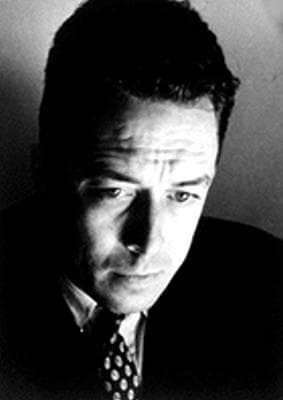
Albert Camus was a French-Algerian philosopher, author, dramatist, and journalist. He was the recipient of the 1957 Nobel Prize in Literature at the age of 44, the second-youngest recipient in history. His works include The Stranger, The Plague, The Myth of Sisyphus, The Fall, and The Rebel.