“Poverty is not caused by an increase of population, but by the increase of Riches, which is owned by those who profit by the poverty of others.”
— Owen's explanation of wealth disparity to his colleagues.

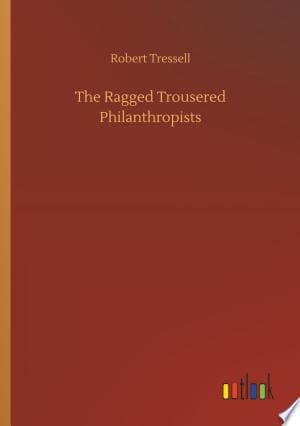
Robert Tressell (2018)
Genre
Politics / Historical Fiction / Philosophy
Reading Time
15-20 hours
Key Themes
See below
Sign in to track this book
In an Edwardian English town, a house painter's relentless socialist arguments expose the self-defeating 'philanthropy' of his working-class colleagues who unknowingly perpetuate their own exploitation.
The story starts in the fictional town of Mugsborough, focusing on painters and decorators working for Rushton & Co. The book begins with a detailed description of a pre-election dinner hosted by the town's rich, including Mayor Sweater and the wealthy Mr. Rushton. This scene immediately shows the clear social divide: the rich feast while working men like Frank Owen, George Barrington, and Bert White struggle daily to earn enough money. Owen, a socialist and skilled craftsman, often tries to explain the causes of their poverty to his coworkers, who mostly accept their situation or have traditional, often wrong, ideas about economics and class. The men are always pressured to work faster for less pay, living in fear of unemployment and the workhouse.
Frank Owen, frustrated that his workmates do not understand the systemic nature of their poverty, creates a practical demonstration he calls 'The Great Money Trick.' Using pieces of bread as raw materials and coins as money, he shows how capitalists, by controlling production and money, take the full value of workers' labor. He explains how wages are kept low, leading to ongoing poverty for the working class, while employers get rich. Despite Owen's clear explanation, many colleagues, such as Philpot and Easton, remain doubtful or dismissive. They prefer to blame foreign competition, alcohol, or individual laziness for their problems, rather than the capitalist system. This scene is central to the novel's teaching purpose.
The daily lives of the painters and decorators are shown in harsh detail. They are paid by the hour, often for less time than they work, and are frequently fired without warning, only to be rehired later for lower wages. Bert White, a young apprentice, struggles to support his family on his small earnings. Philpot, an older worker, faces wage cuts and the constant fear of not providing for his wife and children. Owen, though skilled, also faces economic pressure and finds it hard to support his family. The men must buy their tools from the firm at high prices, reducing their small incomes further. The fear of the workhouse, a dreaded place for the poor, hangs over their lives, making them accept any terms, no matter how unfair.
Throughout the novel, Owen uses every chance to explain socialist principles to his workmates during lunch or after hours. He argues that land and production methods should be owned by everyone, not private individuals, to ensure fair wealth distribution. He exposes the hypocrisy of politicians and employers who promote thrift and hard work while exploiting their employees. However, his efforts often meet with apathy, ridicule, or fixed conservative views. Some workers, like Easton and Crass, repeat the opinions of their bosses or the local newspaper, believing their poverty is unavoidable or their own fault. Others, like Philpot, are more open to Owen's ideas but are too tired by life to challenge the system. Owen's discussions show the great difficulty of political awareness among the working class.
The uncertainty of the workers' lives is sadly shown by several instances of illness and death. Easton's wife becomes very ill, and because of their poverty, they cannot afford good medical care, leading to her slow decline and death. Philpot's son also gets sick, an illness that could have been prevented or treated with better living conditions and healthcare access. These events are not isolated; they are shown as direct results of the exploitative system. The novel emphasizes that the working class, without proper sanitation, nutrition, and medical access, is affected more by disease, while the wealthy are largely untouched by such hardships. These personal tragedies make the statistical realities of poverty and injustice Owen discusses more real.
As a local election nears, the political actions of Mugsborough's rich are revealed. Candidates from both Liberal and Conservative parties, all wealthy businessmen, make big promises to the working class, while secretly supporting the system that benefits them. The workers are swayed by speeches, free beer, and the fear of losing their jobs if they do not vote 'correctly.' Owen tries to explain that neither party truly represents their interests, advocating for a socialist change. However, his pleas are mostly ignored. Many workers, from habit, ignorance, or fear, vote for the very people who exploit them, continuing the 'ragged trousered philanthropists' cycle of self-sacrifice for their masters' benefit. The election is shown as a charade, designed to keep the existing power structure.
Frank Owen, a skilled craftsman and a strong supporter of socialism, faces increasing personal hardship. His family, especially his wife, suffers because of his limited income and his dedication to his political ideas, which often leaves him tired and preoccupied. Owen often works overtime, frequently without proper pay, to make ends meet. The mental stress of constantly fighting the ignorance and apathy of his workmates, combined with the physical demands of his job and poor living conditions, severely affects his health. He starts to show signs of consumption (tuberculosis), a common and often fatal disease among the poor at the time. Despite his worsening health, Owen stays committed to his cause, seeing the suffering around him as more proof of the need for systemic change.
A major event happens with the arrival of George Barrington, a new worker at Rushton & Co. Barrington first appears as a common laborer, but it is soon clear that he is a wealthy, educated socialist who has disguised himself to experience working men's lives and spread socialist ideas. Barrington quickly sees Owen's intelligence and shares his political beliefs, becoming Owen's only true confidant and ally among the group. He gives Owen financial help, medical advice, and moral support, easing some of Owen's immediate burdens. Barrington's presence offers a bit of hope, as he can explain socialist arguments with authority and provide practical help, showing that not all educated or wealthy people are involved in exploitation.
The dreaded workhouse, a symbol of ultimate poverty, becomes a reality for some characters. Philpot, after a series of misfortunes and illnesses, cannot work and is eventually forced to consider the workhouse, a fate he had always feared. The novel describes the degrading conditions of the workhouse, where families are separated, personal items are taken, and inmates face harsh rules and forced labor. This portrayal strengthens Owen's arguments about the systemic cruelty of a society that allows such places to exist while great wealth is held by a few. The workhouse serves as a clear reminder of the consequences of unemployment and illness for those without social support.
As Owen's consumption gets worse, he becomes very weak and can no longer work effectively. Despite his physical decline, his intellectual and political passion remains strong. He uses his remaining strength to write a detailed book explaining his socialist theories, hoping his work will educate future generations. Barrington provides him with a quiet space and financial support, allowing Owen to focus on his important work. The manuscript, titled 'The Ragged Trousered Philanthropists,' tries to expose the injustices of capitalism and present a clear path to a socialist society. Owen works quickly, driven by the urgency of his message and the knowledge that his time is limited. The novel suggests that this manuscript is the very book the reader is holding.
Frank Owen eventually dies from his illness, prematurely, due to poverty, overwork, and lack of good medical care. His death is a sad result of the systemic injustices he fought. However, his ideas are not lost. George Barrington, his loyal friend and fellow socialist, makes sure that Owen's unfinished manuscript, 'The Ragged Trousered Philanthropists,' is saved and will be published. The novel ends with both despair and hope: despair for the immediate suffering and death of Owen and many others like him, but hope that Owen's ideas, clearly stated in his writings, will eventually reach and inspire the working class to demand a better future and to finally shed their 'ragged trousers' of poverty and exploitation. The final pages stress the lasting power of ideas to bring about change.
The Protagonist
Owen consistently strives to educate his peers, facing increasing personal hardship and illness, but ultimately leaves behind a powerful legacy of his socialist ideas.
The Supporting
Barrington transitions from an observer to an active supporter of Owen, becoming the guardian of Owen's socialist legacy.
The Supporting
Philpot experiences increasing hardship, moving from skepticism to a partial understanding of Owen's ideas, ultimately facing the indignity of poverty and the workhouse.
The Supporting
Crass remains a consistent antagonist, unwavering in his ignorance and cruelty, never learning or changing his views.
The Supporting
Easton moves from entrenched conventional thinking to a more open, albeit painful, understanding of systemic injustice after personal tragedy.
The Supporting
Bert is portrayed as a young man struggling to survive, showing potential for socialist understanding while remaining trapped by economic necessity.
The Mentioned
Sweater remains a static symbol of the detached and self-serving ruling class.
The Antagonist
Rushton remains a consistent antagonist, never showing remorse or changing his exploitative practices.
The main theme of the novel is the unfairness and exploitation within the capitalist system. Tressell details how workers are consistently deprived of the full value of their labor, kept poor, and denied basic human dignity. Through Owen's 'Great Money Trick' and the daily struggles of the painters, the book shows low wages, unstable jobs, and the unequal distribution of wealth. The story consistently highlights the gap between the rich (like Mayor Sweater and Mr. Rushton) and the desperate poverty of the working class, showing that this inequality is not accidental but a basic result of the system.
“What we 'ave to do is to work and work and work, and the more we work the more we 'ave to work, and the less we get for it.”
A significant theme is the widespread ignorance and lack of political interest among the working class, which stops them from seeing and challenging their exploitation. Owen's constant efforts to explain socialist principles often meet with misunderstanding, ridicule, or fixed conservative views. Characters like Crass and Easton initially repeat the opinions of their bosses or the sensationalist press, blaming individual failures or foreign competition instead of systemic problems. This theme explores how the ruling class keeps power by keeping the working class uninformed and divided, and how internalized bias and fear of change contribute to their own subjugation. The novel argues that understanding is the first step toward freedom.
“They were called 'philanthropists' because they were for ever doing good to others, and through their own generosity and unselfishness were being continuously reduced to poverty.”
Despite the widespread ignorance, the novel supports the power of education and understanding as the key to social change. Frank Owen's character shows this theme, as he consistently tries to teach his colleagues about economics, politics, and the true nature of their exploitation. His 'Great Money Trick' is a direct teaching tool. The gradual, though limited, shift in understanding among some characters, like Philpot and Easton, after experiencing personal tragedy, suggests that knowledge, even hard-won, can overcome apathy. Owen's final act of writing his socialist manuscript emphasizes the lasting belief that ideas, once shared, can change society.
“We are all philanthropists. We are all engaged in a great work of charity. We are giving away our lives for the benefit of others.”
The development (or lack thereof) of class awareness and unity is a key theme. Owen constantly works to create a sense of shared class identity among his workmates, urging them to see their common enemy (the capitalist system) rather than blaming each other or themselves. The novel clearly shows the barriers to unity, such as internal divisions, competition for scarce jobs, and employers' 'divide and conquer' tactics. The contrast between the workers' individual struggles and the collective power they could have if united is a repeated idea. Barrington's arrival symbolizes a potential for unity across classes, but the overall message is that real change requires the working class to unite.
“Poverty is not caused by the great multitude of the poor, but by the comparatively small number of the rich.”
The novel explores the dignity in honest labor, especially skilled craftsmanship, and contrasts it with the indignity caused by an exploitative system. Owen, a highly skilled painter, takes pride in his work, but his efforts are constantly devalued by low wages, demands for speed over quality, and his employers' indifference. The detailed descriptions of the men's work highlight their skill and effort, making their poverty even more unfair. The workhouse, where people lose their independence and are forced into dehumanizing labor, is the ultimate symbol of the indignity of exploitation, showing how the system takes not only their money but also their self-respect.
“They were the ragged-trousered philanthropists; they were 'doing good' to others, and 'making money' for others, and 'giving employment' to others, and 'finding work' for others, and 'creating wealth' for others, and 'building mansions' for others, and 'filling coffers' for others, and ‘making fortunes’ for others.”
Owen's detailed explanations of socialist economics serve to educate both characters and readers.
A primary plot device is the extensive use of didactic dialogue, primarily through Frank Owen's character. Owen frequently delivers lengthy, detailed explanations of socialist theory, economic principles, and the mechanics of capitalist exploitation to his workmates. These sections, such as 'The Great Money Trick,' are not merely conversations but structured lessons, breaking down complex ideas into understandable terms. This device serves a dual purpose: it educates the fictional characters within the story, albeit with varying degrees of success, and simultaneously educates the reader, making the novel a powerful piece of political propaganda in addition to a work of fiction. It ensures the author's message is clearly and directly communicated.
Realistic portrayal of working-class life, conditions, and conversations.
Tressell employs meticulous social realism, providing excruciating detail about the daily lives of the working class in Mugsborough. This includes precise descriptions of their meagre meals, their threadbare clothing, the dilapidated houses they live in, the unsanitary working conditions, and the exact amounts of their wages (and deductions). The dialogue is often rendered in a phonetic approximation of working-class speech, adding to the authenticity. This device immerses the reader in the harsh realities of poverty, making the abstract arguments of socialism tangible and relatable. The detailed depiction of their suffering is designed to evoke empathy and outrage, reinforcing the novel's political message.
The title itself is a powerful symbol of the workers' self-sacrificing exploitation.
The title of the novel is a central symbolic device. The workers are called 'ragged trousered philanthropists' because, through their unwitting and often unwilling labour, they 'philanthropically' create wealth and comfort for their employers and the wealthy class, while receiving barely enough to survive themselves. Their 'ragged trousers' symbolize their poverty and degraded status, while 'philanthropists' is used ironically to highlight the profound injustice of their situation. This symbolic phrase encapsulates the core argument of the book: that the working class, despite their self-sacrifice, are exploited, and their 'generosity' only serves to enrich others at their own expense.
Events and outcomes often highlight the bitter irony of the workers' situation.
Tragic irony is frequently used to underscore the injustices faced by the characters. For instance, workers are encouraged to be thrifty and hardworking, yet their thrift often means foregoing necessities, and their hard work only leads to more exploitation. The death of Easton's wife due to poverty-related illness, while the wealthy dine lavishly, is another example of tragic irony. The ultimate irony lies in the workers' continued support for the political and economic systems that oppress them, often voting for the very people who exploit them. This device emphasizes the systemic nature of their suffering and the deep-seated contradictions of capitalist society.
“Poverty is not caused by an increase of population, but by the increase of Riches, which is owned by those who profit by the poverty of others.”
— Owen's explanation of wealth disparity to his colleagues.
“The earth is a paradise, and the only devils are the humans who make it a hell.”
— A reflection on human nature and societal conditions.
“What is money? Money is the cause of nearly all the poverty in the world.”
— Owen challenging the conventional understanding of money.
“You can never make a man rich by making him poor.”
— A simple yet profound statement on economic principles.
“The greatest swindle of all is the swindle of the poor by the rich.”
— Owen's blunt assessment of class exploitation.
“Work! That's the real curse of the world, not money.”
— A character's cynical view on the nature of labor under capitalism.
“They were not poor because they were improvident; they were improvident because they were poor.”
— A refutation of the idea that the poor are responsible for their own poverty.
“It is better to starve than to work for nothing.”
— A desperate sentiment reflecting the workers' plight.
“The majority of the population are poor because they are robbed.”
— Owen's direct accusation against the capitalist system.
“Ignorance is the root of all evil, and the cause of all suffering.”
— A philosophical observation on the importance of education and awareness.
“The world is full of things, but the people who make them cannot use them.”
— Highlighting the paradox of production and consumption in an unequal society.
“They didn't want to think; they wanted to go on believing what they had always been taught.”
— Describing the resistance to new ideas among the working class.
“It is not charity that is wanted, but justice.”
— A core socialist principle articulated in the book.
“The greatest crime is to be poor.”
— A bitter commentary on how society treats those in poverty.
Ready to see how well you understood this book? Take our interactive quiz with 10 questions.

Robert Noonan, born Robert Croker and best known by the pen name Robert Tressell, was an Irish writer best known for his novel The Ragged-Trousered Philanthropists.

Brett Casper
5.0
Dirk Uffelmann
4.7
Winston S. Churchill
4.5
Chimamanda Ngozi Adichie
4.5
Will Durant
4.4
Thomas Sowell
4.4
W.E.B. Du Bois
4.3
Alan Moore
4.3