“I was caught between two worlds, the one I was born into and the one I was trying to create for myself.”
— Main character Ximena reflects on her dual identity as she navigates between her indigenous village and the 'white' world of the city.

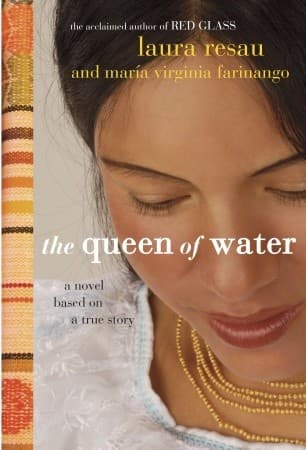
Laura Resau (2011)
Genre
Lifestyle / Historical Fiction / Young Adult
Reading Time
360 min
Key Themes
See below
Sign in to track this book
Torn from her Andean village at seven to serve a mestizo family, Virginia navigates a world of prejudice and cultural clashes, ultimately finding her voice and identity in Ecuador.
Virginia, a young Indigenous girl, lives with her large family in the Andean village of Zumbahua, Ecuador. Her early childhood is spent working in the fields, caring for siblings, and participating in traditional ceremonies like the Inti Raymi festival. She speaks Kichwa and experiences her community's deep cultural connection. However, Virginia also knows the societal hierarchy, where mestizos (people of mixed Spanish and Indigenous heritage) hold power and often denigrate Indigenous people, calling them 'longa tonta' (stupid Indian). Her family, though loving, struggles with poverty, and the children often face leaving home to find work.
At seven, Virginia's life changes when her parents agree to let her go live with a wealthy mestizo couple, the Padrons, in the town of Cotacachi. The Padrons promise to send Virginia to school and treat her well, but the reality is different. Virginia works as a full-time servant, performing chores like washing clothes, cleaning, and cooking, often from early morning until late at night. She is isolated from her family and community, forced to speak Spanish, and often subjected to the Padrons' harsh discipline and emotional abuse, including being locked in a closet for minor mistakes.
Years pass, and Virginia remains in servitude with the Padrons. She rarely visits her family, and when she does, the Padrons make it difficult, emphasizing her duties to them. The promise of schooling is largely unfulfilled; she attends sporadically and is often pulled out for chores. Virginia struggles with her identity, feeling neither fully Indigenous nor accepted by the mestizo world. She faces constant belittling from the Padrons, particularly Doña Mercedes, who often reminds her of her 'inferior' Indigenous background and her place as a servant. Despite the hardship, Virginia maintains a quiet resilience and a longing for freedom and connection.
Despite her harsh life, Virginia experiences moments of hope. She occasionally attends school, where a kind teacher, Señorita Dolores, recognizes her intelligence and encourages her. These brief periods of education open Virginia's mind to new possibilities. She also has a few short visits with her family in Zumbahua, which are bittersweet reminders of the life she lost and the love she misses. These moments, though brief, fuel her desire for a different future and strengthen her connection to her Indigenous roots, even as she navigates the mestizo world.
As Virginia enters adolescence, her workload increases, and Doña Mercedes becomes more controlling, particularly concerning Virginia's interactions with others. The Padrons expect her to remain a compliant servant. During this time, Virginia begins a secret relationship with Segundo, a young Indigenous man who works on a nearby farm. Their meetings offer Virginia companionship and forbidden joy, a contrast to her lonely existence in the Padrons' house. This relationship, however, carries risk, given the Padrons' strict surveillance and their disapproval of outside connections.
Virginia discovers she is pregnant. The news is terrifying, knowing the Padrons' reaction will be severe. When Doña Mercedes discovers Virginia's condition, she is furious. The Padrons immediately dismiss Virginia, accusing her of betrayal and immorality. Despite her years of loyal, unpaid service, they cast her out with nothing, forcing her to return to her family in Zumbahua in disgrace. This abrupt expulsion leaves Virginia feeling ashamed, abandoned, and uncertain about her future, especially with a child on the way and no support.
Virginia returns to Zumbahua, where she is initially met with a mix of sympathy and judgment from her family and community. Her mother, while supportive, is also concerned about the added burden. Virginia gives birth to her son, Juan. Life back in the village is challenging; she is now a single mother and struggles to find her place. The years spent with the Padrons have changed her, making it difficult to fully reintegrate into the traditional Indigenous lifestyle. She misses the limited education she received and feels a disconnect from some of her village's customs, while still cherishing her heritage.
Driven by a desire for a better future for Juan and herself, Virginia decides to pursue her education. This is a challenge, as she faces financial difficulties, the need to care for her son, and the societal expectation for Indigenous women to remain in traditional roles. She enrolls in a night school program, often walking long distances and studying late into the night after a full day of work. Her dedication is unwavering, as she sees education as the way to break the cycle of poverty and reclaim her dignity, refusing to be defined by her past as a servant.
Virginia's perseverance pays off. She secures a job as a housemaid for a more compassionate mestizo family, the Rodriguezes, who treat her with respect and encourage her studies. This new environment provides her with stability and the opportunity to continue her education. She enrolls in a teacher training program, determined to become a teacher and empower other Indigenous children. Her journey is still hard, balancing work, motherhood, and demanding studies, but she is now on a clear path toward her dreams, showing incredible resilience and strength.
Virginia achieves her dream of becoming a teacher. She returns to her community, or similar Indigenous communities, to educate children and advocate for Indigenous rights. She uses her own experiences to inspire her students, teaching them both Kichwa and Spanish, and instilling in them pride in their heritage. Virginia's journey from a child servant to an empowered educator shows her transformation into the 'Queen of Water,' a woman who has navigated adversity and emerged as a beacon of hope and strength for her people.
The Protagonist
Virginia transforms from a submissive child servant, struggling with her identity, into an educated, empowered woman who embraces her Indigenous heritage and fights for the rights of her people.
The Antagonist
She remains static, representing the entrenched prejudice and social injustice Virginia fights against.
The Supporting
He remains static, illustrating complicity in the oppressive system.
The Supporting
She remains a consistent source of love and traditional wisdom, guiding Virginia when she returns to the village.
The Supporting
His character remains consistent as a loving, traditional father figure.
The Supporting
He serves as a catalyst for Virginia's pregnancy and subsequent return to her village, then fades from the immediate narrative as Virginia focuses on her education.
The Supporting
His birth marks a turning point for Virginia, solidifying her determination to achieve an education and a better life.
The Supporting
She provides a brief but significant spark of hope and intellectual stimulation for Virginia, influencing her future aspirations.
The Supporting
They provide a supportive environment that enables Virginia to continue her education and pursue her dreams.
Virginia's journey is an exploration of identity. Torn between her Kichwa heritage and the mestizo world she is forced into, she struggles to find where she belongs. Initially ashamed of her Indigenous roots due to the Padrons' constant insults, she slowly reclaims her pride. Her education and experiences lead her to understand that her strength is in embracing her dual cultural background and using it to empower others. She ultimately defines herself not by the labels others impose but by her own resilience and aspirations.
“I was caught between two worlds, the Indigenous world of my family and the mestizo world of the Padrons, and I didn't feel I truly belonged to either.”
The novel portrays the social injustices and class struggle in Ecuador, particularly between the Indigenous population and the mestizo ruling class. Virginia's servitude exemplifies the exploitation and dehumanization faced by Indigenous people, who are often denied basic rights, education, and respect. The Padrons' treatment of Virginia shows the systemic oppression rooted in racial prejudice and economic disparity. The book exposes how poverty forces families to make difficult choices, continuing a cycle of servitude for their children.
“For them, I was just a longa tonta, a stupid Indian, good only for washing their clothes and scrubbing their floors.”
Education is the most significant factor for Virginia's liberation and empowerment. Denied formal schooling for years, Virginia's brief moments in the classroom and her eventual dedication to night school change her life. Education provides her with knowledge, critical thinking skills, and a sense of agency, enabling her to challenge her circumstances and pursue a professional career. It is through education that she finds her voice and the means to break free from servitude, ultimately becoming a teacher herself to uplift her community.
“Books were like magic. They could take you to places you'd never seen and show you things you'd never imagined.”
Despite enduring hardship, abuse, and isolation, Virginia's spirit of resilience never fully breaks. Her quiet determination to survive, her hope for a better future, and her capacity to forgive are central to her character. From escaping the Padrons' cruelty to raising her son as a single mother while pursuing her studies, Virginia consistently shows inner strength. Her journey shows the human capacity to overcome adversity and find hope even in dark circumstances.
“Even in the darkest moments, a tiny spark of hope flickered inside me, refusing to be extinguished.”
The novel shows the importance of family and community in Indigenous culture. Despite physical separation, Virginia's connection to her family in Zumbahua remains a source of strength and identity. Her mother's love and the traditions of her village support her during her years of servitude. Upon her return, the community provides a safety net, though with challenges. Ultimately, Virginia's desire to become a teacher is driven by her love for her son and her broader community, aiming to empower future generations.
“My family was like the mountains around Zumbahua – strong, ancient, and always there.”
Provides an intimate and authentic perspective on Virginia's experiences.
The story is told through Virginia's first-person perspective, allowing readers direct access to her thoughts, feelings, and struggles. This narrative choice creates a deep sense of empathy and authenticity, immersing the reader in her emotional journey from a child servant to an empowered woman. It effectively conveys the psychological impact of her abuse and her internal conflict regarding her identity, making her triumphs all the more powerful as they are filtered through her own resilient voice.
Represents life, cleansing, and Virginia's journey of self-discovery and resilience.
Water appears throughout the novel as a powerful symbol. It represents the arduous labor Virginia performs (washing clothes, fetching water), her tears and suffering, but also cleansing, renewal, and the flow of life. The title 'The Queen of Water' itself alludes to Virginia's eventual mastery over her circumstances, navigating the 'currents' of her life with strength and grace. It symbolizes her connection to nature, her Indigenous heritage, and her ability to overcome adversity, emerging strong and clear like purified water.
Highlights the stark differences and conflicts between two distinct cultural worlds.
The novel heavily relies on the contrast between Virginia's Indigenous Kichwa culture in Zumbahua and the mestizo culture of the Padrons in Cotacachi. This contrast is evident in language (Kichwa vs. Spanish), social customs, values, and power dynamics. The Indigenous world is portrayed with warmth, community, and respect for tradition, while the mestizo world, as experienced by Virginia, is often cold, hierarchical, and prejudiced. This device underscores the social injustice and Virginia's struggle to bridge these two vastly different worlds, ultimately finding strength in both.
Chronicles Virginia's transformation from childhood innocence to mature self-actualization.
The novel is structured as a coming-of-age story, following Virginia from her innocent childhood in Zumbahua through her traumatic adolescence as a servant, to her eventual adulthood as an educated and empowered woman. This narrative arc focuses on her psychological and emotional development, her struggle with identity, and her journey towards self-discovery and independence. Her experiences shape her understanding of the world and her place within it, culminating in her embracing her true self and purpose.
“I was caught between two worlds, the one I was born into and the one I was trying to create for myself.”
— Main character Ximena reflects on her dual identity as she navigates between her indigenous village and the 'white' world of the city.
“The past is like a river. It keeps flowing, even if you try to dam it up.”
— An elder shares wisdom about the enduring impact of history and tradition.
“Sometimes the strongest current isn't the one you see on the surface, but the one pulling underneath.”
— Ximena considers hidden forces and influences in her life and community.
“To truly learn, you have to be willing to unlearn.”
— A mentor advises Ximena on the process of adapting and growing beyond ingrained beliefs.
“Water remembers. It holds the stories of all who have touched it.”
— A reflection on the symbolic significance of water and its connection to history and memory.
“There are many ways to be strong, and not all of them involve fighting.”
— Ximena learns about resilience and different forms of power, especially from the women around her.
“Silence can be a language all its own, speaking volumes without a single word.”
— Ximena observes the unspoken communication and deep understanding within her indigenous family.
“Hope is a seed. You have to plant it and keep watering it, even when you can't see anything growing.”
— Ximena maintains her aspirations despite challenges and setbacks.
“The world isn't just black and white. There are so many shades of gray, so many colors in between.”
— Ximena grapples with complex moral and cultural dilemmas, moving beyond simple judgments.
“Sometimes the greatest journeys are not across lands, but across the heart.”
— Ximena's internal transformation is highlighted as a significant part of her story.
“You can carry your culture with you, like a river carrying its stones, no matter where you go.”
— Ximena finds a way to integrate her heritage with her new experiences.
“Fear can be a heavy blanket, but courage is the spark that burns through it.”
— Ximena confronts her fears and finds inner bravery to pursue her goals.
“The stories we tell about ourselves, and the ones others tell about us, can shape our reality.”
— Ximena recognizes the power of narrative and reputation in her community and personal life.
“Even the smallest drop of water can contribute to a mighty river.”
— A metaphor for the collective power of individuals and small actions.
Ready to see how well you understood this book? Take our interactive quiz with 10 questions.