BookBrief
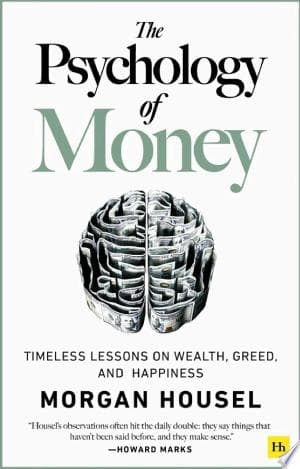
The Psychology of Money cover
Archivist's Choice

The Psychology of Money

Morgan Housel (2020)

Genre

General

Reading Time

240 min

Key Themes

See below

Track Your Reading

Sign in to track this book

Forget the spreadsheets; true wealth isn't about market smarts, but mastering the irrational human behaviors that dictate our financial fates.

Core Idea

The core idea of "The Psychology of Money" is that successful investing and financial management are less about math or complex formulas, and more about understanding human behavior, biases, and emotions about money. The book argues that personal history, unique experiences, and psychological quirks influence financial decisions, often leading to choices that seem illogical given the data. It emphasizes that understanding one's own psychology, not market mechanics, is the most important skill for long-term financial success and well-being. It suggests that financial outcomes are often driven by soft skills like patience, risk tolerance, and the ability to control greed and fear, rather than by financial modeling or economic forecasting. Understanding compounding, what wealth truly is, and how unpredictable the future can be helps create a strong financial mindset that values long-term stability and happiness over short-term gains.
Reading time
240 min
Difficulty
Easy
✓ Read this if...
You want to understand the behavioral side of money and investing, recognize your own financial biases, and develop a more rational, long-term approach to wealth management.
✗ Skip this if...
You are looking for specific stock picks, detailed investment strategies, or technical financial analysis. This book focuses on mindset, not mechanics.

Core idea

The central argument and framework that powers the entire book.

The core idea of "The Psychology of Money" is that successful investing and financial management are less about math or complex formulas, and more about understanding human behavior, biases, and emotions about money. The book argues that personal history, unique experiences, and psychological quirks influence financial decisions, often leading to choices that seem illogical given the data. It emphasizes that understanding one's own psychology, not market mechanics, is the most important skill for long-term financial success and well-being.

It suggests that financial outcomes are often driven by soft skills like patience, risk tolerance, and the ability to control greed and fear, rather than by financial modeling or economic forecasting. Understanding compounding, what wealth truly is, and how unpredictable the future can be helps create a strong financial mindset that values long-term stability and happiness over short-term gains.

At a glance

Reading time

240 min

Difficulty

Easy

Read this if...

You want to understand the behavioral side of money and investing, recognize your own financial biases, and develop a more rational, long-term approach to wealth management.

Skip this if...

You are looking for specific stock picks, detailed investment strategies, or technical financial analysis. This book focuses on mindset, not mechanics.

Key Takeaways

1

No One's Crazy

Your unique financial history shapes your perception of money, making seemingly irrational decisions rational to you.

Quote

Your personal experiences with money make up maybe 0.00000001% of what’s happened in the world, but 80% of how you think the world works.

Housel argues that financial decisions are deeply personal and come from individual experiences. What seems illogical to one person, like taking too much risk or being too careful, is often a logical response to another's unique financial background and history. Someone who grew up poor might save all their cash, while another who experienced hyperinflation might invest heavily in physical assets. Understanding this individual context helps people be more understanding and less judgmental about different financial behaviors. It shows ...

Supporting evidence

Housel illustrates this by comparing the financial perspectives of someone who grew up during the Great Depression versus someone who grew up in the booming 1990s. Their 'truths' about money will be fundamentally different, influencing their risk tolerance and savings habits.

Apply this

Before judging someone's financial choices, or even your own, reflect on the historical and personal context that might be driving them. Recognize that your 'normal' isn't universal, and others' 'crazy' might be their rational response to their past.


behavioral-financecognitive-biasfinancial-literacy
2

Luck & Risk are Siblings

Success and failure are often more a product of random chance and circumstance than pure skill or effort.

Quote

The world is too complex to allow 100% of your actions to dictate 100% of your outcomes. The way you deal with that reality is more important than the skills you master.

Housel argues against the idea that success comes only from hard work and skill, or that failure is purely due to incompetence. Luck and risk, often ignored, play a big part. A seemingly smart investment decision might have been pure chance, while a huge loss could be from unavoidable system-wide issues. Acknowledging this interaction leads to humility in success and compassion in failure. It shifts the focus from only controlling outcomes to managing probabilities and staying strong, recognizing that even the best plans can be ruined...

Supporting evidence

He cites Bill Gates' success, noting that while Gates was brilliant and hardworking, he also benefited from the fortuitous timing of being at the right place (Lakeside School with a computer) at the right time (dawn of the personal computer era) with the right people. Similarly, the collapse of Long-Term Capital Management, run by Nobel laureates, showed how brilliant minds can be undone by unforeseen market events.

Apply this

When evaluating success or failure, pause to consider the role of luck and risk. Cultivate humility by recognizing external factors in your achievements and develop resilience by understanding that some setbacks are beyond your control. Focus on robust strategies that can withstand a range of outcomes, rather than relying on a single 'perfect' scenario.

randomnesssurvivorship-biasrisk-management
3

Never Enough

The insatiable desire for 'more' often leads to reckless behavior and the destruction of what you already have.

Quote

The hardest financial skill is getting the goalpost to stop moving.

Housel criticizes the dangerous appeal of 'never enough,' a common psychological trap where growing desires make people take too many risks, even after becoming very rich. The problem is not a lack of money, but a lack of an internal stopping point. This constant desire for 'more' often means chasing the next big gain, comparing oneself to others, or simply not knowing when to be happy. This mindset can lead to big failures, as people risk everything they have for something they don't truly need, ultimately destroying their financial ...

Supporting evidence

He uses the example of Rajat Gupta, a highly successful businessman and former McKinsey CEO, who was convicted of insider trading despite his immense wealth. His downfall wasn't due to financial need, but an inability to say 'enough' and a desire for even greater status or riches.

Apply this

Define 'enough' for yourself. Identify a point where you feel financially secure and content, and strive to stick to it. Avoid lifestyle creep and the temptation to constantly compare your wealth to others. Prioritize peace of mind and financial security over the endless pursuit of accumulation.

greedcomparison-traphedonic-treadmill
4

Confounding Compounding

True wealth is built slowly and steadily through the consistent power of compounding, demanding patience above all else.

Quote

Good investing isn't necessarily about earning the highest returns, because the highest returns tend to be one-off hits that can't be repeated. It's about earning pretty good returns that you can stick with and which can be repeated for the longest period of time.

Compounding is often understood mathematically, but its psychological effects are significant and often underestimated. Housel emphasizes that the power of compounding is not about finding the next hot stock; it is about time and consistency. The best returns come from normal, steady investments held for decades, letting small amounts grow greatly. This requires a lot of patience and the ability to avoid chasing quick money or reacting to short-term market changes. The psychological challenge is accepting slow, often boring, progress ...

Supporting evidence

He highlights Warren Buffett's wealth, noting that 95% of his net worth was accumulated after his 60th birthday. This wasn't due to exceptionally high annual returns, but rather decades of consistent, above-average returns combined with an incredibly long time horizon.

Apply this

Start investing early and consistently, even small amounts. Prioritize long-term holding over frequent trading. Embrace the 'boring' reality of slow, steady growth and resist the temptation of get-rich-quick schemes. Let time be your greatest asset.

long-term-investingpatiencetime-value-of-money
5

The Man in the Car Paradox

People often desire wealth for status, but the pursuit of status through possessions often backfires, leading to envy rather than admiration.

Quote

No one is impressed with your possessions as much as you are.

This situation shows a basic misunderstanding of human psychology in the pursuit of wealth. People often buy expensive cars, watches, or homes believing these items will earn them respect and admiration. However, Housel argues that what others actually see is not you, but the item itself, and they project their own desires onto it. When someone sees an expensive car, they are often thinking, 'If I had that car, I would be successful,' not 'That person is successful.' This creates a never-ending cycle of buying things driven ...

Supporting evidence

Housel describes this paradox directly: when someone drives a fancy car, you rarely think, 'Wow, that person is cool!' Instead, you think, 'Wow, if I had that car, *I* would be cool!' The attention is on the object and the observer's desires, not the owner.

Apply this

Shift your focus from acquiring possessions for external validation to building wealth for financial independence and personal freedom. Understand that true respect and admiration are earned through character and actions, not material displays. Prioritize experiences and relationships over things.

status-anxietyconspicuous-consumptionmaterialism
6

Wealth is What You Don't See

True wealth is built on savings and unseen assets, not on visible displays of consumption.

Quote

Spending money to show people how much money you have is the fastest way to have less money.

Housel separates 'rich' from 'wealthy.' Being rich often means showing off current income with expensive cars, homes, and luxury items. Being wealthy, however, means having assets that provide future choices and security—it is what you don't spend. Wealth is the money saved, invested, and not yet used for buying things. This difference is important because visible spending reduces wealth, while unseen savings build it. The path to real financial freedom involves being careful with money, delaying immediate rewards, and prioritizing ...

Supporting evidence

He explains that someone driving a $100,000 car could be rich (high income, low savings) or poor (financed debt). Someone with $100,000 in a savings account, however, is definitively wealthy, even if that wealth is invisible to others.

Apply this

Prioritize saving and investing over conspicuous consumption. Understand that true financial power comes from what you accumulate, not what you display. Cultivate a mindset that values financial independence and future optionality over immediate gratification and status symbols.

frugalityfinancial-independencesavings-rate
7

Room for Error

Build a margin of safety into your financial plans to account for the unpredictable nature of life.

Quote

The biggest single point of failure in money is a sole reliance on a plan that works only if every single link in the chain holds precisely as planned.

Life is unpredictable, and financial planning should reflect this. Housel suggests building 'room for error'—a buffer, a safety net—into all financial decisions. This is not just about having an emergency fund; it is about recognizing that even the most carefully made plans can be ruined by unexpected events, from market crashes to personal health problems. Being too optimistic and not planning for emergencies are common mistakes. Being conservative and flexible, rather than aiming for maximum efficiency, is key to long-term financial...

Supporting evidence

He notes that even the most brilliant minds, like those at Long-Term Capital Management, failed because their models assumed perfect conditions and had no room for error when the unexpected occurred. Conversely, businesses that survive recessions often do so not because they were the 'best' but because they had cash reserves and flexibility.

Apply this

Always maintain an emergency fund. Avoid taking on excessive debt that limits your flexibility. Diversify investments. Don't assume your current income or market conditions will last forever. Build in financial slack that allows you to weather unforeseen storms without catastrophic consequences.

margin-of-safetycontingency-planningrisk-aversion
8

History Doesn't Repeat, It Rhymes

Past events offer valuable lessons about human behavior and cycles, but specific outcomes are never guaranteed to recur.

Quote

The further back in history you look, the more general your takeaways should be.

Housel warns against using past data as a precise guide for the future. While human psychology and some economic principles tend to repeat patterns (like greed and fear, booms and busts), the specific causes, sizes, and results of events are unique to their time. Blindly assuming past returns or identical market reactions will happen again is dangerous. Instead, history should be used to understand lasting behavioral patterns and the range of possibilities, encouraging a flexible mindset rather than strict predictions. The key is to l...

Supporting evidence

He explains that while stock market crashes happen regularly, the causes (e.g., dot-com bubble, subprime mortgages, pandemic) are always different. Investors who expected a repeat of the 1929 crash in 2008 would have been looking for the wrong signals.

Apply this

Study financial history to understand human behavior and the cyclical nature of markets, but avoid making precise predictions based on past events. Focus on timeless principles like diversification and long-term investing, rather than trying to time the market based on historical patterns. Be adaptable.

market-cycleshistorical-analysisforecasting-bias
9

The Price of Admission

Market volatility and losses are not penalties; they are the unavoidable cost of achieving long-term investment returns.

Quote

Volatility is not a fine, it’s a fee.

A major change in perspective is needed for successful investing: seeing market downturns and volatility not as mistakes or punishments, but as the necessary 'price of admission' for the long-term growth that markets offer. Just as you pay a fee to enter an amusement park, you must 'pay' with periods of uncertainty, drops in value, and even losses to benefit from the wealth-generating power of stocks. Those who try to avoid this fee by timing the market or staying in cash often miss out on the best returns. Accepting volatility as an ...

Supporting evidence

He points out that the stock market has returned an average of 10% annually over the long run, but this comes with frequent corrections and bear markets. Investors who panic and sell during these 'fees' miss out on the subsequent recoveries and long-term gains.

Apply this

Expect and embrace market volatility. View downturns as normal, even healthy, parts of the investing process, rather than signals to panic. Stay invested through good times and bad, understanding that consistent participation, not perfect timing, is what earns the long-term returns.

market-volatilitylong-term-investingemotional-discipline
10

Saving for Saving's Sake

The most powerful reason to save is to gain control over your time and future, not just to buy things.

Quote

The highest form of wealth is the ability to wake up every morning and say, 'I can do whatever I want today.'

Housel elevates the purpose of saving beyond just buying things. While saving for a house or retirement is common, the ultimate, often forgotten, benefit of accumulating wealth is gaining independence and choices. Money saved directly translates into control over your time, your career choices, and your life decisions. It provides the freedom to pursue interests, decline undesirable work, take breaks, or change careers without immediate financial pressure. This fundamental shift redefines saving not as doing without, but as an investm...

Supporting evidence

He argues that the truest measure of wealth is financial independence, which allows you to control your time. This ability to 'do what you want, when you want, with who you want' is a more valuable outcome of saving than any specific purchase.

Apply this

Shift your mindset about saving from buying things to buying freedom and flexibility. View each dollar saved as a brick in the foundation of your future autonomy. Prioritize building a financial buffer that grants you control over your time and career choices, enhancing your overall well-being.

financial-independenceoptionalityautonomy

Critical analysis

Notable Quotes

The hardest financial skill is getting the goalpost to stop moving.

Discussing the challenges of wealth accumulation and the human tendency for desires to escalate with income.

Saving money is the gap between your ego and your income.

Emphasizing that saving is often less about how much you earn and more about how much you spend to impress others.

Luck and risk are two sides of the same coin.

Highlighting that outcomes are rarely purely a result of effort or skill; external factors play a significant role.

The most powerful and important financial book ever written is called 'compounding.'

Underlining the immense, often underestimated, power of compounding over long periods.

The End of History Illusion is a hell of a drug.

Referring to the psychological bias where people accurately recall how much they've changed in the past but underestimate how much they will change in the future.

The highest form of wealth is the ability to wake up every morning and say, 'I can do whatever I want today.'

Defining true wealth not just as money, but as the freedom and control over one's time and choices.

Things that have never happened before happen all the time.

Warning against relying too heavily on historical data and recognizing the inevitability of unprecedented events.

Go out of your way to find humility when things are going well and forgiveness/compassion when they go wrong.

Advising on the right mindset to adopt during both periods of success and failure in finance and life.

The greatest show on Earth is people's reaction to money.

Observing the diverse and often irrational ways people behave and make decisions when it comes to money.

Beware of taking financial cues from people playing different games than you are.

Cautioning against comparing oneself or adopting strategies from those with different financial goals, time horizons, or risk tolerances.

Reasonable is more powerful than rational.

Arguing that in finance, making decisions that are 'reasonable' and sustainable for you is often better than trying to be perfectly 'rational' according to economic theory.

The ability to do what you want, when you want, with who you want, for as long as you want, is priceless.

Reiterating the concept that true wealth is about control over one's life, not just accumulating assets.

The history of money is the history of people telling stories.

Suggesting that the value and function of money are deeply intertwined with collective beliefs and narratives.

Financial success is not a hard science. It’s a soft skill, where how you behave is more important than what you know.

Emphasizing that psychological traits and behaviors outweigh technical knowledge in achieving financial success.

Optimism is usually the best bet, but it's important to understand what kind of optimism you're buying.

Distinguishing between naive optimism and a more realistic optimism that acknowledges setbacks and volatility.

Quiz

Test Your Knowledge

Ready to see how well you understood this book? Take our interactive quiz with 10 questions.

10
Questions
~5
Minutes
?
Best Score

Key Questions (FAQ)

This book explores the often-overlooked behavioral aspects of personal finance and investing. Instead of focusing on mathematical formulas, it delves into the psychological biases, emotions, and unique personal histories that drive our financial decisions, often in irrational ways.

About the author