“‘A man who waits until the last minute to make a decision is a man who has made the decision to do nothing.’”
— Early advice given to Florentyna by her father, emphasizing decisiveness in politics.

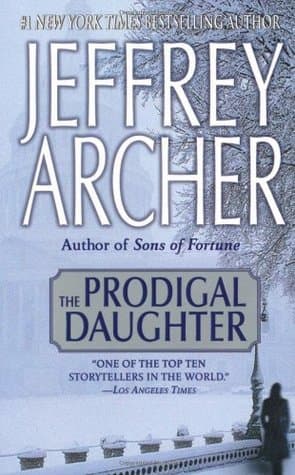
Jeffrey Archer (1973)
Genre
Politics / Thriller / Historical Fiction / Mystery
Reading Time
820 min
Key Themes
See below
Sign in to track this book
Florentyna Rosnovski, driven by her Polish immigrant father's ambition, wants to be America's first female president, but her path becomes intertwined with a powerful banking family through love and a deep-seated feud.
Florentyna Rosnovski is born in Chicago in 1937. Her father is Polish immigrant Abel Rosnovski, a hotel owner, and her mother is Zofia. From a young age, Florentyna shows great intelligence, ambition, and determination, much like her father. She does well in school, wanting to make her mark and honor her father's hard work. Abel teaches her a strong work ethic and love for America, often telling stories of his journey from poverty to wealth. Florentyna's early life is comfortable, but also shaped by her father's high expectations; he sees in her the potential for even greater achievements, possibly in public service, a path he once considered.
At Radcliffe College, Florentyna meets Richard Kane, an intelligent student from Harvard. Richard is the son of Abel's business rival, William Kane. Despite the long-standing hostility between their fathers, Florentyna and Richard are attracted to each other and form a strong romantic bond. During college, Florentyna becomes interested in politics, joining student government and debate clubs. Her natural leadership and persuasive skills become clear, firming up her goal to enter public service. She decides her ultimate aim is to become the first female President of the United States, a dream she shares with Richard, who fully supports her.
The business rivalry between Abel Rosnovski and William Kane intensifies, fueled by decades of competition and personal dislike. Neither man accepts the idea of their child marrying into the opposing family. Despite their fathers' strong objections, Florentyna and Richard are deeply in love and decide to marry secretly. Their hidden wedding causes a big break with both families. Abel feels betrayed and cuts Florentyna off financially and emotionally, refusing to acknowledge her marriage. William Kane also shows strong disapproval, but Richard, having inherited his mother's independent spirit, stands by Florentyna, ready to make his own way apart from his father's influence and wealth.
After their secret marriage, Florentyna and Richard want to build their lives independently. Richard, despite being disinherited by his father, quickly makes a name for himself in banking, using his intelligence and connections for fast success. Florentyna, meanwhile, focuses on her political goals. She starts at the local level, working for campaigns and getting involved in community service. She proves to be a smart and dedicated politician, quickly earning recognition for her sharp mind, charm, and tireless work. Her early experiences in local politics give her valuable insights and build a strong base for her future ambitions.
Over time, Abel Rosnovski's anger toward Florentyna lessens, especially after his grandchildren are born. Seeing Florentyna's strong determination and commitment to public service, and perhaps recognizing his own ambition in her, Abel starts to fix their broken relationship. He eventually offers his full support, both financial and strategic, to her political career. Abel's large network, business sense, and wealth become valuable assets for Florentyna. This reconciliation is important, giving Florentyna the resources and backing she needs to move from local politics to state and then national campaigns, speeding up her progress.
With Abel's backing and Richard's support, Florentyna's political career thrives. She wins a seat in the House of Representatives, quickly becoming an effective legislator. Her intelligence, honesty, and ability to connect with voters earn her respect. After several terms in Congress, she aims higher and wins a seat in the U.S. Senate. As a Senator, Florentyna becomes an influential figure, known for her policy stances, powerful speeches, and ability to handle complex political situations. Her ambition to become President remains her main goal, and each victory brings her closer to it.
While Florentyna's political standing grows, Richard Kane continues to build a career in international banking. He becomes a respected and wealthy financier, showing great business skill. However, as Florentyna's political commitments increase, Richard takes on more of the role of her main supporter and confidant. He makes personal and professional sacrifices, often putting his own ambitions aside to manage their family life and support Florentyna's demanding career. He travels with her, gives strategic advice, and acts as a stable presence in her busy political world, always believing in her ultimate destiny despite the personal cost.
Florentyna Rosnovski officially announces her candidacy for President of the United States, exciting the nation as a pioneering female candidate. Her campaign involves many rallies, debates, and media appearances, drawing much public attention. However, the intensity of the presidential race also brings scrutiny on her and her family. Old rivalries, especially the long-standing feud between the Rosnovskis and Kanes, start to reappear, threatening to derail her campaign. Opponents try to use any weakness, and the pressure on Florentyna and Richard, both personally and professionally, reaches a high point as they deal with the challenging political situation.
As Florentyna's presidential campaign gains momentum, a shocking, long-hidden secret comes out. It is revealed that Abel Rosnovski was indirectly responsible for the death of William Kane, Richard's father, many years ago. The details emerge: Abel had manipulated stock prices, causing a financial collapse that ruined William Kane's bank and led him to suicide. This devastating revelation, exposed by political enemies, creates a huge scandal, threatening to completely undo Florentyna's campaign and public image. The news devastates Richard, who must face the truth about his father's death and the deep hatred between the two families.
Richard is completely devastated and angry by the revelation of Abel's role in his father's death. He confronts Florentyna, demanding answers and struggling to reconcile the man he loved as a father-in-law with the man who destroyed his own father. The weight of this secret, and its timing during the presidential campaign, puts immense stress on their marriage. Richard is torn between his love for Florentyna and his loyalty to his deceased father and the Kane family legacy. He must make a difficult decision: either support his wife and her political ambitions, seemingly accepting his father's ruin, or leave her and seek justice for his family.
Facing great pressure, Florentyna decides to address the scandal directly. She gives a powerful and sincere public apology, acknowledging the tragic past and expressing sorrow for the pain it caused, without directly blaming her father. Her honesty and openness connect with many voters. In a moment of personal sacrifice and love, Richard, despite his deep personal pain and feeling of betrayal, chooses to stand by Florentyna. His public support, showing their strong bond, helps lessen some of the damage to her campaign, demonstrating a united front against adversity.
Despite the scandal and challenges, Florentyna Rosnovski narrowly wins the presidential election, making history as the first female President of the United States. Her victory is a triumph of ambition, resilience, and the fulfillment of a lifelong dream. However, the path to the presidency has come with a significant personal cost. The revelation of Abel's secret has changed her relationship with Richard forever, leaving a lingering shadow of pain and mistrust. While she achieves her ultimate goal, the novel ends with the understanding that power and ambition often demand deep personal sacrifices, and the past, no matter how hidden, can always resurface.
The Protagonist
From a brilliant young girl with a nascent political dream, she transforms into a powerful and resilient leader who achieves the ultimate political office, though not without personal cost.
The Supporting
He evolves from a privileged student to a successful and supportive husband, who ultimately faces a devastating family secret that tests his loyalty and love.
The Supporting
From a ruthless businessman consumed by rivalry, he softens slightly in his later years, becoming a powerful but morally compromised supporter of his daughter's ambition.
The Antagonist/Mentioned
His life is defined by his rivalry with Abel, and his death serves as the catalyst for the central conflict of the story.
The Supporting
Her arc is largely static, serving as a loving and supportive maternal figure throughout the story.
The Supporting
He grows into a capable businessman, taking on the family's corporate legacy while his sister pursues a political one.
The Supporting
He serves as a catalyst for Florentyna's early political success, providing mentorship and opening doors.
The Supporting
He develops from a campaign operative to Florentyna's indispensable chief political strategist.
The Antagonist
He acts as a catalyst for the main conflict by uncovering and weaponizing the Rosnovski-Kane feud, ultimately failing to stop Florentyna's rise.
The novel carefully shows Florentyna Rosnovski's ambition to become the first female President of the United States. From childhood, every decision and action works toward this goal, like her father Abel's drive to build his empire. The theme explores the sacrifices such ambition requires, both personal and ethical, and how far people will go to achieve their dreams. Florentyna's journey shows the dedication, resilience, and strategic thinking needed to navigate politics and reach the highest office.
“"She would be the first. The first woman to sit in the Oval Office. Nothing less would do."”
A main theme is the impact of family history and the ongoing conflict between generations. The decades-long feud between Abel Rosnovski and William Kane affects their children, Florentyna and Richard. Their love story is initially forbidden because of this rivalry, and their fathers' past actions eventually threaten Florentyna's political career. The novel explores how parents' actions can define, limit, or inspire their children, showing that old grievances can haunt and shape future generations, demanding resolution.
“"The hatred between their fathers was a living thing, a shadow that had fallen across their own love story."”
The lasting love between Florentyna and Richard Kane is a main part of the story. Despite the deep animosity between their families and the immense personal and political pressures, their loyalty to each other stays strong. Richard, in particular, makes significant personal and professional sacrifices to support Florentyna's ambitions, even when facing the truth about his father's death. The theme explores the strength and limits of love when tested by betrayal, political schemes, and deep personal pain, showing how loyalty can be pushed to its breaking point but still endure.
“"He knew that his life, his career, his very being, was now inextricably bound to hers. And he wouldn't have it any other way."”
The novel looks at the moral compromises and personal costs of seeking and using power. Abel Rosnovski's ruthless business tactics, which ruined William Kane, show the ethical lines crossed in the pursuit of wealth and dominance. Florentyna, while aiming for integrity, also benefits from her father's morally questionable actions. The revelation of the past forces characters to confront the dark side of ambition and the sacrifices, both intentional and unintentional, made on the path to success. It questions whether ultimate power can be achieved without some moral stain.
“"Power, Florentyna had learned, was never given. It had to be taken, and often, the taking left scars."”
Florentyna's journey involves constantly figuring out her identity—as Abel Rosnovski's daughter, as Richard Kane's wife, and as a pioneering female politician. She tries to define herself beyond the powerful men in her life, asserting her own vision and abilities. The theme explores how external expectations and family histories shape a person, but also how one can create a distinct path. Her struggle to maintain her integrity and define her own moral compass amid political pressures and family secrets is central to her character.
“"She was not just Abel's daughter or Richard's wife. She was Florentyna Rosnovski, and her destiny was her own."”
The long-standing rivalry between the Rosnovski and Kane families drives much of the initial conflict and later plot twists.
The decades-long animosity between Abel Rosnovski and William Kane is more than just a business rivalry; it's a deep-seated personal hatred rooted in class, ambition, and past grievances. This feud initially prevents Florentyna and Richard from being together, forcing them into a secret marriage. Crucially, the hidden consequences of this feud – specifically Abel's role in William Kane's death – resurface as the central conflict late in the story, threatening to derail Florentyna's presidential campaign. It serves as a powerful engine for both character motivation and plot progression, illustrating how past conflicts can dramatically impact future generations.
Abel Rosnovski's indirect responsibility for William Kane's death serves as the climactic plot twist.
The revelation that Abel Rosnovski orchestrated the financial ruin that led to William Kane's suicide is the primary hidden secret of the novel. This secret is carefully concealed for much of the story, only coming to light at the most critical juncture of Florentyna's presidential campaign. Its exposure creates immense personal and political turmoil, forcing Richard to confront his father-in-law's past and testing the very foundation of his marriage to Florentyna. This device generates suspense, provides a major turning point, and explores the themes of betrayal, justice, and the inescapable weight of the past.
The narrative structure follows Florentyna's step-by-step rise through the political ranks.
The novel is structured around Florentyna's meticulously detailed political journey, from her early involvement in student politics and local campaigns to her eventual election as President. This 'political ascent' narrative device allows the author to explore the inner workings of American politics, the demands of campaigning, and the personal sacrifices required for such a career. It provides a clear, linear progression for the protagonist's ambition, building suspense and showcasing her evolving skills and challenges at each stage of her career. It grounds the fictional story in a realistic portrayal of the political process.
Abel Rosnovski and William Kane serve as foils, highlighting contrasting approaches to power and legacy.
Abel Rosnovski and William Kane act as foil characters, representing two different types of powerful men and two contrasting paths to success. Abel, the self-made immigrant, is driven by raw ambition and a ruthless will, willing to bend rules and engage in cutthroat competition. William, the old-money aristocrat, embodies established power and a more traditional, albeit equally formidable, approach. Their rivalry highlights the clashes of class, background, and ethics. This contrast not only fuels their feud but also informs the choices and challenges faced by their children, Florentyna and Richard, who must reconcile these opposing legacies within themselves and their relationship.
“‘A man who waits until the last minute to make a decision is a man who has made the decision to do nothing.’”
— Early advice given to Florentyna by her father, emphasizing decisiveness in politics.
“‘There are two sorts of women: those who are beautiful and those who are intelligent. I have always preferred the latter.’”
— Remarks made by an older male character, reflecting on women's roles and attributes.
“‘The first rule of politics, my dear, is never to surprise your enemies and always to surprise your friends.’”
— A cynical political lesson learned by Florentyna, highlighting strategic maneuvering.
“‘Power is not given, it is taken.’”
— Florentyna's realization about the nature of political ambition and achieving goals.
“‘Every man has his price, and every woman her weakness.’”
— A jaded observation about human nature and susceptibility to temptation.
“‘History is written by the victors.’”
— A classic adage reiterated in the context of political narratives and legacy.
“‘The truth is a luxury few politicians can afford.’”
— A cynical view on the compromises and evasions inherent in political life.
“‘Sometimes, the greatest strength lies in appearing to have none.’”
— A strategic insight into underestimated opponents and concealed power.
“‘A good politician never makes a promise he can’t keep, and a great politician never makes a promise he doesn’t intend to break.’”
— A sharp distinction drawn between ethical and pragmatic political behavior.
“‘Revenge is a dish best served cold, and often, with a side of surprise.’”
— A character's contemplation of retribution, emphasizing patience and unexpected moves.
“‘The only thing more dangerous than a politician with nothing to lose is a politician who believes he has everything to gain.’”
— An observation on the different motivations and risks in political ambition.
“‘Democracy is a wonderful thing, provided you can control the electorate.’”
— A cynical perspective on the manipulation inherent in democratic processes.
“‘To truly understand a man, you must first understand his enemies.’”
— An analytical approach to character assessment, particularly in a political context.
Ready to see how well you understood this book? Take our interactive quiz with 10 questions.

Jeffrey Howard Archer, Baron Archer of Weston-super-Mare is an English novelist, life peer, convicted criminal, and former politician. Before becoming an author, Archer was a Member of Parliament (1969–1974), but did not seek re-election after a financial scandal that left him almost bankrupt.

Brett Casper
5.0

Dirk Uffelmann
4.7

Winston S. Churchill
4.5

Chimamanda Ngozi Adichie
4.5
Will Durant
4.4
Thomas Sowell
4.4
W.E.B. Du Bois
4.3
Alan Moore
4.3