BookBrief
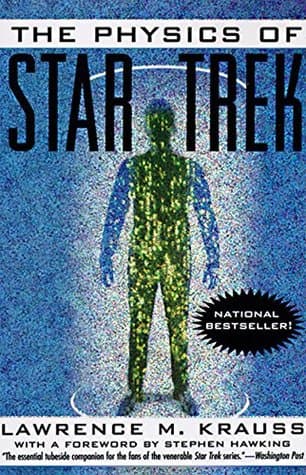
The Physics of Star Trek cover
Archivist's Choice

The Physics of Star Trek

Lawrence M. Krauss

Genre

Reference / Science

Reading Time

180 min

Key Themes

See below

Track Your Reading

Sign in to track this book

Lawrence Krauss explains the real science behind 'Star Trek's' technologies, from warp drives to holodecks, showing what's possible and what isn't.

Core Idea

Lawrence M. Krauss examines the scientific truth behind Star Trek's most famous technologies and events. He uses them to explore basic principles of modern physics. He shows the difference between scientific fact, theoretical ideas, and pure science fiction. He explains how ideas like warp drive, transporters, and dilithium crystals, while often beyond our current abilities, are frequently based on real scientific theories like general relativity, quantum mechanics, and exotic matter. The book says that Star Trek, even with its fictional parts, is a good way to understand complex scientific concepts. It has encouraged many people to think about the universe's true potential and limits.
Reading time
180 min
Difficulty
Medium
✓ Read this if...
You are a Star Trek fan curious about the real science behind its fictional technologies, or a science enthusiast looking for an engaging, accessible introduction to concepts like spacetime, quantum mechanics, and cosmology through a familiar pop culture lens.
✗ Skip this if...
You are looking for a deep dive into advanced theoretical physics with complex equations, or you have no interest in Star Trek and prefer a more traditional science textbook.

Core idea

The central argument and framework that powers the entire book.

Lawrence M. Krauss examines the scientific truth behind Star Trek's most famous technologies and events. He uses them to explore basic principles of modern physics. He shows the difference between scientific fact, theoretical ideas, and pure science fiction. He explains how ideas like warp drive, transporters, and dilithium crystals, while often beyond our current abilities, are frequently based on real scientific theories like general relativity, quantum mechanics, and exotic matter. The book says that Star Trek, even with its fictional parts, is a good way to understand complex scientific concepts. It has encouraged many people to think about the universe's true potential and limits.

At a glance

Reading time

180 min

Difficulty

Medium

Read this if...

You are a Star Trek fan curious about the real science behind its fictional technologies, or a science enthusiast looking for an engaging, accessible introduction to concepts like spacetime, quantum mechanics, and cosmology through a familiar pop culture lens.

Skip this if...

You are looking for a deep dive into advanced theoretical physics with complex equations, or you have no interest in Star Trek and prefer a more traditional science textbook.

Key Takeaways

1

Warp Drive: Stretching Spacetime, Not Breaking Light Speed

True warp travel involves manipulating the fabric of the universe itself.

Quote

The warp drive does not involve moving through space faster than light, but rather moving space itself.

The idea of warp drive in Star Trek, which seems to break the speed of light, comes from a theoretical, though very speculative, answer to Einstein's equations of general relativity. Krauss explains that instead of the ship moving faster than light through space, a warp drive would create a 'warp bubble.' This bubble would shrink space in front of the ship and stretch it behind. The ship itself stays still inside this local bubble of spacetime. The bubble, and therefore the ship, then travels at superluminal speeds compared to a dis...

Supporting evidence

Krauss references Miguel Alcubierre's 1994 theoretical solution to Einstein's field equations, which describes a mechanism for warp travel without violating local light speed limits.

Apply this

Understand that 'faster than light' travel isn't about raw speed, but about manipulating the medium of travel. This shifts the focus of future propulsion research from brute force acceleration to exotic energy sources and spacetime engineering.


warp-drivegeneral-relativityspacetimelight-speed-limit
2

Teleportation: Quantum Entanglement vs. Disintegration

Star Trek's transporter is far more complex and problematic than simple quantum entanglement.

Quote

The Star Trek transporter is essentially a quantum fax machine, but the 'information' it sends is the entire pattern of a human being.

Krauss examines the Star Trek transporter, clearly separating it from real-world quantum teleportation. Quantum teleportation, shown in labs, moves quantum information (like a particle's spin) between entangled particles. It does not move matter itself. The Star Trek version, however, suggests taking a person apart into their atoms, scanning their information, sending it, and then putting them back together in a new place. This brings up deep philosophical and physical questions: Is the reassembled person truly the same, or a perfec...

Supporting evidence

Krauss contrasts real quantum teleportation (transfer of quantum states, not matter) with the Star Trek mechanism of 'dematerialization' and 'rematerialization,' highlighting the immense information processing and energy demands.

Apply this

When considering advanced technologies, distinguish between the transfer of information/states and the physical transfer of complex matter. Appreciate the ethical and identity dilemmas inherent in technologies that claim to 'copy' or 'recreate' sentient beings.

teleportationquantum-mechanicsinformation-theoryconsciousness
3

The Holodeck: A Quantum Computing and Force Field Fantasy

Creating tangible, interactive realities requires unimaginable technological leaps.

Quote

The holodeck is not just a sophisticated projector; it must be able to create solid objects and sensory input from pure energy.

The holodeck, a popular feature, is an even bigger scientific challenge than warp drive or transporters. Krauss says it's not just a projection system. It must be able to make solid, interactive objects, smells, tastes, and touch sensations from pure energy. This means understanding and controlling matter and energy beyond what we currently know. It would likely involve precise force fields to make 'solid' objects and advanced replicator technology to create temporary matter. Also, the ability to change the environment dynamically and...

Supporting evidence

Krauss points out that the holodeck needs to create physical interaction (e.g., a person falling on a 'holodeck floor' doesn't fall through), requiring matter synthesis or highly sophisticated force fields, not just light projections.

Apply this

Recognize the distinction between virtual reality (sensory input) and augmented reality (overlaying digital onto physical) versus the holodeck's ability to create *physical* interactive simulations. This highlights the immense energy and matter-manipulation capabilities required for true immersive physical simulations.

holodeckvirtual-realityforce-fieldsmatter-replicationartificial-intelligence
4

Time Travel: Grandfather Paradoxes and Cosmic Censors

Backward time travel likely faces insurmountable paradoxes or cosmic safeguards.

Quote

If time travel to the past were possible, we would expect to see tourists from the future everywhere.

Krauss looks at the difficult topic of time travel, especially to the past. He points out the famous 'grandfather paradox' – the logical problem of going back in time to stop your own birth. While Star Trek often solves these paradoxes with alternate timelines or convenient story devices, Krauss discusses scientists' doubts. Some theories, like Novikov's self-consistency principle, suggest that any actions in the past would be limited to keep things consistent, preventing paradoxes. Others, like Stephen Hawking's 'Chronology Protectio...

Supporting evidence

Krauss cites the grandfather paradox as a core logical issue and discusses theoretical solutions like Novikov's self-consistency principle and Hawking's Chronology Protection Conjecture.

Apply this

Approach claims of time travel with extreme skepticism, especially those involving altering the past. Focus on the logical paradoxes and the immense energy and exotic matter requirements that render it highly improbable, if not impossible.

time-travelgrandfather-paradoxcausalitychronology-protection-conjectureclosed-timelike-curves
5

Dilithium Crystals: The Fictional Fuel for Antimatter Power

Antimatter is real, but its containment and stable regulation remain a monumental challenge.

Quote

Antimatter is the most efficient energy source known to physics, but harnessing it safely is another matter entirely.

Krauss explains that antimatter is a real and powerful energy source. (Annihilation with matter turns 100% of mass into energy, much more than nuclear fission/fusion.) However, Star Trek's use of 'dilithium crystals' to control matter-antimatter reactions is fiction. The problem isn't just making antimatter (which we can do in tiny amounts) but containing it. Antimatter instantly disappears when it touches regular matter, so it must be held in a vacuum by strong magnetic fields. Dilithium, in Star Trek, magically allows controlled int...

Supporting evidence

Krauss details the reality of antimatter annihilation (100% mass-energy conversion) and the immense difficulty of containment, contrasting it with the fictional 'dilithium crystals' that regulate the reaction in Star Trek.

Apply this

Appreciate the power of antimatter as an energy source, but recognize the significant hurdles in its production, containment, and controlled use. Distinguish between theoretical energy release and practical, safe engineering solutions.

antimatterenergy-generationdilithiummagnetic-containmentmatter-annihilation
6

Artificial Gravity: Spinning vs. Spacetime Manipulation

Star Trek's ubiquitous artificial gravity is a massive scientific leap we haven't achieved.

Quote

The ability to generate artificial gravity fields at will is perhaps one of the most convenient, yet least understood, technologies in Star Trek.

While Star Trek ships easily keep Earth-normal gravity, Krauss notes this is a big scientific problem. The only known way to create gravity in space is by spinning, which creates centrifugal force (as seen in some sci-fi ideas like rotating space stations). Star Trek's artificial gravity, though, is a 'field' that can be turned on and off, allowing for flat decks and stable environments no matter the ship's direction or speed. This means controlling spacetime itself, or perhaps a new fundamental force, which is far beyond current phys...

Supporting evidence

Krauss highlights that real-world artificial gravity is achieved through rotation (centrifugal force), contrasting it with Star Trek's unexplained 'gravity plating' that creates a localized gravitational field without rotation or acceleration.

Apply this

When designing future space habitats, understand that artificial gravity is likely to involve rotation, with all its design constraints. Recognize that 'gravity plating' represents a profound, currently impossible, manipulation of fundamental physics.

artificial-gravitycentrifugal-forcespacetime-manipulationgeneral-relativityspace-colonization
7

Phasers: Coherent Energy Beams with Variable Effects

While lasers are real, phasers' adjustable effects imply advanced particle manipulation.

Quote

Phasers are not just 'ray guns'; they are highly sophisticated directed energy weapons with adjustable effects, from stunning to disintegration.

Star Trek's phasers, which can stun, heat, or break apart targets, are far beyond modern directed energy weapons like lasers. Lasers focus light, but phasers seem to control energy at a more basic level, likely involving subatomic particles or very localized force fields. The ability to change the effect on a target so precisely suggests a complete understanding and control over the target's molecular bonds and energy states. Krauss suggests that if phasers were real, they would likely involve some kind of 'force field' or 'particle b...

Supporting evidence

Krauss notes the versatility of phasers (stun, kill, vaporize) and how this goes beyond simple laser technology, suggesting control over molecular bonds or particle interactions.

Apply this

When evaluating future weapon technology, consider the difference between raw energy projection (like current lasers) and the precise, variable effects of phasers. This highlights the need for fundamental breakthroughs in particle physics and energy manipulation.

phaserdirected-energy-weaponslasersparticle-beamsenergy-manipulation
8

The Prime Directive: A Necessary Universal Ethic

Non-interference is crucial for preventing cultural contamination and preserving scientific integrity.

Quote

The Prime Directive is not just a moral principle; it's a practical necessity to prevent the contamination of emerging civilizations and scientific observation.

While not strictly a physics concept, Krauss discusses the Prime Directive's scientific and ethical importance. He says that interfering with less developed civilizations, even with good intentions, could permanently change their natural growth, both culturally and biologically. From a scientific view, it would spoil any observations of natural evolution and society's progress. Ethically, it forces outside values and technologies, possibly leading to dependence or societal collapse. The Prime Directive, then, is not just about 'not pl...

Supporting evidence

Krauss frames the Prime Directive as a safeguard against cultural and scientific contamination, drawing parallels to anthropological practices on Earth regarding isolated communities.

Apply this

When encountering cultures or systems significantly different from your own, adopt a principle of non-interference unless direct harm is being done. Value observation and understanding over imposing external solutions or technologies.

prime-directiveethicsexosociologycultural-relativismscientific-observation
9

The Universe is Stranger Than Fiction

Many Star Trek concepts are less fantastic than current scientific theories.

Quote

The real universe, with its black holes, wormholes, and quantum weirdness, is often far more bizarre and interesting than anything science fiction can invent.

Krauss consistently highlights that while Star Trek is a fun way to talk about physics, the actual universe, as understood by modern science, is often stranger and more wonderful than the show's wildest ideas. Concepts like dark matter, dark energy, the multiverse, quantum entanglement, and the odd nature of black holes are real. They often defy common sense more deeply than warp drive or transporters. This encourages readers to see that science is not just about disproving fiction. It is about finding a reality that is endlessly more...

Supporting evidence

Krauss frequently intersperses explanations of Star Trek technologies with discussions of real-world phenomena like black holes, wormholes, and quantum mechanics, often noting their inherent strangeness.

Apply this

Cultivate a sense of wonder and curiosity about the real universe. Read popular science books, follow scientific discoveries, and understand that the most incredible stories are often found in the pursuit of truth.

cosmologyquantum-mechanicsblack-holesdark-mattermultiverse
10

Science as Inspiration: The Legacy of Star Trek

Despite its inaccuracies, Star Trek has profoundly inspired generations of scientists and engineers.

Quote

Star Trek's greatest legacy may be not in its predictions, but in its ability to inspire curiosity and motivate young minds to pursue science.

Beyond judging its scientific accuracy, Krauss recognizes Star Trek's large cultural and inspiring effect. He says that even if its technologies are mostly impossible, the show's vision of a hopeful, exploring future, driven by science and ethics, has led many people to careers in science, engineering, and space exploration. Many real scientists, including Krauss himself, say Star Trek sparked their first interest in physics and the cosmos. This lasting impact shows how speculative fiction can not only entertain but also shape goals, ...

Supporting evidence

Krauss, as a physicist, explicitly states how Star Trek served as an inspiration for many in the scientific community, including himself, fostering a fascination with science and the future.

Apply this

Engage with science fiction not just for entertainment, but as a source of inspiration for future possibilities. Encourage young people to explore STEM fields by connecting them to compelling visions of the future, whether fictional or grounded in current science.

science-communicationinspirationscientific-literacyfuture-studiesspeculative-fiction

Critical analysis

Notable Quotes

The laws of physics, as we understand them, would seem to prohibit much of what occurs in Star Trek. Yet, for many, the allure of the show lies precisely in its ability to bend and even break those laws.

Introduction to the book's premise, discussing the conflict between Star Trek's fiction and real-world physics.

Warp drive, transporters, and phasers—these are not merely plot devices; they are a testament to the human imagination's ability to transcend current technological limitations, at least in fiction.

Krauss's reflection on the iconic technologies of Star Trek.

The speed of light is not just a limit for spaceships; it's a fundamental constant that defines causality and the very structure of our universe.

Discussing the challenges of faster-than-light travel and the implications of special relativity.

To travel to distant stars within a human lifetime requires either a new understanding of physics or a very creative interpretation of the laws we already know.

Setting the stage for the discussion of warp drive and its scientific feasibility.

Antimatter is real, and its annihilation provides the most efficient energy source known. Its controlled use, however, is a far cry from Star Trek's warp core.

Explaining the real science behind antimatter and its application in Star Trek.

The Heisenberg Compensator, a famous Star Trek 'fix,' highlights the show's awareness of quantum mechanics, even if its solution is pure fiction.

Referring to the fictional device used to overcome the Heisenberg Uncertainty Principle in transporters.

Teleportation, if it were ever possible, would involve a profound redefinition of identity and consciousness, raising philosophical questions far beyond the physics.

Discussing the philosophical implications of transporters, beyond just the technical challenges.

Artificial gravity is a staple of science fiction, but generating it without massive rotation or extreme acceleration remains firmly in the realm of fantasy.

Explaining the scientific challenges of creating artificial gravity as depicted in Star Trek.

The Prime Directive, in its essence, is a recognition of the profound impact advanced technology can have on developing civilizations, a lesson relevant even today.

Krauss connecting the fictional Prime Directive to real-world ethical considerations of technological intervention.

While Star Trek often stretches the laws of physics, it does so in a way that encourages viewers to think about those laws, making science more accessible and exciting.

Krauss's overarching argument for the value of Star Trek as a tool for science popularization.

A universe where the speed of light is not a barrier fundamentally changes everything we understand about space, time, and our place within the cosmos.

Reflecting on the implications of warp drive for our understanding of the universe.

The idea of a 'tractor beam' relies on manipulating fundamental forces in ways we currently cannot fathom, requiring either exotic matter or undiscovered physics.

Analyzing the science behind tractor beams and their current implausibility.

Energy shields, while visually compelling, would require immense power and a method of deflecting or absorbing energy that is beyond our current capabilities.

Discussing the physics of defensive energy shields in Star Trek.

The 'physics' of Star Trek is often a placeholder for future scientific discovery, a hope that what seems impossible today might be merely improbable tomorrow.

Concluding thought on Star Trek's role in inspiring scientific inquiry.

Quiz

Test Your Knowledge

Ready to see how well you understood this book? Take our interactive quiz with 10 questions.

10
Questions
~5
Minutes
?
Best Score

Key Questions (FAQ)

When traveling at warp speed, it is space-time itself that is warped, not the starship directly moving faster than light. The ship creates a 'bubble' where space ahead is contracted and space behind is expanded, effectively moving the ship by distorting the fabric of the universe around it.

About the author