BookBrief
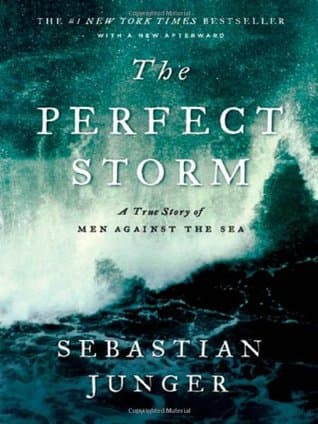
The Perfect Storm: A True Story of Men Against the Sea cover
Archivist's Choice

The Perfect Storm: A True Story of Men Against the Sea

Sebastian Junger (1997)

Genre

Lifestyle / Biography / History / Science

Reading Time

12 Minutes

Key Themes

See below

Track Your Reading

Sign in to track this book

A harrowing account of the 1991 "perfect storm" that claimed the fishing vessel Andrea Gail and its six-man crew, showing nature's raw, untamed power against human effort.

Core Idea

Sebastian Junger's "The Perfect Storm" delves into the harrowing true story of the Andrea Gail, a commercial fishing boat lost at sea during an unprecedented confluence of three powerful weather systems in October 1991. The book meticulously reconstructs the final days of the crew, intertwining their personal stories with a detailed scientific explanation of the meteorological phenomenon that created the 'perfect storm.' Junger explores themes of man versus nature, the inherent dangers and allure of a life at sea, and the human capacity for courage and resilience in the face of overwhelming odds. The central argument is that while the storm itself was a rare and catastrophic event, the lives of the swordfishing crew were already defined by risk, a constant battle against the elements, and the profound economic pressures that drove them to push the limits. The book is a testament to the lives of working-class fishermen and a stark reminder of nature's indifference to human endeavor.
Difficulty
Medium

Core idea

The central argument and framework that powers the entire book.

Sebastian Junger's "The Perfect Storm" delves into the harrowing true story of the Andrea Gail, a commercial fishing boat lost at sea during an unprecedented confluence of three powerful weather systems in October 1991. The book meticulously reconstructs the final days of the crew, intertwining their personal stories with a detailed scientific explanation of the meteorological phenomenon that created the 'perfect storm.' Junger explores themes of man versus nature, the inherent dangers and allure of a life at sea, and the human capacity for courage and resilience in the face of overwhelming odds.

The central argument is that while the storm itself was a rare and catastrophic event, the lives of the swordfishing crew were already defined by risk, a constant battle against the elements, and the profound economic pressures that drove them to push the limits. The book is a testament to the lives of working-class fishermen and a stark reminder of nature's indifference to human endeavor.

At a glance

Difficulty

Medium

Key Takeaways

1

The Allure and Brutality of Commercial Fishing

The financial precarity and inherent dangers of deep-sea fishing drive crews to take immense risks.

Quote

They were driven by the need to make a living, to provide for their families, in a profession where every trip could be their last.

Junger shows the harsh economic realities faced by Gloucester fishermen. Dwindling fish stocks, constant pressure to maximize catches, and fluctuating market prices mean crews like the Andrea Gail's must push safety and endurance limits. This economic pressure often overrides common sense, leading captains to risk bad weather or stay out longer than they should. The book highlights how financial desperation and pride in their work shape their decisions, leading them into the perfect storm's path. This is a clear look at the human elem...

Supporting evidence

The detailed accounts of the Andrea Gail's previous trips, the financial pressures on Captain Tyne, and the constant pursuit of swordfish in increasingly remote and dangerous waters.

Apply this

Understanding the economic drivers behind high-risk professions can offer insights into decision-making under pressure and the societal factors that contribute to occupational hazards.


2

The 'Perfect Storm' Phenomenon

The convergence of three distinct weather systems created an unprecedented and catastrophic meteorological event.

Quote

It was a confluence of factors so rare, so perfectly aligned, that it formed a storm of unparalleled ferocity.

Junger explains the weather conditions that created the 'Perfect Storm' of October 1991. He details how a strong cold front from the Great Lakes, a dying Hurricane Grace, and a powerful high-pressure system interacted. This unique alignment created an extreme pressure gradient, which caused huge waves and hurricane-force winds. The book makes complex science easy to understand, showing how different elements can combine to produce an event of unimaginable scale. This explanation is key to understanding why the storm was so deadly and ...

Supporting evidence

Junger's detailed descriptions of atmospheric pressure systems, cold fronts, and the remnants of Hurricane Grace, supported by meteorological data and expert analysis.

Apply this

Appreciating the complexity of natural phenomena can foster a greater respect for environmental forces and inform disaster preparedness strategies.

3

The Anatomy of a Rogue Wave

The storm's unique conditions likely generated extreme, unpredictable waves far beyond typical storm swell.

Quote

These were not just big waves; they were mountains of water, anomalies that defied conventional understanding of the sea.

One terrifying part of 'The Perfect Storm' is the discussion of rogue waves. Junger explores the science behind these huge, unpredictable walls of water, which can be much taller than average waves in a given sea. He suggests that the 1991 storm's specific dynamics, with its converging swells and extreme winds, likely generated such waves. For a vessel like the Andrea Gail, even a modern fishing boat, a 100-foot rogue wave would be impossible to survive. This look into oceanography adds a chilling layer to the story, showing the open ...

Supporting evidence

The scientific explanations of wave dynamics, the 'three sisters' phenomenon, and anecdotal accounts from other mariners who survived similar extreme wave events.

Apply this

Understanding the potential for rogue waves highlights the limitations of even advanced marine technology and the constant dangers faced by those at sea.

4

The Human Element: Skill, Comradeship, and Hubris

The tight-knit bonds and professional pride of the crew were both their strength and, perhaps, their undoing.

Quote

They were a team, bound by shared danger and the tacit understanding that their lives depended on each other.

Junger skillfully portrays the close-knit community of commercial fishermen, especially the Andrea Gail crew. He explores their personalities, motivations, and the complex parts of their work relationships. The book stresses the deep camaraderie and unspoken trust needed for survival at sea. However, it also subtly looks at how overconfidence—the belief in one's own skill and the rule to never return empty-handed—can lead to risky decisions. This balance between skilled professionalism and the pressures that can cause overconfidence i...

Supporting evidence

Biographical details of Captain Billy Tyne and his crew, their past experiences, and the descriptions of their interactions and shared history.

Apply this

Recognizing the interplay of group dynamics, individual skill, and external pressures can inform leadership and team-building strategies in any high-stress profession.

5

The Limitations of Technology and Forecasting

Despite advancements, humans remain vulnerable to nature's extremes, and communication gaps can be fatal.

Quote

Even with radios and satellites, the vastness of the ocean could swallow a vessel without a trace.

While the story is set in 1991, Junger points out the limits of maritime technology and weather forecasting at the time, especially for smaller boats far offshore. The Andrea Gail had standard communication and navigation tools, but these were not enough against the storm's intensity. Communication breakdowns, difficulty getting timely and accurate weather updates far at sea, and the destructive power that could disable electronics show humanity's lasting vulnerability to nature. This is a strong reminder that even with modern tools, ...

Supporting evidence

The account of the Andrea Gail's last radio contact, the delayed understanding of the storm's true severity by shore-based authorities, and the difficulty in locating the vessel.

Apply this

This takeaway encourages a healthy skepticism about relying solely on technology and emphasizes the importance of robust contingency planning and redundant safety systems, especially in remote or hazardous environments.

6

The Psychological Toll on Survivors and Communities

The aftermath of a maritime disaster extends far beyond the immediate event, impacting families and entire towns.

Quote

For the people of Gloucester, every storm brought a fresh wave of fear, a reminder of the sea's relentless hunger.

Junger does not just focus on the storm but also explores the devastating psychological effect on the lost crew members' families and the wider Gloucester fishing community. The agonizing wait for news, the eventual acceptance of loss, and the lasting grief are clear throughout the story. He shows a town familiar with the sea's dangers, where loss is an unfortunate, if tragic, part of life. This part of the book is particularly moving, highlighting the widespread effect of such a disaster and the collective trauma it causes in close c...

Supporting evidence

Interviews with the families of the Andrea Gail crew, particularly Ethel and Christina, detailing their hopes, fears, and eventual bereavement.

Apply this

Understanding the long-term psychological and social impacts of disasters can inform effective community support and mental health initiatives.

7

The Indifference of Nature

The storm's power underscores nature's ultimate disregard for human endeavor and life.

Quote

The ocean doesn't care who you are, or what you're doing. It just is.

This is likely the book's strongest point: Junger consistently highlights nature's overwhelming power and its complete indifference to human struggles. The storm is not malicious; it is simply a force of nature following its own rules. This view removes any romantic ideas of 'man against nature' and replaces it with a stark truth: humans are completely at the mercy of the elements. The Andrea Gail and its crew were not 'defeated' by the storm; they were simply caught in a natural process of immense scale. This underlying idea gives th...

Supporting evidence

The objective, almost clinical descriptions of the storm's meteorological processes, the lack of any 'villain' in the narrative beyond nature itself, and the ultimate disappearance of the vessel and crew without a trace.

Apply this

Cultivating humility and respect for natural forces can lead to more sustainable practices and a greater emphasis on safety and preparedness.

8

The Search and Rescue Dilemma

The immense challenges and emotional toll of searching for survivors in an unforgiving environment.

Quote

To search a sea like that was to search for a needle in a haystack, with the added torment of knowing the haystack itself was trying to kill you.

Junger spends significant parts of the book on the difficult search and rescue operations by the Coast Guard and other vessels. He details the extreme conditions rescuers faced, the huge search area, and the decreasing hopes as time passed. The story highlights the incredible bravery and dedication of these individuals, even as they faced the near impossibility of finding anyone alive in such a storm. This contrasts with the initial story of the Andrea Gail, shifting the view to those who had to deal with the aftermath and the agonizi...

Supporting evidence

Accounts of Coast Guard operations, the deployment of rescue swimmers, and the experiences of other vessels caught in the storm, like the Satori.

Apply this

Understanding the complexities of search and rescue operations can inform better resource allocation, training, and public awareness about maritime safety.

9

The Science of Survival and Drowning

Junger explores the physiological limits of human endurance in extreme cold and rough seas.

Quote

The human body, even at its strongest, has a finite capacity against the relentless cold and pounding of the sea.

Beyond the weather explanations, Junger looks into the grim science of human survival in the open ocean. He discusses the rapid onset of hypothermia, the body's effects from long exposure to cold water, and how drowning happens. This scientific view adds a layer of stark realism to the Andrea Gail crew's fate, explaining why survival was almost impossible. He references studies on survival rates in cold water and the impact of wave action on the body. While unsettling, this examination is essential for understanding the storm's true d...

Supporting evidence

Discussions of hypothermia, cold shock, and the physiological effects of prolonged immersion in extremely cold water, supported by scientific data and expert opinions.

Apply this

This knowledge is vital for developing effective cold-weather survival gear, training protocols for mariners, and understanding the limits of human endurance.

10

The Enduring Mystery of Loss at Sea

Despite all analysis, the final moments of the Andrea Gail remain an unknowable, haunting void.

Quote

The sea guards its secrets fiercely, and some questions are destined to remain unanswered.

Despite Junger's thorough research and vivid reconstruction, 'The Perfect Storm' ends with an unresolved mystery. The exact events that led to the Andrea Gail's sinking remain unknown, leaving a haunting gap. Junger skillfully handles this uncertainty, acknowledging the limits of what can be known and allowing the reader to imagine the crew's final moments. This uncertainty is a strength, not a weakness, emphasizing the deep and often unanswerable questions that come with loss at sea. It leaves a lasting impression of the ocean's powe...

Supporting evidence

The lack of debris, the absence of distress calls, and the reliance on scientific inference and circumstantial evidence to reconstruct the most probable scenario, rather than definitive proof.

Apply this

Embracing the inherent uncertainties in life and death, particularly in the face of overwhelming natural forces, can foster a deeper appreciation for the present moment and the fragility of existence.

Critical analysis

Notable Quotes

Quiz

Test Your Knowledge

Ready to see how well you understood this book? Take our interactive quiz with 10 questions.

10
Questions
~5
Minutes
?
Best Score

Key Questions (FAQ)

The Perfect Storm is a non-fiction book by Sebastian Junger that recounts the harrowing true story of the Andrea Gail, a commercial fishing vessel caught in a monstrous, once-in-a-century storm in October 1991. It details the immense power of nature and the struggle of the six-man crew against the sea.

About the author