BookBrief
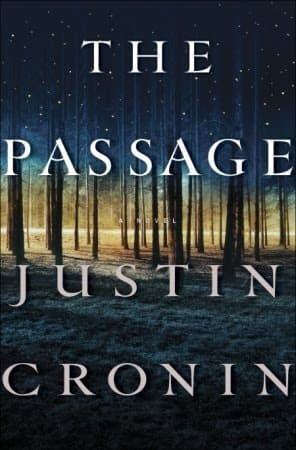
The Passage cover
Archivist's Choice

The Passage

Justin Cronin (2010)

Genre

General

Reading Time

15-20 hours

Key Themes

See below

Track Your Reading

Sign in to track this book

After a government experiment unleashes a vampiric plague, a former FBI agent protects a young girl who may save humanity, embarking on a decades-long, dangerous journey in a post-apocalyptic world.

Core Idea

The Passage is about humanity's fight for survival against a vampiric plague. It focuses on the cycles of fear and hope, the power of human connection, and the difficult moral choices people make in desperate times. It covers how the 'virals' began and the special role of Amy Bellafonte, a child who has both human and viral traits. She is a potential savior and a unique figure in a world close to extinction. The story spans generations, showing how past events influence future struggles and how people must constantly adapt to survive.
Reading time
15-20 hours
Difficulty
Medium
✓ Read this if...
You enjoy epic post-apocalyptic sagas with a blend of horror, science fiction, and profound character development, exploring themes of humanity's resilience and the blurred lines between good and evil.
✗ Skip this if...
You dislike lengthy books, stories with graphic violence and horror elements, or narratives that take a long time to build their world and character arcs.

Core idea

The central argument and framework that powers the entire book.

The Passage is about humanity's fight for survival against a vampiric plague. It focuses on the cycles of fear and hope, the power of human connection, and the difficult moral choices people make in desperate times. It covers how the 'virals' began and the special role of Amy Bellafonte, a child who has both human and viral traits. She is a potential savior and a unique figure in a world close to extinction. The story spans generations, showing how past events influence future struggles and how people must constantly adapt to survive.

At a glance

Reading time

15-20 hours

Difficulty

Medium

Read this if...

You enjoy epic post-apocalyptic sagas with a blend of horror, science fiction, and profound character development, exploring themes of humanity's resilience and the blurred lines between good and evil.

Skip this if...

You dislike lengthy books, stories with graphic violence and horror elements, or narratives that take a long time to build their world and character arcs.

Key Takeaways

1

The Genesis of the Virals

A scientific quest for immortality unleashes a global apocalypse.

Quote

They were looking for a cure for death, and all they found was a new way to die.

The Passage begins with an apocalyptic event: a scientific experiment gone wrong. The U.S. government starts Project NOAH, hoping to find a universal cure for all diseases and a virus from a South American bat that grants immortality. This project involves experimenting on death row inmates, turning them into a new kind of aggressive, telepathic, and nearly immortal creature called 'virals.' The book details the ethical compromises and arrogance that lead to the disaster. It shows how humanity's desperate attempt to conquer death acci...

Supporting evidence

The initial chapters detailing the recruitment of death row inmates, Dr. Lear's scientific ambition, and the specific genetic modifications of the 'primaries' like Subject Zero, Babcock, and Fanning, directly illustrate the project's origins.

Apply this

Reflect on the ethical boundaries of scientific research, particularly when dealing with potentially world-altering biological agents. Consider the long-term societal implications of prioritizing perceived benefits over stringent safety protocols and moral considerations.

project-noahviralsscientific-hubrisbio-engineering
2

Amy Bellafonte: The Hope and the Anomaly

A young girl becomes the linchpin for humanity's survival.

Quote

She was the cure, the virus, the beginning, and the end.

Amy Harper Bellafonte is the main character, a mystery, and humanity's only hope. Infected with the viral strain when she was young, she does not become a monster. Instead, she develops unique abilities: a longer life, a link to the virals, and an immunity that suggests a possible cure or weapon. Her innocence combined with her important destiny makes her a compelling figure. The story follows her journey over decades, highlighting her loneliness, her burden, and her growing understanding of herself. She represents the unclear line be...

Supporting evidence

Amy's early life in Project NOAH, her escape with Wolgast, her slow aging process (or lack thereof), her ability to sense virals, and her eventual journey towards the 'Mother' viral are all central to her character arc.

Apply this

Consider how individual resilience and unique attributes can become pivotal in overcoming seemingly insurmountable global crises. Recognize the profound responsibility that often accompanies extraordinary circumstances, especially when one person holds the key to many lives.

amy-bellafontechosen-oneimmunitychild-protagonist
3

The Enduring Power of Human Connection

Bonds forged in apocalypse prove vital for survival and meaning.

Quote

In the end, all we had was each other. And it was enough.

Despite the extreme horror and isolation of the viral apocalypse, 'The Passage' powerfully shows humanity's need for connection and community. From Wolgast's fatherly love for Amy, to the complex relationships within the Colony, and later, the bonds formed during the long march, the story shows that survival is not just physical but also deeply social. Trust, loyalty, sacrifice, and love become essential in a world where everything else has fallen apart. These relationships provide purpose, comfort, and the collective strength needed ...

Supporting evidence

The relationship between Wolgast and Amy; the dynamics within the First Colony (Lila, Peter, Alicia, Sara); the later 'caravans' and the formation of new communities, all showcase the importance of human bonds.

Apply this

In times of crisis, actively seek and nurture meaningful relationships. Understand that collective action and emotional support are as critical as individual resourcefulness for navigating difficult situations.

communitysurvivalloyaltyhuman-spirit
4

The Cycle of Fear and Hope

Humanity's resilience oscillates between despair and the will to rebuild.

Quote

Fear was the only thing that kept them alive, and the only thing that kept them from truly living.

The novel masterfully shows the mental impact of living in a post-apocalyptic world. Fear of the virals, of the dark, and of not having enough resources is constant, influencing every decision and interaction. However, mixed with this constant dread is a strong spark of hope—the desire to rebuild, to find a cure, or simply to create a safe place for future generations. The story shows humanity's ability to swing between complete despair and remarkable resilience. It illustrates that even in the darkest situations, the drive for a bett...

Supporting evidence

The establishment of the First Colony as a beacon of hope against the viral threat, contrasted with the constant fear of breaches and the strict curfew; the desperate search for Amy; the long journey to find a new home, all exemplify this duality.

Apply this

Acknowledge that fear is a natural response to threat, but consciously cultivate hope and resilience. Focus on actionable steps towards rebuilding and fostering safety, rather than succumbing to paralyzing dread.

resiliencehopefearpost-apocalypse
5

The Legacy of the Past

Decisions made generations ago echo profoundly in the present.

Quote

The past was not dead; it was not even past. It was a viral strain, and it lived in them all.

Cronin uses the long timeline of 'The Passage' to show that the past is never truly gone. The terrible decisions of Project NOAH, made decades before the main story of the Colony, directly cause the suffering and problems faced by later generations. The virals are a living consequence of past arrogance. Additionally, the survivors themselves carry the mental scars and traditions passed down from their ancestors, influencing their societies, fears, and hopes. This theme emphasizes the deep responsibility each generation has to the next...

Supporting evidence

The entire existence of the Colony and its struggle against the virals is a direct consequence of Project NOAH. The stories and warnings passed down through generations within the Colony, like the tales of 'The Before,' also serve as evidence.

Apply this

Consider the long-term impact of your current decisions, both personal and collective. Advocate for ethical and sustainable practices that will benefit future generations, recognizing that history's lessons are often learned too late.

legacygenerational-traumaconsequenceshistory
6

Adaptation and Evolution

Survival demands constant change, both biological and societal.

Quote

The world had ended, but life, stubborn and relentless, always found a way.

Both the virals and humanity show a great ability to adapt. The virals evolve, becoming more organized and intelligent, always creating new threats. Humanity must also adapt. The survivors in the Colony develop new technologies, social structures, and fighting techniques to fight the virals and maintain their meager existence. Characters like Alicia and Peter show physical and mental adaptation to a brutal world. This theme stresses that staying the same means death in a post-apocalyptic world; continuous learning, innovation, and let...

Supporting evidence

The virals' evolving hunting strategies and communication methods. The Colony's defensive innovations (lights, fences, specific weapons). Alicia's transformation into a formidable warrior and Peter's leadership in a new world.

Apply this

Embrace change and cultivate adaptability in your own life and work. Recognize that rigid adherence to old methods can be detrimental, and actively seek new solutions and perspectives when faced with evolving challenges.

adaptationevolutionsurvival-skillsinnovation
7

The Grey Areas of Morality

In extremis, clear distinctions between good and evil blur.

Quote

There were no good men left, only men who tried to be good.

The Passage explores the complex moral landscape of a world on the edge. Characters must make impossible choices, often sacrificing one life to save many, or doing things that would be unthinkable in peaceful times. Wolgast's early role in Project NOAH, the Colony's harsh justice system, and the desperate measures taken by survivors all show how traditional moral lines blur. The virals themselves, once human, complicate the idea of absolute evil. The novel suggests that while the fight for survival can bring out humanity's best, it al...

Supporting evidence

Wolgast's guilt over his actions at Project NOAH; the Colony's decision to execute those who break rules to maintain order; the moral quandaries faced by the expedition members when confronting human and viral threats.

Apply this

Reflect on the ethical dilemmas inherent in extreme situations. Understand that 'right' and 'wrong' can become complex and context-dependent, requiring careful consideration and empathy rather than rigid judgment.

moralityethicssurvival-dilemmasmoral-relativism
8

The Quest for the Origin

Understanding the source of evil is crucial for its defeat.

Quote

To kill the monster, you must first know its name, and where it sleeps.

A constant driving force in 'The Passage' is the characters' continuous search to understand and eventually confront the origin of the viral plague. This is not just about survival; it is about finding answers, justice, and a definite end to the nightmare. The journey to the 'Mother' viral (Fanning) is like a pilgrimage, representing the ultimate confrontation with the source of their suffering. The novel implies that true victory is not just about holding off the immediate threat, but about eliminating the root cause, no matter how d...

Supporting evidence

The expedition's long journey from the Colony, guided by fragmented knowledge and Amy's unique connection, to find and confront the primary virals, particularly Babcock and Fanning, at the original Project NOAH site.

Apply this

When facing a persistent problem, don't just treat the symptoms. Dedicate efforts to understanding and addressing the root cause, even if it requires significant effort and confronts uncomfortable truths.

origin-storyconfrontationroot-causeredemption
9

The Power of Storytelling and Memory

Narratives preserve identity and guide future generations.

Quote

They told stories not to forget, but to remember how to live.

In a world where civilization has mostly collapsed, storytelling becomes a vital tool for survival and keeping identity alive. The survivors in the Colony carefully record their history, pass down legends of 'The Before,' and share tales of heroism and sacrifice. These stories serve many purposes: they educate the young, reinforce community values, warn against past mistakes, and offer a sense of continuity amid radical change. The book itself, as a story spanning generations, embodies this theme, suggesting that stories are not just ...

Supporting evidence

The 'scribes' of the Colony who meticulously record events; the oral traditions and 'histories' shared by the elders; the character of Mausami, who becomes a keeper of stories and knowledge.

Apply this

Recognize the importance of documenting experiences and sharing stories, both personal and communal. Understand that narratives play a crucial role in shaping identity, passing on knowledge, and fostering collective resilience.

storytellingmemoryoral-traditioncultural-preservation
10

The Nature of Humanity's 'Monsters'

The true horror often lies in what humans create or become.

Quote

The monsters were not born, they were made, by us.

'The Passage' challenges the reader to think about the true nature of monsters. While the virals are certainly terrifying, the novel consistently points back to humanity's role in their creation. Project NOAH's ambition, the government's harshness, and the ethical compromises made by scientists are the original sins that unleash the apocalypse. Furthermore, the desperation of the survivors sometimes leads them to commit monstrous acts themselves, blurring the line between predator and prey. This theme suggests that the greatest horror...

Supporting evidence

The entire premise of Project NOAH; the transformation of death row inmates into virals; the instances where human survivors turn on each other or make morally dubious choices for survival.

Apply this

Critically examine the origins of perceived 'evil' or 'monsters,' both in fiction and reality. Understand that societal problems often have roots in human decisions, systems, and ethical failures, rather than being purely external forces.

human-naturemonstersself-inflicted-harmethical-dilemmas

Critical analysis

Notable Quotes

Before, there had been a world, and they had been of it, and it had been a thing of beauty. Now there was not.

Reflecting on the post-apocalyptic world.

The past is a place, and in a place you can hide.

Amy's early life and the secrets surrounding her.

The only thing worse than a monster is a monster who was a man.

Discussing the origins of the virals.

Hope was a thing that you had to find; it wasn't a thing that was given.

One of the survivors grappling with despair.

In the end, all you had was the person you were, and the people you loved.

A character reflecting on what truly matters.

She was a weapon, and she knew it, and she was afraid of it.

Amy coming to terms with her powers and destiny.

The world was a book, and those who do not travel read only one page.

A philosophical thought amidst their journey.

Sometimes the greatest courage is simply to keep breathing.

A moment of intense struggle and perseverance.

The truth was a scalpel, and it always cut.

Uncovering painful truths about the past.

They were the last fire against the coming dark.

Describing the human resistance against the virals.

A life lived in fear is a life half-lived.

A character encouraging another to overcome their fears.

Memory was a kind of haunting, but also a kind of fuel.

Characters remembering lost loved ones.

The world had ended, but life had not.

A concise summary of the enduring struggle.

Every beginning is born from an end.

A hopeful outlook on the possibility of rebuilding.

Quiz

Test Your Knowledge

Ready to see how well you understood this book? Take our interactive quiz with 10 questions.

10
Questions
~5
Minutes
?
Best Score

Key Questions (FAQ)

The Passage tells the story of a post-apocalyptic world where a secret U.S. government experiment unleashes a monstrous plague, transforming most of humanity into vampiric creatures. It follows the journey of survivors, particularly FBI agent Brad Wolgast and a young girl named Amy, as they navigate this new, dangerous landscape.

About the author