BookBrief
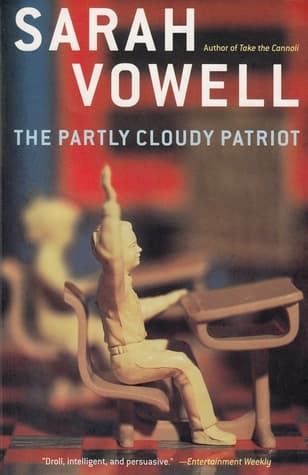
The Partly Cloudy Patriot cover
Archivist's Choice

The Partly Cloudy Patriot

Sarah Vowell (2003)

Genre

Politics / Memoir / History

Reading Time

3-4 hours

Key Themes

See below

Track Your Reading

Sign in to track this book

Sarah Vowell takes a witty, unusual journey through America's historical sites, connecting the nation's past to her own patriotic feelings.

Core Idea

Sarah Vowell's "The Partly Cloudy Patriot" looks at American patriotism as a complicated, often conflicting experience based on historical questions, personal thoughts, and a deep, sometimes annoyed, love for the nation's past and present. Through essays that mix memoir, history, and political comments, Vowell argues that real patriotism accepts confusion, disagreement, and a close look at both the good and bad parts of American history, instead of just simple praise. She uses her own unique trips and interests—from presidential assassinations to Hawaiian statehood—to show how personal stories connect with national identity, revealing a patriotism that is always changing, very personal, and naturally 'partly cloudy.' The book suggests that understanding America means dealing with its natural conflicts, its ability for both greatness and serious mistakes. Vowell supports a kind of civic involvement that includes constant questioning, an interest in historical facts, and an acceptance of America's messy, often violent, path forward. Her work shows that this detailed view, far from being unpatriotic, is necessary for a lasting love of country.
Reading time
3-4 hours
Difficulty
Easy
✓ Read this if...
You enjoy political and historical essays infused with wit, personal anecdote, and a distinctly quirky voice. You're interested in a nuanced, critical, but ultimately affectionate look at American patriotism and history.
✗ Skip this if...
You prefer straightforward historical accounts without authorial interjection, or you are seeking a traditional, uncritical celebration of American exceptionalism.

Core idea

The central argument and framework that powers the entire book.

Sarah Vowell's "The Partly Cloudy Patriot" looks at American patriotism as a complicated, often conflicting experience based on historical questions, personal thoughts, and a deep, sometimes annoyed, love for the nation's past and present. Through essays that mix memoir, history, and political comments, Vowell argues that real patriotism accepts confusion, disagreement, and a close look at both the good and bad parts of American history, instead of just simple praise. She uses her own unique trips and interests—from presidential assassinations to Hawaiian statehood—to show how personal stories connect with national identity, revealing a patriotism that is always changing, very personal, and naturally 'partly cloudy.'

The book suggests that understanding America means dealing with its natural conflicts, its ability for both greatness and serious mistakes. Vowell supports a kind of civic involvement that includes constant questioning, an interest in historical facts, and an acceptance of America's messy, often violent, path forward. Her work shows that this detailed view, far from being unpatriotic, is necessary for a lasting love of country.

At a glance

Reading time

3-4 hours

Difficulty

Easy

Read this if...

You enjoy political and historical essays infused with wit, personal anecdote, and a distinctly quirky voice. You're interested in a nuanced, critical, but ultimately affectionate look at American patriotism and history.

Skip this if...

You prefer straightforward historical accounts without authorial interjection, or you are seeking a traditional, uncritical celebration of American exceptionalism.

Key Takeaways

1

Patriotism as Perplexity

True love of country involves questioning and internal conflict, not blind allegiance.

Quote

The true patriot is partly cloudy, haunted by doubt and internal arguments.

Vowell argues that real patriotism is not a single, aggressive feeling but a complex, often contradictory state of mind. It is the 'partly cloudy' nature of loving a country while also looking closely at its flaws, past wrongs, and current problems. This inner debate, this struggle with the nation's ideals versus its realities, is what makes someone a thoughtful, involved citizen rather than a passive observer. She suggests that those who claim unquestioning loyalty often miss the deeper, harder work of true national affection.

Supporting evidence

Vowell's own sleepless nights pondering American history, particularly the darker chapters, and her discomfort with uncritical displays of patriotism, especially in the wake of 9/11 and the Bush administration's rhetoric.

Apply this

Embrace intellectual discomfort and critical thinking when engaging with national narratives. Instead of shying away from historical complexities or current political problems, lean into them as an essential part of civic duty and a more profound form of national love.


critical-patriotismcivic-engagementhistorical-scrutiny
2

The Allure of American Bloodshed

Vowell finds an unexpected sense of belonging and meaning at sites of historical violence.

Quote

Why is she happiest when visiting the sites of bloody struggles like Salem or Gettysburg?

Vowell's specific interest in battlefields and places of historical tragedy—like Gettysburg, Salem, or where Lincoln was shot—is not a dark curiosity. Instead, it is a search for truth and a link to the nation's raw, forming experiences. She finds these places, full of past suffering and big decisions, more meaningful and 'real' than clean, celebratory monuments. For her, these sites offer a clear connection to the struggles that shaped American identity, providing a sense of grounding and understanding that modern life often lacks.

Supporting evidence

Her detailed descriptions of visits to Gettysburg and Salem, and her feeling of 'happiness' or profound connection in these places, contrasted with her observations on the superficiality of other tourist attractions.

Apply this

Seek out historical sites, particularly those that commemorate difficult or violent events, not just for entertainment but for deeper reflection on human experience and national development. Recognize that understanding struggle is as crucial as celebrating triumph.

historical-memorynational-traumasite-specific-history
3

The Peril of Historical Analogy

Misusing historical figures like Rosa Parks trivializes their struggles and distorts their legacy.

Quote

Why do people always inappropriately compare themselves to Rosa Parks?

Vowell criticizes the common habit of using historical figures, especially those who showed great moral courage, in unimportant or self-serving ways. Her frustration with the constant, often poorly fitting comparisons to Rosa Parks highlights a larger problem: the way complex historical struggles are simplified into easy metaphors. This practice not only disrespects the huge sacrifices made by such figures but also lessens the seriousness of their historical context, making it harder to truly learn from their actions. It is a type of ...

Supporting evidence

Vowell's exasperation with contemporary individuals who compare their minor inconveniences or disagreements to Rosa Parks's act of defiance on the bus.

Apply this

Exercise extreme caution and critical self-awareness when drawing historical analogies. Ensure that comparisons are genuinely relevant and respectful of the original context, rather than using historical figures as mere rhetorical props for personal grievances.

historical-misappropriationfalse-analogyhistorical-literacy
4

California Dreaming, California Dissenting

The pressure to be happy in an idyllic setting can make unhappiness feel profoundly worse.

Quote

Why is a bad life in sunny California so much worse than a bad life anywhere else?

Vowell explores the mental burden of being unhappy in a supposedly perfect, sunny place like California. The expectation of constant sunshine and easy joy can make feelings of personal failure or unhappiness worse when life naturally brings challenges. In a place where the outside world seems to promise a perfect life, inner struggles become more obvious and isolating. This is very different from places where hardship is more culturally normal, making individual suffering feel less unusual or shameful.

Supporting evidence

Her personal reflections on living in California and the unique psychological weight of experiencing personal difficulties amidst its famed optimism and beauty, especially compared to her experiences in places like Montana.

Apply this

Recognize that external circumstances, no matter how ideal, do not guarantee internal happiness. Be wary of societal pressures to conform to idealized lifestyles, and validate your own feelings regardless of your environment.

geographical-psychologycultural-expectationshappiness-paradox
5

The Zen of Repetitive Action

Monotonous, focused tasks can provide a surprising sense of calm and control.

Quote

What is it about the Zen of foul shots?

Vowell finds a meditative quality in seemingly simple, repeated actions, like the 'Zen of foul shots' in basketball. This is not about the shot's result, but the process itself: the focus, the muscle memory, the brief escape from bigger worries. In a world often marked by chaos and too much complexity, these small, controllable rituals offer a temporary safe place. They allow for a mental reset, a moment of single-minded focus that can be very calming and restorative.

Supporting evidence

Her observations on the mental state achieved during repetitive physical actions, like shooting foul shots, and the sense of control and calm derived from them.

Apply this

Identify and cultivate simple, repetitive activities in your own life – whether it's a craft, a sport, or a household chore – that can serve as a mental escape and provide a sense of focused calm amidst daily stressors.

mindfulness-in-actionflow-stateritualistic-calm
6

History as Personal Narrative

Understanding the past is deeply intertwined with our individual experiences and identities.

Quote

Sarah Vowell travels through the American past and, in doing so, investigates the dusty, bumpy roads of her own life.

Vowell seamlessly mixes her personal stories with her historical explorations, showing that history is never purely objective. Our individual viewpoints, biases, and life experiences always affect how we see and understand the past. This approach makes history more relatable and lively, changing it from a dry collection of facts into a living story that directly informs who we are. It emphasizes the idea that our personal stories are small versions of larger historical trends, and vice versa.

Supporting evidence

The entire structure of the book, where each historical reflection is framed by a personal anecdote, a current event, or an internal monologue from Vowell's own life.

Apply this

When studying history, actively reflect on how it connects to your own life, family, and community. Recognize your own perspective as a part of the historical process, and consider how different perspectives might interpret the same events.

autobiographical-historysubjective-narrativehistorical-empathy
7

The Power of the Underdog (and the Nerd)

Vowell champions the intellectual and often awkward outsider as a source of genuine insight.

Quote

Vowell ponders... twins and nerds.

Vowell consistently connects herself with the 'nerds' and 'outsiders'—those who are often ignored or underestimated but have a deep intellectual curiosity and a unique view. She sees value in their careful attention to detail, their love for obscure facts, and their willingness to question common ideas. This view suggests that true insight often comes from the edges, from those who observe rather than follow, and who are driven by real intellectual hunger rather than social acceptance. Her own personality, marked by a distinct voice a...

Supporting evidence

Her self-identification as a 'nerd' and her admiration for figures who exhibit similar intellectual intensity or quirky interests, often contrasting them with more mainstream, less reflective personalities.

Apply this

Cultivate your own unique interests and intellectual pursuits, even if they are not widely popular. Value and seek out diverse perspectives, recognizing that profound insights often come from unconventional sources.

intellectual-curiositymarginalized-perspectivesanti-conformity
8

Public Figures as Personal Touchstones

Historical and contemporary icons serve as mirrors for Vowell's own anxieties and fascinations.

Quote

Her essays confront a wide range of subjects, themes, icons, and historical moments: Ike, Teddy Roosevelt, and Bill Clinton; Canadian Mounties and German filmmakers; Tom Cruise and Buffy the Vampire Slayer.

Vowell does not just analyze public figures; she connects with them on a very personal level, using them as reference points to explore her own identity, values, and cultural observations. Whether it is the calm of Ike, the strong independence of Teddy Roosevelt, or the pop culture phenomenon of Buffy the Vampire Slayer, these figures become ways for her to comment more broadly on American character, leadership, and entertainment. This approach highlights how public figures, both historical and modern, shape our shared understanding a...

Supporting evidence

Her detailed, often humorous, and always insightful discussions of figures like Ike, Teddy Roosevelt, and even Tom Cruise, and how these discussions invariably loop back to her personal reflections or broader societal critiques.

Apply this

Beyond simply consuming media or historical narratives, actively reflect on why certain public figures resonate with you. Use their stories and personas as prompts for self-reflection and understanding your own place in the cultural landscape.

cultural-criticismpersonal-mythologyiconography-analysis

Critical analysis

Notable Quotes

History is a merciless judge, but it's not the only judge.

Reflecting on historical figures and their legacies.

The past isn't dead. It isn't even past. It's just a different kind of present, one that we can visit, if we're brave enough to open the door.

On the enduring relevance of history and its impact on the present.

I like my country the way I like my coffee: strong, dark, and a little bitter.

A humorous and insightful take on her patriotic but critical stance towards America.

There are two kinds of Americans: those who think they're right, and those who know they're right.

Observations on American certainty and self-assurance.

To be an American is to move between these two poles: the sacred and the profane, the heroic and the ridiculous, the ideal and the actual.

Describing the complex and often contradictory nature of American identity.

Every generation rewrites the past in its own image.

Discussing how historical narratives are shaped and reinterpreted over time.

The problem with living in a democracy is that you have to live with other people.

A wry comment on the challenges and compromises inherent in democratic societies.

It’s not that I don’t believe in heroes; it’s that I believe in humans, and humans are messy.

Expressing a nuanced view on heroism, acknowledging human flaws.

Most of American history has been a story of arguments.

Highlighting the contentious and debate-filled nature of the American past.

The point of studying history isn't to get it right, it's to get it. To understand its complexity, its contradictions, its sheer human weirdness.

Advocating for a deeper, more empathetic engagement with historical study.

Patriotism is a funny thing. It can make you do brave things, and it can make you do stupid things.

Musing on the dual nature and potential pitfalls of patriotic fervor.

I’m a patriot, but I’m a partly cloudy one.

Her self-description, reflecting a nuanced and critical love for her country.

The truth is, all history is local history if you look closely enough.

Emphasizing the importance of specific details and individual experiences in broader historical narratives.

Maybe the point of a republic is not to be perfect, but to keep trying.

Considering the ongoing effort and aspiration inherent in a democratic republic.

Quiz

Test Your Knowledge

Ready to see how well you understood this book? Take our interactive quiz with 10 questions.

10
Questions
~5
Minutes
?
Best Score

Key Questions (FAQ)

'The Partly Cloudy Patriot' is a collection of essays by Sarah Vowell that blends personal memoir, American history, and political commentary. Vowell travels to historical sites, reflecting on the past while simultaneously exploring her own life experiences and quirky observations.

About the author