BookBrief
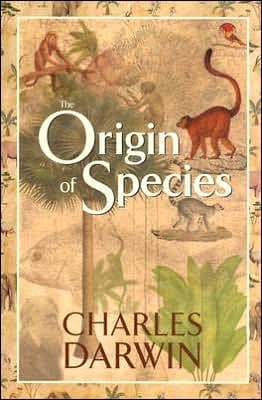
The Origin of Species cover
Archivist's Choice

The Origin of Species

Charles Darwin (1959)

Genre

Reference / History / Science / Philosophy

Reading Time

1200-1800 min

Key Themes

See below

Track Your Reading

Sign in to track this book

Darwin's work reveals nature's endless, unguided process, where all life, from plants to humans, adapts and faces extinction in a complex, beautiful, and harsh cycle.

Core Idea

The Origin of Species suggests that all life on Earth shares a common ancestor and has changed over long periods through natural selection. This process means individuals with traits better suited to their environment are more likely to survive, reproduce, and pass those traits to their offspring. This leads to gradual changes in populations over generations. This 'descent with modification' explains life's great diversity and adaptation, how new species form, and why others die out. All this is driven by the constant struggle for survival and the small, continuous work of natural forces over vast amounts of time.
Reading time
1200-1800 min
Difficulty
Hard
✓ Read this if...
You are interested in the foundational text of evolutionary biology, the history of science, or understanding the meticulous argumentation and empirical observations that reshaped our understanding of life's diversity and origins.
✗ Skip this if...
You prefer modern, updated scientific texts over historical primary sources, or are looking for a quick, simplified overview of evolution without delving into 19th-century scientific discourse and extensive detailed examples.

Core idea

The central argument and framework that powers the entire book.

The Origin of Species suggests that all life on Earth shares a common ancestor and has changed over long periods through natural selection. This process means individuals with traits better suited to their environment are more likely to survive, reproduce, and pass those traits to their offspring. This leads to gradual changes in populations over generations. This 'descent with modification' explains life's great diversity and adaptation, how new species form, and why others die out. All this is driven by the constant struggle for survival and the small, continuous work of natural forces over vast amounts of time.

At a glance

Reading time

1200-1800 min

Difficulty

Hard

Read this if...

You are interested in the foundational text of evolutionary biology, the history of science, or understanding the meticulous argumentation and empirical observations that reshaped our understanding of life's diversity and origins.

Skip this if...

You prefer modern, updated scientific texts over historical primary sources, or are looking for a quick, simplified overview of evolution without delving into 19th-century scientific discourse and extensive detailed examples.

Key Takeaways

1

Descent with Modification

Life's grand, branching tree of interconnectedness.

Quote

I can see no good reason why the views given in this volume should shock the religious feelings of any one.

Darwin's most basic idea, 'descent with modification,' says that all life shares a common ancestor and has changed over vast amounts of time through gradual alteration. This means species change, and it also means a large, branching tree of life where every part connects to a shared origin. This idea overturned the common belief that species were fixed and created independently. Instead, it showed a dynamic, connected biological world where new forms come from existing ones through small, cumulative changes. It's a powerful idea of co...

Supporting evidence

Darwin meticulously details homologous structures across diverse species (e.g., the similar bone structure in the limbs of humans, bats, and whales), vestigial organs, and the embryological similarities across vertebrates as evidence for a shared ancestry and subsequent modification.

Apply this

When observing any two species, consider not just their differences but their shared fundamental characteristics, which are often echoes of a common ancestor. This perspective encourages a deeper appreciation for the interconnectedness of all life and provides a framework for understanding biodiversity.
common-ancestryhomologyphylogeny
2

Natural Selection: The Engine of Change

Survival of the 'fittest' is not about strength, but adaptation.

Quote

I have called this principle, by which each slight variation, if useful, is preserved, by the term Natural Selection.

Natural selection is the main way Darwin proposed for evolutionary change. It works on three basic ideas: variation, inheritance, and different rates of survival and reproduction. Individuals within a population show variations that can be passed down. When the environment creates pressures, some of these variations help individuals survive or reproduce better. This means those individuals are more likely to survive and pass on their helpful traits. Over generations, these 'favorable' variations build up, leading to gradual changes in...

Supporting evidence

Darwin extensively cites examples from artificial selection (dog breeding, pigeon fancying) to illustrate how selection can rapidly alter traits, then extrapolates this principle to the slower, more subtle action of natural processes. He also discusses the struggle for existence and the Malthusian principle of population growth outstripping resources.

Apply this

Recognize that 'fitness' in a biological context is entirely relative to the specific environment. Understanding this helps us avoid anthropocentric biases and appreciate the diverse strategies life employs to thrive. It also underscores the importance of genetic diversity for a species' long-term resilience.

variationinheritancedifferential-reproductionadaptation
3

The Struggle for Existence

Life's relentless competition shapes the living world.

Quote

Battle within battle must be continually recurring with varying success; and yet in every case the result is not extinction alone, but the improvement of one race or the other.

Darwin's idea of the 'struggle for existence' is key to understanding natural selection. This is not always a violent fight, but rather the constant challenge all organisms face to survive and reproduce with limited resources. This struggle happens between individuals of the same species (for mates, food, territory), between different species (predation, competition), and against the physical environment (climate, disease). This constant pressure removes individuals less suited to their conditions, ensuring that only the 'fittest' (th...

Supporting evidence

Darwin draws heavily on Malthus's ideas about population growth, noting that all species produce more offspring than can possibly survive. He gives examples like the exponential reproductive capacity of elephants, which if unchecked, would cover the Earth in a few centuries, demonstrating the immense mortality rates in nature.

Apply this

When observing ecosystems, look beyond the obvious interactions. Consider the subtle competitions for light, water, nutrients, or space that are constantly occurring, even among seemingly static plant life. This broadens one's understanding of ecological dynamics and resource allocation.

malthusian-principlecompetitionresource-limitationsurvival
4

Sexual Selection: A Different Kind of Battle

Beauty and display drive evolution, sometimes at the cost of survival.

Quote

Sexual selection depends on the success of certain individuals over others of the same sex, in relation to the propagation of the species.

While natural selection focuses on survival, sexual selection explains traits that improve reproductive success, even if they harm survival. This happens through two main ways: male-male competition (e.g., stags fighting for mates) and female choice (e.g., peacocks showing off tails to attract peahens). These pressures can lead to exaggerated, often beautiful, but sometimes awkward features like bright feathers, complex songs, or large antlers. This shows that evolution is not just about efficiency, but also about the complex and some...

Supporting evidence

Darwin meticulously describes the elaborate plumage of male birds of paradise, the complex songs of birds, and the competitive struggles among male deer, recognizing that these traits are often costly in terms of energy or vulnerability to predators but are crucial for attracting mates.

Apply this

When encountering seemingly 'impractical' or exaggerated features in animals (like a peacock's tail), consider their role in attracting mates or competing with rivals, rather than just their utility for daily survival. This offers insight into the complex trade-offs inherent in evolution.

sexual-dimorphismmate-choiceintersexual-selectionintrasexual-selection
5

Gradualism and Deep Time

Evolution unfolds over immeasurable epochs, not sudden leaps.

Quote

Nature abhors an abrupt and sudden transition.

Darwin strongly believed that evolutionary change happens slowly. It occurs through many small variations over vast geological periods. This idea, called gradualism, was very different from common ideas of sudden changes or divine intervention. For natural selection to work, there must be enough time for tiny, helpful changes to build up, leading to big transformations. This required a radical increase in the estimated age of the Earth, from a few thousand years to millions, or even billions, of years. Without 'deep time,' the scale o...

Supporting evidence

Darwin often refers to the imperfections of the geological record, arguing that the rarity of transitional fossils is due to the incompleteness of fossilization, not the absence of gradual change. He also cites geological processes like erosion and sedimentation, which operate slowly but profoundly, as analogies for biological change.

Apply this

When considering evolutionary processes, resist the urge to imagine rapid, dramatic shifts. Instead, visualize change as an incredibly slow, continuous process, much like the erosion of a mountain range over millennia. This perspective fosters patience and a deeper appreciation for the subtle forces at play.

gradualismdeep-timegeological-timefossil-record
6

The Imperfection of Adaptation

Evolution is a tinkerer, not a perfect designer.

Quote

Natural selection acts only by the preservation and accumulation of infinitesimally small inherited modifications, each profitable to the preserved being.

One of Darwin's most insightful observations is that adaptations are rarely perfect. Natural selection works with existing variations and past events, leading to solutions that are 'good enough' rather than perfectly designed. Organisms carry legacies of their evolutionary past. This results in compromises and imperfections—think of the human eye's blind spot or the recurrent laryngeal nerve's absurdly long path in giraffes. This 'tinkering' approach, rather than intelligent design, is a key feature of evolution. It shows that life is...

Supporting evidence

Darwin discusses vestigial organs like the human appendix or rudimentary wings in flightless birds, which serve little to no function but are remnants of ancestral forms. He also notes the 'clumsy' design of certain structures that suggest modification from earlier forms rather than ideal creation.

Apply this

When analyzing biological structures, look for imperfections, historical relics, or compromises rather than assuming every feature is perfectly optimized. This shifts understanding from a teleological (purpose-driven) view to a historical, evolutionary one, revealing the constraints and opportunities of past adaptations.

vestigial-structuresevolutionary-compromisesuboptimal-designhistorical-contingency
7

The Power of Isolation

Geographic barriers drive the formation of new species.

Quote

Isolation, also, is an important element in the formation of new species.

While Darwin himself did not fully develop the concept of speciation, 'The Origin of Species' clearly suggests that geographical isolation is crucial for new species to form. When populations are separated by physical barriers (mountains, oceans, rivers), they no longer exchange genes. Over time, different selective pressures and random mutations build up in each isolated group, leading to different evolutionary paths. Eventually, these populations become so genetically distinct that they can no longer interbreed, thus becoming separa...

Supporting evidence

Darwin frequently discusses endemic species found on islands (like the Galapagos finches, though he didn't fully grasp their significance until later), noting how their distinctness relates to their isolation from mainland populations. He also mentions the distinct flora and fauna found on different continents.

Apply this

Consider how geographical features in your local environment might have historically influenced the distribution and diversification of species. This can help explain patterns of biodiversity and the existence of unique local species.

geographic-isolationallopatric-speciationgene-flowendemic-species
8

The Interconnected Web of Life

All organisms are linked in a delicate ecological balance.

Quote

Battle within battle must be continually recurring with varying success; and yet in every case the result is not extinction alone, but the improvement of one race or the other.

Beyond the struggle for survival, Darwin also described the complex connections within ecosystems. He understood that species do not exist alone. They are part of a complex web of relationships—predator-prey, host-parasite, and mutual interactions. The fate of one species can greatly affect many others, creating a delicate balance where changes spread throughout the system. This ecological view, though not explicitly named 'ecology' by Darwin, is a basic part of his work. It reveals the deep connections and mutual reliance that charac...

Supporting evidence

Darwin famously illustrates this with his example of the intricate relationship between cat populations, field mice, humble-bees (bumblebees), and the fertilization of clover. More cats mean fewer mice, which means more bees, which means more clover, demonstrating a chain of ecological effects.

Apply this

When considering environmental issues, always think about the cascading effects of actions. Removing one species or altering one habitat can have unforeseen and significant impacts on an entire ecological community, underscoring the importance of holistic conservation efforts.

ecosystemfood-webmutualismecological-balance
9

The Grandeur of This View of Life

Evolution transforms our understanding of beauty and purpose.

Quote

There is grandeur in this view of life, with its several powers, having been originally breathed into a few forms or into one; and that whilst this planet has gone cycling on according to the fixed law of gravity, from so simple a beginning endless forms most beautiful and most wonderful have been, and are being, evolved.

Darwin ends 'The Origin of Species' with a strong statement about the deep beauty and wonder in the evolutionary process. Understanding that all life forms came from 'so simple a beginning' through natural laws does not diminish life. Instead, it increases our appreciation for the complexity, adaptability, and sheer diversity of the biological world. It replaces a static, pre-ordained view with a dynamic, ever-changing story of life's development, where beauty comes from struggle and adaptation. This perspective offers a deep sense of...

Supporting evidence

The closing paragraph of the book itself serves as the primary evidence, a philosophical summation that ties together all the scientific observations into a cohesive, inspiring worldview.

Apply this

Cultivate a sense of wonder and curiosity about the natural world, viewing every organism, no matter how simple, as a testament to billions of years of evolutionary history. This perspective can enrich our appreciation for biodiversity and motivate efforts towards conservation.

awebiodiversityevolutionary-beautynatural-laws

Critical analysis

Notable Quotes

But with regard to the material world, however, we can at least go so far as this—we can perceive that events are brought about not by insulated interpositions of Divine power, exerted in each particular case, but by the establishment of general laws.

From the Introduction, setting the stage for his scientific approach.

I can see no good reason why the views given in this volume should shock the religious feelings of any one.

From the Conclusion, addressing potential religious objections.

I have called this principle, by which each slight variation, if useful, is preserved, by the term Natural Selection.

Chapter 4: Natural Selection; or the Survival of the Fittest, introducing the core concept.

It is not the strongest of the species that survives, nor the most intelligent that survives. It is the one that is most adaptable to change.

A widely attributed (though not directly found in this exact phrasing) sentiment reflecting the essence of his theory.

Light will be thrown on the origin of man and his history.

From the Conclusion, a subtle but profound hint at future implications of his theory.

There is no exception to the rule that every organic being naturally increases at so high a rate, that if not destroyed, the earth would soon be covered by the progeny of a single pair.

Chapter 3: Struggle for Existence, discussing the Malthusian principle.

As natural selection works solely by and for the good of each being, all corporeal and mental endowments will tend to progress towards perfection.

Chapter 6: Difficulties on Theory, discussing the idea of progress.

Analogy would lead me one step further, namely, to the belief that all animals and plants have descended from some one prototype.

From the Conclusion, speculating on a common ancestor.

We see the beauty of the world by the very imperfections of its parts.

A philosophical observation on the nature of life and evolution.

The geological record is imperfect; but the evidence it affords, though imperfect, is of the highest importance.

Chapter 9: On the Imperfection of the Geological Record, addressing a major criticism.

It is interesting to contemplate an entangled bank, clothed with many plants of many kinds, with birds singing on the bushes, with various insects flitting about, and with worms crawling through the damp earth, and to reflect that these elaborately constructed forms, so different from each other, and dependent on each other in so complex a manner, have all been produced by laws acting around us.

The very last paragraph of the book, a poetic summary of his theory.

Thus, from the war of nature, from famine and death, the most exalted object which we are capable of conceiving, namely, the production of the higher animals, directly follows.

From the Conclusion, reflecting on the consequences of the struggle for existence.

Man can act only on external characters; nature can act on every internal organ, on every shade of constitutional difference, on the whole machinery of life.

Chapter 4: Natural Selection, contrasting artificial and natural selection.

On the principle of natural selection with divergence of character, it is impossible to say how far the continuous action of this force may extend in modifying the forms of life.

Chapter 4: Natural Selection, emphasizing the power and scope of the process.

Quiz

Test Your Knowledge

Ready to see how well you understood this book? Take our interactive quiz with 10 questions.

10
Questions
~5
Minutes
?
Best Score

Key Questions (FAQ)

The book argues that species gradually evolve over long periods through a process called natural selection. This process favors individuals with traits best suited to their environment, leading to the survival and reproduction of the fittest, and the eventual diversification of life forms.

About the author

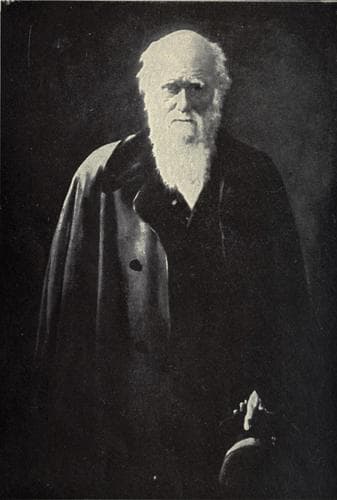
Charles Darwin

Charles Darwin was a renowned English naturalist and geologist, best known for his groundbreaking work 'On the Origin of Species.' His extensive research and observations during the voyage of the HMS Beagle led to his theory of evolution by natural selection. Darwin's other notable works include 'The Descent of Man' and 'The Expression of the Emotions in Man and Animals,' which profoundly influenced scientific thought.