BookBrief
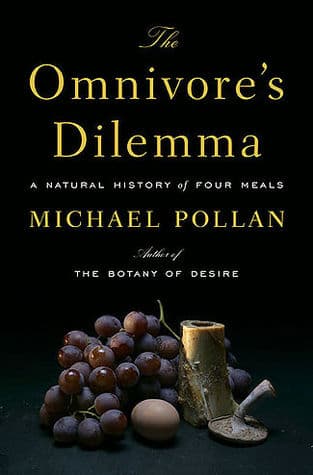
The Omnivore's Dilemma: A Natural History of Four Meals cover
Archivist's Choice

The Omnivore's Dilemma: A Natural History of Four Meals

Michael Pollan (2006)

Genre

Politics / Lifestyle / History / Health / Science

Reading Time

12 Minutes

Key Themes

See below

Track Your Reading

Sign in to track this book

Core Idea

Michael Pollan's "The Omnivore's Dilemma" explores the origins of the food we eat, tracing four distinct meals back to their agricultural roots: an industrial meal, an organic-industrial meal, a local-sustainable meal, and a hunter-gatherer meal. Pollan argues that modern industrial food systems have obscured our connection to food production, leading to confusion about what we should eat and the environmental and health consequences of our choices. He advocates for a return to more transparent, sustainable, and locally sourced food chains as a way to resolve the 'omnivore's dilemma' – the inherent challenge humans face in deciding what to consume from an overwhelming array of potential foods.
Difficulty
Medium

Core idea

The central argument and framework that powers the entire book.

Michael Pollan's "The Omnivore's Dilemma" explores the origins of the food we eat, tracing four distinct meals back to their agricultural roots: an industrial meal, an organic-industrial meal, a local-sustainable meal, and a hunter-gatherer meal. Pollan argues that modern industrial food systems have obscured our connection to food production, leading to confusion about what we should eat and the environmental and health consequences of our choices. He advocates for a return to more transparent, sustainable, and locally sourced food chains as a way to resolve the 'omnivore's dilemma' – the inherent challenge humans face in deciding what to consume from an overwhelming array of potential foods.

At a glance

Difficulty

Medium

Key Takeaways

1

The Industrial Food Chain: An Edible Illusion

Modern industrial agriculture, driven by corn, creates a food system that is efficient but environmentally and nutritionally bankrupt.

Quote

We are what we eat, it is often said, but if this is true, then most Americans today are walking corn chips.

Pollan examines the industrial food chain, showing how almost all American food, from soda to feedlot beef, comes from corn. This single crop, subsidized and engineered for high yield, supports a system that is productive but deeply flawed. Animals, even those like cattle not suited for corn, are fed it, leading to digestive problems and a need for antibiotics. This efficiency depletes soil, uses much fossil fuel, and reduces food's nutritional variety. The industrial system values quantity and low cost over quality, health, and ecolo...

Supporting evidence

Pollan's journey to an Iowa cornfield and subsequent tracing of corn through the food system, from feedlots to high-fructose corn syrup in processed foods, demonstrates its pervasive influence. He highlights the physiological impact of corn-fed beef versus grass-fed beef on animal health and, by extension, human health.

Apply this

Become a label detective. Look for ingredients that indicate a reliance on industrial corn (e.g., high-fructose corn syrup, corn oil, corn-fed meat). Prioritize whole, unprocessed foods to minimize exposure to this ubiquitous and often hidden ingredient.

2

The Illusion of 'Organic': Navigating the Supermarket

The industrialization of organic food has diluted its original promise, requiring consumers to look beyond the label for true sustainability.

Quote

Industrial organic agriculture has become a victim of its own success, forced to compromise its original ideals in order to compete in the mainstream marketplace.

Pollan explores the 'organic' food chain, distinguishing between small, sustainable farms and large industrial organic operations. While industrial organic avoids synthetic pesticides and fertilizers, it often uses monoculture and long-distance shipping, hurting its environmental impact. The book argues that the 'organic' label, though a step forward, does not always ensure animal welfare, local sourcing, or truly sustainable practices. Consumers must learn to tell the difference between ethical organic products and those that just me...

Supporting evidence

Pollan's comparison of Polyface Farm (Joel Salatin's 'beyond organic' farm) with large-scale industrial organic dairies or produce operations illustrates the vast difference in ecological impact and animal welfare despite both being 'organic.'

Apply this

Seek out local farmers' markets, CSAs (Community Supported Agriculture), or directly inquire about the practices of 'organic' brands. Prioritize 'pasture-raised,' 'grass-fed,' and 'humanely raised' labels, and consider the carbon footprint of your organic produce.

3

Beyond Organic: The Integrated Farm Ecosystem

True food sustainability lies in diversified, integrated farm ecosystems that mimic natural processes, exemplified by Joel Salatin's Polyface Farm.

Quote

The greatest criticism of industrial agriculture is that it is a system of one-way flows, of inputs and outputs, rather than a system of cycles.

This is the book's best idea. Pollan's look at Joel Salatin's Polyface Farm in Virginia shows how food can be grown ethically and sustainably. Salatin's 'beyond organic' method mixes different animals (chickens after cows, pigs in forests) in a system where waste becomes fertilizer, pests are controlled naturally, and land improves. This method, though it takes more work, shows respect for nature and offers a different way from industrial and industrial-organic farming. It shows that doing what is right for the land often leads to the...

Supporting evidence

The detailed description of Polyface Farm's rotational grazing system, where cattle graze, followed by 'egg-mobiles' carrying chickens that spread manure and eat insect larvae, illustrating a highly efficient, symbiotic ecosystem.

Apply this

Support farms that prioritize ecological integration and animal welfare. Look for producers who explicitly describe their farming practices, emphasizing biodiversity, soil health, and humane treatment, not just 'organic' certification.

4

The Hunter-Gatherer Within: Reclaiming Our Primal Connection

Foraging and hunting offer a radical, yet deeply satisfying, path to understanding our food and our place in the natural world.

Quote

The act of hunting, of killing, of gathering, connects us to the land and to the animals we eat in a way that is utterly alien to the modern supermarket shopper.

Pollan's experience hunting and gathering wild mushrooms and a wild pig is an extreme, but eye-opening, answer to the omnivore's dilemma. This direct interaction with food sources creates a deep connection with nature, an understanding of ecological cycles, and a strong sense of the sacrifice involved in eating. It shows that food is not just a product, but comes from life and death, effort and skill. While not for everyone, this part shows the emotional and spiritual emptiness caused by our distance from food production and suggests ...

Supporting evidence

Pollan's detailed accounts of hunting a wild pig, gutting it, and preparing it for a meal, as well as his mushroom foraging expedition with experts, vividly illustrate the labor, knowledge, and intimate connection required.

Apply this

Consider growing some of your own food, even herbs on a windowsill. Explore local foraging opportunities with experts, or simply become more aware of the wild edible plants in your environment. This fosters a deeper appreciation for where food comes from.

5

The Anxieties of Omnivory: A Historical Perspective

Modern dietary confusion is an exaggerated echo of humanity's ancient struggle to discern edible from inedible, beneficial from harmful.

Quote

The omnivore's dilemma is not merely a problem of what to eat, but a problem of how to eat, of how to make sense of the bewildering array of choices that confront us.

Pollan describes the modern American 'national eating disorder' as a worsening of an old evolutionary problem. Unlike animals that eat only one thing (like pandas eating bamboo), omnivores have the freedom, and therefore the worry, of choice. Our ancestors made cultural rules to handle this, but modern society, with its constant food changes, advertising, and scientific claims, has mostly broken down these traditions, leaving us unsure. This history helps explain why we are so easily swayed by diet fads and why 'what to eat' has becom...

Supporting evidence

Pollan references anthropological theories about the 'omnivore's dilemma' as an evolutionary pressure, contrasting human dietary flexibility with the rigidity of dietary specialists. He also discusses the historical role of culture and tradition in shaping human diets.

Apply this

Be wary of singular dietary 'solutions' or fads. Instead, look to enduring food cultures and traditions (e.g., Mediterranean, Asian diets) that have historically sustained health. Re-establish mealtime rituals and shared eating experiences.

6

The Hidden Costs of Cheap Food

The seemingly low price of industrial food masks significant environmental, health, and social externalities that are ultimately paid by all of us.

Quote

The true cost of food is not reflected in its price tag; it's externalized onto the environment, the animals, the workers, and ultimately, our own health.

Pollan shows that the 'cheapness' of industrial food is false. The low supermarket prices do not include environmental damage (pesticide runoff, greenhouse gas emissions), public health costs (obesity, diabetes from processed foods), exploitation of farm workers, or inhumane animal treatment. Society pays these 'externalized costs.' While this argument does not fully address why some people cannot afford more expensive, sustainable food, it strongly redefines food's value, urging consumers to look beyond the price tag. It questions th...

Supporting evidence

The discussion of corn subsidies, the pollution from feedlots, the energy input required for industrial farming, and the health crisis linked to the Western diet all point to these hidden costs.

Apply this

Recognize that investing in higher-quality, sustainably produced food is an investment in your health and the environment. Advocate for policies that internalize these costs, making sustainable food more accessible and conventional food reflect its true impact.

7

Cooking as an Act of Resistance and Connection

Reclaiming the kitchen is a vital step towards food literacy, health, and resisting the industrial food system's power.

Quote

To eat is to participate in the world, and to cook is to participate more fully and thoughtfully.

While much of the book focuses on how food is made, Pollan implies that cooking is important. By cooking meals from scratch, people control ingredients, rely less on processed foods, and better appreciate the work involved in food production. Cooking becomes a way to take charge, to connect with ingredients, family, and cultural history. It also builds 'food literacy' – knowing where food comes from and how to prepare it. This idea, though not as detailed as the supply chains, is a key practical lesson for dealing with the omnivore's ...

Supporting evidence

Pollan's own narrative of preparing meals from his foraged and hunted ingredients, as well as his descriptions of traditional food preparation methods, emphasize the connection forged through cooking.

Apply this

Dedicate more time to cooking at home, using whole, unprocessed ingredients. Involve family members, especially children, in the cooking process to foster food literacy and appreciation.

8

Know Your Food Chains: The Power of Tracing Origins

Understanding the journey of our food, from soil to plate, is the most powerful tool for making informed and ethical eating choices.

Quote

The single greatest thing you can do for your health and the health of the planet is to begin to understand where your food comes from.

The book's main method—following food chains—is a lesson in itself. By tracing industrial, organic, and hunter-gatherer meals from their start to his plate, Pollan shows that real food knowledge is not about calorie counting or nutrient ratios, but about understanding the whole system that makes our food. This 'food systems' thinking helps consumers look past simple labels and choose based on environmental impact, animal welfare, and human health. It helps people become active parts of the food system instead of just passive buyers.

Supporting evidence

The entire structure of the book, which systematically follows each of the three food chains (industrial, pastoral/organic, personal/wild), serves as evidence for this principle.

Apply this

Actively seek information about where your food comes from. Ask questions at farmers' markets, read up on producers, and choose foods with transparent origins. Prioritize direct relationships with farmers whenever possible.

9

The Co-Evolutionary Dance: Humans and Food Species

Our relationship with the plants and animals we eat is a dynamic, reciprocal one, shaping both our diets and their very existence.

Quote

We didn't just domesticate these plants and animals; they domesticated us too, shaping our bodies, our societies, and our very consciousness.

Pollan often points out how humans and the species we eat have changed together. Corn, for instance, has been so changed by human farming that it cannot live without us. Likewise, our diets have been shaped by what these species offer. This view challenges the idea that humans are the only masters of nature, showing a deep, two-way dependence. Understanding this makes us feel more responsible for the plants and animals that feed us, arguing that their health is tied to our own. This detailed understanding adds depth to the ethical que...

Supporting evidence

The history of corn's domestication and its current reliance on human intervention, as well as the selective breeding of livestock for specific traits, illustrate this co-evolution.

Apply this

Recognize that your food choices have direct impacts on the genetic diversity and future existence of food species. Support practices that promote biodiversity and the health of cultivated and wild ecosystems.

10

Eat Food, Not Too Much, Mostly Plants: A Simple Mantra

Despite the complexity, Pollan distills the solution to the omnivore's dilemma into a few clear, actionable principles.

Quote

Eat food. Not too much. Mostly plants.

After many pages explaining the food system, Pollan offers simple, but powerful, eating rules. 'Eat food' means eating whole, unprocessed ingredients that your great-grandmother would recognize as food, avoiding 'edible foodlike substances.' 'Not too much' addresses overeating in modern society. 'Mostly plants' highlights the health and environmental benefits of a plant-focused diet, while still allowing for the flexibility of an omnivore. This idea, though not fully explored in The Omnivore's Dilemma (it is the focus of *In Defense...

Supporting evidence

This mantra is the synthesis of all the research and experiences presented in the book, drawing conclusions from the analysis of industrial food's harms and the benefits of more natural diets.

Apply this

Prioritize whole, unprocessed foods. Be mindful of portion sizes. Make vegetables, fruits, and legumes the largest part of your diet, reducing reliance on meat and highly processed items.

Critical analysis

Notable Quotes

Quiz

Test Your Knowledge

Ready to see how well you understood this book? Take our interactive quiz with 10 questions.

10
Questions
~5
Minutes
?
Best Score

Key Questions (FAQ)

The Omnivore's Dilemma explores the origins of the food we eat by tracing four different meals back to their sources. Michael Pollan examines industrial food, organic food, and food we forage ourselves, revealing the complex systems and consequences behind our dietary choices.

About the author