BookBrief
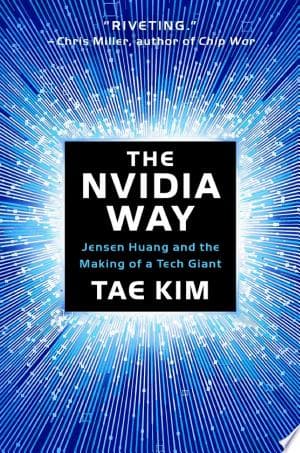
The Nvidia Way: Jensen Huang and the Making of a Tech Giant cover
Archivist's Choice

The Nvidia Way: Jensen Huang and the Making of a Tech Giant

Tae Kim (2024)

Genre

General

Reading Time

12 Minutes

Key Themes

See below

Track Your Reading

Sign in to track this book

Core Idea

"The Nvidia Way" explores the remarkable journey of Nvidia, from its humble beginnings as a graphics card manufacturer to its current status as a semiconductor and AI powerhouse, with a particular focus on the visionary leadership of co-founder and CEO Jensen Huang. The book dissects the strategic decisions, technological bets, and cultural principles that allowed Nvidia to not only survive the volatile tech industry but to repeatedly reinvent itself, anticipating major shifts from gaming to professional visualization, data centers, and ultimately, the artificial intelligence revolution. It argues that Huang's unique blend of long-term vision, engineering prowess, and an unwavering commitment to innovation and execution has been the driving force behind Nvidia's sustained success and its pivotal role in shaping the future of computing.
Difficulty
Medium

Core idea

The central argument and framework that powers the entire book.

"The Nvidia Way" explores the remarkable journey of Nvidia, from its humble beginnings as a graphics card manufacturer to its current status as a semiconductor and AI powerhouse, with a particular focus on the visionary leadership of co-founder and CEO Jensen Huang. The book dissects the strategic decisions, technological bets, and cultural principles that allowed Nvidia to not only survive the volatile tech industry but to repeatedly reinvent itself, anticipating major shifts from gaming to professional visualization, data centers, and ultimately, the artificial intelligence revolution. It argues that Huang's unique blend of long-term vision, engineering prowess, and an unwavering commitment to innovation and execution has been the driving force behind Nvidia's sustained success and its pivotal role in shaping the future of computing.

At a glance

Difficulty

Medium

Key Takeaways

1

The Long Game Pays Off

Nvidia's success stems from a relentless, multi-decade commitment to future technologies, not short-term gains.

Quote

Nvidia played the longest of long games, repeatedly creating new markets and outmaneuvering competitors.

This book's strongest insight is Nvidia's dedication to a long-term vision, often years, if not decades, ahead of market demand. Unlike many tech companies driven by quarterly results, Jensen Huang created a culture that embraced significant, sustained investment in technologies like parallel computing and AI when they were new. This 'long game' strategy allowed them to build foundational technologies and ecosystems (like CUDA) that became essential once the market caught up, giving them an insurmountable lead. It shows the strategic ...

Supporting evidence

Nvidia's early and sustained investment in GPU computing for non-gaming applications, long before the AI boom, and the development of CUDA.

Apply this

Entrepreneurs and managers should cultivate a culture that values long-term strategic bets and sustained R&D, even if immediate returns aren't apparent, to build durable competitive advantages.


2

Jensen Huang's Unique Leadership

A blend of maniacal work habits, direct communication, and a flat organizational structure defines Nvidia's CEO and culture.

Quote

[L]oaded with fascinating details about Huang’s unusual leadership style and maniacal work habits.

Jensen Huang is a unique leader, known for his intense personal commitment, a 'flat' organizational structure, and a direct, often challenging, communication style. He encourages low-level employees to help shape strategic direction, breaking traditional corporate hierarchies. This approach, while possibly intimidating, creates an environment of openness and meritocracy, where ideas are judged on their content rather than the originator's rank. His personal focus on detail and problem-solving influences the company, driving a culture ...

Supporting evidence

Description of Huang's 'maniacal work habits,' the flat organizational structure, and his direct engagement with employees at all levels.

Apply this

Leaders should consider fostering flatter organizational structures and direct communication to empower employees and accelerate decision-making, while maintaining high standards and personal involvement.

3

Solving the Innovator's Dilemma

Nvidia actively guards against complacency by continuously reinventing its approach and challenging its own successes.

Quote

Jensen’s obsession with solving the Innovator’s Dilemma... drove him to reinvent his approach to corporate strategy.

This book shows how Jensen Huang was aware of the 'Innovator's Dilemma' – the way successful market leaders can be disrupted by smaller, faster companies. Nvidia's strategy was not just about innovation, but about self-disruption. They consciously avoided being satisfied with their gaming GPU dominance, instead moving into new, unproven markets like professional visualization, data centers, and AI. This constant reinvention, even when profitable, kept them adaptable and ready for the future, preventing them from being trapped by their...

Supporting evidence

Nvidia's pivot and massive investment into AI and data center GPUs, even while their gaming GPU business was thriving.

Apply this

Companies, especially market leaders, should proactively invest in emerging technologies and be willing to disrupt their own successful business models to avoid stagnation and disruption.

4

From Niche to Necessity: The AI Bet

Nvidia's foresight in betting big on AI, years before its mainstream adoption, was a pivotal strategic gamble.

Quote

How Nvidia saw the coming AI wave sooner than anyone else, and how it bet its future on a technology that had not yet arrived.

The narrative shows Nvidia's most important strategic gamble: its early and large commitment to artificial intelligence. While others focused on immediate market needs, Nvidia put resources into developing GPUs suitable for parallel processing, recognizing their potential for accelerating AI workloads. This was a fundamental reorientation of the company's future, betting on a technology that was still largely academic. This bold foresight, along with the development of the CUDA platform, positioned them perfectly to benefit from the g...

Supporting evidence

The long-term development of CUDA and the significant R&D investment in AI-specific GPU architectures years before the recent AI boom.

Apply this

Leaders should cultivate a culture of foresight and be prepared to make significant, risky bets on unproven technologies if the long-term strategic alignment is strong, rather than waiting for market validation.

5

Overcoming Early Missteps

Nvidia's resilience and adaptability allowed it to navigate and recover from significant foundational challenges.

Quote

How Nvidia managed to overcome early missteps that would have killed most start-ups.

The book details how Nvidia's path was not always successful. Early in its history, the company faced significant technical and market challenges that would have ended many startups. However, Nvidia showed remarkable resilience, adaptability, and a willingness to learn from failures. This ability to change, adjust, and persist through adversity is a critical element of their eventual triumph. It was not just about having a good idea, but about the grit and determination to refine that idea and survive the inevitable setbacks that come...

Supporting evidence

Specific examples of early product failures or strategic errors and how the company recovered, as detailed in the book's founding account.

Apply this

Entrepreneurs should understand that failure is often part of the innovation process; building resilience, adaptability, and a culture of learning from mistakes is crucial for long-term survival and success.

6

Ecosystem Lock-in: The CUDA Advantage

Nvidia's proprietary CUDA platform created an unparalleled developer ecosystem, securing its market dominance.

Quote

The definitive look at the most remarkable business story of this era.

While often overlooked in favor of hardware, the book shows CUDA as a critical differentiator for Nvidia. By investing heavily in a proprietary software platform that made it easier for developers to program their GPUs for parallel computing, Nvidia created a powerful network effect. This 'ecosystem lock-in' meant that even if competitors could match Nvidia's hardware performance, they could not easily replicate the vast library of tools, frameworks, and developer expertise built around CUDA. This strategy turned hardware into a platf...

Supporting evidence

The multi-decade development and continuous improvement of the CUDA platform, and its widespread adoption in scientific computing and AI research.

Apply this

Companies should consider how to create strong platform ecosystems around their core products, leveraging software and developer tools to build defensible competitive advantages beyond mere hardware or feature parity.

7

The Power of Focus and Specialization

Nvidia's singular focus on the GPU allowed it to become the undisputed leader in a critical computing paradigm.

Quote

Nvidia is the darling of the age of artificial intelligence: its chips are powering the generative-AI revolution, and demand is insatiable.

Unlike generalist semiconductor companies, Nvidia made a foundational bet on the Graphics Processing Unit (GPU) and stayed with it, evolving its capabilities far beyond its initial gaming purpose. This intense specialization allowed them to put all their engineering and R&D resources into mastering parallel processing, rather than diversifying across various chip architectures like CPUs, memory, or other ASICs. This deep focus helped them innovate quickly, ultimately making the GPU the cornerstone of modern AI and high-performance com...

Supporting evidence

Nvidia's consistent focus on GPU architecture development and refinement since its founding, rather than diversifying into CPU production like Intel.

Apply this

Businesses should identify their core competency and consider deep specialization to achieve market leadership, rather than diluting efforts across too many different product lines or technologies.

8

Culture as a Competitive Advantage

Nvidia's distinct culture, shaped by Jensen Huang, is a key driver of its sustained innovation and success.

Quote

A rare view into Nvidia’s distinct culture and Jensen’s management principles.

The book emphasizes that Nvidia's success is not solely about technology or strategy, but is rooted in its unique corporate culture. This culture, a reflection of Jensen Huang's personality and principles, combines an intense work ethic, intellectual curiosity, direct feedback, and a shared long-term vision. It is an environment where challenging assumptions is encouraged, and where a relentless pursuit of 'the impossible' is normal. This cultural foundation allows the company to attract and retain top talent, make bold bets, and navi...

Supporting evidence

Descriptions of Jensen Huang's management principles, the flat organizational structure, and anecdotes illustrating the company's internal dynamics and values.

Apply this

Leaders should consciously design and nurture a strong, distinctive corporate culture that aligns with their strategic goals, recognizing it as a potent, often inimitable, source of competitive advantage.

9

Outmaneuvering Giants: The Intel Comparison

Nvidia's agility and foresight allowed it to surpass established giants like Intel in new computing paradigms.

Quote

Outmaneuvering competitors, including the original semiconductor giant, Intel, which now finds itself well behind the upstart.

A compelling part of the book is Nvidia's ability to not just survive, but thrive and eventually surpass established semiconductor giants like Intel. This was not achieved through direct competition in Intel's core CPU market, but by identifying and dominating a new, parallel computing paradigm (GPUs for AI) that Intel initially underestimated or struggled to adapt to because of its entrenched CPU architecture. It is a classic story of a nimble challenger using a paradigm shift to disrupt an incumbent, showing the dangers of relying t...

Supporting evidence

The narrative contrasting Nvidia's rise in AI with Intel's slower adaptation to the GPU-centric AI revolution.

Apply this

Companies should be vigilant about emerging technological paradigms that could render their core competencies obsolete and be willing to invest in new areas, even if it means challenging their own established market dominance.

10

The Founders' Vision: Beyond the Product

Nvidia's origin story reveals a deeper, more authoritative vision than commonly understood.

Quote

An authoritative, myth-busting account of Nvidia’s founding in 1993.

The book's account of Nvidia's founding provides important context, showing that the company's vision was more far-reaching than simply creating better graphics cards for gaming. The founders, particularly Jensen Huang, had an early intuition about the broader applications of parallel processing, even if the specific 'killer app' was not immediately clear. This deeper, underlying vision – rather than just a product idea – guided the company through its early struggles and changes, allowing it to evolve from a gaming component supplier...

Supporting evidence

The detailed account of Nvidia's founding discussions and initial strategic intent, as presented by Kim's interviews.

Apply this

Entrepreneurs should cultivate a foundational vision that transcends specific products, allowing for strategic pivots and long-term evolution in response to technological shifts and market opportunities.

Critical analysis

Notable Quotes

Quiz

Test Your Knowledge

Ready to see how well you understood this book? Take our interactive quiz with 10 questions.

10
Questions
~5
Minutes
?
Best Score

Key Questions (FAQ)

'The Nvidia Way' is a business history book that chronicles the rise of Nvidia, from its founding in 1993 to its current status as a global tech giant. It focuses on the company's culture and the leadership of cofounder and CEO Jensen Huang.

About the author