BookBrief
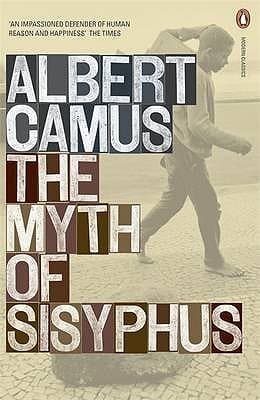
The Myth of Sisyphus cover
Archivist's Choice

The Myth of Sisyphus

Albert Camus (1955)

Genre

Philosophy

Reading Time

240 min

Key Themes

See below

Track Your Reading

Sign in to track this book

Camus writes about confronting life's absurdity, not to despair, but to find joy in rebelling against a meaningless world, like Sisyphus embracing his task.

Core Idea

Camus argues that life has no inherent meaning or purpose, a state he calls the 'Absurd.' This comes from our human need for clarity clashing with a silent, indifferent universe. Instead of giving in to despair or seeking comfort in religion, people should accept this absurd reality clearly and fight against its meaninglessness. True freedom and happiness come from this conscious, ongoing defiance—by living passionately now, engaging fully with experiences, and making our own values without outside reasons. The greatest act of defiance is to see the Absurd and still choose to live, finding joy in the struggle and the present moment, much like Sisyphus pushing his boulder.
Reading time
240 min
Difficulty
Hard
✓ Read this if...
You are grappling with questions of life's meaning, feel a sense of existential unease, or are interested in how to live passionately and freely in a world devoid of inherent purpose.
✗ Skip this if...
You prefer clear, prescriptive life advice, are uncomfortable with philosophical challenges to traditional meaning systems, or seek comfort in definitive answers rather than embracing ambiguity.

Core idea

The central argument and framework that powers the entire book.

Camus argues that life has no inherent meaning or purpose, a state he calls the 'Absurd.' This comes from our human need for clarity clashing with a silent, indifferent universe. Instead of giving in to despair or seeking comfort in religion, people should accept this absurd reality clearly and fight against its meaninglessness. True freedom and happiness come from this conscious, ongoing defiance—by living passionately now, engaging fully with experiences, and making our own values without outside reasons. The greatest act of defiance is to see the Absurd and still choose to live, finding joy in the struggle and the present moment, much like Sisyphus pushing his boulder.

At a glance

Reading time

240 min

Difficulty

Hard

Read this if...

You are grappling with questions of life's meaning, feel a sense of existential unease, or are interested in how to live passionately and freely in a world devoid of inherent purpose.

Skip this if...

You prefer clear, prescriptive life advice, are uncomfortable with philosophical challenges to traditional meaning systems, or seek comfort in definitive answers rather than embracing ambiguity.

Key Takeaways

1

Embrace the Absurd

Life's inherent meaninglessness is not a cause for despair, but a call to revolt.

Quote

There is but one truly serious philosophical problem, and that is suicide. Judging whether life is or is not worth living amounts to answering the fundamental question of philosophy.

Camus states that the basic human condition is the 'absurd'—the conflict between our natural human desire for meaning and the universe's cold, silent indifference. This conflict is not a problem to solve, but a reality to accept. The universe offers no inherent meaning, no divine plan, and no ultimate answers to our big questions. To deny this absurdity through religious faith or philosophical escape is 'philosophical suicide.' Instead, we must face this meaninglessness directly, seeing that it frees us from outside rules and lets us ...

Supporting evidence

Camus begins by framing suicide as the central philosophical question, arguing that if life is truly meaningless, then suicide becomes a rational response. He then systematically dismisses traditional religious and philosophical systems for attempting to provide a false sense of meaning.

Apply this

Confront your own existential anxieties and the lack of inherent meaning without resorting to comforting illusions. Recognize that this absence of pre-ordained purpose empowers you to create your own values and meaning.
absurdityexistentialismmeaninglessness
2

Revolt Against Meaninglessness

Our defiance against the absurd gives life its value and dignity.

Quote

The absurd man will not commit suicide; he wants to live, without renouncing any of his certainties, without a future. That is his revolt.

Revolt, for Camus, is not a political uprising, but a constant, conscious stand against the absurd. It is refusing to accept the universe's silence, living fully despite the lack of ultimate meaning, and rejecting any escape. This revolt gives human life its dignity and value. It is an ongoing process of questioning what is given, asserting one's freedom, and living with full awareness of life's fragility and limits. This defiance does not come from hope for a better future, but from an active engagement with existence now.

Supporting evidence

Camus contrasts the absurd hero, who embraces life without illusions, with those who seek solace in religious faith or nihilistic despair. He argues that persistent revolt is the only logical conclusion once the absurd is recognized.

Apply this

Actively challenge societal norms and personal expectations that are based on false hopes or external meanings. Live authentically, defining your own purpose through your actions and experiences, rather than passively accepting pre-set paths.

revoltdefianceauthenticity
3

Freedom in the Present

The absence of eternal meaning liberates us to live fully and intensely in the here and now.

Quote

The absurd man thus has no other law than what springs from his reason. He knows that he is the master of his days.

Once we let go of the idea of an afterlife or a grand cosmic plan, we are free from living for a future reward or outside judgment. This freedom lets us fully experience the present, feeling life's sensations, joys, and sorrows with greater intensity. Our freedom is not just the lack of outside chains, but the conscious choice to create our own values and purposes within our limited lives. Every moment becomes precious, not as a step to something greater, but for its own sake.

Supporting evidence

Camus discusses the 'absurd man' who, freed from hope for the future, lives with a singular focus on the present, maximizing his experiences. He uses figures like Don Juan and the actor as examples of those who embrace a multiplicity of experiences without attachment to a single, ultimate meaning.

Apply this

Practice mindfulness and intentional living, focusing on the quality of your present experiences rather than constantly striving for future outcomes. Make choices that reflect your self-created values, rather than external pressures or promises of future rewards.

present-momentfreedomintentionality
4

Passion and Experience

Quantity of experience, not quality of purpose, defines a rich absurd life.

Quote

What counts is not the best living but the most living.

Camus questions the traditional idea that a life is judged by its ultimate purpose or the 'goodness' of its goals. Instead, he suggests that the value of an absurd life comes from the sheer number and intensity of experiences it gathers. To live 'the most' means to embrace a wide range of sensations, emotions, and involvements, without favoring one over another based on some external moral code. This does not mean hedonism, but a deep, passionate engagement with every part of existence, recognizing that each authentically lived moment...

Supporting evidence

Camus illustrates this through archetypes like Don Juan, who embraces a multitude of loves without seeking a single, ultimate love; the actor, who lives many lives on stage; and the conqueror, who ceaselessly strives without an ultimate goal, embodying the spirit of quantity over quality of purpose.

Apply this

Seek out diverse experiences, cultivate curiosity, and engage passionately with the world around you. Don't be afraid to try new things, even if they don't seem to have a 'grand purpose,' as the act of living them fully is valuable in itself.

experiencepassionintensity
5

Sisyphus as the Absurd Hero

Finding joy and meaning in the struggle itself, despite its futility.

Quote

The struggle itself toward the heights is enough to fill a man's heart. One must imagine Sisyphus happy.

The myth of Sisyphus is the ultimate symbol for the absurd condition: a life of endless, repetitive, and ultimately pointless labor. Yet, Camus argues that Sisyphus is the absurd hero not because he finds meaning in his punishment, but because he consciously accepts it. In the moment he walks down the mountain, knowing his rock waits, he becomes stronger than his fate. His clarity, his awareness of the futility, and his continued effort turn his punishment into a win. His happiness is in the conscious act of revolt, in the struggle it...

Supporting evidence

Camus dedicates the final essay to Sisyphus, meticulously analyzing his predicament and concluding that his conscious awareness and defiance make him the ultimate absurd hero, finding joy in the very act of pushing the rock.

Apply this

Identify areas in your own life that feel repetitive or meaningless. Instead of despairing, consciously choose to engage in the effort, finding satisfaction and dignity in the struggle itself. Embrace tasks not for their end result, but for the act of doing them with full awareness.

Sisyphusheroismstrugglehappiness
6

Lucidity Over Hope

Clear-sighted acceptance of reality is more valuable than comforting illusions.

Quote

What is called a reason for living is also an excellent reason for dying.

Camus values clarity—a clear, steady look at life's harsh realities, including death and meaninglessness—over false hope. Hope, in the absurd sense, means believing in a future purpose, an ultimate reward, or an escape from the present. Such hope, he argues, is a form of self-deception that stops us from truly living. Embracing clarity means letting go of these illusions, accepting life's finite nature and the indifferent universe, and finding strength in this raw truth. It is a difficult path, but one that leads to true freedom and a...

Supporting evidence

Camus critiques various philosophical and religious systems for offering 'leaps of faith' that aim to resolve the absurd, thereby denying its fundamental nature. He argues that such leaps betray reason and prevent true freedom.

Apply this

Practice radical honesty with yourself about your fears, limitations, and the lack of ultimate answers. Avoid seeking comfort in beliefs that require you to deny reality. Cultivate a mindset that values truth, even if it's uncomfortable, over comforting fictions.

lucidityhopetruthself-deception
7

The Absurd Artist

Art is a powerful act of creation and revolt against the silence of the world.

Quote

Creating is living twice.

For Camus, the artist is a prime example of an absurd hero. Art is not about finding ultimate meaning or providing final answers, but about describing and reflecting the human condition in its absurdity. The act of creation itself is a form of revolt—an assertion of human will and imagination against the universe's indifference. The artist, like Sisyphus, creates endlessly, knowing their work will eventually be lost to time, yet finds deep satisfaction and meaning in the act of bringing something into being. Through art, we expand our...

Supporting evidence

Camus dedicates a section to 'Absurd Creation,' discussing the novel, drama, and painting as ways for the absurd man to live out his revolt. He emphasizes that the value of the art lies in its creation, not in its eternal truth.

Apply this

Engage in creative pursuits, whether writing, painting, music, or any form of making. Recognize that the act of creation is a powerful way to assert your individuality and find meaning in the process, regardless of the 'success' or longevity of the final product.

artcreationartistimagination
8

Solidarity in Shared Absurdity

While solitary, our shared human condition fosters a unique form of connection.

Quote

There are truths that are not told, not because they are inexpressible, but because they are useless.

Although facing the absurd is a deeply personal and solitary experience, Camus implies a subtle connection among those who recognize it. We are all, ultimately, pushing our own rocks. This shared situation, while not offering a solution, can lead to deeper empathy and understanding between people. It is a recognition that despite our individual struggles, we are united by the common fate of living in an indifferent universe. This does not lead to traditional collective action, but to a deep, unspoken acknowledgment of shared human vul...

Supporting evidence

While not explicitly stated as a central theme, Camus's consistent focus on the 'absurd man' as a universal figure implicitly suggests a shared human condition. His later works, like 'The Plague,' more directly explore themes of solidarity in the face of existential threats.

Apply this

Cultivate empathy for others, recognizing that everyone is grappling with their own version of the absurd. Find connection in shared human experiences, even the difficult ones, without needing to find ultimate answers together.

solidarityempathyhuman-conditionconnection
9

Rejecting Nihilism

The absurd is not an invitation to despair, but a starting point for action.

Quote

Nihilism is not only despair and negation but above all the desire to despair and to negate.

It is important to tell the difference between Camus's absurdism and nihilism. While both acknowledge the lack of inherent meaning, nihilism often leads to passive despair, inaction, and rejecting all values. Camus explicitly rejects this path. For him, recognizing the absurd is not an end but a beginning. It is the trigger for revolt, freedom, and passionate living. If nothing has ultimate meaning, then we are free to create our own values and to act with intensity, knowing that every moment we choose to live and create is a defiance...

Supporting evidence

Camus repeatedly contrasts the absurd man, who chooses to live and revolt, with those who fall into the trap of nihilism or philosophical suicide, arguing that despair is a choice, not an inevitable outcome of recognizing the absurd.

Apply this

When confronted with the meaninglessness of certain situations, resist the urge to fall into apathy or despair. Instead, use that realization as an impetus to define your own purpose and take action, however small, that aligns with your self-created values.

nihilismactionvaluesdespair
10

Death as the Ultimate Absurdity

The finality of death makes our finite lives all the more precious.

Quote

At the end of his effort, man is faced with death. There is no justice for the absurd man.

Death is the ultimate and undeniable sign of the absurd. It is the final, irreversible end to all our struggles, achievements, and hopes, making all future hopes meaningless. There is no 'justice' or ultimate reward after this life. However, for Camus, this stark fact does not lessen life; it makes it more intense. Knowing our limited existence, and the certainty of death, makes every moment of life more precious and urgent. It pushes us to live more fully, more passionately, and to embrace our revolt against the void with greater con...

Supporting evidence

Camus highlights death as the ultimate 'leap' that cannot be overcome, a universal certainty that underscores the finality and meaninglessness of human endeavors in a cosmic sense. It is the ultimate boundary of our freedom.

Apply this

Contemplate your own mortality not as a source of fear, but as a motivator to live more authentically and passionately in the present. Prioritize experiences and relationships that truly matter to you, recognizing the finite nature of your time.

deathmortalityfinalityurgency

Critical analysis

Notable Quotes

The struggle itself towards the heights is enough to fill a man's heart. One must imagine Sisyphus happy.

The concluding thought of the essay, reflecting on Sisyphus's fate.

There is but one truly serious philosophical problem, and that is suicide.

The opening statement of the essay, setting the central question.

Living an experience, a particular fate, is accepting it fully.

Discussing the embrace of the absurd condition.

It is not rebellion itself that is noble but the demands it makes upon itself.

Exploring the nature of the absurd hero's revolt.

The absurd man says yes and his effort will henceforth be unceasing.

Describing the commitment of the absurd individual to life despite its meaninglessness.

What is called a reason for living is also an excellent reason for dying.

Pondering the paradoxes inherent in the search for meaning.

The need to be understood is a form of spiritual laziness.

A commentary on individual isolation and the self-sufficiency of the absurd man.

Seeking what is true is not seeking what is desirable.

Distinguishing between objective truth and subjective desires.

The absurd is born of this confrontation between the human need and the unreasonable silence of the world.

Defining the core concept of the absurd.

For if there is a sin against life, it consists perhaps not so much in despairing of life as in hoping for another life and in eluding the implacable grandeur of this life.

Critiquing the hope for an afterlife as a diversion from the present.

There is no fate that cannot be surmounted by scorn.

Referring to the absurd hero's defiance against their predetermined destiny.

All Sisyphus's silent joy is there. His fate belongs to him. His rock is his thing.

Emphasizing Sisyphus's ownership and mastery over his seemingly futile task.

That revolt is the certainty of a crushing fate, but not a resignation.

Clarifying that the absurd revolt is not about giving up but active defiance.

The world is not rational, that is all that can be said. But the absurd is precisely this confrontation between the irrational and the wild longing for clarity whose call echoes in the human heart.

Further elaborating on the nature of the absurd.

Quiz

Test Your Knowledge

Ready to see how well you understood this book? Take our interactive quiz with 10 questions.

10
Questions
~5
Minutes
?
Best Score

Key Questions (FAQ)

The book argues that life is inherently without meaning or purpose in a universe devoid of God and objective values. Despite this 'absurd' condition, Camus proposes that we can find happiness and revolt against this meaninglessness by embracing life's experiences and creating our own values.

About the author

Albert Camus

Albert Camus was a French-Algerian philosopher, author, dramatist, and journalist. He was the recipient of the 1957 Nobel Prize in Literature at the age of 44, the second-youngest recipient in history. His works include The Stranger, The Plague, The Myth of Sisyphus, The Fall, and The Rebel.