“The Grand Fenwickian Declaration of War was probably the politest declaration of war in the history of the world.”
— Describing the Duke's formal declaration of war against the United States.

Genre
Politics / Fantasy / Science Fiction
Reading Time
280 min
Key Themes
See below
Sign in to track this book
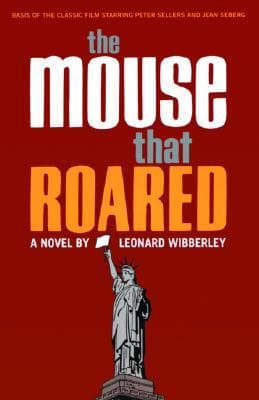
When the tiny Duchy of Grand Fenwick tries to solve its money problems by losing a war against the United States for foreign aid, they win by accident, causing a global nuclear disarmament crisis.
The small, isolated European Duchy of Grand Fenwick, a medieval remnant with 6,000 people, faces severe financial trouble. Its only export, Pinot Grand Fenwick wine, loses sales to a cheap American copy called 'Grand Fenwick' California wine. This economic crisis threatens to bankrupt the Duchy and impoverish its citizens. Gloriana XII, the young Duchess, is worried but has no clear answer. Her Prime Minister, Count Mountjoy, suggests a desperate plan: declare war on the United States, lose quickly, and then receive generous American foreign aid, like that given to post-war Germany and Japan.
After much discussion and a unanimous vote from the Duchy's Parliament, Gloriana XII reluctantly agrees to Count Mountjoy's bold plan. The Duchy sends a formal declaration of war to the United States. To lead their 'invasion,' the Grand Fenwick army consists of twenty longbowmen, led by Tully Bascomb, the eager but naive Field Marshal and Chief Forester. The plan is simple: sail to New York, surrender immediately upon arrival, and then wait for American generosity. The longbowmen, with their traditional weapons and medieval armor, set sail on a small ship, unaware of the true difficulties of international conflict.
Tully Bascomb and his small army arrive in New York Harbor, expecting to meet overwhelming American military power. To their surprise, the city seems empty. They land unopposed and march through the quiet streets, puzzled by the lack of resistance. Unbeknownst to them, the city is having an air raid drill, causing everyone to take shelter. This timing creates a strange atmosphere for the Fenwickians, who see the silence as either complete disinterest or a strategic move by the Americans. They continue their march, growing more confused by the lack of confrontation.
During their confused exploration of deserted New York, Tully Bascomb and his men find a scientific laboratory. Inside, they discover Dr. Alfred Kokintz, a smart but odd American physicist, and his new weapon: the Q-bomb (Quadium bomb). This bomb is far more powerful than any existing atomic weapon, able to destroy an entire continent. Dr. Kokintz, surprised by the intruders, is taken prisoner along with his powerful invention. The Fenwickians, still thinking they are just fulfilling their mission to surrender, have no idea of the immense power they have accidentally captured.
With Dr. Kokintz and the Q-bomb, Tully Bascomb and his men return to their ship. American authorities, initially confused by the disappearance of Dr. Kokintz and the Q-bomb, eventually realize that the tiny Duchy of Grand Fenwick is responsible. The world is shocked that a small, medieval nation has somehow 'defeated' the United States and captured the most powerful weapon ever made. Grand Fenwick, which planned to lose the war, now finds itself in the unique position of having won. The original plan for foreign aid through defeat is now completely reversed.
News of Grand Fenwick's capture of the Q-bomb sends shockwaves globally. Major world powers, especially the United States and the Soviet Union, panic. The idea of such a powerful weapon in the hands of a small, unsophisticated nation, or potentially falling into the wrong hands, is terrifying. Diplomatic efforts begin immediately, with nations scrambling to understand Grand Fenwick's intentions and to secure the Q-bomb. Duchess Gloriana XII, at first happy about her country's unexpected 'victory,' soon realizes the huge and dangerous responsibility that has fallen on her small Duchy.
Back in Grand Fenwick, Gloriana XII faces a major crisis. She holds the most powerful weapon in the world, giving her tiny Duchy immense, though accidental, influence over global powers. She is advised by Count Mountjoy and Tully Bascomb, who, despite their earlier naivete, now understand the seriousness of their situation. The Duchess realizes that simply returning the bomb is not enough; she must use this chance to ensure the long-term safety and prosperity of Grand Fenwick and, perhaps, the world. She starts to form a plan that goes beyond her original financial goals.
Duchess Gloriana XII, showing surprising wisdom and bravery, calls representatives from the world's major powers to Grand Fenwick. She proposes a radical solution: Grand Fenwick will return the Q-bomb only if all nuclear nations agree to disarm their own weapons and place the Q-bomb under international control. She argues that such a weapon makes all others useless and that true peace can only come from complete disarmament. Her proposal meets skepticism and resistance from the major powers, who do not want to give up their strategic advantages.
As talks fail, Tully Bascomb, who has grown much in confidence and understanding of world affairs, takes a firm stand. He refuses to hand over the Q-bomb unless a binding international disarmament agreement is reached. He sees the Q-bomb not as a weapon of destruction, but as a tool to force the world's great powers to face the absurdity and danger of their arms race. His firmness, combined with the genuine fear of what might happen if the Q-bomb were released or fell into less careful hands, puts great pressure on the United States and the Soviet Union.
Under unexpected pressure from Grand Fenwick, the major world powers, including the United States and the Soviet Union, are forced to rethink their positions. The sheer terror of the Q-bomb, along with Gloriana XII's steady resolve and Tully Bascomb's principled stand, ultimately leads to a breakthrough. They reluctantly agree to Grand Fenwick's terms: a global disarmament treaty is signed, and the Q-bomb is placed under international control, ensuring no single nation can use its destructive power. Grand Fenwick, the 'mouse that roared,' has accidentally started an era of global peace and disarmament, securing its own future in the process.
The Protagonist
Gloriana transforms from a timid, overwhelmed ruler into a wise and decisive leader who uses unexpected power for global good.
The Protagonist
Tully evolves from a simple, naive forester into a resolute figure who understands and champions global peace through disarmament.
The Supporting
Mountjoy remains largely pragmatic, but his initial cynical plan unexpectedly leads to a moral victory he hadn't anticipated.
The Supporting
Dr. Kokintz transitions from a scientist focused solely on creation to one who understands the profound moral responsibility of his invention.
The Supporting
As a collective, they maintain their loyalty and simplicity, serving as a humorous contrast to the global crisis they inadvertently create.
The Mentioned
The President is forced to concede to Grand Fenwick's demands, shifting from a position of power to one of reluctant compromise.
The novel satirizes the illogical and often silly nature of international relations and military power. Grand Fenwick's plan to declare war and lose to gain aid, and their accidental victory, shows how arbitrary and self-serving global power dynamics can be. The image of longbowmen 'defeating' a superpower by sheer chance highlights the book's comedic criticism of modern warfare and diplomatic posturing. The focus on economic gain through defeat, rather than conquest, reverses traditional war stories.
“It was the first war in history in which a nation had gone to war with the express purpose of being defeated.”
A main theme is that even the smallest and most seemingly unimportant entity can greatly affect the world. Grand Fenwick, a duchy of 6,000 people, manages to humble the greatest superpowers through a series of unlikely events. This theme celebrates the unexpected strength and moral clarity that can come from those who are underestimated. It suggests that true power is not always about military might or economic dominance, but can also come from unique situations, moral conviction, and a bit of luck.
“The mouse that roared had, by accident, brought the lions of the world to heel.”
The discovery and capture of the Q-bomb adds a serious ethical layer to the story. Dr. Kokintz, the bomb's creator, is at first unaware of the implications of his invention. Grand Fenwick, through Duchess Gloriana and Tully Bascomb, must face the huge moral responsibility that comes with having such destructive power. The novel argues that scientific progress, especially in weaponry, must be guided by strong ethical considerations and a global view to prevent disaster. The Q-bomb becomes a symbol of humanity's ability to destroy itself.
“A weapon that could destroy a continent was no longer a weapon of war, but of universal suicide.”
Ultimately, the novel supports global disarmament as the way to lasting peace. Gloriana XII's radical proposal to trade the Q-bomb for universal nuclear disarmament is the peak of this theme. The story suggests that weapons of mass destruction make all nations vulnerable and that true security lies in getting rid of them, not in having more. Grand Fenwick's accidental victory provides a unique point of influence to force the world's powers to face this uncomfortable truth and move towards a more peaceful, cooperative future.
“For the first time, all the great powers were united by a common fear, and that fear was the only thing that could make them truly disarm.”
The audience knows more than the characters, creating humor and tension.
The entire premise of Grand Fenwick's war plan is built on dramatic irony. The audience knows that their intention is to lose and gain aid, while the American public and government are initially unaware of this cynical motive. More significantly, the air raid drill that clears New York City is a prime example; the Fenwickians believe the city is deserted due to American fear or disinterest, while the audience knows the true, mundane reason. This creates comedic effect and highlights the characters' naiveté.
Unlikely chance events drive the plot and lead to unexpected outcomes.
The plot is heavily reliant on a series of extraordinary coincidences. The air raid drill in New York allowing Tully's unopposed landing, and his subsequent accidental discovery and capture of Dr. Kokintz and the Q-bomb, are pivotal examples. These chance occurrences transform Grand Fenwick's intended defeat into an accidental victory, completely subverting their original plan and setting the stage for the global crisis. The story uses these coincidences to propel the narrative and emphasize the unpredictable nature of events.
The use of humor, irony, exaggeration, or ridicule to expose and criticize folly and vice.
The entire novel is a work of political and social satire. It ridicules the absurdity of Cold War politics, the arms race, and the self-serving nature of international relations. The image of a medieval army with longbows 'defeating' a modern superpower, the cynical plan to lose a war for profit, and the subsequent global panic over a tiny duchy holding the ultimate weapon, all serve to mock the follies of the powerful and the serious issues of the day through a comedic lens. It's a lighthearted but pointed critique.
An object or device in a story which serves merely as a trigger for the plot.
The Q-bomb functions as the primary MacGuffin in the story. Its specific scientific properties are less important than its immense power and its role as the catalyst for the entire global crisis. Its capture by Grand Fenwick is the event that forces the world's superpowers to act and drives the plot towards the disarmament negotiations. The Q-bomb itself isn't deeply explored; its significance lies in what it represents and the actions it compels the characters and nations to take.
“The Grand Fenwickian Declaration of War was probably the politest declaration of war in the history of the world.”
— Describing the Duke's formal declaration of war against the United States.
“It was a situation which, in the language of the diplomatists, was 'fraught with peril,' and in the language of everyone else, was 'a mess.'”
— Regarding the international reaction to Grand Fenwick's possession of the Q-bomb.
“The only way to get aid from America these days is to declare war on them and lose.”
— The Duke's initial, cynical rationale for Grand Fenwick's declaration of war.
“The weapon, which had been designed to destroy the world, became the instrument of its salvation.”
— Referring to the Q-bomb's unexpected role in bringing about world peace.
“It is a strange thing that the world can be saved by a handful of men from a duchy you could put in your pocket.”
— A reflection on the unlikeliness of Grand Fenwick's global impact.
“When you are a small nation, you have to be clever, because you cannot be strong.”
— The underlying philosophy behind Grand Fenwick's approach to international relations.
“The world was not ready for a weapon that could destroy it. It was too childish, too prone to tantrums.”
— Dr. Kokintz's assessment of humanity's maturity in handling the Q-bomb.
“War, as Grand Fenwick was about to discover, was a far more complicated business than simply sending a letter.”
— Narrator's observation as the Fenwickian invasion force sets sail.
“The greatest danger lay not in the bomb itself, but in the fear it engendered.”
— Dr. Kokintz's analysis of the psychological impact of the Q-bomb.
“They had come to conquer, but they had stayed to be conquered by the sheer, overwhelming generosity of the Americans.”
— The Fenwickian army's experience in New York, initially expecting battle.
“It was a matter of national pride, and national pride, as everyone knows, is a very dangerous thing.”
— Explaining the motivations behind Grand Fenwick's seemingly absurd actions.
“The world was tired of being frightened. It wanted to be safe, even if safety came from the most unlikely quarter.”
— After Grand Fenwick proposes a solution for global disarmament.
“The smaller the nation, the louder its roar, sometimes.”
— A general reflection on the unexpected influence of minor players on the world stage.
“He had invented a weapon that could destroy the world, and in doing so, had created the means for its salvation.”
— Summarizing Dr. Kokintz's paradoxical contribution to humanity.
Ready to see how well you understood this book? Take our interactive quiz with 10 questions.
Biography coming soon.

Brett Casper
5.0

Dirk Uffelmann
4.7

Winston S. Churchill
4.5

Chimamanda Ngozi Adichie
4.5
Will Durant
4.4
Thomas Sowell
4.4
W.E.B. Du Bois
4.3
Alan Moore
4.3